
How to Grow and Care for Coneflower
Contents
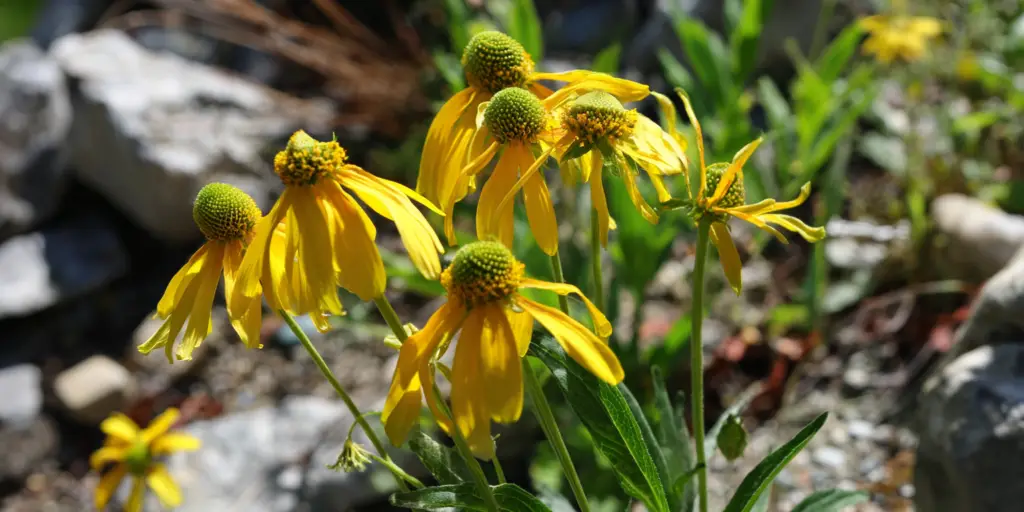
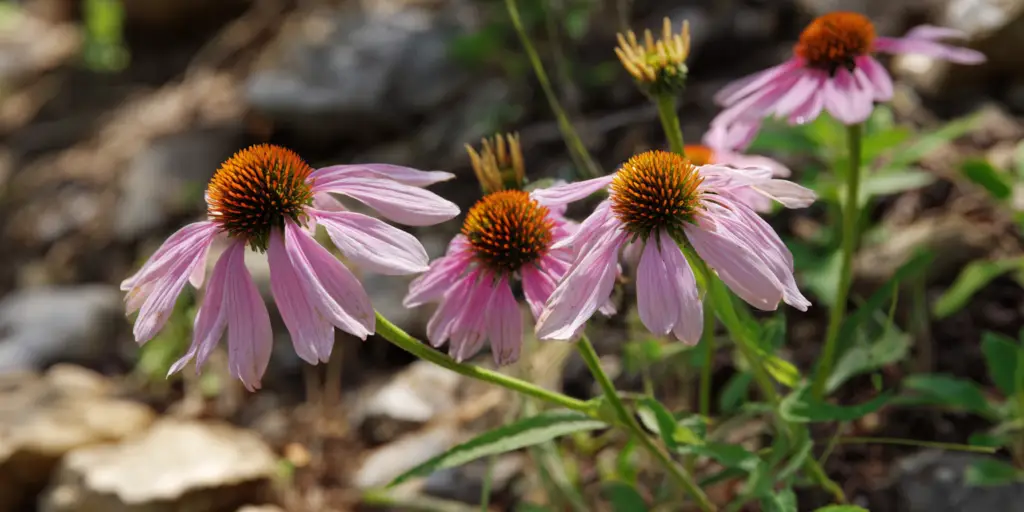
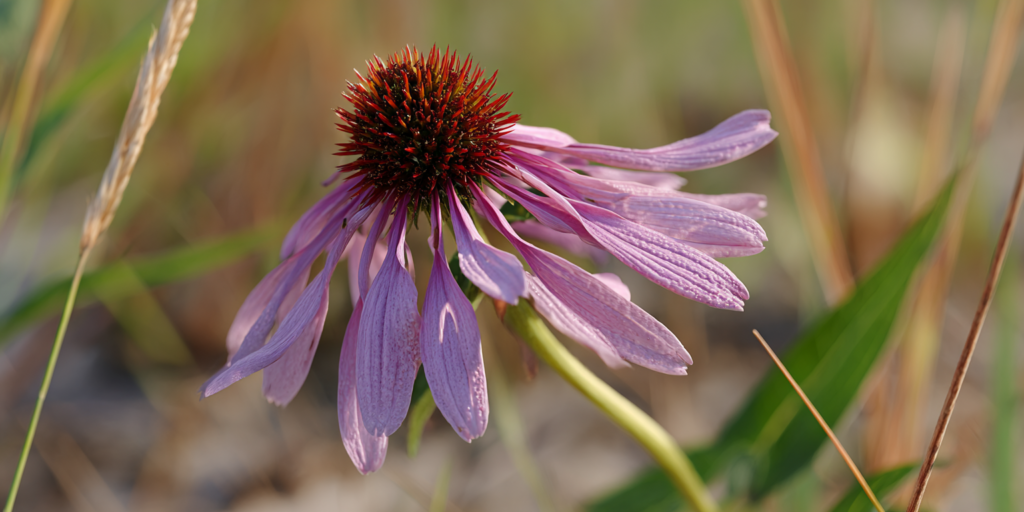
Coneflower is a reliable North American prairie perennial prized for nonstop summer color and easy care. The accepted botanical name for the most widely grown species is Echinacea purpurea, commonly called purple coneflower. Garden centers also sell other species and hybrids in the genus Echinacea, including E. pallida and E. paradoxa, which bring pale purple or clear yellow forms to the same sturdy daisy shape. In gardens across much of the United States, coneflower grows as a long lived clumping perennial with flower stalks from 2 to 4 feet tall and strong, rough leaves that stand up to heat and light drought. Coneflowers are typically hardy in USDA Zones 3 to 9, depending on species and cultivar. They bloom best in full sun with 6 to 8 hours of direct light. Afternoon shade can be helpful in the hottest southern and desert regions. The flowers are rich in nectar and pollen, so they are excellent for native bees and butterflies. If you are building a border around purple flowers or looking to mix with yellow flowers for strong contrast, coneflower is a dependable backbone plant that keeps the show going from early summer into fall. Plant where the soil drains well and the sun is strong. Set crowns at soil level and space plants for air flow. Water regularly the first growing season, then water only during prolonged drought. Leave some seedheads for birds in fall and cut stems back in late winter. These four habits cover most of what coneflower care requires for years of healthy bloom.
Soil & Bed Preparation
Coneflower is adaptable, but it performs best in moderately fertile, well drained soil. A loam or sandy loam is ideal. Heavy clay that stays wet in winter causes crown and root rot, while very loose sand dries too fast and can leave plants stunted. Aim for a soil pH in the slightly acidic to neutral range, about 6.0 to 7.0. Organic matter improves both clay and sand. Work in 1 to 2 inches (2.5 to 5 cm) of finished compost over the top 8 to 10 inches (20 to 25 cm) of the bed before planting. In clay, blending in fine pine bark can open texture without sealing the surface. In very sandy soils, compost combined with a small amount of aged leaf mold helps retain moisture through heat waves.
Raised beds are useful wherever seasonal rains sit on the surface or where a shallow hardpan prevents drainage. A raised bed 6 to 12 inches (15 to 30 cm) high filled with a mix of topsoil and composted material gives coneflowers the drainage they need without drying too quickly. If you garden in a low coastal site, lift the planting area and set crowns precisely at grade so water sheds away from the crown. Avoid fresh manure or overly rich mixes at planting. Excessive nitrogen pushes soft growth and reduces bloom. To check drainage, dig a hole 12 inches (30 cm) wide and 12 inches (30 cm) deep. Fill it with water and let it drain. Refill, then measure the drop after one hour. A drop of about 1 to 3 inches (2.5 to 7.5 cm) means drainage is suitable. Less than 1 inch is slow and calls for raised planting or more texture improvement. More than 4 inches is very fast and calls for additional organic matter. For pH, use a home test kit or send a sample to your state extension lab. If pH is below 6.0, add garden lime as recommended by your test. If pH is above 7.0, incorporate elemental sulfur at the labeled rate and retest after several months. Reworking soil before planting pays off for many years of easy coneflower care.
Planting Calendar by USDA Zone
Coneflower is a hardy perennial across much of the country, but timing your planting to match soil temperature and regional climate results in quicker establishment. Container grown plants can go in whenever the soil is workable and not waterlogged. Bare root crowns or divisions do best very early in spring or in early fall while soil remains warm enough for root growth.
Zones 3 to 4. Plant container grown coneflowers from late spring to early summer once the danger of hard frost has passed and soil has warmed. For bare root or divisions, plant as soon as the soil can be worked in spring, then mulch lightly to buffer temperature swings. Fall planting is possible in early September in sheltered areas, but spring is the safer choice because winters are long and severe.
Zones 5 to 6. Plant container grown stock in mid spring to very early summer. Bare root or divisions can go in from early spring through mid spring. Early fall planting is reliable, usually from early September to early October, leaving at least six weeks before the ground freezes. Fall planted crowns put energy into roots and can flower strongly the following summer.
Zones 7 to 8. You have two excellent windows. Plant in early to mid spring when nights are still cool, or plant in early fall after summer heat breaks. In humid Gulf states, emphasize fall planting so roots establish during mild winter. In the southern Plains, spring works well, but provide afternoon shade or temporary shade cloth during the first hot spell.
Zones 9 and warm coastal areas. Plant from late fall through late winter when nights are cool and soil is workable. Avoid midsummer planting in the low desert and along hot urban corridors. Afternoon shade, extra mulch, and even a light reflective fabric during the first month can help reduce transplant stress in warm climates. Coneflower tolerates heat once established, but seed set and bloom quality improve where nights moderate.
Bare root vs container notes. Bare root divisions wake early and root fast in cool soil, but they dry quickly. Keep roots moist and plant the same day you receive them. Container grown plants are more forgiving and can be set out across a longer window. In every zone, avoid planting into cold, saturated soil or during a heat wave. Choose a calm, cloudy day whenever possible.
Planting: Depth & Spacing
Set the crown at the soil surface. Spread roots outward in a shallow cone and backfill gently, firming as you go to eliminate air pockets. Water to settle soil and top up if the crown sinks. Space plants 18 to 24 inches apart (45 to 60 cm) for most garden uses. For tall species or large hybrid selections, 24 to 30 inches (60 to 75 cm) improves airflow. In rows for cutting gardens, set rows 24 to 36 inches (60 to 90 cm) apart for easy access and to reduce leaf disease. Loosen the outer roots without breaking the root ball. Plant so the crown is level with the surrounding soil. Planting too deep is a common cause of decline. After planting, water deeply and apply a 2 inch (5 cm) mulch, keeping the mulch a small saucer width away from the crown. If you are converting an existing bed, stagger plants in a triangle pattern with 18 to 24 inches between neighbors to fill in evenly over two seasons. Coneflower seeds germinate in warm soil, but germination improves after a period of cold moist stratification. For spring sowing, mix seed with slightly damp peat or sand and refrigerate for 4 to 6 weeks at about 40°F (4°C). Surface sow in trays or sow very shallowly at about 1⁄8 inch (3 mm) because the seeds benefit from light. Maintain 65 to 70°F (18 to 21°C) until emergence. Harden seedlings by setting them outdoors for 7 to 10 days in light shade, then plant at the same depth they grew in the tray. Expect seed grown plants to flower in the second year, while some will bloom lightly the first summer. Water the planting hole before setting the plant, then water again after backfilling. Plant in the evening or on a cloudy day. In hot weather, shade new transplants with a temporary screen for three to five days. Do not fertilize at planting unless a soil test recommends it. The roots need time to knit into the native soil before they can use extra nutrients.

Watering & Mulching
Coneflowers are drought tolerant once established, but steady moisture during the first growing season builds a strong root system. In most soils, aim for about 1 inch of water per week (25 mm) from rain and irrigation combined during spring and early summer. Water deep and infrequent rather than daily sprinkles. Let the top 2 inches (5 cm) of soil dry between waterings to discourage crown rot. In sandy soils you will water a little more often because water moves quickly through the profile. In clay soils, water more slowly and watch for runoff. A simple rain gauge placed in the bed helps you track totals.
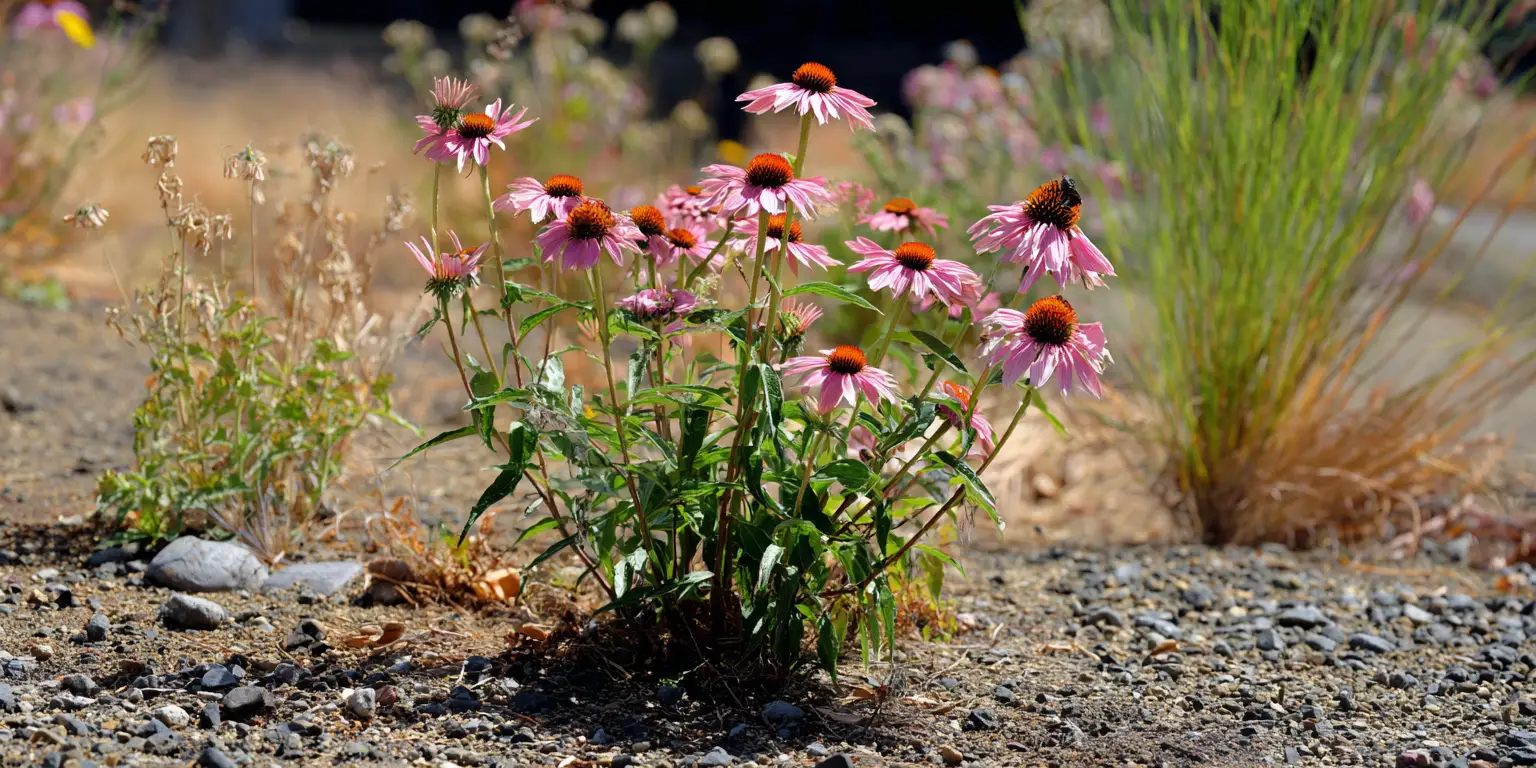
Mulch is a key part of coneflower care in all climates. Apply 2 to 3 inches (5 to 7.5 cm) of shredded bark, leaf mold, or pine straw after planting. Keep a small open circle around the crown so the base of the stems stays dry. Mulch stabilizes soil temperature, reduces weed pressure, and keeps soil from sealing in heavy summer rains. In the desert Southwest, a light colored gravel mulch can reflect heat and protect the crown from splashing. In humid regions, a looser organic mulch allows better air movement near the soil surface and reduces fungal leaf spots. During a heat wave, water the evening before a very hot day and check soil earlier than usual the next morning. If leaves flag midday but recover by dusk, the plant is managing. If leaves remain limp toward sunset, water deeply. Plants in containers dry faster than those in beds and may need water every one to three days in midsummer, depending on pot size. Coneflower is not salt tolerant, so avoid irrigation that brings brackish water or heavy road salt into the bed. Hard water from municipal sources is usually fine for coneflowers, but if you garden over limestone and the soil runs alkaline, monitor pH and adjust with sulfur as needed.
Feeding
Coneflower grows and blooms well in average soils without frequent fertilizer. Many gardeners find that adding compost in spring is enough. If a soil test shows low fertility or if plants appear pale and growth is weak, a light feeding in early spring helps. Use a slow release or organic formulation in a general range such as 5 5 5 or 10 10 10, applied at a modest label rate. Scatter it around the dripline, scratch it lightly into the surface, and water in. Avoid high nitrogen products that push soft, floppy growth with fewer flowers. Feed once in spring as new growth starts. Do not feed again that season unless your soil test recommends it. In sandy or very lean soils, repeating a light topdressing of compost in midsummer supports steady bloom without overfeeding. Where plants grow tall and lush with deep green leaves but few flowers, cut back on nitrogen the following year. If plants sit in rich amended beds with consistent mulch, skip fertilizer and focus on water and light management. Retest soil every two to three years so you are feeding to need rather than by habit. Building a living soil is a long term approach that pays off. In new beds, target 3 to 5 percent organic matter by volume. Keep mulch renewed, add leaves in fall, and disturb the soil as little as possible. Fungal networks thrive when soil stays undisturbed and roots are present through the seasons. These networks help coneflowers mine nutrients and moisture, particularly during summer stress.
Pruning & Support
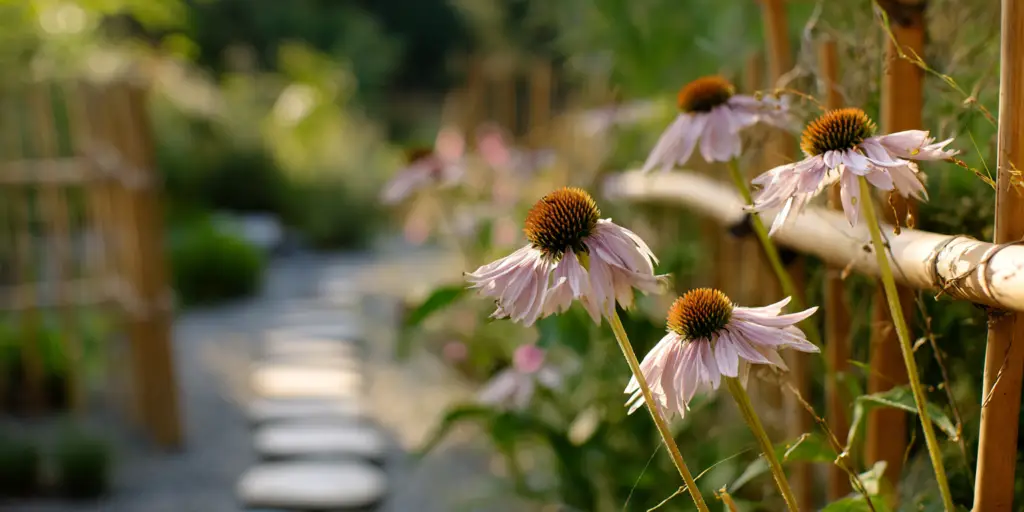
Pruning needs for coneflower are simple. Deadhead through summer to extend bloom. Cut spent flower stalks back to a strong leaf or to the base of the plant. If you want winter seeds for birds and sculptural interest, stop deadheading by late summer and let the last flush of flowers mature. The familiar dark cones feed finches and add texture after frost. In late winter or very early spring, cut remaining stems to just above the emerging crown. Remove any matted leaves, then apply a fresh light mulch. To encourage bushier plants with more but smaller flowers, pinch the main stems when plants are 12 to 16 inches tall (30 to 40 cm). This delays bloom slightly and is optional. Support is rarely needed, but very tall cultivars can lean in rich soil. A simple bamboo stake and a soft tie placed loosely just below the flower heads keeps stalks from lodging in wind or heavy rain. Clean shears and loppers before moving from plant to plant to limit disease spread. Wipe blades with 70 percent isopropyl alcohol and allow them to stay wet for at least 30 seconds. Remove and discard, rather than compost, any plants that show distorted, tufted green growth or oddly deformed flowers. Those are classic signs of aster yellows, a disease carried by leafhoppers. There is no cure in the home garden, so sanitation and removal protect the rest of the bed.
Overwintering
In cold regions, let plants go naturally dormant. After several hard frosts, apply a loose winter mulch 2 to 3 inches (5 to 7.5 cm) deep of shredded leaves or pine needles around, but not over, the crown. This mulch buffers freeze and thaw cycles that can heave shallow roots. In spring, begin pulling mulch back as soon as new sprouts are visible and daytime temperatures reliably rise above freezing. Where winters are very windy, a low ring of hardware cloth lined with leaf mulch can keep insulating material in place until spring cleanup. Voles and other small rodents sometimes chew crowns under thick winter mulch. To discourage them, avoid deep layers of dense mulch and keep birdseed feeders away from coneflower beds in winter. A ring of pea gravel 8 to 10 inches (20 to 25 cm) in diameter around the crown discourages tunneling against the base. If you have persistent vole pressure, a small open cylinder of half inch hardware cloth set around the crown in late fall and removed in spring offers additional protection. Most coneflowers are hardy, but containers experience colder conditions than in ground soil. In Zones 5 and colder, move potted coneflowers into an unheated garage or against a protected foundation where the pot will not freeze solid. Water just enough to keep the root ball from becoming bone dry, usually once every three to five weeks during winter. In Zones 7 to 9, containers can overwinter outdoors, but place them where they are shielded from repeated freeze and thaw and heavy winter rain.
Growing Environments
Coneflower adapts well to containers, raised beds, and traditional in ground borders. For containers, choose a pot at least 12 to 16 inches (30 to 40 cm) in diameter with a similar depth. Larger is better because soil volume buffers heat and drought. Use a high quality potting mix that drains freely and contains some bark or perlite for air space. Avoid garden soil in pots. Place the container where it receives full sun, then check moisture more often than in beds. Refresh the top few inches with compost each spring and repot every two to three years or when growth slows. When repotting, slice away circling roots and reset the crown at the same depth as before. In hot southern or interior West sites, give afternoon shade or plant on the east or northeast side of a fence or shrub. In cool summer climates, a south facing wall adds welcome heat and accelerates bloom. Where wind funnels between buildings, set plants a little lower in the bed and use a looser mulch that will not scour away. Avoid planting in pockets where downspouts dump water. If you garden along the immediate coast, lift the bed and provide excellent drainage. Coneflower tolerates heat and short dry spells but does not tolerate persistent salt spray or saturated soil. Coneflower will bloom in light shade, but flower count drops and stems reach. If you have a bright dappled understory, choose species like E. purpurea which tolerates a touch more shade than species adapted to open prairie. In paved urban courtyards, reflected heat can be intense. Wider spacing and a light colored mulch reduce stress, and a weekly deep soak through the hottest weeks keeps buds from aborting.
Companion Planting & Design
Coneflower fits many design styles, from prairie inspired drifts to cottage combinations. In a naturalistic planting, pair it with ornamental grasses such as little bluestem (Schizachyrium scoparium), prairie dropseed (Sporobolus heterolepis), or switchgrass (Panicum virgatum). The grasses add movement and their fine blades frame the sturdy cones. For summer color echoes, combine coneflowers with black eyed Susan (Rudbeckia), blazing star (Liatris), and yarrow (Achillea). To extend color through fall, weave in asters and late sedums. If you prefer a softer palette, choose selections in pale pink or white and mix them with catmint (Nepeta) and salvias for a long blooming border that also feeds bees.
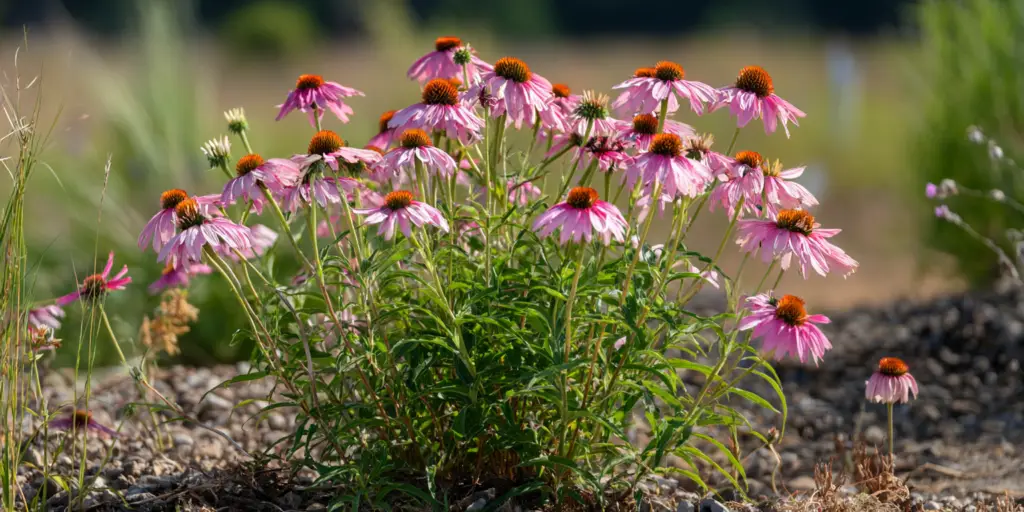
Color families make planning easier. Purple and magenta coneflowers sit naturally among other pink flowers and white flowers. Yellow forms of Echinacea paradoxa light up the center of borders and tie easily to yellow flowers like coreopsis and goldenrod. In summer cutting gardens, coneflowers blend with zinnias and sunflower for bold, cheerful bouquets. For backyard weddings and outdoor parties, coneflower provides durable stems that hold up well in heat, a practical note to file beside our wedding flowers guide. Whether you are mapping a cottage mix or a prairie ribbon, treat coneflower as a repeating anchor. Place clumps in triangles spaced 18 to 30 inches apart to create rhythm and to maintain airflow that reduces leaf disease.
Written by: Your Flowers Guide editorial team
We are a small independent group of flower lovers who research and review each guide using trusted horticultural and educational sources. Learn more about us