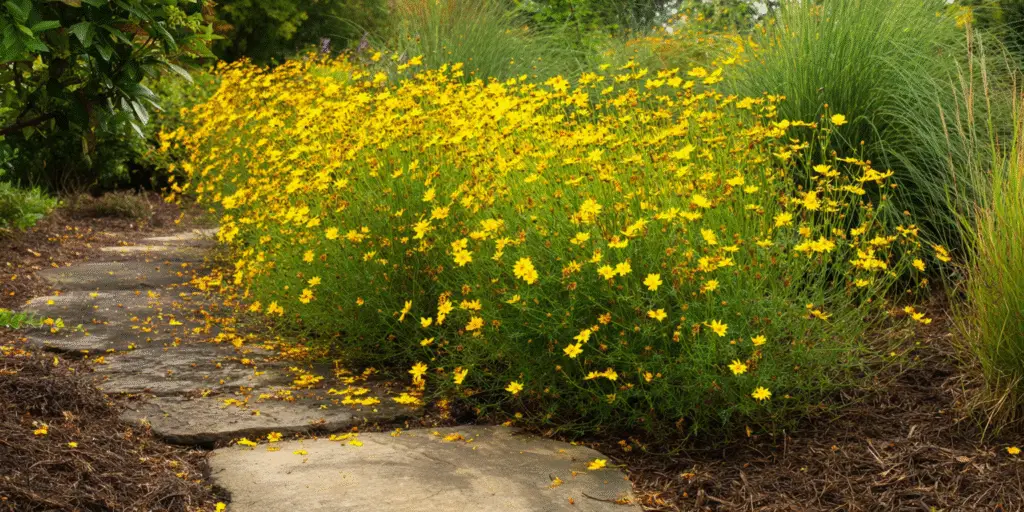
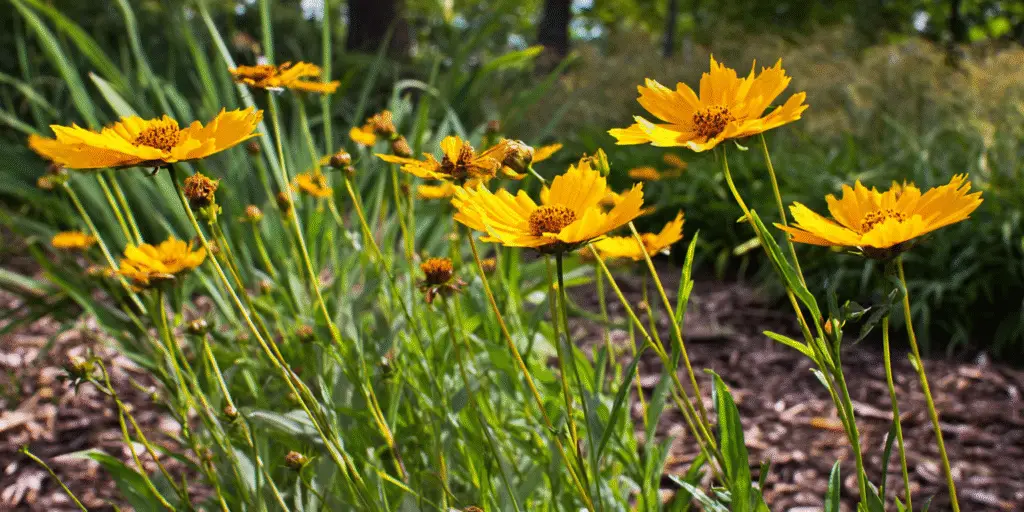
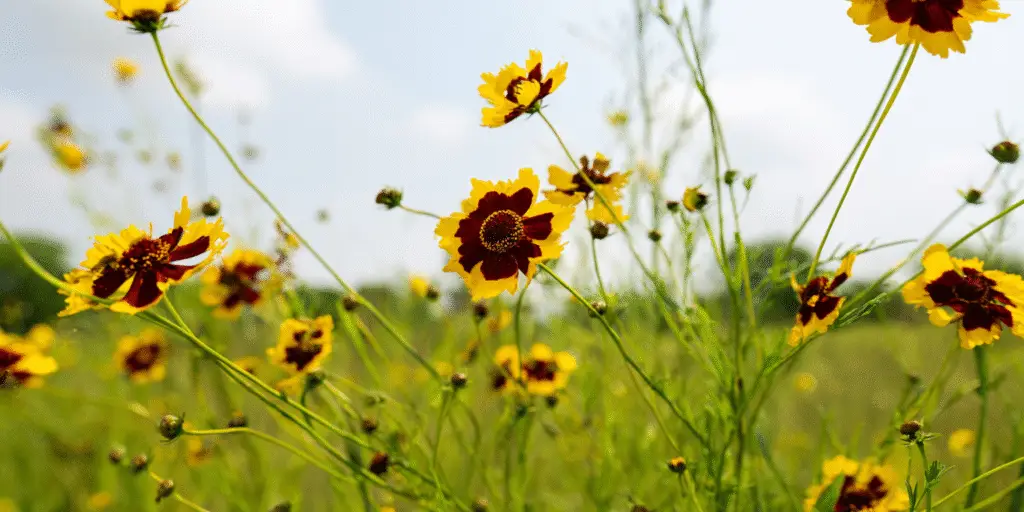
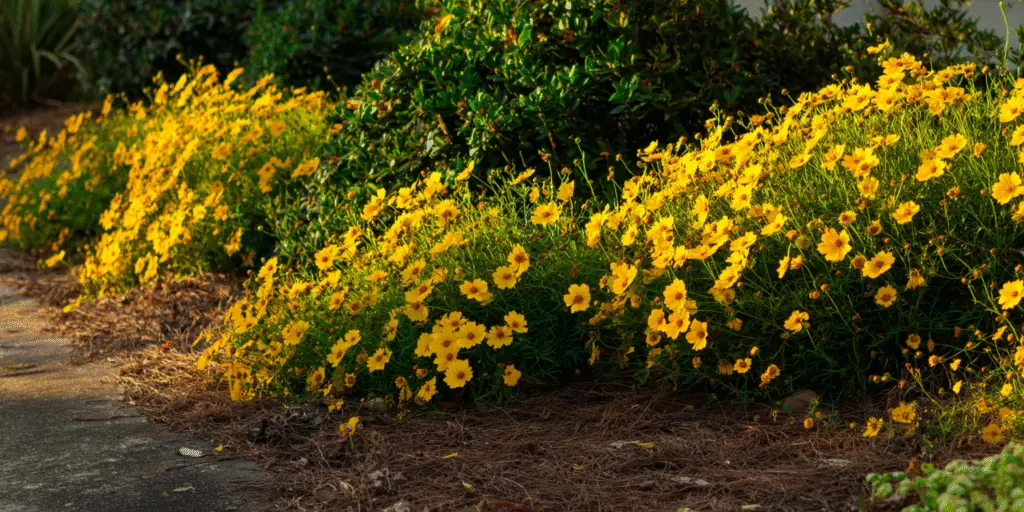
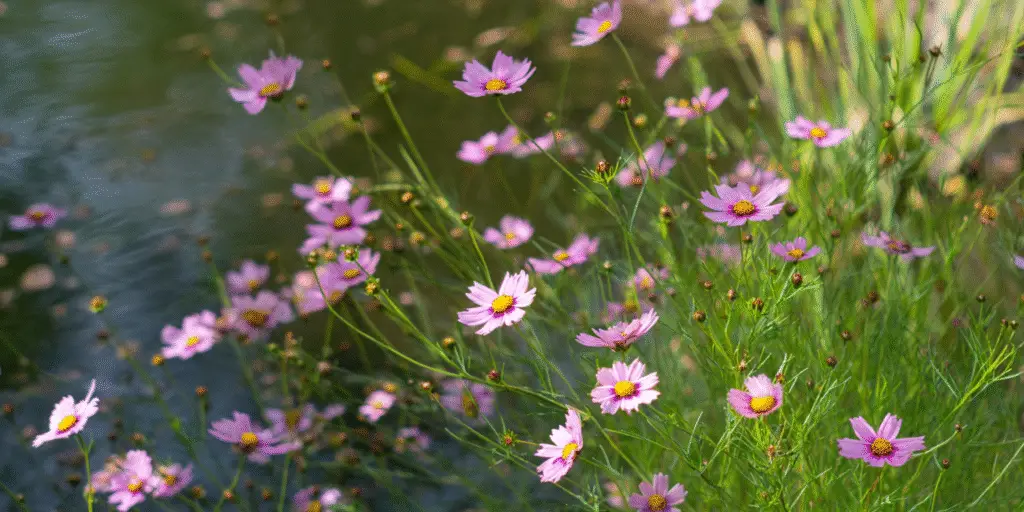
Coreopsis rosea is a pink‑flowered tickseed forming mounds of fine foliage and soft pink daisies. It prefers full sun with consistent moisture and performs best in cooler summer climates or near the coast. Plants bloom from early to late summer and can rebloom with deadheading. This species is less drought tolerant than many yellow tickseeds. Use it where soils stay evenly moist but drain well.
At‑a‑glance
Group/Class: species; perennial
Height × spread: 12-24 in (30-60 cm) × 24-36 in (60-90 cm)
Bloom window: June to September (with deadheading)
Color & flower form: soft pink rays with yellow disks; single daisies
Fragrance: 0 none
USDA hardiness: zones 3-8
Breeder / Year / Origin: unknown; native to the northeastern Atlantic coastal plain
Cut‑flower notes: stems slender for small arrangements; good cut noted; typical vase life unknown / varies by handling
Pet safety: safe
How it differs
Pink flowers rather than the typical yellow of most Coreopsis.
Prefers average to moist soils and may struggle in drought.
Forms broad, mounded clumps wider than tall.
Best in cooler summers or coastal sites.
Strengths
Uncommon color within the genus.
Long bloom with regular deadheading.
Attracts pollinators.
Deer tolerant in many gardens.
Care in one minute
Site: full sun; light afternoon shade in hot inland sites.
Soil and pH: average, well‑drained soils that hold some moisture; neutral to slightly acidic.
Watering: regular moisture in summer; do not allow sustained drought.
Feeding: light feeding in spring only.
Grooming: deadhead through summer; shear lightly to encourage a fresh flush.
Overwintering: mulch in colder zones; ensure winter drainage.
Watch‑outs
Lower drought tolerance than many tickseeds.
Can decline in prolonged heat without moisture.
Needs drainage to prevent crown issues.
Best uses (tags)
borders; pollinators; coastal; massing; cutting
Provenance note
Native to the northeastern U.S. coastal plain; selected into several garden forms since the late twentieth century.
Written by: Your Flowers Guide editorial team We are a small independent group of flower lovers who research and review each guide using trusted horticultural and educational sources. Learn more about us