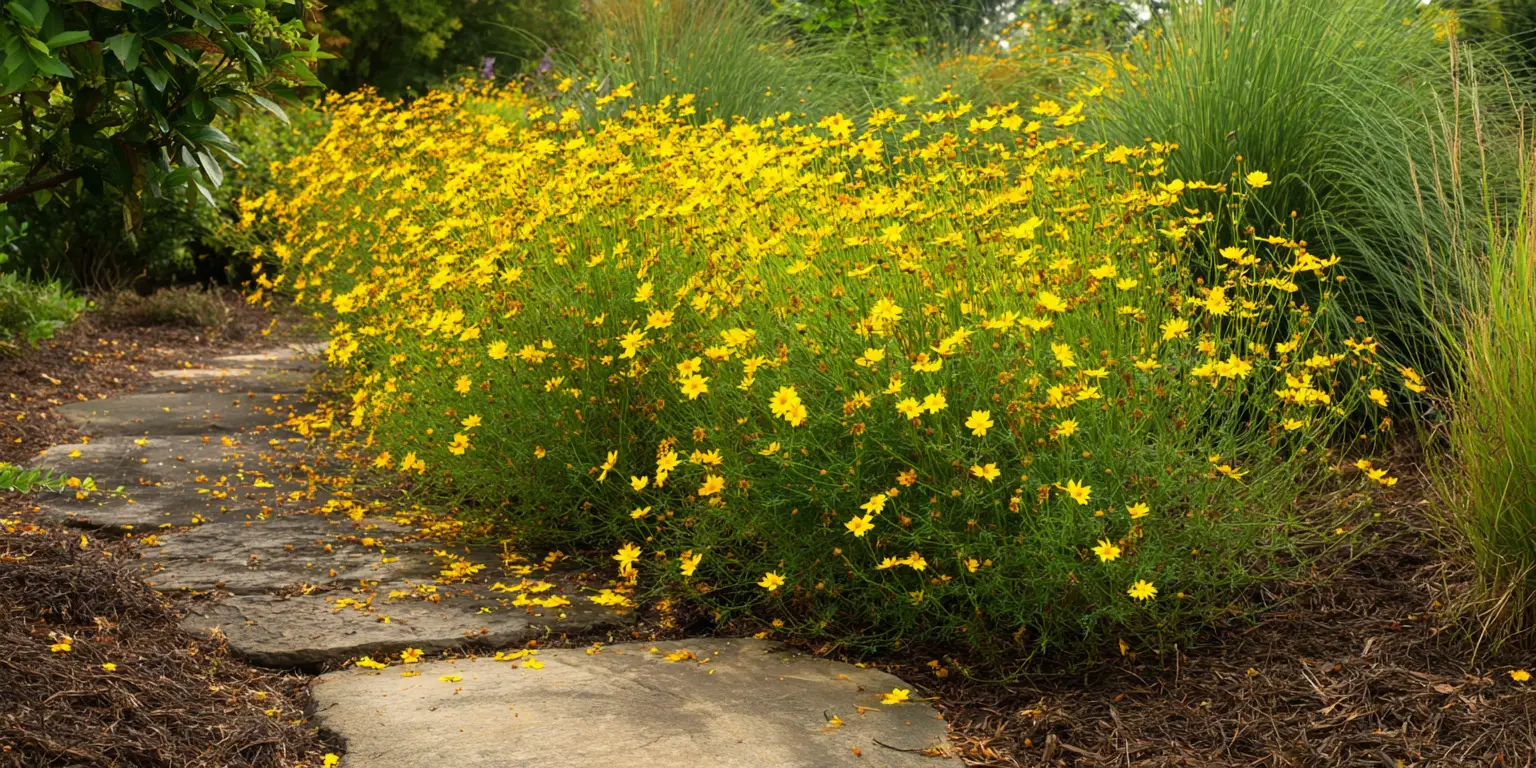
in bloom
now
through Sep
Bloom calendar
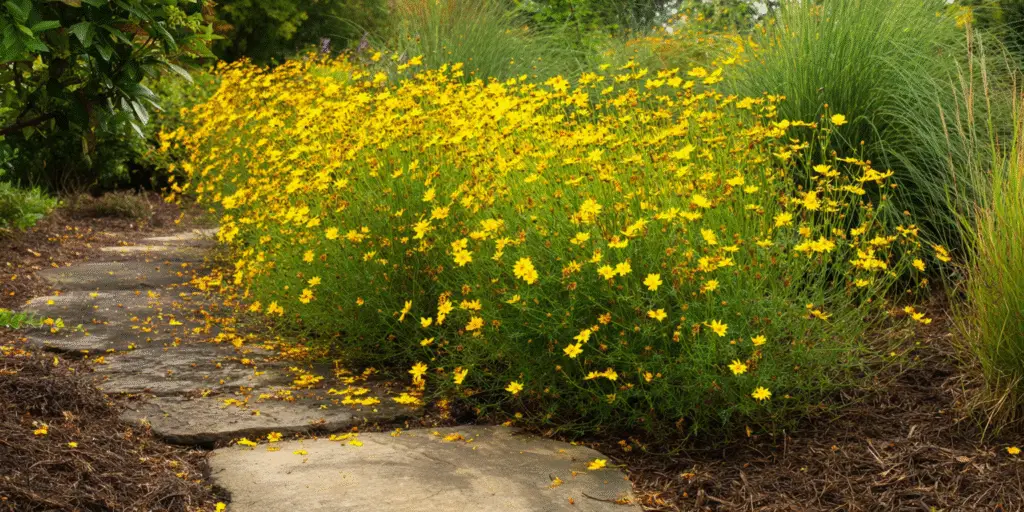
Coreopsis verticillata
species; threadleaf type; perennial
At‑a‑glance
- Group/Class: species; threadleaf type; perennial
- Height × spread: 30-36 in (75-90 cm) × 18-24 in (45-60 cm)
- Bloom window: June to September (reblooms after shearing)
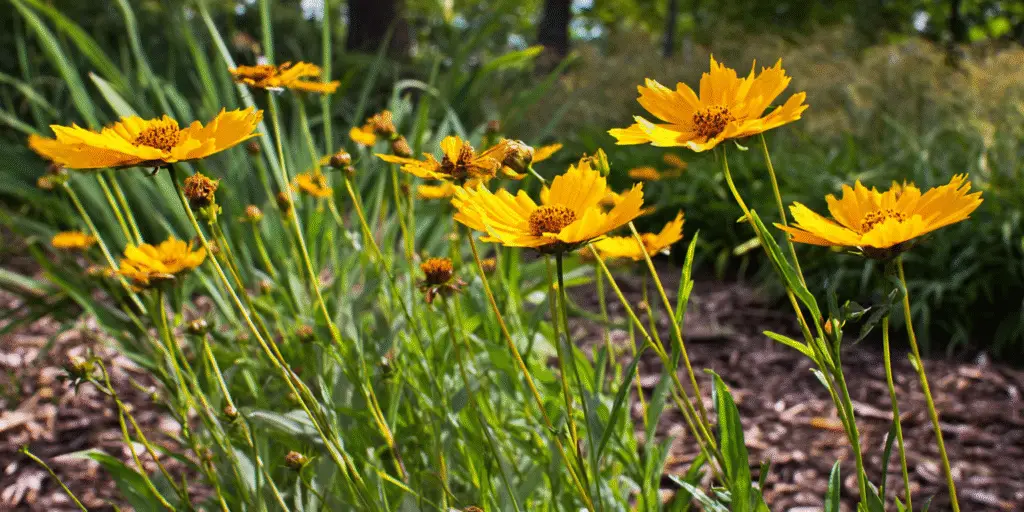
- Color & flower form: yellow, single daisies about 1-2 in wide
- Fragrance: 0 none
- USDA hardiness: zones 3-9
- Breeder / Year / Origin: unknown; native to Eastern United States
- Pet safety: safe
How it differs
- Fine threadlike leaves create a lighter, ferny texture than many tickseed species.
- Forms rhizomatous clumps rather than short‑lived crowns.
- Holds color in summer heat when soils are lean and well drained.
- Typically blooms from early summer to early fall with prompt deadheading.
Strengths
- Tolerates poor, sandy, or rocky soils.
- Deer and drought tolerant once established.
- Long bloom with shearing or deadheading.
- Low maintenance in full sun.
Care in one minute
Site: full sun with open air movement.
Soil and pH: lean, well‑drained sandy or rocky loam; neutral to slightly acidic.
Watering: water to establish; then deep, infrequent watering during drought.
Feeding: minimal fertilizer; excess nutrients increase flopping.
Grooming: deadhead spent stems; shear midsummer to encourage fall bloom.
Overwintering: leave some seedheads for birds; cut back in late winter.
Watch‑outs
- Can sprawl in moist or fertile soils.
- Crown rot possible in poorly drained sites.
- May spread by rhizomes and self‑seeding if not maintained.
- Occasional powdery mildew or aster yellows in humid seasons.
Best uses (tags)
Provenance note
Native to the eastern United States; the threadlike, whorled leaves give rise to the common name threadleaf coreopsis.
References
- Missouri Botanical Garden Plant Finder – Coreopsis verticillata
- ASPCA – Coreopsis (Tickseed) non‑toxic to pets
Similar Flowers
Enjoying our flower guides? Add YourFlowersGuide as a preferred source on Google. It helps more readers find us.
Add to Preferred Sources