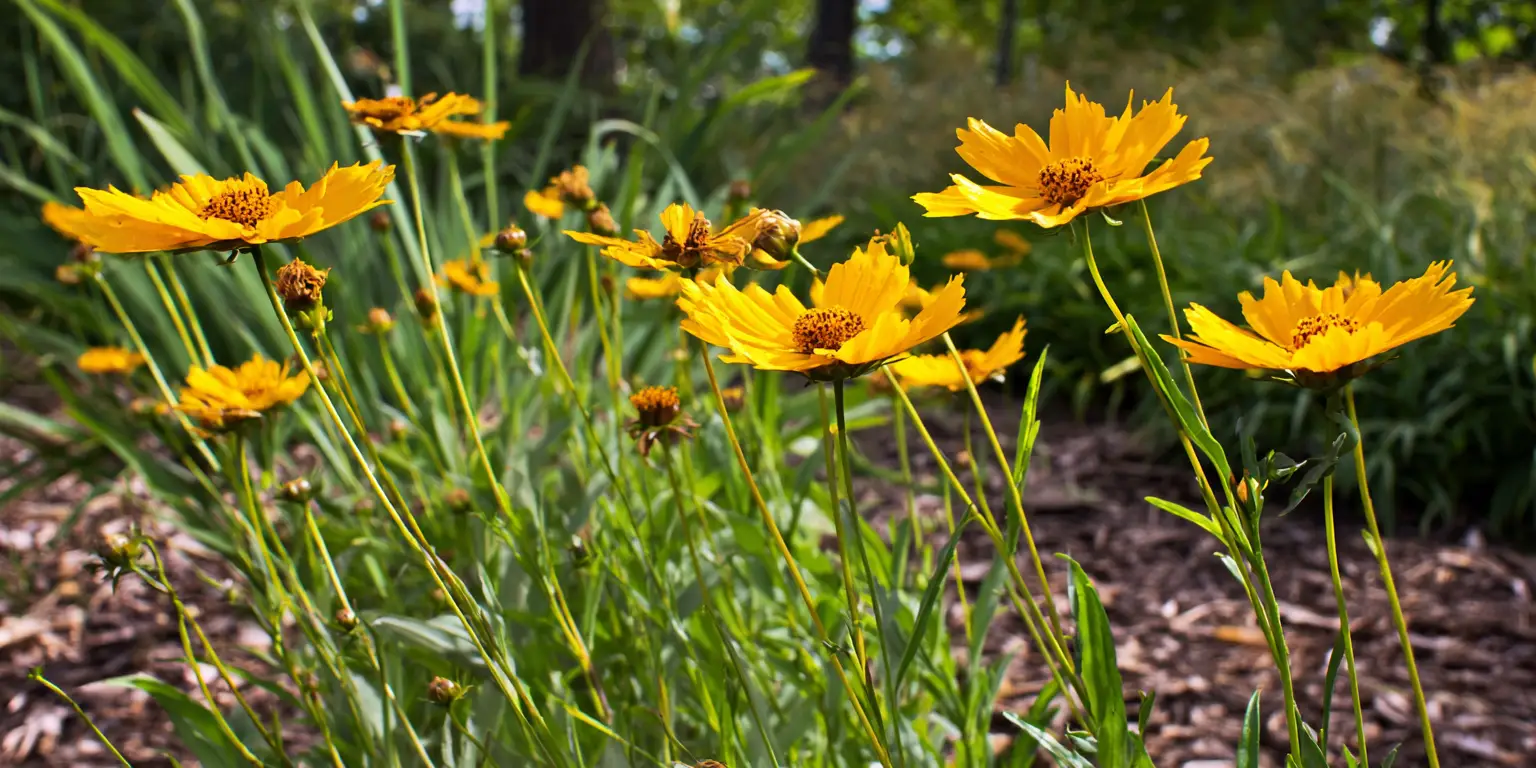
in bloom
now
through Sep
Bloom calendar
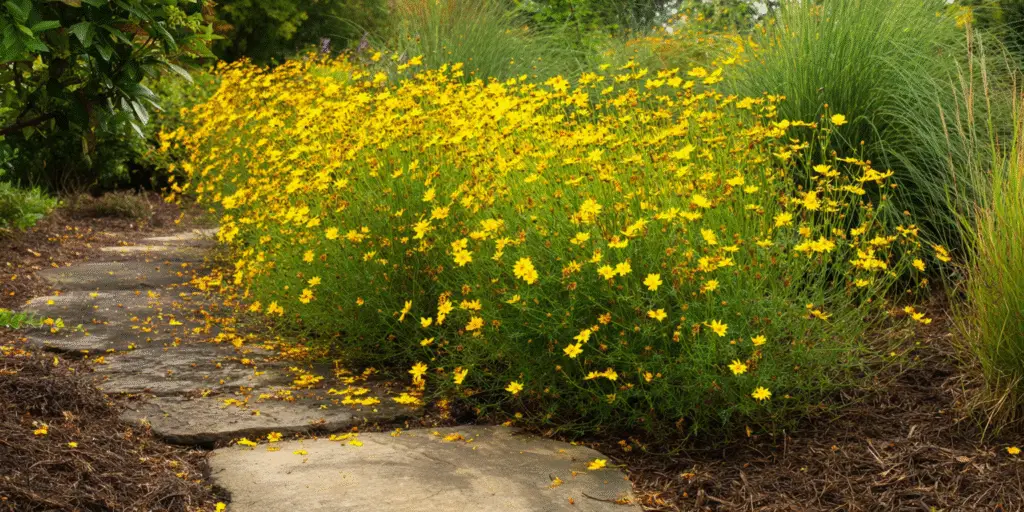
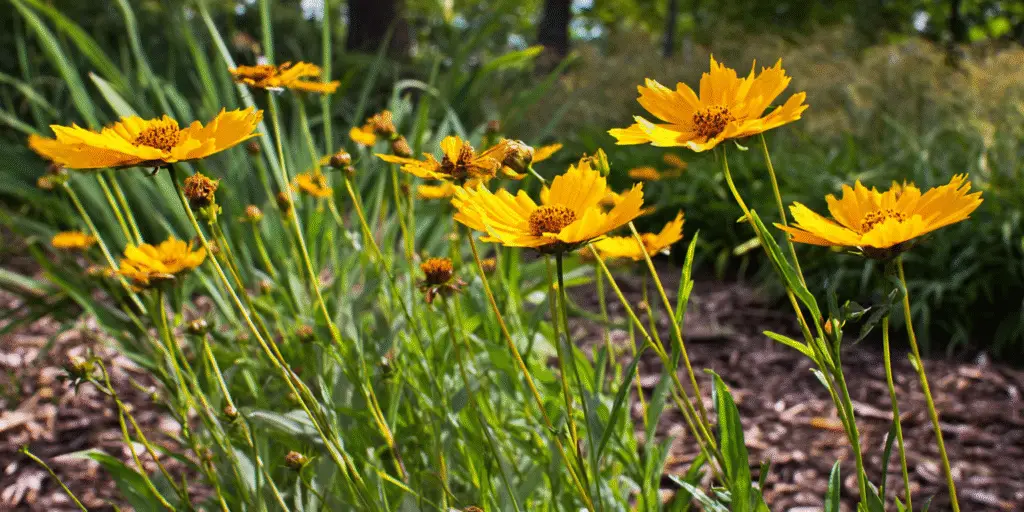
Coreopsis lanceolata
species; perennial
At‑a‑glance
- Group/Class: species; perennial
- Height × spread: 12-36 in (30-90 cm) × 12-24 in (30-60 cm)
- Bloom window: May to June (longer with deadheading)
- Color & flower form: yellow, single daisies with notched rays
- Fragrance: 0 none
- USDA hardiness: zones 4-9
- Breeder / Year / Origin: unknown; native to southeastern Canada and south‑central United States
- Cut‑flower notes: stems fairly sturdy; good for cutting; typical vase life unknown / varies by handling
- Pet safety: safe
How it differs
- Blooms earlier than many tickseed species, often in late spring.
- Clump‑forming habit with broader leaves versus threadleaf types.
- Self‑seeds more readily than many named hybrids.
- Performs on lean, sandy or rocky soils where other perennials struggle.
Strengths
- Heat, humidity, and drought tolerant after establishment.
- Deer resistant foliage and flowers.
- Low maintenance with good performance in poor soils.
- Useful for naturalizing and roadside conditions.
Care in one minute
Site: full sun for strongest stems and best bloom.
Soil and pH: well‑drained sandy or rocky loam; acidic to neutral.
Watering: average moisture; allow soil to dry between waterings once established.
Feeding: avoid rich fertilizers; excess nutrients encourage flopping.
Grooming: deadhead to extend bloom and reduce reseeding; divide every 2 to 3 years.
Overwintering: no special protection needed in zones 4 to 9.
Watch‑outs
- Can become weedy without deadheading due to self‑seeding.
- Sprawls in fertile or moist soils.
- Crown rot can occur in poorly drained sites.
Best uses (tags)
Provenance note
Native from southeastern Canada into the south‑central United States; long cultivated in North American meadows and roadside seed mixes.
References
- NC State Extension Plant Toolbox – Coreopsis lanceolata
- Lady Bird Johnson Wildflower Center – Coreopsis lanceolata
- ASPCA – Coreopsis (Tickseed) non‑toxic to pets
Similar Flowers
Enjoying our flower guides? Add YourFlowersGuide as a preferred source on Google. It helps more readers find us.
Add to Preferred Sources