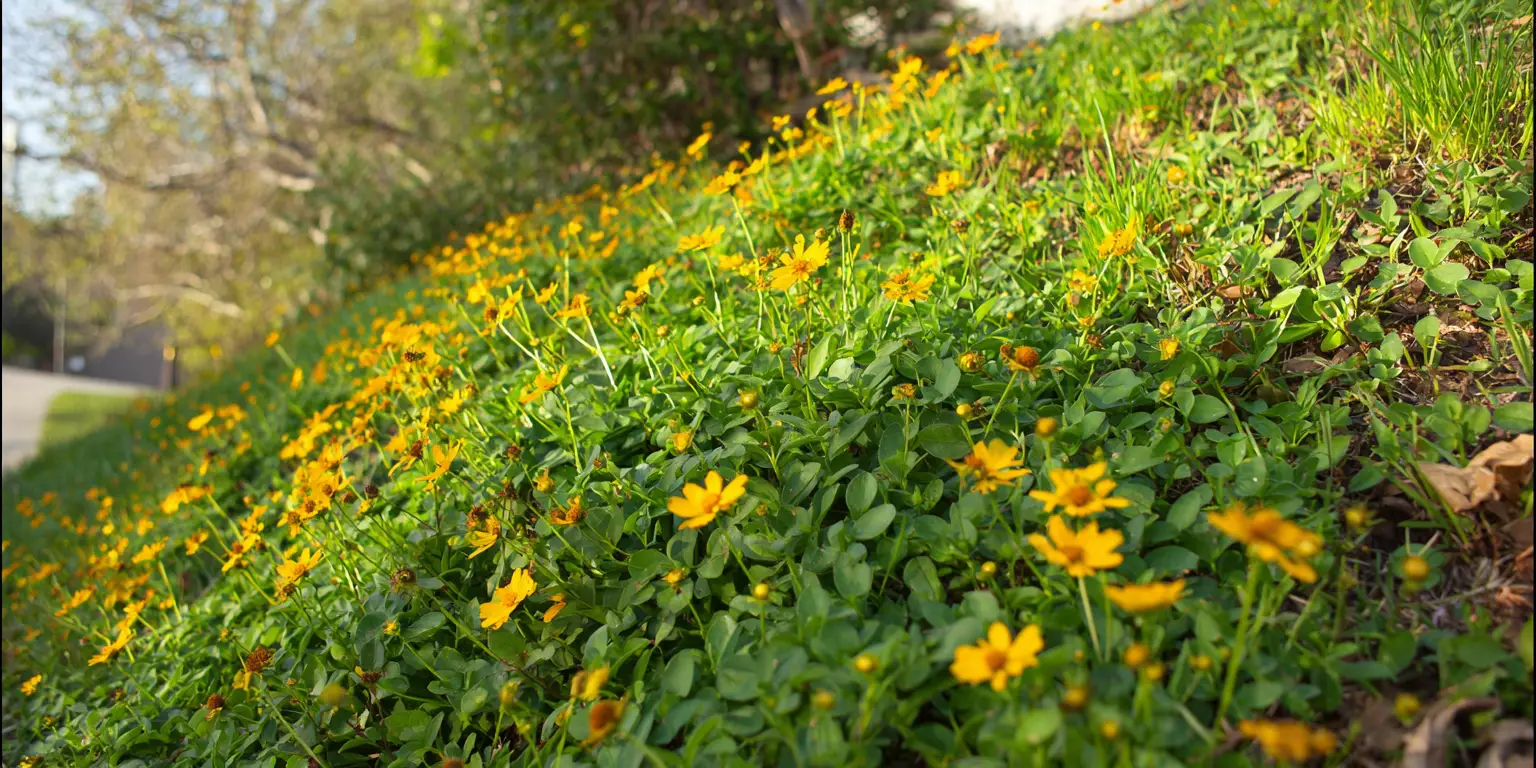
in bloom
now
through Sep
Bloom calendar
Coreopsis auriculata
species; perennial
At‑a‑glance
- Group/Class: species; perennial
- Height × spread: 12-24 in (30-60 cm) × 6-9 in (15-23 cm)
- Bloom window: April to June (rebloom after shearing)
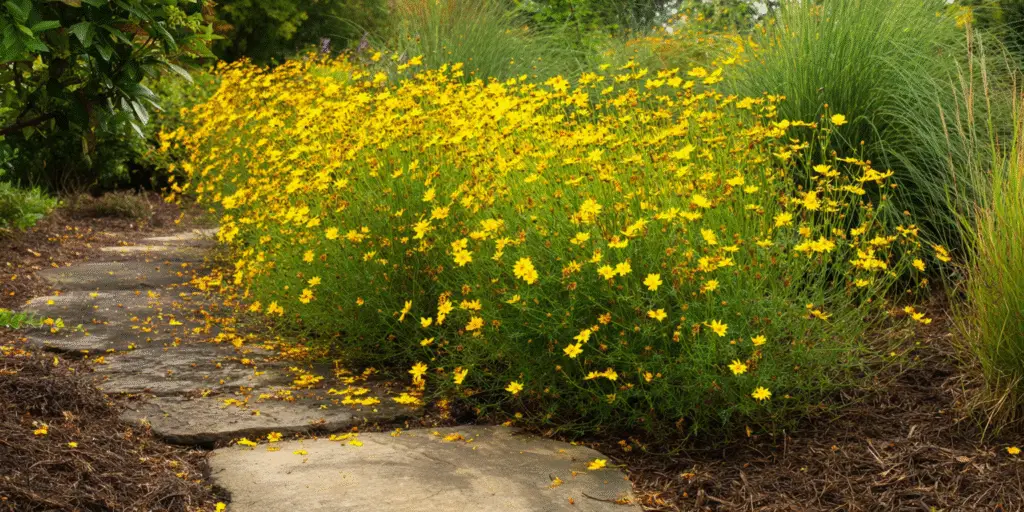
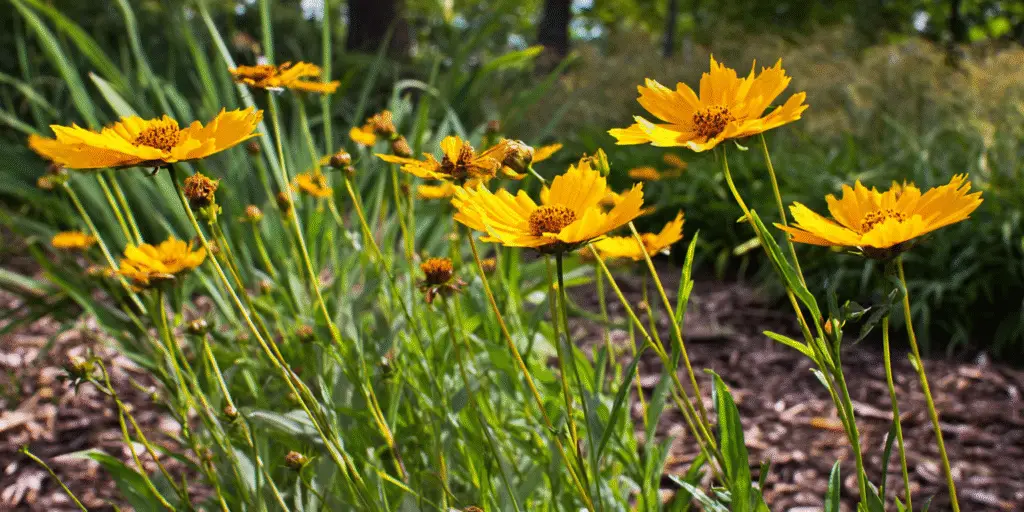
- Color & flower form: golden yellow, single daisies to about 2 in wide with three‑lobed rays
- Fragrance: 0 none
- USDA hardiness: zones 4-9
- Breeder / Year / Origin: unknown; native to the southeastern United States
- Pet safety: safe
How it differs
- Blooms earlier than most Coreopsis, peaking in spring.
- Spreads by short stolons for a groundcover‑like effect.
- Handles part shade better than many tickseeds.
- Less drought tolerant than threadleaf types.
Strengths
- Early color for borders and slopes.
- Tolerates heat and humidity.
- Deer resistant.
- Reliable rebloom with shearing.
Care in one minute
Site: sun to light afternoon shade in hot summers.
Soil and pH: well‑drained sandy or loamy soils; acidic to neutral.
Watering: steady moisture in spring; allow to dry slightly between waterings later.
Feeding: light feeding only; excess fertility promotes flopping.
Grooming: deadhead; shear after the first flush to tidy and encourage rebloom.
Overwintering: none needed where hardy; ensure winter drainage.
Watch‑outs
- Foliage can scorch in extreme summer heat.
- Sprawls in moist or fertile soils.
- Crown rot possible without drainage.
Best uses (tags)
Provenance note
Native to the southeastern United States; the epithet auriculata refers to the small ear‑like lobes at the base of the leaves.
References
- NC State Extension Plant Toolbox – Coreopsis auriculata
- Flora of the Southeastern U.S. (UNC) – Coreopsis auriculata
- NC Native Plant Society – Lobed Tickseed profile (PDF)
- ASPCA – Coreopsis (Tickseed) non‑toxic to pets
Similar Flowers
Enjoying our flower guides? Add YourFlowersGuide as a preferred source on Google. It helps more readers find us.
Add to Preferred Sources