
in bloom
now
through Sep
Bloom calendar
Coreopsis grandiflora
species; perennial
At‑a‑glance
- Group/Class: species; perennial
- Height × spread: 18-30 in (45-75 cm) × 12-18 in (30-45 cm)
- Bloom window: June to August (longer with deadheading)
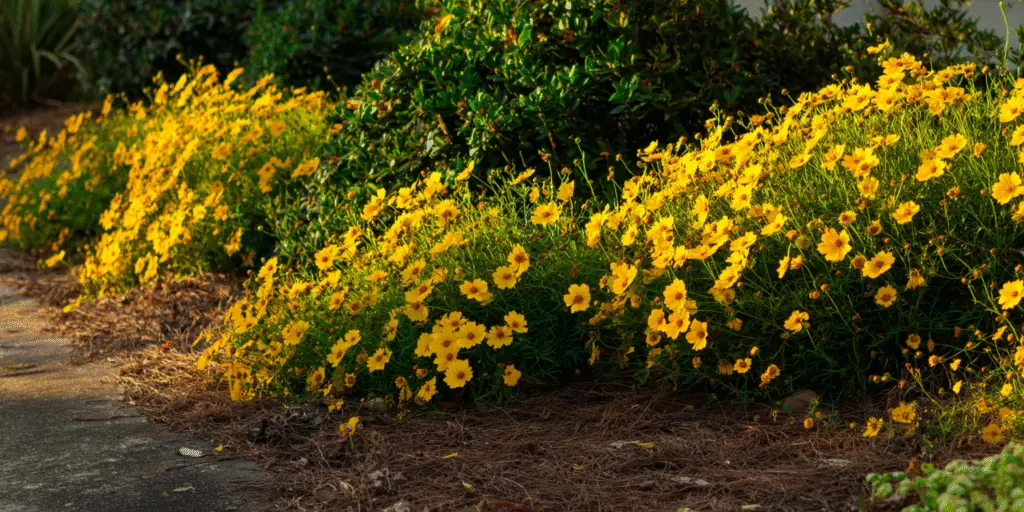
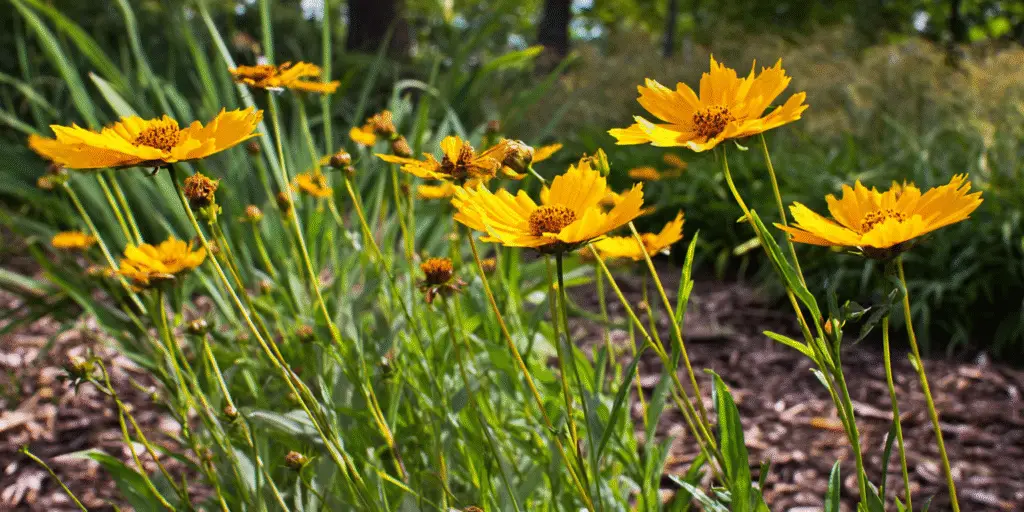
- Color & flower form: deep yellow, single daisies about 2-3 in wide
- Fragrance: 0 none
- USDA hardiness: zones 4-9
- Breeder / Year / Origin: unknown; native to the southeastern United States
- Pet safety: safe
How it differs
- Larger individual blooms than many Coreopsis species.
- Clump‑forming habit rather than spreading rhizomes.
- Often short‑lived compared with threadleaf types.
- Best flower size in lean, well‑drained soils.
Strengths
- Showy early‑summer color.
- Responds to deadheading with repeat bloom.
- Good pollinator support.
- Adaptable to many garden soils if drainage is good.
Care in one minute
Site: full sun for stout stems.
Soil and pH: well‑drained loam or sandy loam; neutral to slightly acidic.
Watering: regular moisture in establishment; moderate thereafter.
Feeding: light feeding only; excess nitrogen causes flopping.
Grooming: deadhead to extend bloom; shear lightly after peak flush.
Overwintering: ensure sharp drainage; avoid mulches that trap winter wet.
Watch‑outs
- Can be short‑lived; plan to divide or replant.
- Crown rot possible in winter‑wet or heavy clay.
- May flop in rich soil or shade.
Best uses (tags)
Provenance note
Native to the southeastern United States; widely selected into many garden forms since the 20th century.
References
- Missouri Botanical Garden Plant Finder – Coreopsis grandiflora
- NC State Extension Plant Toolbox – Coreopsis grandiflora
- Kew POWO – Coreopsis grandiflora Hogg ex Sweet
- ASPCA – Coreopsis (Tickseed) non‑toxic to pets
Similar Flowers
Enjoying our flower guides? Add YourFlowersGuide as a preferred source on Google. It helps more readers find us.
Add to Preferred Sources