How to Grow and Care for
Contents
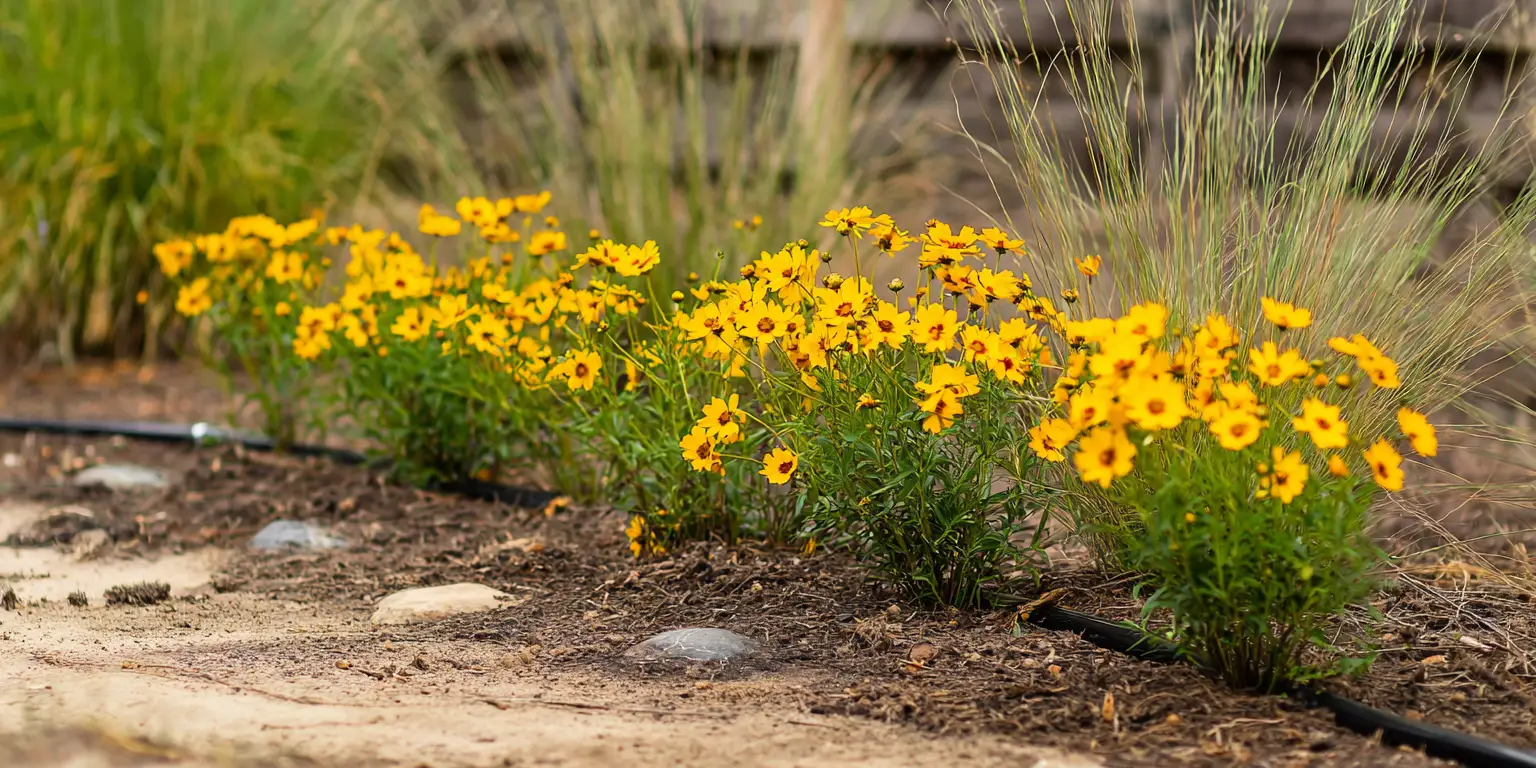
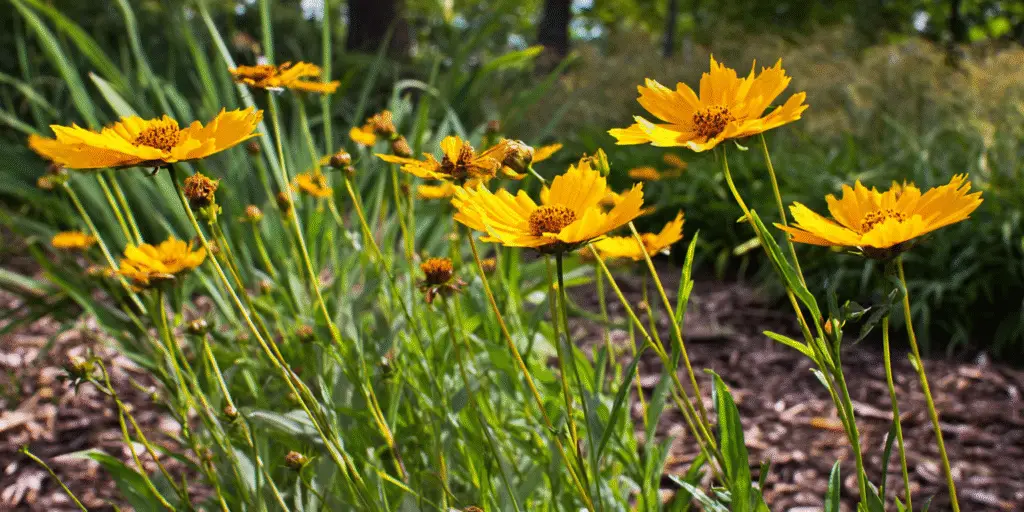
Coreopsis, commonly called tickseed, is a sun‑loving North American genus prized for long seasons of daisy‑like bloom on airy, drought‑tolerant plants. Accepted botanical name: Coreopsis (Asteraceae), with garden species and selections that include perennials such as Coreopsis verticillata, C. grandiflora, and C. lanceolata, and annuals such as C. tinctoria. In most gardens across the United States, perennial coreopsis thrives in USDA Zones 4 to 9, with some types hardy to colder or warmer pockets when sited carefully. The plants bloom best in full sun, which means at least 6 hours of direct light and preferably 8. The quick path to success is simple: choose a sunny, well‑drained spot; plant at the right depth and spacing for airflow; water to establish then ease off; and keep fertility on the lean side. Coreopsis rewards these basics with weeks of cheerful color and constant pollinator traffic that fits naturally among types of flowers focused on wildlife support.
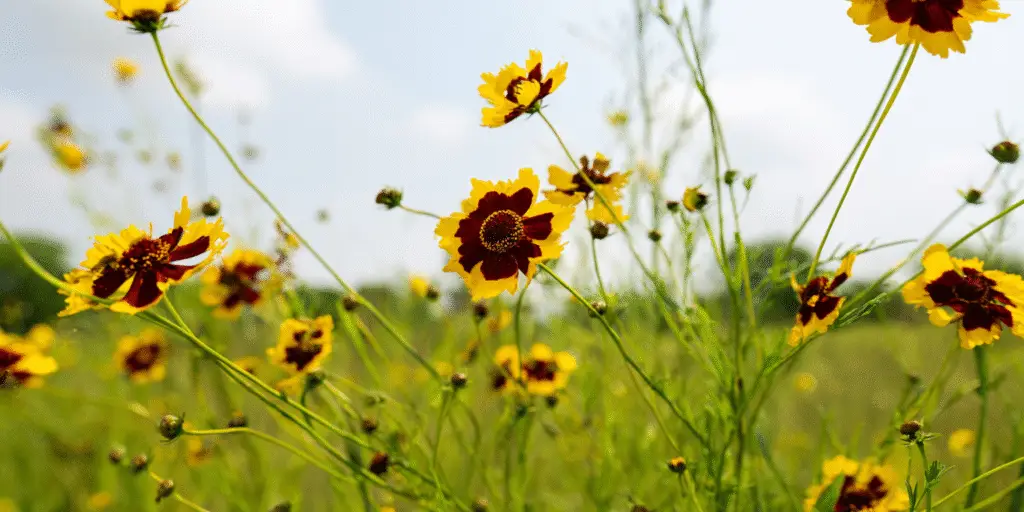
Hardiness and plant form. Perennial forms range from compact mounds 12 to 18 inches tall to tall meadow species 4 to 7 feet, while annual plains coreopsis flowers vigorously in warm weather. Threadleaf coreopsis (C. verticillata) offers fine foliage and a long bloom window, while lanceleaf (C. lanceolata) and large‑flowered (C. grandiflora) types give broader leaves and larger daisies. Color is usually golden yellow, sometimes creamy, rosy, or bicolored. All prefer average, well‑drained soils and resent wet feet, especially in winter. In return for sun and drainage, coreopsis often reblooms if lightly sheared or deadheaded, and many selections tolerate heat and summer humidity without fuss, making Coreopsis care a great fit for busy home gardeners.
Soil & Bed Preparation
Coreopsis tolerates many soils from sandy to clay‑loam as long as drainage is reliable. Aim for soil that feels crumbly in hand and does not stay waterlogged after rain. Good drainage matters more than fertility, since overly rich soil pushes soft growth that flops. In most gardens, a surface dressing of compost each spring and a 2 to 3 inch mulch layer for moisture control are plenty. In beds with chronic wetness, build 6 to 8 inch tall raised berms or raised beds to raise crowns above saturated layers. In heavy clay, resist the urge to add sand, which can create a brick‑like texture; instead, improve structure with compost and plant on slight mounds to shed water. Target a soil pH near neutral to slightly acidic, roughly 6.0 to 7.0, while recognizing coreopsis tolerates a somewhat broader range if drainage is good and salts are low.
Drainage Test and pH Targets. To check drainage, dig a hole 12 inches deep and 12 inches wide, fill with water, let it drain, then refill. If the second filling drains in 1 to 4 hours, conditions are suitable. If water sits longer than 6 hours, switch to a raised bed or berm before planting. For pH, use a soil test kit from your state Cooperative Extension or a reputable lab. If pH reads below 6.0, lime recommendations on your report will indicate how much to raise it. If pH sits above about 7.5, elemental sulfur applications can slowly lower pH, though for coreopsis you can often proceed if drainage is sound and nutrients are balanced. Whichever amendments you add, blend thoroughly within the top 6 to 8 inches of soil rather than layering, and retest soil every few years to avoid overshooting with lime or sulfur. Well‑prepared beds pay off with sturdier plants and fewer root troubles.
Raised beds vs in‑ground. Raised beds warm faster in spring and shed surplus water after storms, which is valuable in humid or clay‑dominant regions. Use a mix based on topsoil and compost rather than pure compost; a finished volume that yields about 5 to 10 percent organic matter by weight is ideal for ornamentals. In‑ground beds are best where native soil already drains well. In either case, avoid planting crowns in depressions that collect water. Coreopsis does not require specialized media like sand‑grit mixes or bark chips, but threadleaf types appreciate open soil texture with plenty of air around the roots.
Planting Calendar by USDA Zone
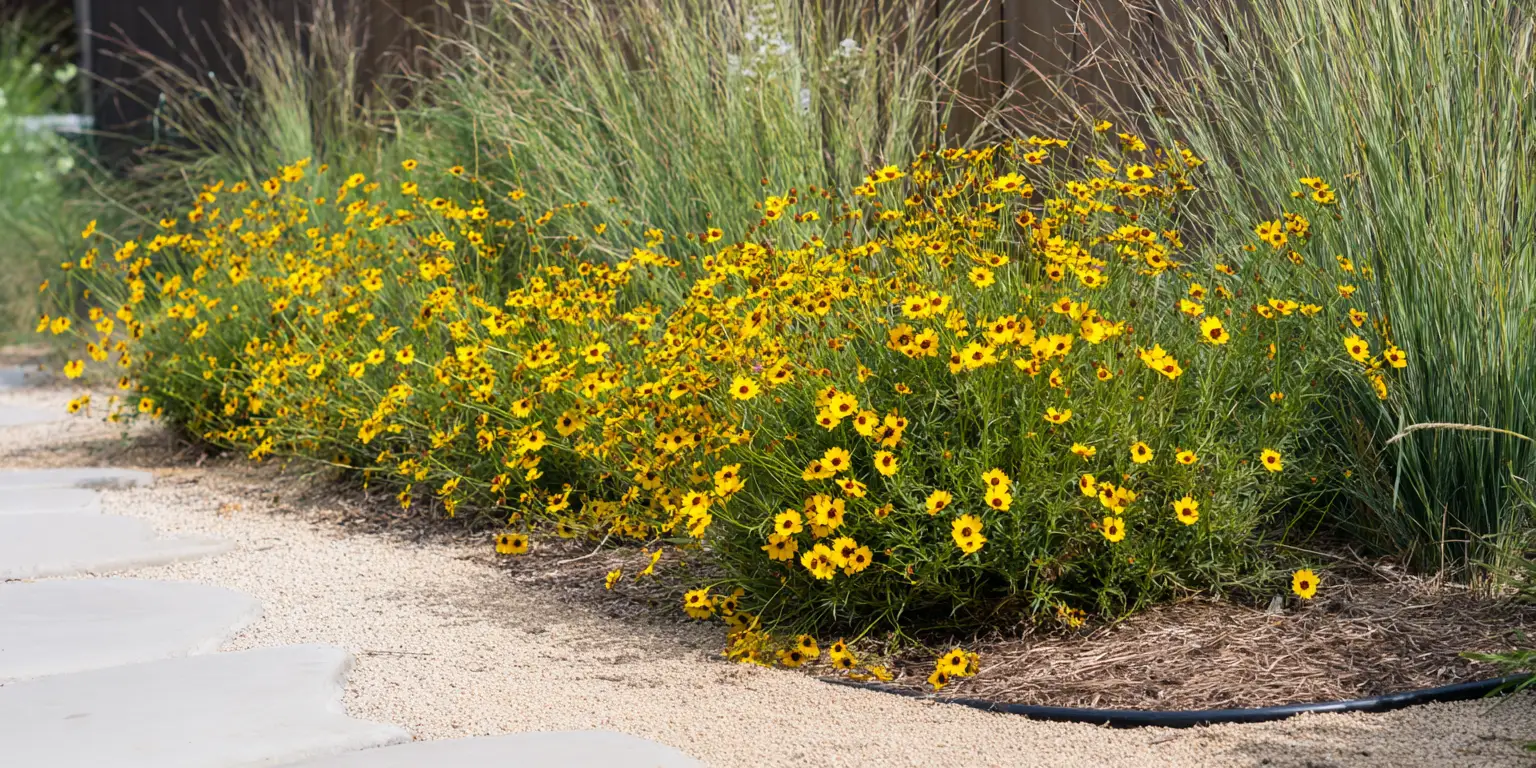
Coreopsis planting times follow a simple rule. In cold regions, plant in spring once soil can be worked and hard freezes have ended. In milder regions, fall planting gives roots a head start before summer heat. Adjust for your local frost dates and whether you are planting perennials, annuals, bare‑root divisions, or container starts. When in doubt, plant earlier in the cool part of the season so roots can knit into the soil before heat or winter.
Zones 3 to 5. Spring is the safer window for perennials, typically from 2 weeks after the average last frost through very late spring. Annual C. tinctoria and other frost‑tender seedlings go in after all frost danger has passed and soils warm. Fall planting works for established container perennials if done 6 to 8 weeks before the first hard freeze to allow rooting, but spring remains best for bare‑root material in these colder zones. In breezy, high‑elevation sites, prioritize spring so plants can anchor before winter winds.
Zones 6 to 7. Spring and fall are both good. Plant perennials in early to mid‑spring or again from late summer into early fall with a 6 week buffer before hard freezes. Annuals go in after the last frost. In hot inland summers, fall planting often outperforms spring because roots grow in warm soil and mild air. In coastal or humid pockets where summer nights are warm, aim for early spring or early fall to limit transplant stress.
Zones 8 to 9. Favor fall planting of perennials, roughly late summer to early winter, as long as the forecast does not show a sudden severe freeze. Spring planting is also fine if you can provide steady water during establishment. In arid regions or reflective heat zones near pavement, fall planting is strongly preferred. Annual plains coreopsis can be sown in very early spring when soils warm or in fall for winter‑into‑spring bloom in mild winters.
Zones 10 to 11. Most coreopsis is treated as a cool‑season or short‑lived perennial. Plant in fall or winter for best performance before extreme heat. Perennial types may decline in continual summer humidity and heat, so refresh with new plants on a two to three year cycle as needed. If you garden along salty coasts, select species and cultivars known to tolerate incidental deicing salt but keep them out of direct salt spray.
Planting: Depth & Spacing
Planting depth and spacing strongly influence vigor and longevity. Aim for consistent soil level at the crown, generous airflow, and firm, settled soil around roots. Avoid burying crowns or leaving them perched above grade.
Seeds. For annual Coreopsis tinctoria and perennial species started from seed, sow outdoors after frost or start indoors 6 to 8 weeks before transplanting. Press seed into the surface and cover very lightly to about 1⁄8 inch (3 mm). Keep evenly moist until germination, which commonly takes 10 to 20 days in warm conditions. When direct sowing, thin to final spacing once seedlings have two to three true leaves. Indoors, provide bright light and a gentle fan for sturdy growth, then harden plants off for 7 to 10 days before transplanting.
Bare‑root or divisions. Plant divisions in early spring or in early fall with a 6 week buffer before hard freeze. Set divisions so the crown sits at the soil surface and the topmost roots are barely covered. Spread roots out laterally and backfill with friable soil to eliminate air gaps. Water thoroughly to settle soil, then mulch after the first thorough irrigation. If you are dividing threadleaf coreopsis, use a sharp spade to slice vigorous edges into fist‑size pieces, each with several shoots and a good root mass. Discard old, woody centers that have thinned. Space divisions 18 to 24 inches apart for medium to tall types and 12 to 18 inches for compact selections.
Container‑grown transplants. Water the pot well before planting. Slide the plant out, tease circling roots gently, and set into a hole as deep as the root ball and slightly wider. Plant so the crown is even with the surrounding soil surface. Backfill, firm gently with your hands to remove voids, and water in thoroughly. In full‑sun sites, provide temporary shade cloth or a light fabric for 3 to 5 days to reduce transplant stress in hot spells. Space compact mounds 12 to 16 inches apart, medium selections 16 to 20 inches, and tall meadow species 24 to 30 inches for airflow and maintenance access. In rows for cutting gardens, leave 24 to 36 inches between rows to move with tools or supports.
Transplant shock minimization and acclimation. Harden off home‑grown seedlings for 7 to 10 days by gradually increasing outdoor exposure. Plant on a mild, overcast day or in late afternoon. Water deeply at planting and again 2 to 3 days later if weather is dry. A light starter solution is optional if a soil test shows low nutrients. Avoid high nitrogen at planting. Keep mulch pulled back a few inches from crowns to prevent rot while plants knit into the soil.
Watering & Mulching
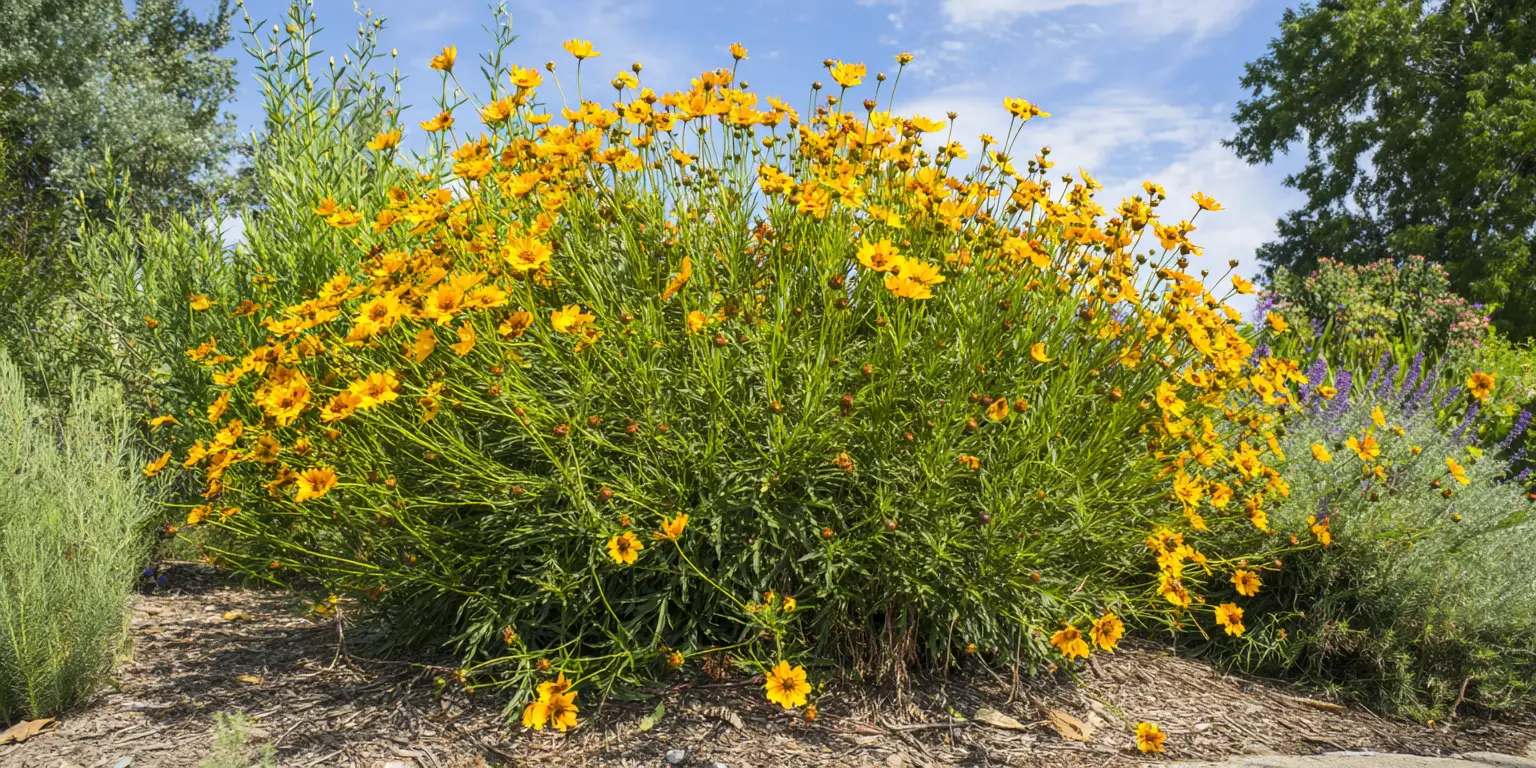
Coreopsis wants steady moisture during the first one to two months after planting, then leaner watering through the season. At establishment, supply roughly 1 inch of water per week if rainfall is lacking. Apply water in one deep session to encourage deeper rooting rather than frequent shallow sprinkles. Drip lines, bubblers, or a gentle hose at the base are better than overhead watering, which can splash soil onto leaves and encourage disease in cramped plantings. Once established, reduce irrigation and allow the top 1 to 2 inches of soil to dry between waterings. In most climates, mature plants need supplemental water only during long dry spells. In containers, plan for more frequent checks because potting mixes drain fast and heat up in sun.
Mulch choices and thickness. After planting and watering in, apply 2 inches of shredded bark, leaf mold, pine straw, or fine gravel around the dripline to conserve moisture and moderate soil temperatures. Keep mulch 3 inches back from crowns. Use lighter, airy mulches in humid regions to discourage soggy collars. In arid regions, a mineral mulch like small pea gravel reflects light and limits evaporation. Avoid packing mulch against stems. In wet summers or heavy soils, reduce mulch thickness to 1 inch to help the crown dry between rains.
Heat spikes, drought, and salts. During heat waves, morning watering keeps plants turgid and ready for afternoon sun. If a prolonged drought sets in, deep water every 7 to 10 days and consider shear‑back of spent bloom to reduce demand. Some coreopsis selections tolerate low levels of salt near driveways and sidewalks, but direct deicing spray and salty runoff can still injure crowns and roots. Where hard water leaves mineral deposits on leaves, water early so foliage dries quickly, and switch to drip irrigation to minimize spotting.
Feeding
Coreopsis prefers moderate to low fertility. In average garden soils, these plants often bloom better with no granular fertilizer at all, especially if you refresh beds with 1 inch of compost each spring. Too much nitrogen pushes lush green growth at the expense of flowers and can make stems floppy. If a soil test indicates low nutrients or plants look pale and stunted, apply a light rate of a balanced product with low to moderate nitrogen. In general ornamental beds, 1 pound of actual nitrogen per 1,000 square feet per year is an upper guideline for established perennials, often split into a light spring application with the option for a mid‑summer touch‑up only if leaves are losing color. For small beds, that translates to roughly 2 to 3 ounces of a 10‑10‑10 fertilizer per 100 square feet, scratched into moist soil outside the crown zone and watered in.
Timing and sources. Feed in early spring as new growth emerges. Skip late summer nitrogen that can produce soft growth before winter. Slow‑release products or organic sources like composted manures and well‑finished compost feed gently over weeks. If you grow coreopsis in containers, nutrients flush out faster with frequent watering, so incorporate a 3 to 4 month slow‑release fertilizer into fresh potting mix at planting, then supplement mid‑season if foliage pales. Always follow your soil test and product label. When plants sit in naturally lean soils and still bloom nicely, do nothing; restraint is a key part of Coreopsis care for long, sturdy flowering.
Soil biology notes and retesting. Healthy soils usually measure in the 3 to 5 percent organic matter range for ornamental beds by weight. Additions of compost should be modest to avoid overly rich conditions that reduce bloom and increase flopping. Retest soil every 2 to 3 years to track pH and nutrient levels, especially in raised beds that can shift faster than native soils.
Pruning & Support
Deadheading and periodic shearing keep coreopsis blooming and tidy. Pinch or snip off spent daisies weekly on compact varieties to promote new buds. On large clumps, shear the top third to half of the plant after the first heavy flush to trigger fresh basal growth and a second round of flowers later in summer. Remove any browned stems at the base during the season. In late fall or very early spring, cut back dormant stems to a few inches above the crown. Where you garden for wildlife, consider leaving some seed heads into fall for birds before cleanup.
Support for tall species. Tall tickseed (Coreopsis tripteris) can reach 5 to 7 feet in good soil with regular moisture. In windy or exposed sites, install a loop stake or low grid support in late spring while stems are 18 to 24 inches tall. Staking is rarely needed for shorter selections when planted in full sun with lean fertility. If taller plants lean, a mid‑summer shear will reduce height and encourage sturdier regrowth. Keep spacing generous to let air move freely around stems, which helps foliage dry after rain.
Tool hygiene. Whenever you prune or divide, clean blades with soap and water, then sanitize with 70 percent isopropyl alcohol or a fresh 10 percent bleach solution before moving to the next clump. Wipe tools between plants if you have removed diseased tissue. Allow tools to dry and oil metal parts lightly to prevent rust. Clean tools reduce the chance of carrying leaf spots or aster yellows from plant to plant during routine deadheading.
Overwintering
In ground, coreopsis overwinters reliably when crowns sit at grade in well‑drained soil. In late fall after a few freezes, apply a light winter mulch to new fall plantings and first‑year divisions to buffer freeze – thaw cycles. Use 2 to 3 inches of loose straw, chopped leaves, or pine needles, and pull it back gradually in early spring as growth begins. Avoid heavy, wet mulch piled over crowns. In colder zones, winter mulching is most useful on freshly planted perennials and in bare, wind‑exposed beds.
Freeze-thaw and heaving. Repeated thawing and refreezing can heave shallow‑rooted crowns. Check in mid‑winter warm spells and gently firm any lifted crowns back into contact with soil. Refresh a light mulch blanket after re‑settling if needed. Where deicing salt splashes from sidewalks, create a short buffer strip with non‑salty snow storage and rinse salted areas during warm spells to limit accumulation near crown zones.
Rodent protection. In winter, mice and voles may tunnel through leaf litter to nibble tender crowns. Keep mulch slightly pulled back from crowns and tidy dense cover around beds. If rodents are a known issue, place a cylinder of quarter‑inch hardware cloth around vulnerable clumps in late fall and set the mesh a couple of inches into the soil to discourage tunneling. Remove guards in early spring.
Overwintering container plants. Roots in pots are more exposed to cold than roots in the ground. In cold regions, sink pots into the ground up to the rim after plants go dormant, then mulch the group with straw or leaves, or move pots into an unheated but sheltered space that stays roughly 20 to 45°F (−7 to 7°C). Water sparingly during thaws so media does not go bone dry. In milder zones, group containers against a north or east wall out of wind, water well before hard freezes, and mulch over and between pots for insulation. In all cases, remove coverings slowly in spring and resume regular watering as growth restarts.
Growing Environments
Coreopsis thrives both in borders and in containers, provided you right‑size the pot and keep the mix draining freely. Compact varieties perform well in containers 10 to 14 inches in diameter with a minimum volume of about 3 to 5 gallons. Taller or spreading selections appreciate 16 to 20 inch wide containers. Use a high‑quality, peat‑ or coir‑based potting mix with added perlite or pine bark for drainage. Do not add gravel to the bottom of pots; it does not improve drainage and can create perched water. Ensure one or more open drainage holes in every container.
Container watering and feeding. Containerized coreopsis dries faster than in‑ground plantings, especially in full sun and wind. Check moisture daily in hot weather and water thoroughly when the top inch of mix is dry. Fertility leaches quickly, so incorporate a slow‑release fertilizer at planting, then supplement lightly mid‑season only if foliage pales. Rotate pots a quarter turn weekly to even out sun exposure and encourage balanced growth.
Microclimates and stress reduction. In hot deserts or on reflective patios, give afternoon shade or place containers where a railing or shrub breaks late‑day sun and hot wind. On coastal sites with salt spray, select tolerant threadleaf types and tuck containers behind a windward hedge. In humid climates, widen in‑ground spacing toward the big end of the ranges and avoid overhead irrigation late in the day so leaves dry before nightfall.
Companion Planting & Design
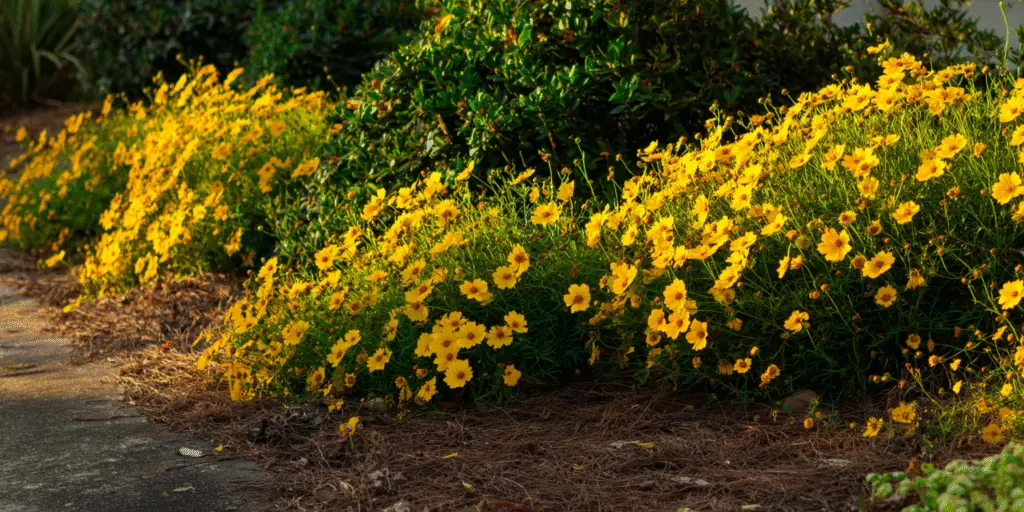
Coreopsis mixes naturally with other sun perennials and ornamental grasses that enjoy similar conditions. For a classic summer palette with continuous color, pair golden coreopsis with purple and blue partners such as catmint, salvia, and hardy geranium, then weave in cone flowers and yarrow for seed heads that carry into fall. The fine foliage of threadleaf types threads between clumps of little bluestem or prairie dropseed without crowding. For long borders, group coreopsis in repeating drifts of three to seven plants and stagger heights so taller forms sit toward the middle of the bed rather than the front edge. In cottage beds near patios, combine compact selections with lavender and dwarf agastache to attract bees and butterflies close to seating, or bring in white airy interludes with baby’s breath to contrast the gold daisies.
Companions to extend bloom and hide die‑back. As spring bulbs fade, emerging coreopsis hides ripening bulb foliage cleanly. Later in the season, late‑blooming asters and ornamental grasses pick up color as coreopsis is sheared after its first flush. In small gardens, use basal leaves of low mounding perennials to cover the soil while letting coreopsis carry the color. Maintain 12 to 24 inches of spacing between clumps to keep air moving, which helps contain powdery mildew in damp summers and keeps plants upright after rain.
References
- Missouri Botanical Garden. Coreopsis verticillata culture and plant profile.
- North Carolina State Extension, Plant Toolbox. Coreopsis lanceolata profile.
- North Carolina State Extension, Plant Toolbox. Coreopsis grandiflora profile.
- North Carolina State Extension, Plant Toolbox. Coreopsis palustris profile and spacing.
- North Carolina State Extension, Cut Flowers. Coreopsis tripteris notes on support in trials.
- University of Florida IFAS Extension, Gardening Solutions. Coreopsis overview and sowing depth.
- University of Florida IFAS Extension, EDIS. Coreopsis spp. Tickseed fact sheet.
- University of Florida IFAS Extension, EDIS. Establishment of Leavenworth’s Tickseed with sowing depth notes.
- University of Minnesota Extension. Clean and disinfect gardening tools.
Written by: Your Flowers Guide editorial team
We are a small independent group of flower lovers who research and review each guide using trusted horticultural and educational sources. Learn more about us