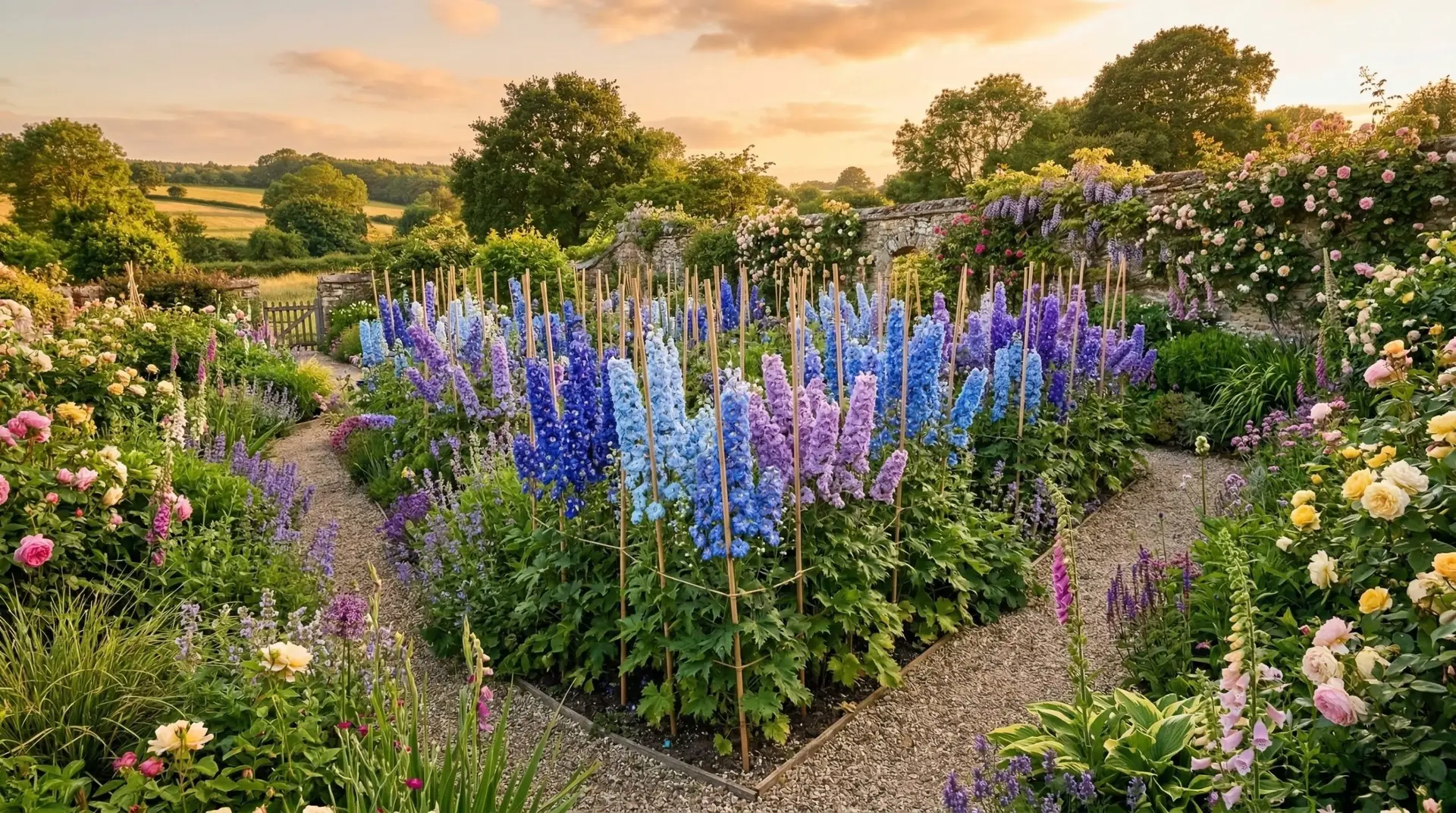
Delphinium elatum requires structural support before the flower spikes reach eighteen inches tall. Waiting until the buds show color guarantees bent or snapped stems during the first heavy rain. The hollow structure of the mature stem cannot support the weight of waterlogged blossoms. Staking delphiniums is a preventative measure rather than a corrective one. Once a stem bends under its own weight or wind pressure, the vascular tissue sustains permanent damage. Prop up a fallen spike, and the flowers will still wilt and drop prematurely because water transport has been compromised. Start your support system when the new spring growth emerges from the crown.
Grow-through supports provide the most reliable foundation for multi-stemmed plants. Place a rigid metal grid or interlocking hoop system over the crown when shoots are only a few inches high. As the plant grows, the foliage will completely hide the metal rings while the grid holds the lower stems rigid. This base stability is necessary because delphinium wind damage usually occurs at the soil line where the hollow stem meets the solid crown. A grid alone will not secure a six-foot spike, but it prevents the entire plant from rocking and loosening its shallow root system. Use heavy-gauge steel supports rather than lightweight wire, which bends under the pressure of a mature plant.
Contents 4 sections
Individual staking for mature spikes
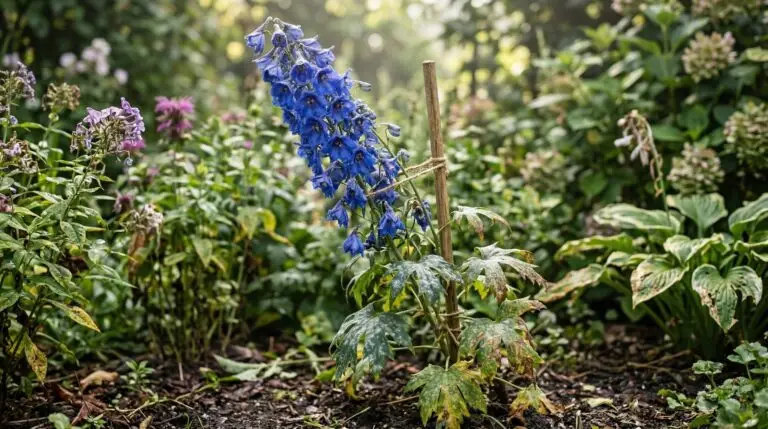
Tall spikes require individual bamboo or steel stakes inserted into the ground near the base of each stem. Drive a five-foot stake at least twelve inches deep into the soil for adequate leverage against wind shear. Position the stake behind the stem relative to your main viewing angle so the wood remains invisible. Insert these stakes while the plant is young to avoid piercing the fleshy root system. If you wait until the plant reaches full height, you risk severing the feeder roots that supply water to the developing flowers. The same rule applies when supporting tall dahlia varieties that produce massive, water-retaining blooms. Secure the stake parallel to the natural growth habit of the stem rather than forcing the plant perfectly vertical.
The material used to bind the stem to the stake dictates whether the support succeeds or fails. Use soft, wide materials like jute twine, strips of cotton cloth, or specialized rubber coated wire. Thin nylon string or bare wire will slice through the soft tissue of the stem when the plant sways. Tie the first loop around the stake using a tight double knot to prevent slipping. Bring the ends around the stem in a loose figure-eight pattern, leaving an inch of slack for future expansion. Tie the final knot back on the stake side. This creates a flexible buffer that allows the spike to move slightly without snapping against the rigid bamboo.
Structural tying techniques
Secure the stem at twelve-inch intervals as it grows toward its final height. The highest tie must sit just below the lowest flower bud on the spike. Tying the actual flower raceme restricts the natural opening of the blossoms and creates a stiff, unnatural appearance. If a spike grows exceptionally tall, insert a secondary, lighter stake alongside the primary one and overlap them. Bind the two stakes together tightly before attaching the upper portion of the plant. Check your ties after every major rain event, as wet jute stretches and may need retightening. Remove any ties that have become tight enough to constrict the stem diameter.
Despite what many garden catalogs suggest with their large ring supports, avoid grouping multiple stems together around a single central stake. Bundling creates a dense column of foliage that restricts airflow and invites powdery mildew. It also forces the outer stems into an unnatural inward angle, causing them to snap at the base under tension. Each spike demands dedicated delphinium support to maintain the health and architecture of the plant. If you lack enough stakes for every stem, thin the plant by removing the weakest shoots at ground level. A plant with three properly supported spikes performs better than one with six crowded, poorly staked stems.
Managing the second flush of blooms
Most established plants will produce a second flush of flowers in late summer if you cut back the initial spikes after they fade. Cut the spent stalks down to the foliage line, but leave the individual stakes in place. Pulling the stakes out and driving them back in weeks later increases the risk of root damage. Instead, evaluate the condition of the stakes and replace any bamboo that has rotted at the soil level. As the new basal shoots emerge for the late summer display, tie them to the existing framework. These secondary spikes are usually shorter and lighter than the spring flush, requiring fewer ties but the same rigid foundation.
Wood and bamboo stakes degrade rapidly when left in damp soil over the winter. Remove all staking materials when you cut the plant down to the ground in late autumn. Clean soil off the stakes with a stiff brush and store them in a dry shed or garage. Leaving stakes in the garden provides a clear path for frost to penetrate deep into the soil profile near the crown. Discard any wooden stakes that show signs of fungal decay or splintering. Starting the spring with compromised stakes results in failure when the heavy summer storms arrive.
Windbreak planting and site selection
The physical location of the plant reduces the mechanical stress on your support system. Plant Delphinium elatum in front of solid structures like brick walls, dense evergreen hedges, or solid wood fences. These barriers disrupt the wind currents that cause the most severe structural failure. Leave two feet of space between the plant and the wall to allow adequate air circulation and prevent fungal diseases. You can also use sturdy companion plants to buffer lower wind currents. Similar to the site requirements for towering hollyhock plants, a sheltered position minimizes the lateral forces acting on the heavy flower heads.
Monitor the weather forecasts during the peak blooming period in early summer. When heavy rain is predicted, verify that all stakes are firmly anchored and ties are intact. Soil becomes unstable when saturated, causing poorly seated stakes to lean under the weight of wet flowers. If a storm is imminent and a spike is fully open but inadequately supported, cut it for indoor use rather than leaving it to break. A severed stem in a vase is useful, while a shattered stalk in the garden is a total loss. Proper staking requires anticipation and rigid materials, not last-minute rescues.
More About Delphinium elatum
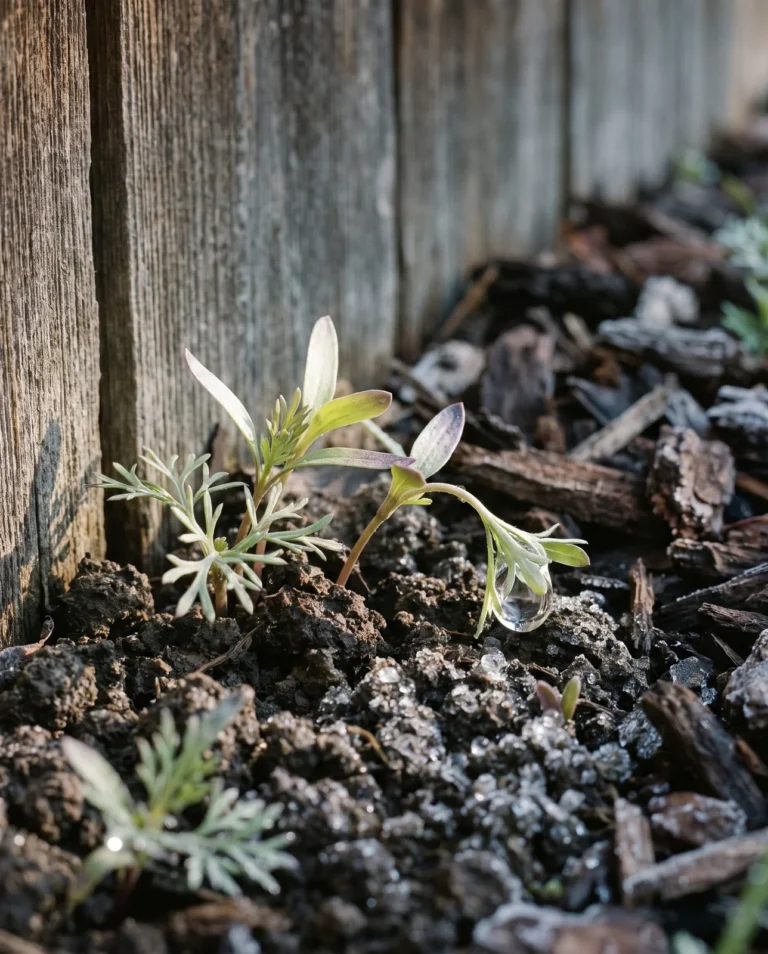
When to plant larkspur seeds in fall
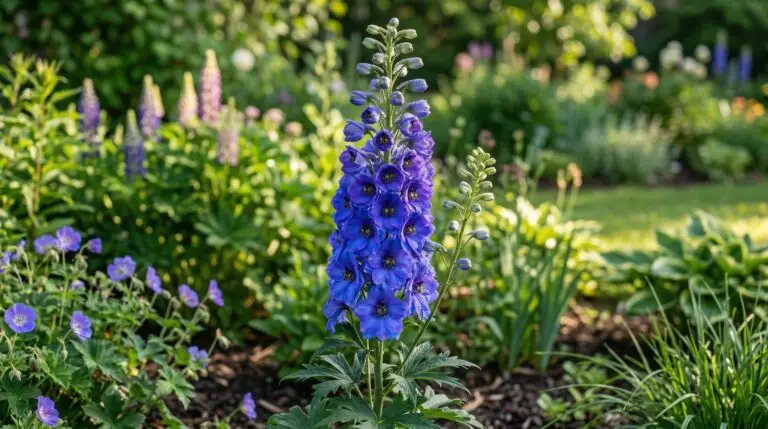
Delphiniums as show-stopping cut flowers for dramatic tall arrangements
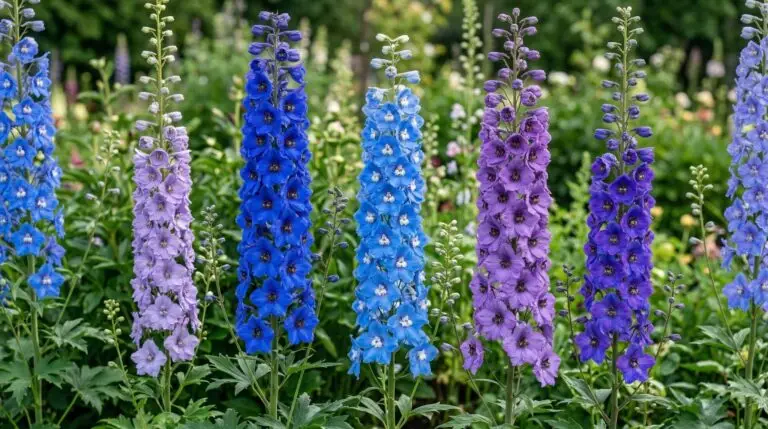
Best delphinium varieties from towering Pacific Giants to compact Magic Fountains
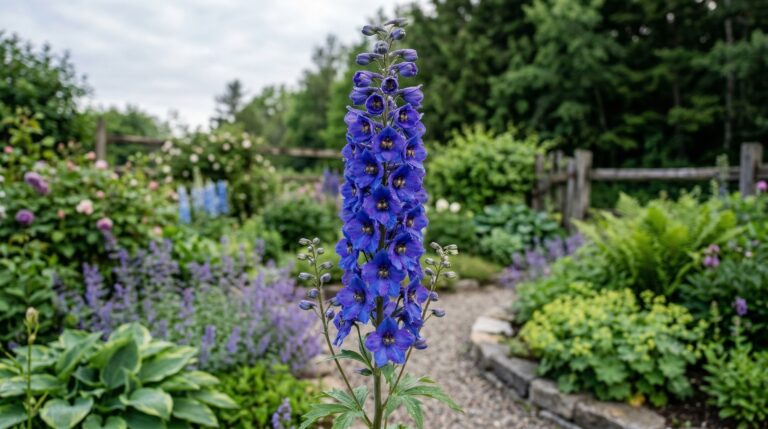
How to grow tall delphinium spires that tower above the garden like living architecture

Delphinium companion plants: what to grow, what to avoid
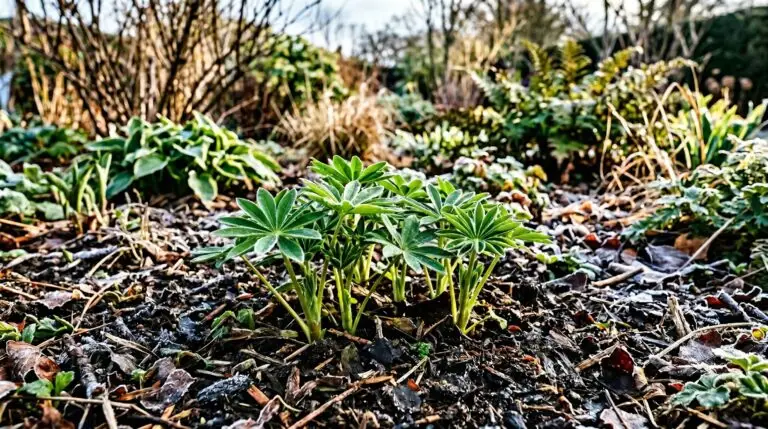
Growing delphiniums from seed and the patience required for first-year blooms
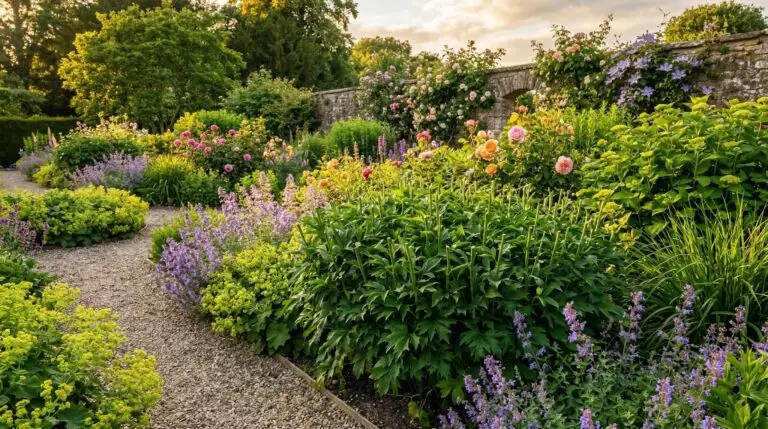
How to get delphiniums to rebloom by cutting back spent flower spikes
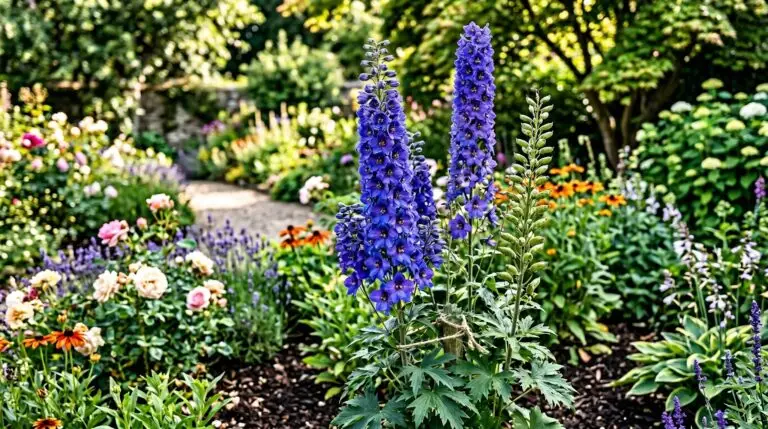
Why delphiniums are short-lived perennials and how to keep them coming back
Delphinium flower meaning and the symbolism of true blue in the garden
Delphiniums in hot climates and alternatives for gardeners south of zone 7
Enjoying our flower guides? Add YourFlowersGuide as a preferred source on Google. It helps more readers find us.
Add to Preferred Sources