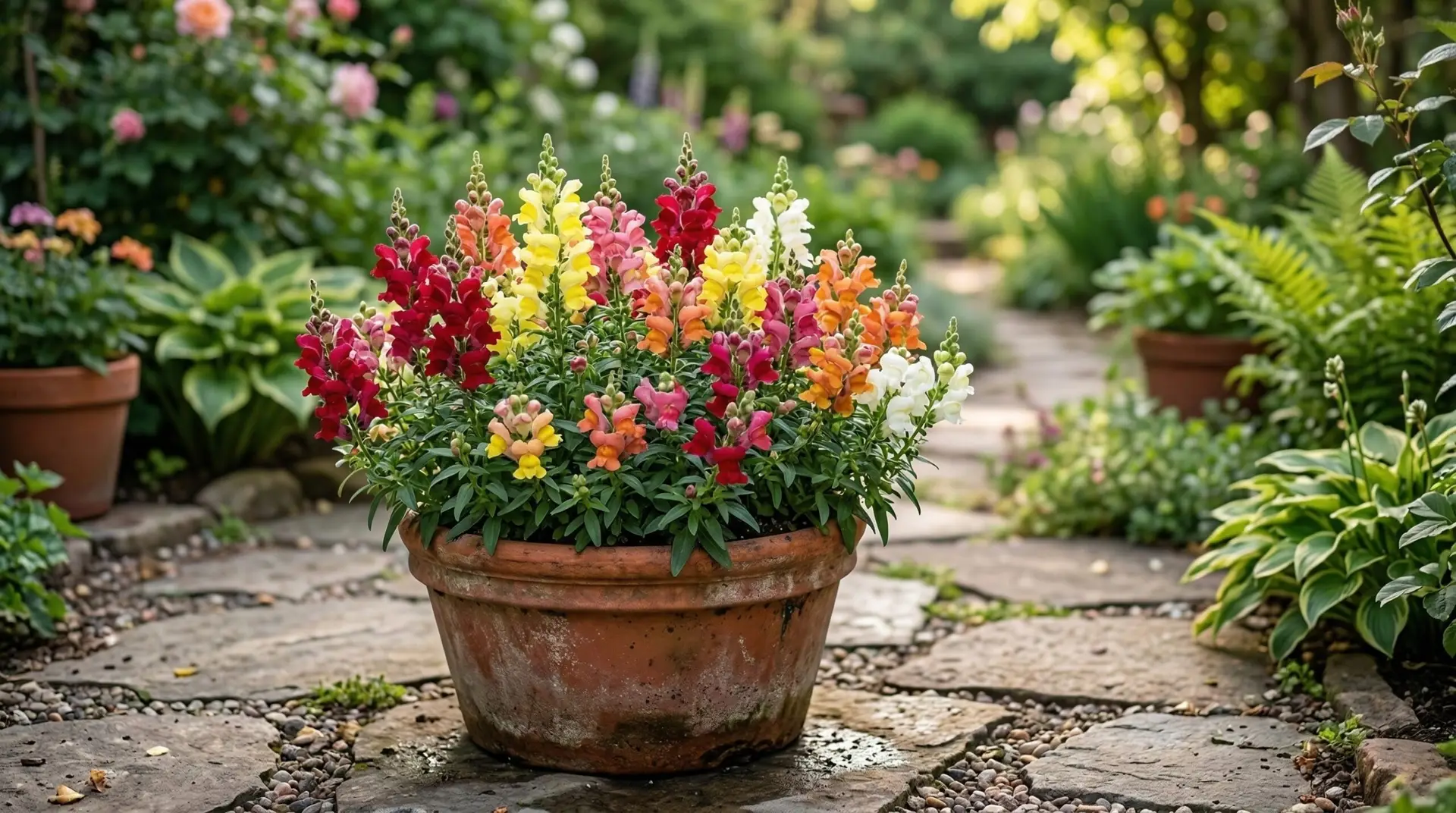
There is always an awkward stretch of weeks when the threat of frost is still hovering, but the nursery shelves are suddenly full of green flats. The front porch pots usually sit there completely empty during this time, holding nothing but last year’s tired potting soil. The soil in the garden beds is still too cold and wet to work, leaving containers as the only real option for scratching that early spring planting itch. Many gardeners try to rush the season with heat-loving plants that immediately turn to mush after one cold night. After losing too many flats to a surprise April freeze, the reliable solution for early container color always comes back to the snapdragon. These plants actually prefer the chill and will happily sit on a freezing doorstep without complaining. They bring height and structure to a pot when everything else is still hugging the dirt.
Growing a snapdragon container is straightforward, provided the right varieties go into the pot. The tall, traditional cutting garden types will flop over the side of a standard patio planter at the first sign of a stiff breeze. Standard patio planters simply do not have the weight or the depth to anchor a top-heavy plant when a spring storm rolls through. The wind catches those three-foot stalks like a sail, and before long, the whole plant is lying horizontally across the pavement. For pots and window boxes, the dwarf and trailing varieties are the ones that actually perform well without needing a cage or a bamboo stake. A shorter, stockier snapdragon handles the confined space of a container well while still providing that classic vertical spike of color.
Contents 3 sections
Picking varieties that stay upright in pots
The nursery tags rarely tell the full story about how big these plants will get by June. Look specifically for dwarf series like Floral Showers or Montego when filling standard front porch planters. These stay compact, usually topping out around ten inches, and they branch out at the base to create a dense mound of flowers. They are practically indestructible in a heavy spring rain, whereas the taller varieties will snap right at the soil line. For hanging baskets or the front edge of a window box, the Candy Showers series is a trailing snapdragon that spills over the edge like a waterfall. Mixing a trailing snapdragon with a low-growing companion like sweet alyssum creates a thick, fragrant mat that covers the bare soil completely.
Getting the soil right makes all the difference when cramming several plants into a single pot. Snapdragons need decent drainage, but they also drink a lot of water once they start blooming heavily. A standard bag of potting mix works fine, but mixing in a few handfuls of perlite helps keep the soil from turning into a soggy brick after a week of spring rain. Do not bother with expensive specialized soils or complicated fertilizer regimens. A simple slow-release granular fertilizer mixed into the top few inches of dirt at planting time is plenty to keep them fed through their entire growing season. The seedlings look dead or stunted for about two weeks after transplanting into their new pots. They are not. Give them time to push their roots into the fresh soil, and they will suddenly take off. Water them in thoroughly on the first day, and then leave them alone until the top inch of soil feels dry to the touch.
Timing the seasons for the best blooms
Temperature dictates exactly how a snapdragon will behave in a container. Gardeners in the South may find this easier as a winter or very early spring planting, because the plants will bloom continuously until the real heat arrives in May. In northern zones, the approach changes to a true spring planting, often setting them out a month before the last frost date. They can handle temperatures dipping into the upper twenties without dropping a single bud. If a hard freeze is predicted, pulling the pots into an unheated garage for the night is usually enough protection. They are one of the few plants that genuinely look better after a few chilly nights, which seems to deepen the color of the blooms.
The hardest lesson to learn about snapdragons is accepting what happens to them when summer arrives. When daytime temperatures consistently stay above eighty degrees, the plants will stop setting new buds and the existing flowers will dry up. The foliage might stay green, but the vertical drama completely disappears. This is the point where many people rip them out and throw them in the compost pile. Instead of pulling them, cut the entire plant back by half, water it sparingly, and let it sit quietly in the background. Make the cut just above a set of healthy leaves, and clear out any dead debris resting on the soil surface to prevent fungal issues. Once the cool nights return in September, those same tired plants will push out a heavy second flush of blooms that lasts right up until a hard winter freeze.
Keeping window boxes full and tidy
Window boxes present their own specific set of challenges because they dry out incredibly fast and offer very little root space. A snapdragon window box needs daily checking once the plants reach their mature size. Stick a finger into the dirt, and if it feels dry an inch down, the box needs a thorough soaking until water runs out the bottom drainage holes. Deadheading is absolutely necessary in these tight displays to keep the plants looking tidy. When a flower spike is mostly spent and developing seed pods at the bottom, cut the whole stalk down to the nearest set of leaves. This simple act forces the plant to send up two new shoots in its place, keeping the window box full and bushy rather than thin and weedy.
Companion planting in these containers extends the visual interest even when the snapdragons are resting between bloom cycles. Because snapdragons provide the upright spikes, they need mounding or spilling partners to balance the arrangement. Tucking a trailing petunia into the corners of the box provides continuous color throughout the warmer months when the snapdragons take their summer break. Stick to cheap, readily available nursery six-packs rather than buying large, expensive gallon pots. The smaller seedlings adapt much faster to the shallow soil of a window box and will quickly catch up in size. Gardening in small spaces always involves a bit of trial and error with spacing, but planting things a little closer together than the tag recommends usually results in the full, lush look that makes a container garden successful.
More About Snapdragon

Companion plants for snapdragons: what to grow and avoid
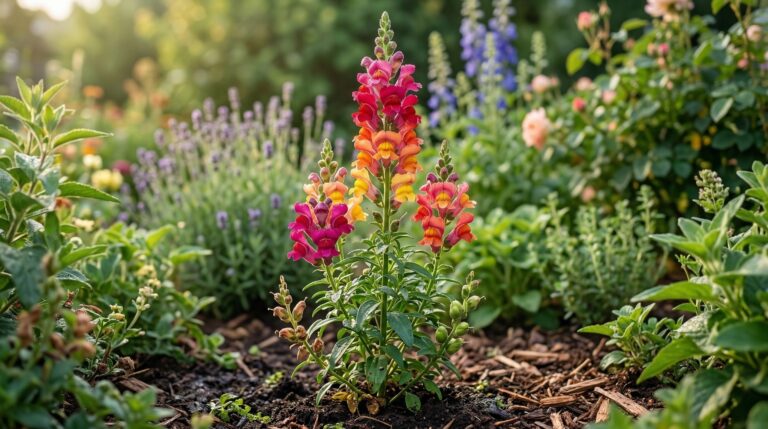
Snapdragons as cool-season cut flowers for spring bouquets when summer flowers are months away
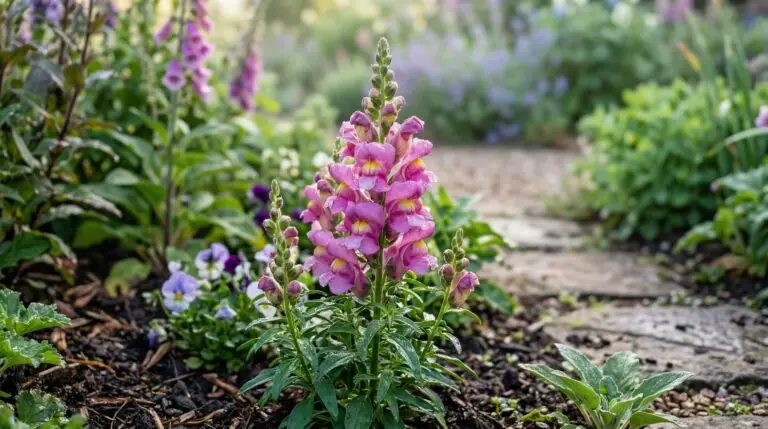
How to grow snapdragons for vertical spikes of color that bloom in cool weather
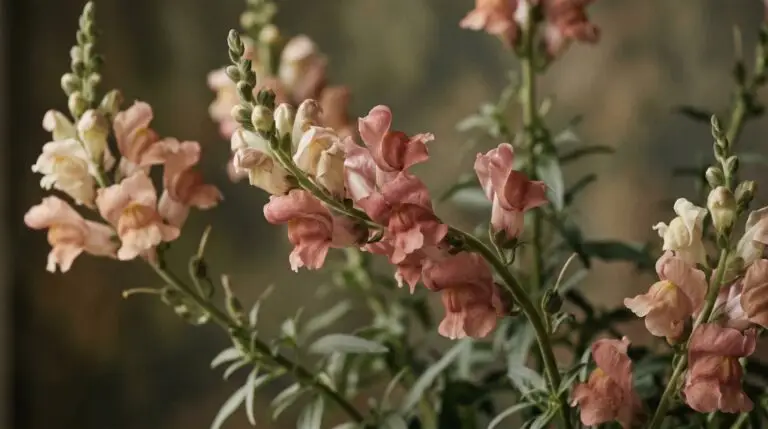
Snapdragon flower meaning and the dragon mouth shape that delights children everywhere
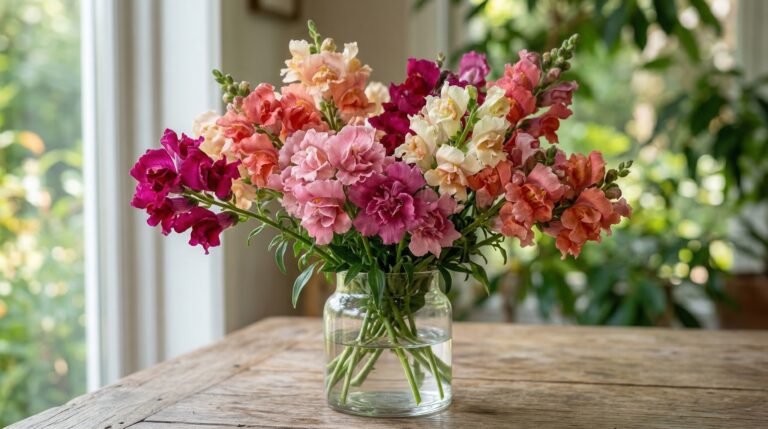
Madame Butterfly snapdragons the double-flowered variety that looks like miniature sweet peas
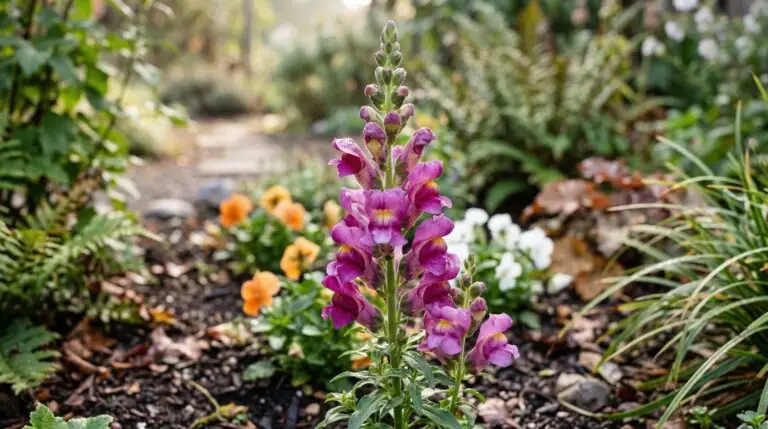
Why snapdragons die in summer heat and how to grow them as fall flowers instead
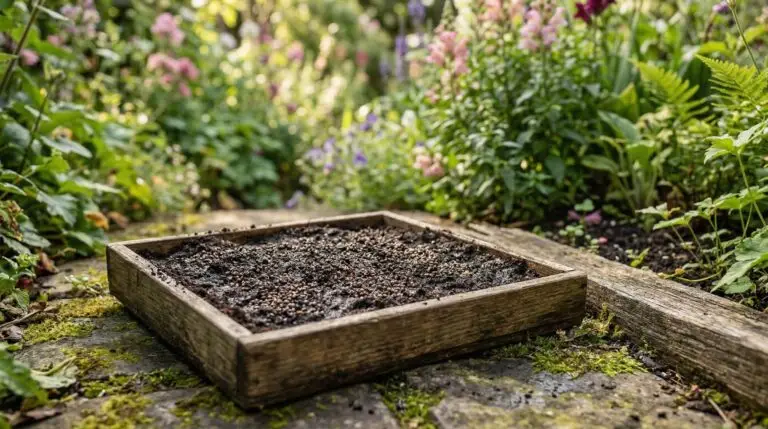
Growing snapdragons from seed and the tiny seeds that need light to germinate
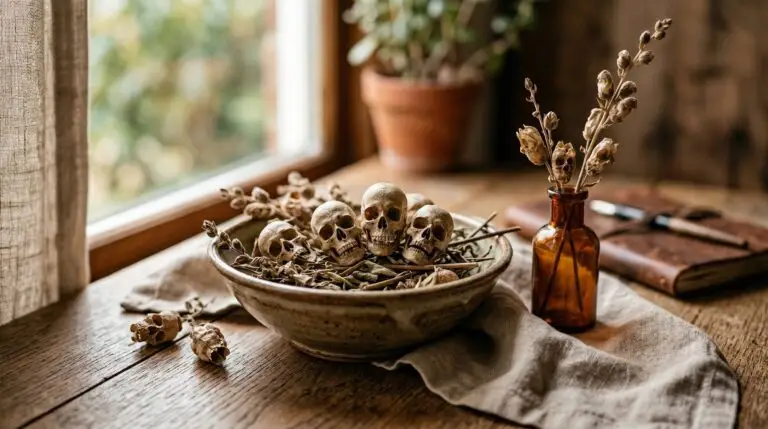
Snapdragon skull seed pods the creepy dried flower heads that fascinate the internet
Enjoying our flower guides? Add YourFlowersGuide as a preferred source on Google. It helps more readers find us.
Add to Preferred Sources