The pairing · pick a flower
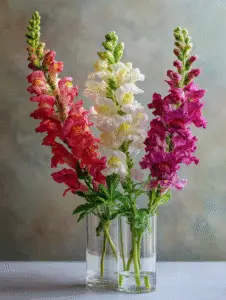 Snapdragon+
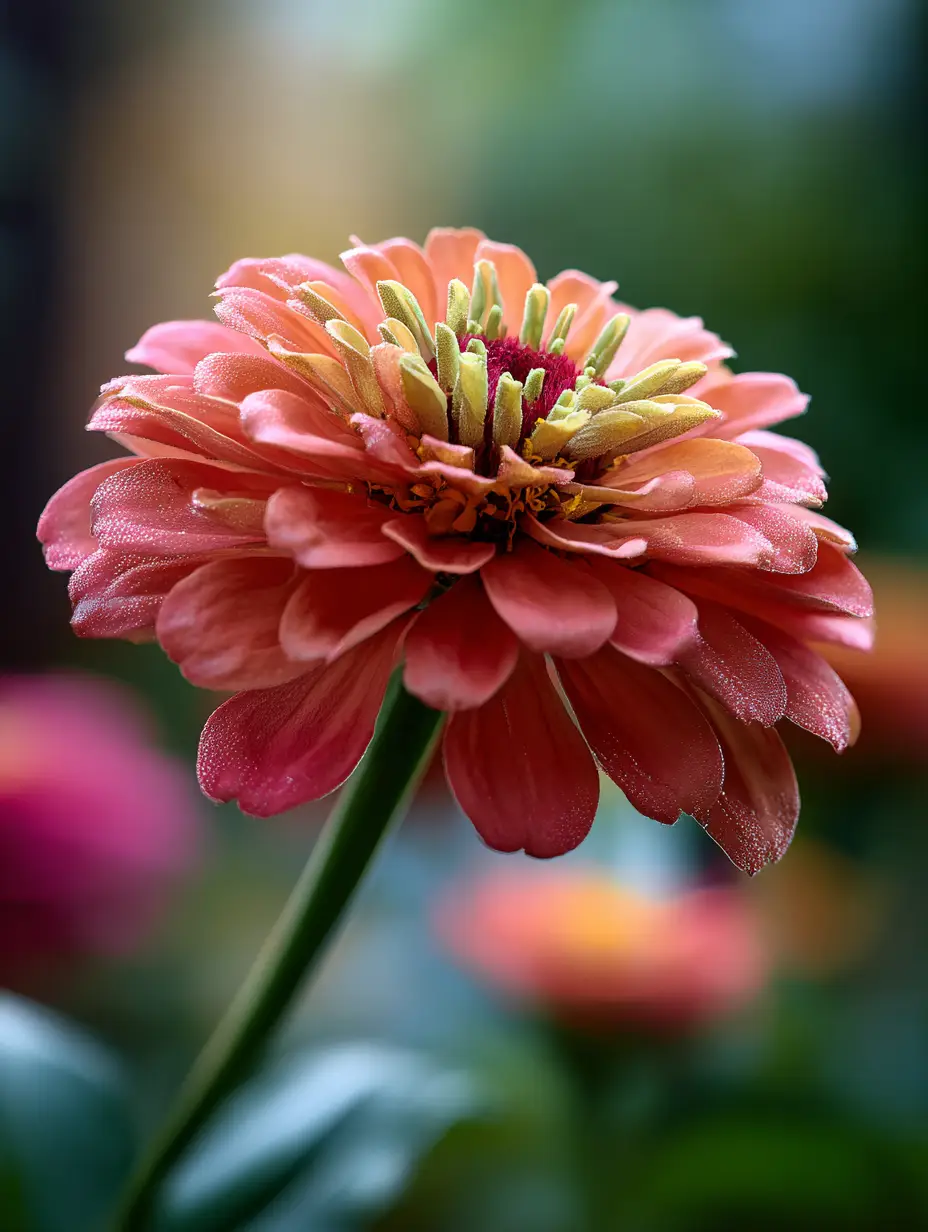 ZinniaPartial
A classic cutting-bed partner: Mississippi State University Extension's own farmer-florist sourcing for snapdragon cross-references its companion zinnia publication, and the two share the same full sun and fertile, well-drained soil, with zinnia's broad daisy heads giving snapdragon's thin spike the mass it lacks on its own.
Snapdragon+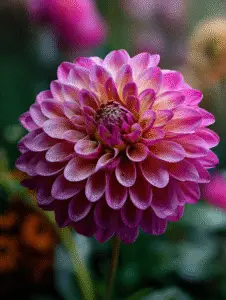 DahliaPartial
A second major cut-flower crop grown right alongside snapdragon in the same rich, well-drained beds, with big round blooms and bold foliage that answer the spike's bare lower stems.
Snapdragon+ ChrysanthemumPartial
Both are genuine cool-season performers that pick up as summer heat breaks, and mum's mounding daisy form gives the autumn bed the softness snapdragon's spike doesn't have.
Snapdragon+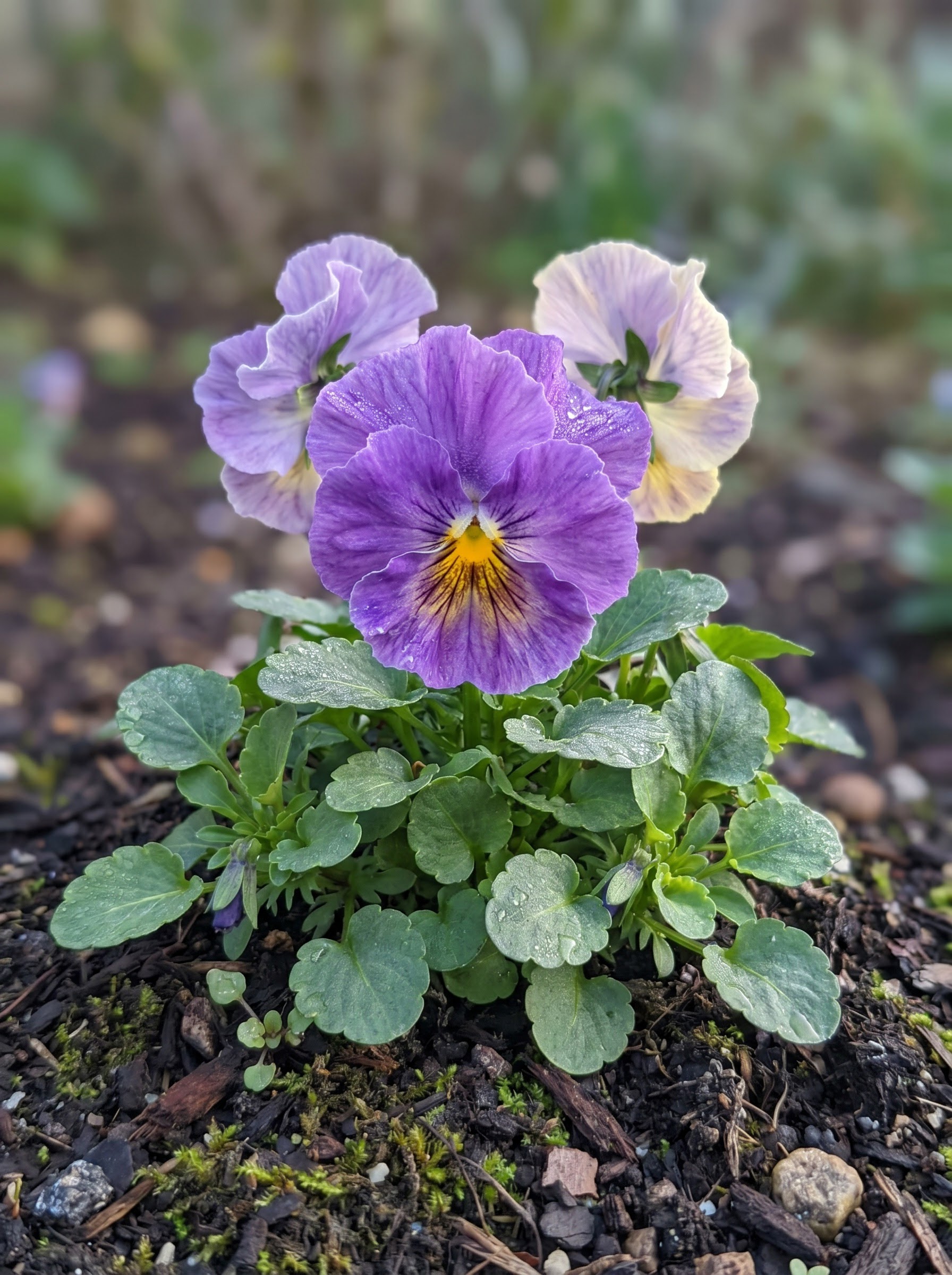 PansyPartial
A low, mounding cool-season annual that shares snapdragon's moist, well-drained soil and stalls in the same summer heat, making it the classic skirt plant for the bare lower stems.
Snapdragon+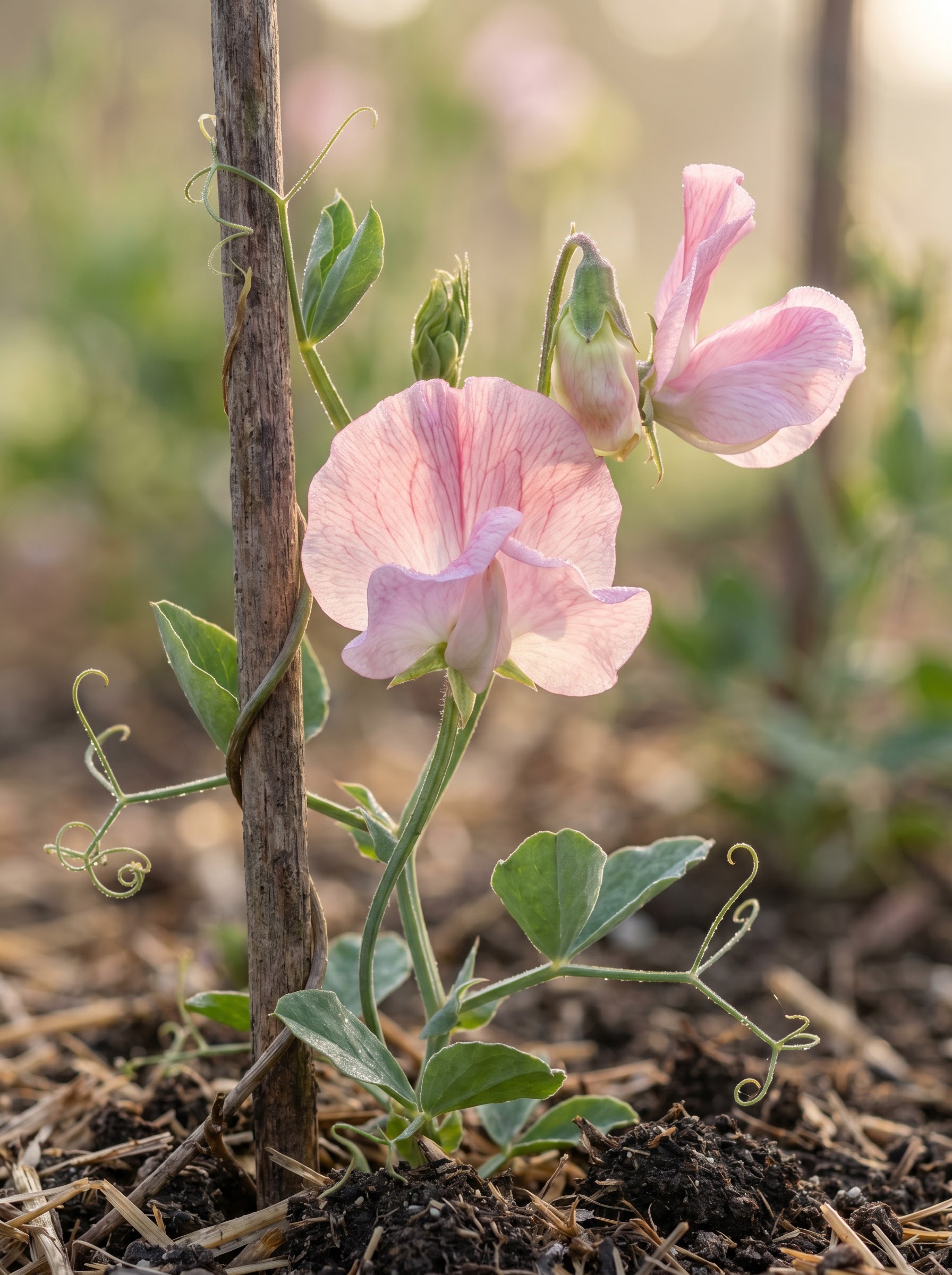 Sweet peaPartial
Shares the cool spring timing and cutting-garden purpose, with fragrant trellised blooms that add scent snapdragon lacks, though both want the back of the bed since sweet pea climbs.
Snapdragon+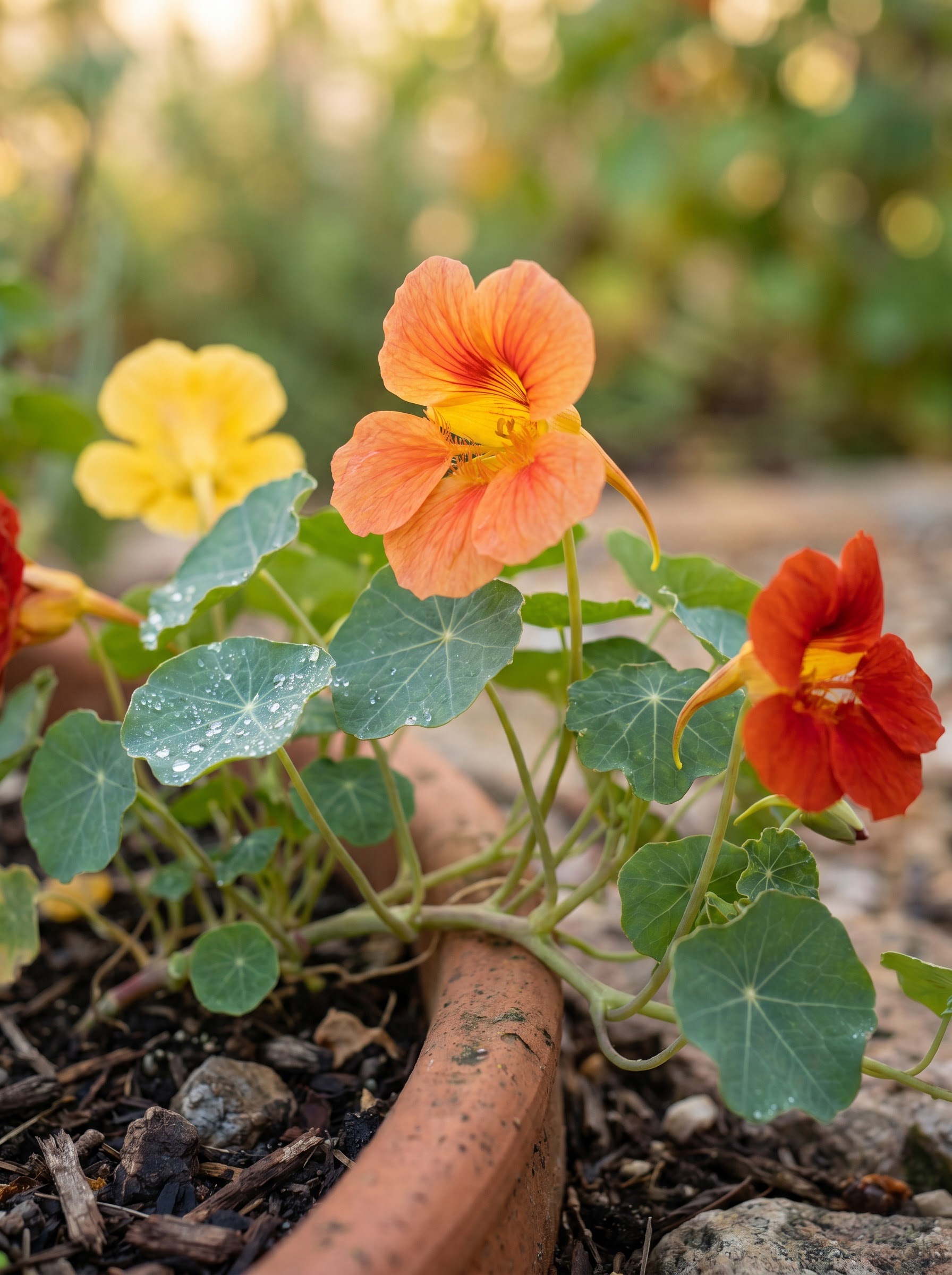 NasturtiumPartial
Full sun and easygoing about soil, and its peppery foliage is a documented aphid trap crop, though the benefit is a general trap-cropping mechanism, not proof tested on snapdragon specifically.
Snapdragon+ MarigoldFolklore
Full sun and similar soil tolerance make it an easy visual pairing, but the real nematode-suppressing compound only works when marigold is tilled in as a cover crop months ahead, not planted as a spot companion.
Snapdragon+ CatmintFolklore
A soft, aromatic mid-border mound that echoes the rose companion pairing and draws bees well, but it wants leaner, drier soil than snapdragon's moist bed, so give it the drier edge.
Snapdragon+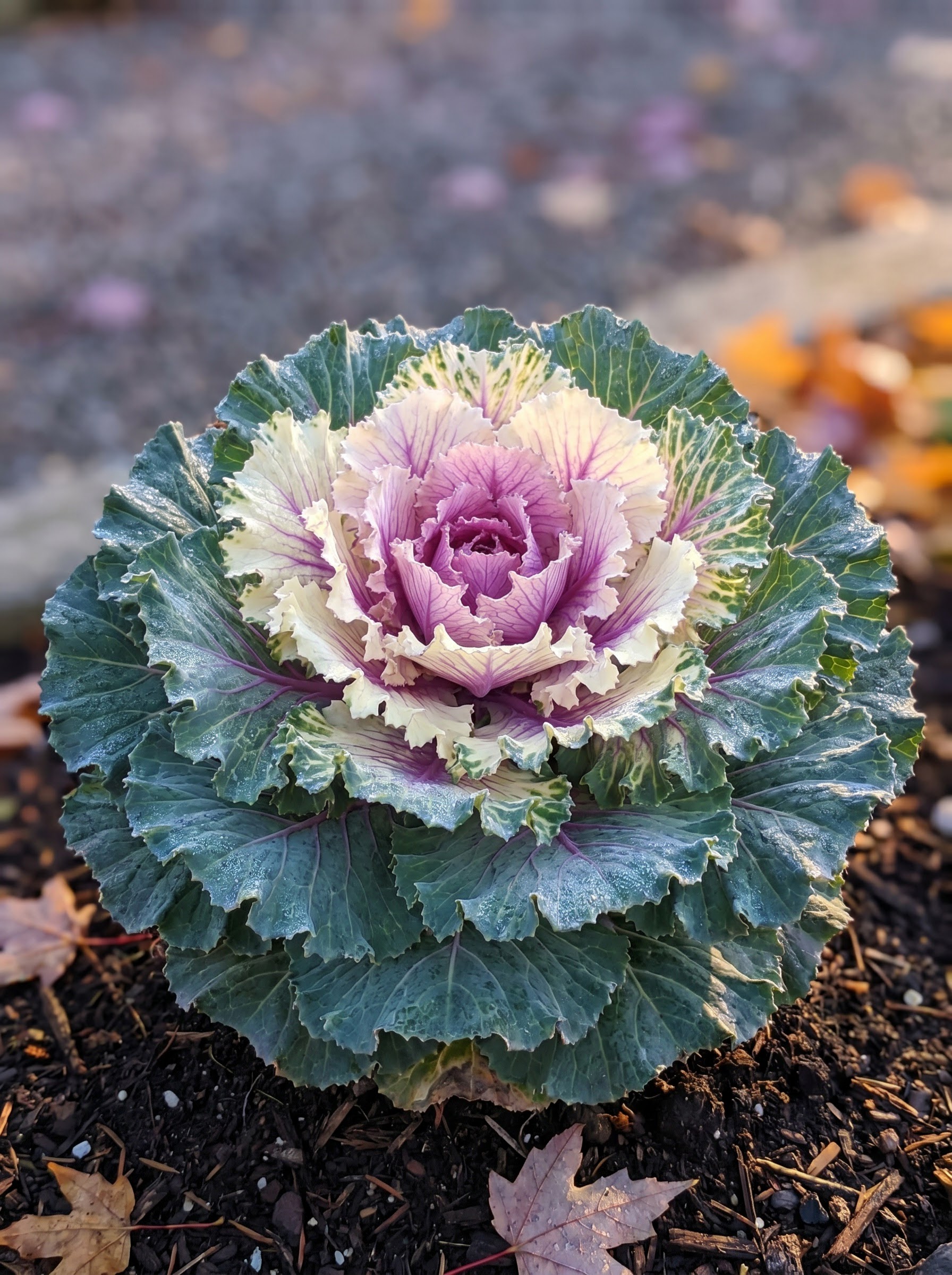 Ornamental kaleProven
A named cool-season fall bedding partner for snapdragon in extension sourcing, its colorful rosette foliage brings the mass snapdragon lacks and both tolerate light frost together.
All snapdragons companions
9 flower companions, best match first
What not to plant near snapdragons
Most bad neighbours are not evil, they just want the opposite light, water or root run. Here is what to keep away, and what to do instead.
True bog and wetland plants (astilbe, ligularia, moisture-loving iris, marsh marigold, cattails)
These want soil at or near saturation, while snapdragon needs consistently moist ground that still drains away; planted together, one side is always too wet or too dry.
Large shade trees and conifers
Snapdragon needs at least 6 hours of direct sun for a strong spike, and mature trees both block that light and pull moisture from the same root zone.
Strongly acid-loving shrubs (azalea, rhododendron)
Azalea and rhododendron want soil in roughly the 4.0 to 5.5 range, and while snapdragon's own optimal pH runs closer to acidic than most gardeners assume, 5.5 to 5.8 for seedling production per UF/IFAS, a shared bed still sits right at the edge of azalea's tolerance and usually shortchanges one plant's nutrient uptake.
Aggressive spreaders (mint and other running rhizomatous herbs)
Mint's rhizomes run fast underground, competing for water and nutrients and choking the open base snapdragon needs for airflow and rust prevention.
Fennel
Fennel is a stock 'avoid' entry on many companion-planting lists, and its allelopathic compounds are documented against nightshades and carrots specifically, but no source found ties that mechanism to snapdragon by name, so the pairing rests on pattern-matching rather than a tested result; the citation here backs fennel's basic growing profile, not the allelopathy claim itself.
A snapdragon spike is nearly all bloom and very little leaf, which is exactly why the right companions matter more here than for a leafier flower. The tall, narrow column of color that makes snapdragon so useful in a spring or fall bed also leaves a visible gap at its base, and the plant’s own foliage never fills that gap on its own. Good companions solve that problem honestly: they add mass, hide bare lower stems, or share the same cutting-garden purpose, and the least useful advice online just repeats a stock listicle without checking whether the pairing actually shares this flower’s conditions.
The best companions for snapdragon, explained
The strongest pairings fall into two groups, and which one matters to you depends on why you’re growing snapdragon in the first place. For the ornamental border, zinnias are the standout: Mississippi State University Extension’s own farmer-florist sourcing for snapdragon cross-references its companion zinnia publication, and the shared full sun and fertile, well-drained soil hold up in a border too, since zinnia’s wide daisy heads are the direct textural answer to a spike that has almost no lateral bulk. Dahlia plays a similar role at a bigger scale, sharing the same rich, well-drained, full-sun conditions and adding bold round blooms and broad foliage that a snapdragon row can’t produce on its own, though dahlia is a notably heavier feeder and deserves its own fertilizing schedule rather than snapdragon’s lighter routine.
For the reader growing a genuine cutting garden rather than a display border, this same pair does double duty, and it’s worth naming the farmer-florist angle directly since most consumer companion-planting content skips it entirely. Chrysanthemum and ornamental kale pick up the thread in autumn: both are documented cool-season performers that gain strength exactly when snapdragon’s own bloom resurges as summer heat breaks, and Wisconsin Horticulture Extension names snapdragon specifically as a companion for ornamental kale in fall bedding, one of the few places a source calls out this exact pairing by name rather than by shared category. Pansy and sweet pea do the equivalent work in spring, low mounding pansy hiding the bare stems at ground level while sweet pea’s fragrance and trellised habit add a dimension snapdragon’s stiff spike doesn’t have. None of these pairings require a leap of faith. Each shares snapdragon’s real growing profile, full sun, moist but draining soil, and a genuine two-season cool-weather bloom window, and each solves a specific, honest gap in what the plant offers by itself.
What not to plant near snapdragon
Snapdragon doesn’t carry the dramatic avoid list that some flowers do. It has no allelopathy of its own, no famous toxic pairing, and no aggressive habit that threatens neighboring plants, so the honest avoid list here is shorter and more specific than most, which is itself worth saying plainly rather than padding the section to look more dramatic than the evidence supports. The single clearest rule is moisture. Snapdragon needs soil that stays consistently moist yet still drains, and true bog or wetland plants, astilbe, ligularia, moisture-loving iris, marsh marigold, and cattails among them, want soil at or near saturation. Put the two together and one side is chronically wrong, either drowning the snapdragon’s roots or drying out the wetland plant, and there is no spacing trick that fixes a fundamental drainage mismatch. Large shade trees and conifers cause a related but separate problem: snapdragon needs at least six hours of direct sun to produce a strong spike, and mature canopy both blocks that light and competes for the same root-zone moisture, so a bed sited too close to established trees underperforms regardless of what else is planted nearby.
A softer, more site-dependent caution applies to strongly acid-loving shrubs like azalea and rhododendron, which generally want soil in the 4.0 to 5.5 pH range, more acidic than the near-neutral ground snapdragon does best in. This is worth a soil test rather than a hard rule, since snapdragon’s own optimal pH for seedling production runs closer to acidic than most gardeners assume, 5.5 to 5.8 per UF/IFAS, putting the two ranges right at the edge of each other rather than worlds apart. Mint and other running, rhizomatous herbs earn a spot on the list for a more familiar reason: their roots spread fast underground, competing for water and choking the open base snapdragon needs to keep air moving around its stems. One claim deserves to be named and then set aside rather than repeated uncritically: fennel shows up on many generic companion-planting avoid lists, and its allelopathic compounds are real, but the plants actually confirmed sensitive to them in the available research are nightshades and carrots, not snapdragon. Repeating that warning here without the caveat would be exactly the kind of listicle pattern-matching this page exists to correct.
Do they like the same conditions?
Snapdragon’s real growing profile is more forgiving than its avoid list might suggest, which is part of why the companion pool above is fairly wide. It wants full sun to part shade, with six or more hours of direct light producing the strongest bloom, though a little afternoon shade helps where summer heat is intense. The soil needs to be fertile and well-drained but never allowed to dry out completely, since the plant has documented low drought tolerance, and it adapts to sand, loam, or clay as long as drainage is adequate. On pH, snapdragon sits closer to the acidic side than many gardeners assume, with university sources citing an optimal range around 5.5 to 5.8 for seedling production, though established plants tolerate a broader slightly-acidic-to-neutral band in garden soil. That middle-ground pH tolerance is actually the reason so many ordinary garden companions work here without a special amendment, and it is also why the azalea caution above is a real but soft one rather than a flat contradiction.
The trait that shapes nearly every companion recommendation on this page, more than sun or water or pH, is snapdragon’s own growth habit: an upright spike carrying most of its bloom on a single vertical column, with sparse basal foliage that leaves a visible gap at ground level. That single fact is the mechanical reason zinnia, dahlia, pansy, and ornamental kale all show up as strong matches. They aren’t paired with snapdragon because a listicle said so; they’re paired with it because each one supplies foliage mass, ground cover, or lateral bulk that the spike physically cannot provide for itself. Snapdragon rust, caused by the fungus Puccinia antirrhini, adds a second practical layer to the shared-conditions picture: the disease needs six to eight consecutive hours of leaf wetness to infect, and tight spacing traps exactly that kind of humidity. Extension spacing guidance runs roughly 8 to 10 inches for dwarf types, 10 to 12 inches for mid-height varieties, and 12 to 18 inches for tall types, and that same spacing logic should extend to whatever is planted directly around the base.
How to plant them together
Layer by height and let the season do some of the planning. Tall companions and true verticals, delphinium chief among them, belong toward the back or at a distance rather than directly beside the snapdragon row, since two competing spikes cancel out each other’s best feature even though both plants share the same sunny, fertile conditions without conflict. Mid-height cutting-garden partners, zinnia and dahlia, work well in the same bed or an adjacent row, spaced roughly 12 to 24 inches from the snapdragon line depending on the companion’s own mature size, which keeps both crops easy to harvest without crowding either one’s base. Low front-of-bed plants, pansy especially, tuck in 8 to 12 inches from the edge and do the visual work of hiding bare lower stems, the same design mechanic that works for a rose’s leggy canes but rooted here in snapdragon’s genuinely sparse foliage rather than in woody growth.
Timing matters as much as spacing for a plant with this particular two-season rhythm. Spring companions, pansy and sweet pea especially, should go in alongside the first wave of snapdragon so both peak together before summer heat arrives. As that heat sets in and snapdragon’s bloom stalls, cosmos and other summer-blooming annuals can fill the gap, growing up through fading spring foliage the way a garden’s seasonal succession is supposed to work. When temperatures cool again in fall, chrysanthemum and ornamental kale take over the same ground, timed to the plant’s genuine autumn rebloom rather than fighting against it. In containers, keep the same logic at a smaller scale: one snapdragon as the vertical anchor, a mounding companion like pansy or a compact marigold at the rim, and drainage holes checked carefully, since a pot traps excess moisture even faster than open ground and undoes the well-drained half of snapdragon’s core requirement.
Does companion planting actually work for snapdragon?
Some of it, yes, and some of it is honest folklore that still deserves a place on this page as long as it’s labeled correctly. The moisture-mismatch avoid rule and the shade avoid rule are both proven in the sense that matters: they follow directly from snapdragon’s documented physiology, low drought tolerance paired with an equally real intolerance for waterlogged soil, and a hard six-hour sun requirement for strong bloom, and they hold up across every source checked. The ornamental kale pairing clears a similarly high bar, named specifically for snapdragon rather than inferred from general category logic; zinnia sits one notch below that, sharing the same cutting-bed sourcing without an extension source stating the pairing in so many words. Marigold is the clearest case where popular belief runs ahead of the evidence: its nematode-suppressing compound is real, but university extension research states plainly that intercropping marigold with other plants does not reliably suppress nematodes, the effect only shows up when marigold is grown as a dedicated cover crop and tilled in months ahead of planting. A few marigolds tucked next to a snapdragon row are a fine color and pollinator companion, but they are not doing pest control, and claiming otherwise would be the kind of overreach this page is built to avoid.
The delphinium caution belongs in a different category still: it isn’t a horticultural conflict at all, since both plants thrive in identical sun, soil, and moisture conditions, but a design observation about wasting two plants’ best feature by stacking their vertical forms. Catmint and Russian sage sit closer to folklore, popular border pairings with real pollinator value but a genuine drought-tolerance gap against snapdragon’s moisture needs that most consumer sources gloss over. None of that makes companion planting for snapdragon a wash. It means the verdict changes pairing by pairing, and a page that tiers each one correctly is more useful than one that calls everything either perfect or forbidden.
FAQ
What can I plant in front of snapdragons to hide the bare stems?
Low, mounding plants work best. Pansy and viola are the classic spring choice, sharing the same cool-season timing and moist, well-drained soil, and a compact marigold does similar work through summer, spaced roughly 8 to 12 inches from the snapdragon row.
What should you not plant near snapdragons?
True bog and wetland plants like astilbe, ligularia, and cattails are the clearest avoid, since they want saturated soil while snapdragon needs moisture that still drains. Large shade trees, mint and other running spreaders, and strongly acid-loving shrubs like azalea round out the list, each for a distinct and honestly different reason.
Do bumblebees pollinate snapdragons, and why don’t other bees land on them?
Yes, and the mechanism is genuinely unusual. Snapdragon’s corolla is personate, fused into a jaw-like shape held closed under its own tension, and research published in Plant Biology found that only heavy, strong insects, primarily bumblebees, have enough weight to pry the lips open and reach the nectar inside. Smaller bees and most other pollinators largely cannot access it, so a snapdragon bed’s pollinator value is specifically a bumblebee story rather than a generic one.
Can I plant snapdragons and delphiniums together?
You can, since both share the same full sun and rich, well-drained soil without any real conflict. The real catch is aesthetic rather than horticultural: two tall vertical spikes planted side by side compete for the same visual attention, so most border designs get more value from separating them or pairing snapdragon with a rounder, mounding form instead.
Are snapdragons good companions for a cutting garden?
Yes, and this is where the plant earns a distinct reputation from its role as a pure ornamental. Mississippi State University Extension’s farmer-florist publication on snapdragon cross-references its companion zinnia publication for the same market, and the two share the same full sun and fertile, well-drained soil the farmer-florist trade depends on; dahlia fits the same cutting-bed logic at a larger scale.
Sources
- North Carolina Extension Gardener Plant Toolbox: Antirrhinum majus
- Mississippi State University Extension: Snapdragon (Antirrhinum majus) for the Farmer Florist
- UF/IFAS Extension: Antirrhinum majus, Snapdragon
- Wisconsin Horticulture Extension: Ornamental Cabbage and Kale
- UF/IFAS Extension: Marigolds (Tagetes spp.) for Nematode Management
- Iowa State University Extension and Outreach: Suitable planting sites for azaleas and rhododendrons
- RHS: Antirrhinum rust, identification and control
More About Snapdragon
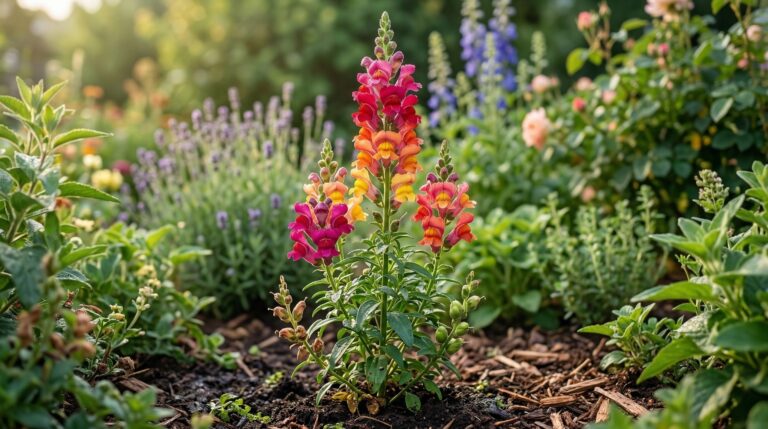
Snapdragons as cool-season cut flowers for spring bouquets when summer flowers are months away
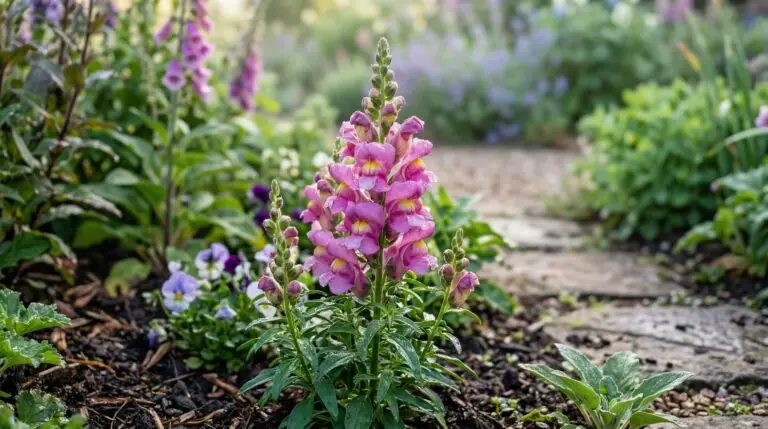
How to grow snapdragons for vertical spikes of color that bloom in cool weather
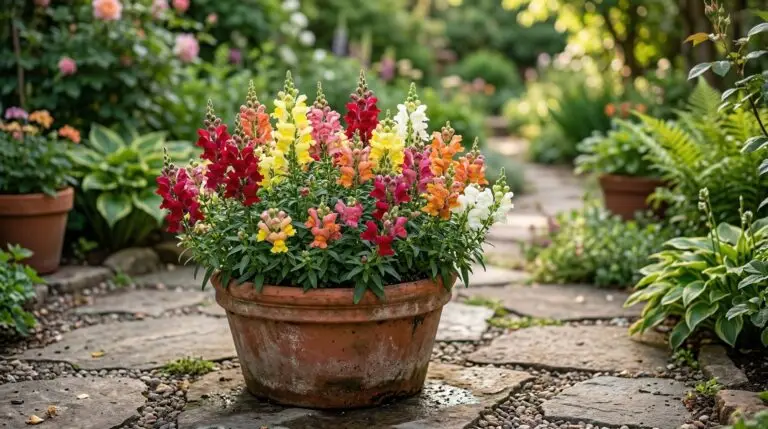
Snapdragons in containers and window boxes for vertical drama in small spaces
Snapdragon flower meaning and the dragon mouth shape that delights children everywhere
Madame Butterfly snapdragons the double-flowered variety that looks like miniature sweet peas
Why snapdragons die in summer heat and how to grow them as fall flowers instead
Growing snapdragons from seed and the tiny seeds that need light to germinate

Snapdragon skull seed pods the creepy dried flower heads that fascinate the internet