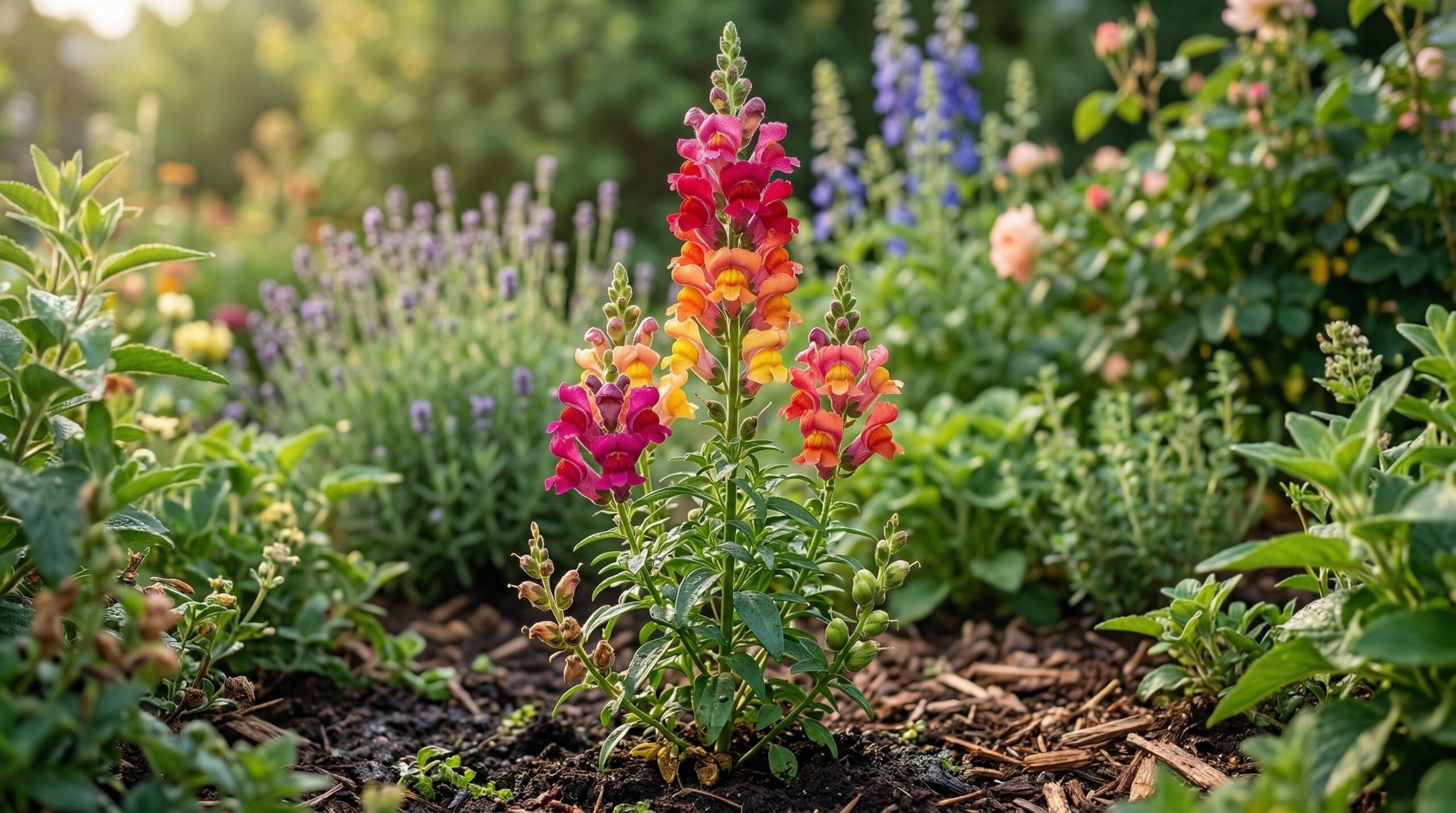
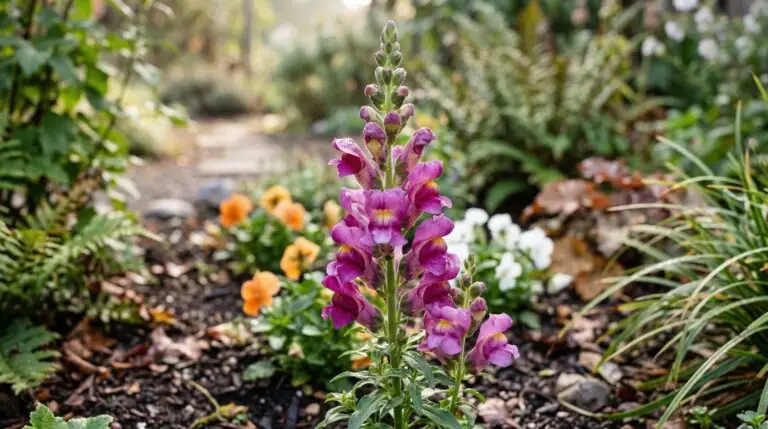
The air in the early spring garden carries a distinct chill, smelling of damp earth and crushed green leaves. Frost still threatens the edges of the morning, keeping the soil cool and the shadows long. Most of the cutting beds remain bare or hold only the smallest green rosettes tightly hugging the ground. Yet rising above the cold soil, tall spires of snapdragons stand completely unbothered by the lingering winter weather. Their thick, watery stems push upward with surprising force, anchoring tightly packed buds that resemble closed fists. Slowly, working from the bottom of the stalk upward, the individual florets begin to unhinge and reveal their colors. The lowest blossoms pop open first, creating a flared skirt of petals while the top remains a tight green spear. Touching the velvety lip of a newly opened snapdragon reminds you that the garden is finally waking up.
This time of year represents a notorious waiting period for anyone who loves to fill a vase with fresh blooms. The heavy heat required to coax summer favorites like cosmos out of the ground is still months away. Gardeners often find themselves searching the borders for anything substantial enough to bring indoors, usually finding only short-stemmed bulbs. Snapdragons fill this seasonal void perfectly, offering height and structure when most other early bloomers are small and delicate. They bridge the gap between the last frost and the first true summer heat wave with reliable, steady growth.
Contents 3 sections
Selecting varieties designed for the vase
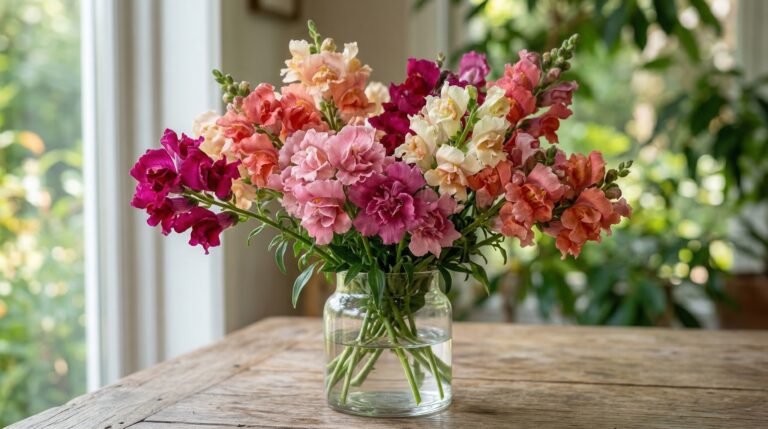
Walking through a garden center in April usually yields flats of dwarf snapdragons bred specifically to stay short and mound neatly in front borders. Those compact plants offer bright colors but leave a floral designer frustrated with stems too short to gather into a proper arrangement. For a cutting garden, you need to seek out specific tall varieties that channel their energy into producing long, straight stems. The Rocket series is a traditional favorite among growers, easily reaching three feet tall and producing classic jaw-like flowers that snap shut over visiting bumblebees. For a completely different texture, the Madame Butterfly series produces double, ruffled blooms that lack the traditional snapping mechanism entirely. These open, azalea-type flowers cluster densely along the stem, creating thick columns of ruffled petals that look incredibly romantic in a glass jar. Both of these tall types require early planting and sometimes a layer of horizontal netting to keep their heavy flower spikes standing straight in spring winds.
These tall varieties thrive under the exact cool conditions that make summer annuals shiver and stall. They prefer to establish their root systems while the ground is barely workable, often shrugging off light snowfalls that melt by mid-morning. This cold tolerance allows you to mix them in the garden alongside other early spring heavyweights like ranunculus, matching their blooming schedules perfectly. The cool weather actually thickens the stems, making them much stronger than snapdragons grown in the heat of summer. By the time the soil warms enough to plant tomatoes, your snapdragons will already be pushing up their first major flush of usable stems.
The mechanics of the early harvest
Knowing exactly when to harvest a snapdragon requires observing the steady upward progression of its opening buds. You want to cut the stem when the bottom third of the flowers are fully open, but the top two-thirds remain tightly closed. If you wait for the entire spike to color up, the lowest blossoms will already be dropping their petals and fading. Harvesting in the early morning is essential, taking advantage of the time when the stems are fully hydrated and stiff from the cool night air. Use sharp bypass pruners to cut deeply into the plant, often taking a stem that is eighteen to twenty-four inches long. Cutting deeply encourages the plant to send up multiple side shoots from the base, giving you a second flush of slightly smaller stems a few weeks later. Before dropping the cut flower into your bucket, strip away all the lower foliage so that no leaves will sit below the water line in your vase.
Once brought indoors, snapdragons demonstrate an impressively long life in a vase, easily lasting over a week if the water is kept clean. The buds that were closed at the time of harvest will continue to slowly open, moving the band of color further up the spike each day. You must keep the cut stems perfectly upright in your bucket while they rest, as they possess a strong geotropic response. If laid flat on a table for even a few hours, the tips of the stems will permanently bend upward toward the ceiling. This creates a crook in the stem that is impossible to straighten, ruining the straight vertical line you worked so hard to grow.
Designing with spring vertical lines
Every successful floral arrangement relies on a mix of shapes, and snapdragons provide the critical vertical line that gives a bouquet its architecture. They establish the boundaries of the arrangement, shooting upward and outward to define the height and width of the display. Without these tall spires, a vase filled entirely with round, disc-shaped flowers can look like a heavy, unstructured dome. A few sturdy stems of Rocket snapdragons thrusting out of a heavy ceramic pitcher immediately give the eye a path to follow. You can soften this strong architecture by tucking in handfuls of delicate, dark-centered anemones near the rim of the container. The ruffled, densely packed stems of the Madame Butterfly series can even stand entirely on their own in a simple glass cylinder. The water in the vase will magnify the thick, pale green stems, adding another layer of visual interest to the kitchen counter.
The true value of the snapdragon lies in its timing, offering abundance when the rest of the garden is just beginning to wake. Eventually, the unrelenting heat of July will arrive, causing the plants to exhaust themselves and stop producing new buds. But for those precious weeks in May and June, they dominate the cutting beds with quiet reliability. A single pale pink stalk catching the low morning light on a dining table proves that the wait for spring was entirely worth it.
More About Snapdragon

Companion plants for snapdragons: what to grow and avoid
How to grow snapdragons for vertical spikes of color that bloom in cool weather
Snapdragons in containers and window boxes for vertical drama in small spaces
Snapdragon flower meaning and the dragon mouth shape that delights children everywhere
Madame Butterfly snapdragons the double-flowered variety that looks like miniature sweet peas
Why snapdragons die in summer heat and how to grow them as fall flowers instead
Growing snapdragons from seed and the tiny seeds that need light to germinate
Snapdragon skull seed pods the creepy dried flower heads that fascinate the internet
Enjoying our flower guides? Add YourFlowersGuide as a preferred source on Google. It helps more readers find us.
Add to Preferred Sources