How to Grow and Care: Jasmine
Contents
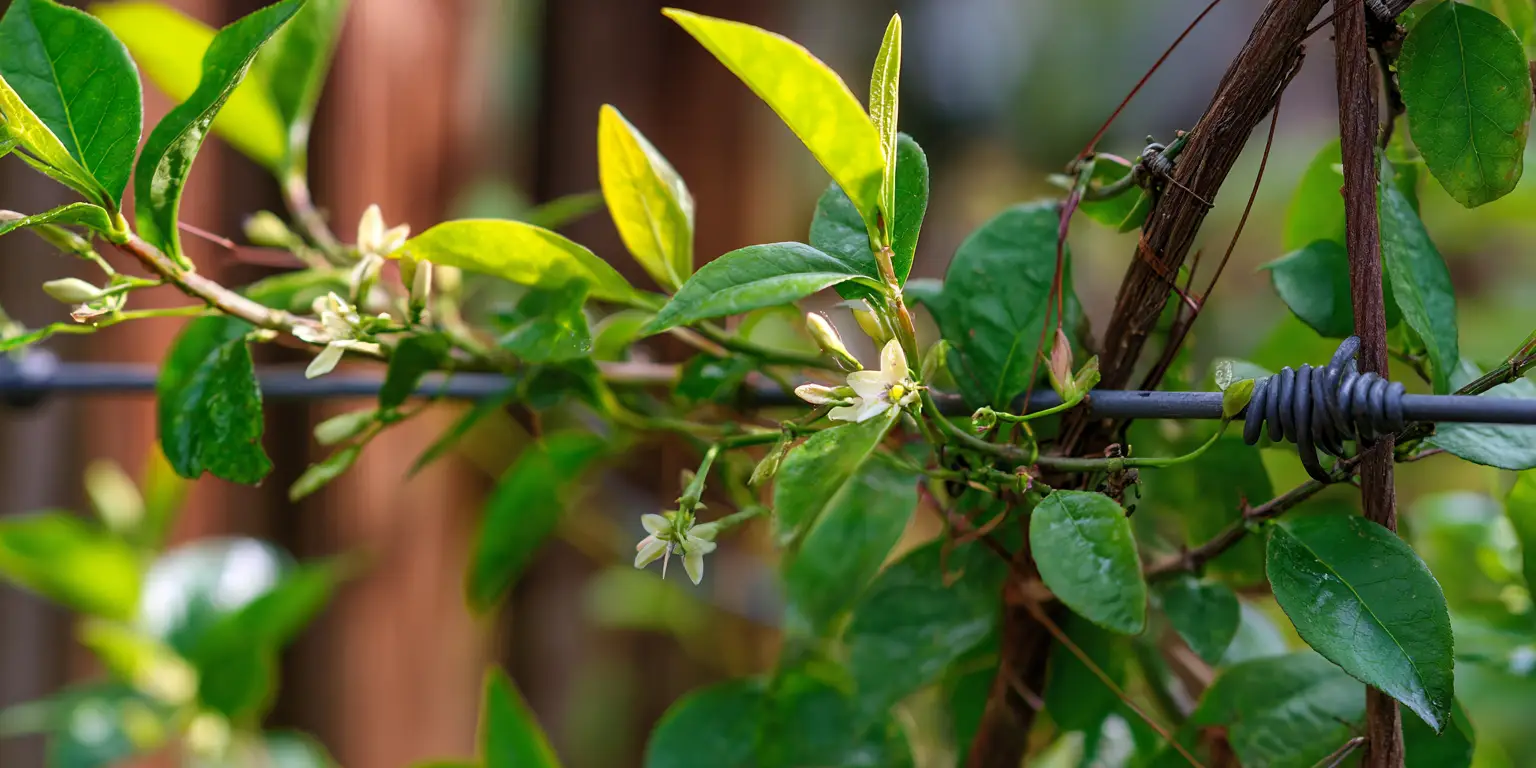
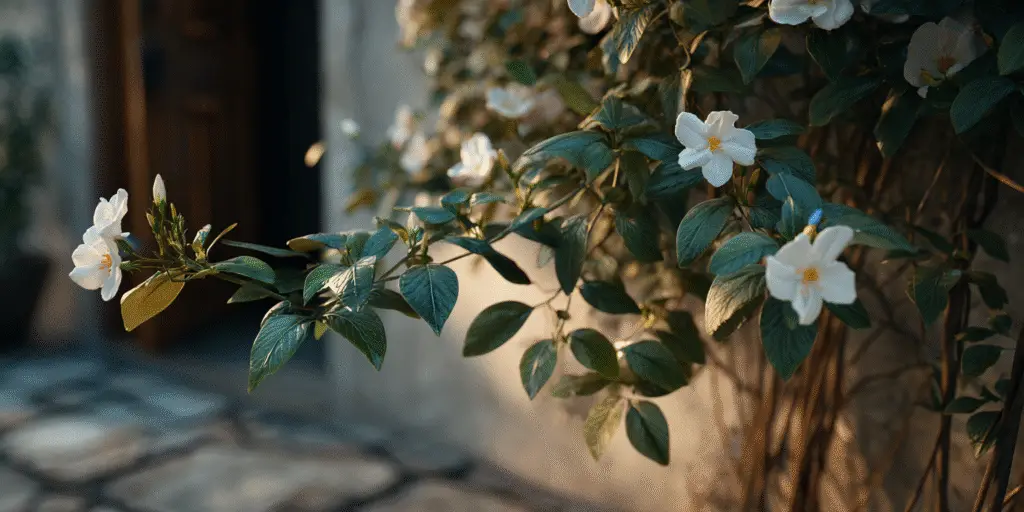
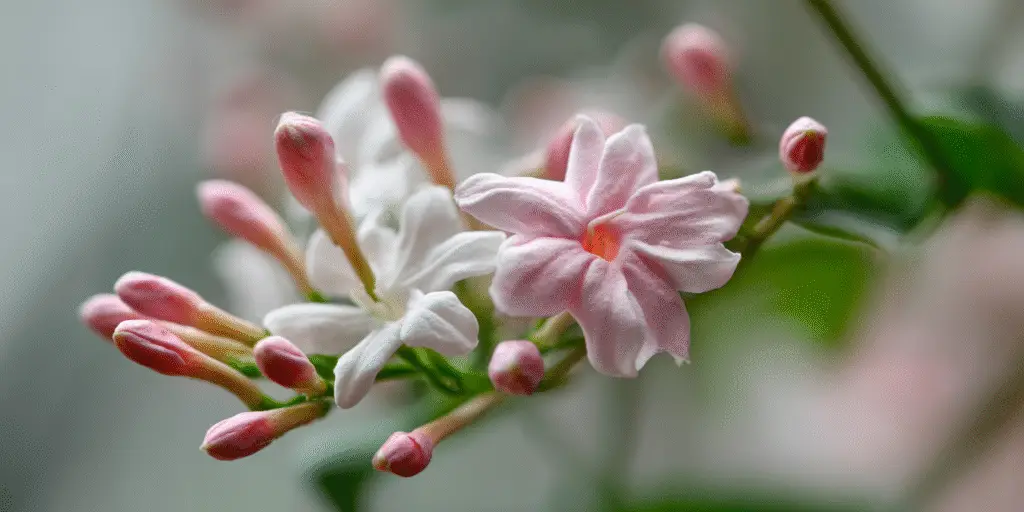
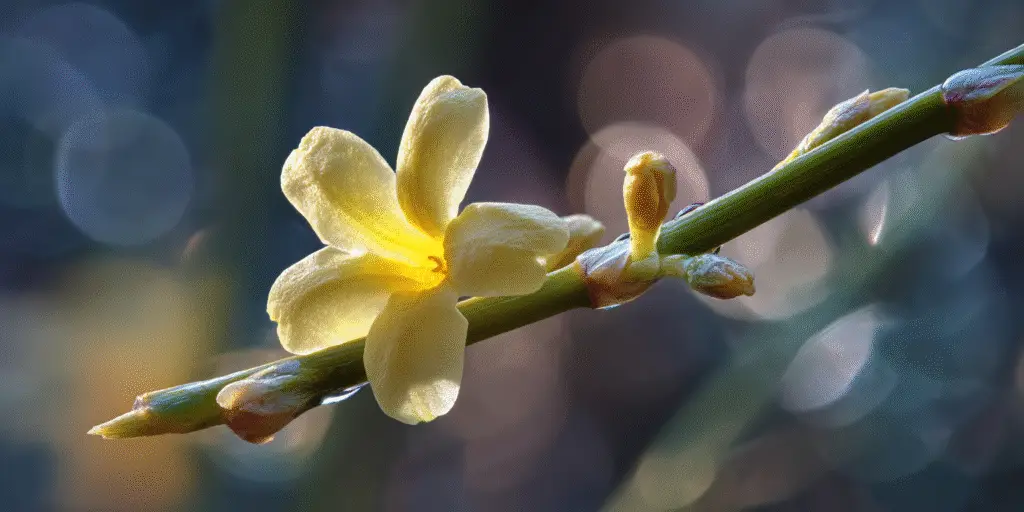
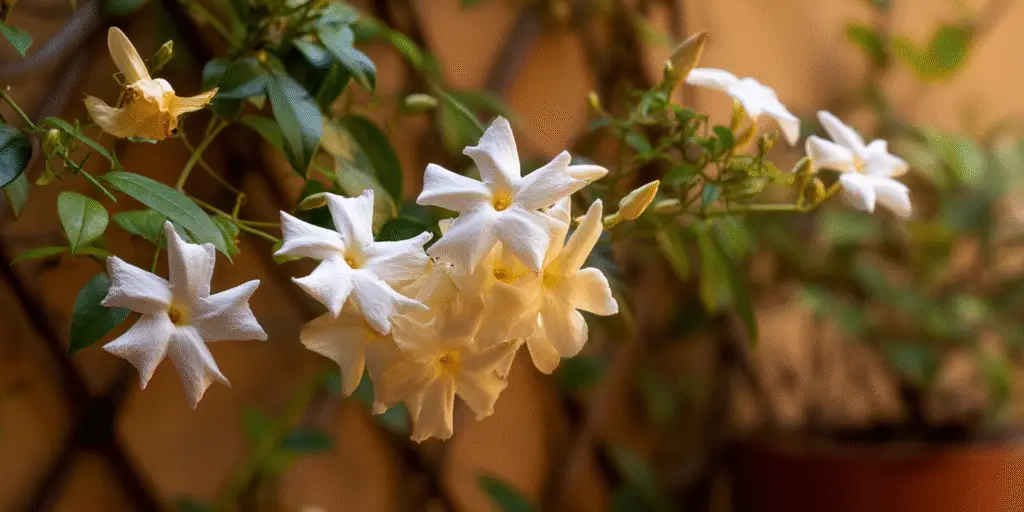
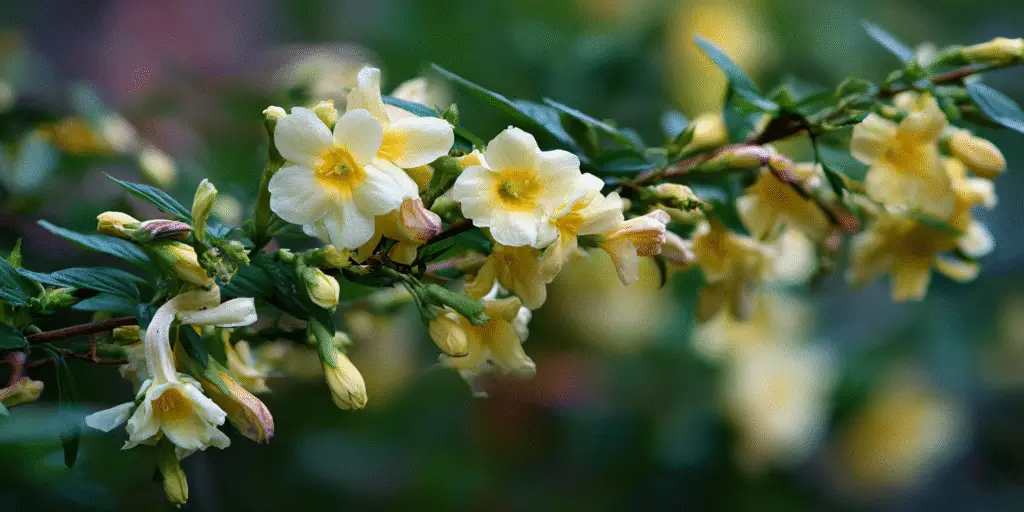
Jasmine refers to species in the genus Jasminum in the olive family Oleaceae. The most common garden types are Jasminum officinale (common or poet’s jasmine), Jasminum sambac (Arabian jasmine, also called mogra or pikake), and Jasminum nudiflorum (winter jasmine). These are true jasmines. Plants often sold as star jasmine or Confederate jasmine are Trachelospermum jasminoides, which is a different genus. Knowing the correct botanical name avoids confusion about hardiness, pruning time, and fragrance. Most true jasmines prefer mild climates. Jasminum officinale is hardy outdoors in much of the South and West in Zones 7 to 10. J. nudiflorum is the most cold tolerant and can handle Zones 6 to 10 with winter protection. J. sambac is frost tender and is best in Zones 9 to 11 or in containers that overwinter indoors in cooler zones. Aim for full sun in cool to warm summer regions and bright morning sun with light afternoon shade where summers run hot. Six hours of direct light produces the best bloom for most forms. In desert heat or intense reflected light, protect the plant from midafternoon sun and hot walls. Choose a species that matches your winter lows. Plant in well drained soil that stays evenly moist. Feed modestly, avoid heavy nitrogen, and keep a tidy structure through timely pruning. Give a trellis or fence to climbing types and a yearly refresh of mulch to keep roots cool. Jasmine care is straightforward when you match species to site and keep roots healthy.
Soil & Bed Preparation
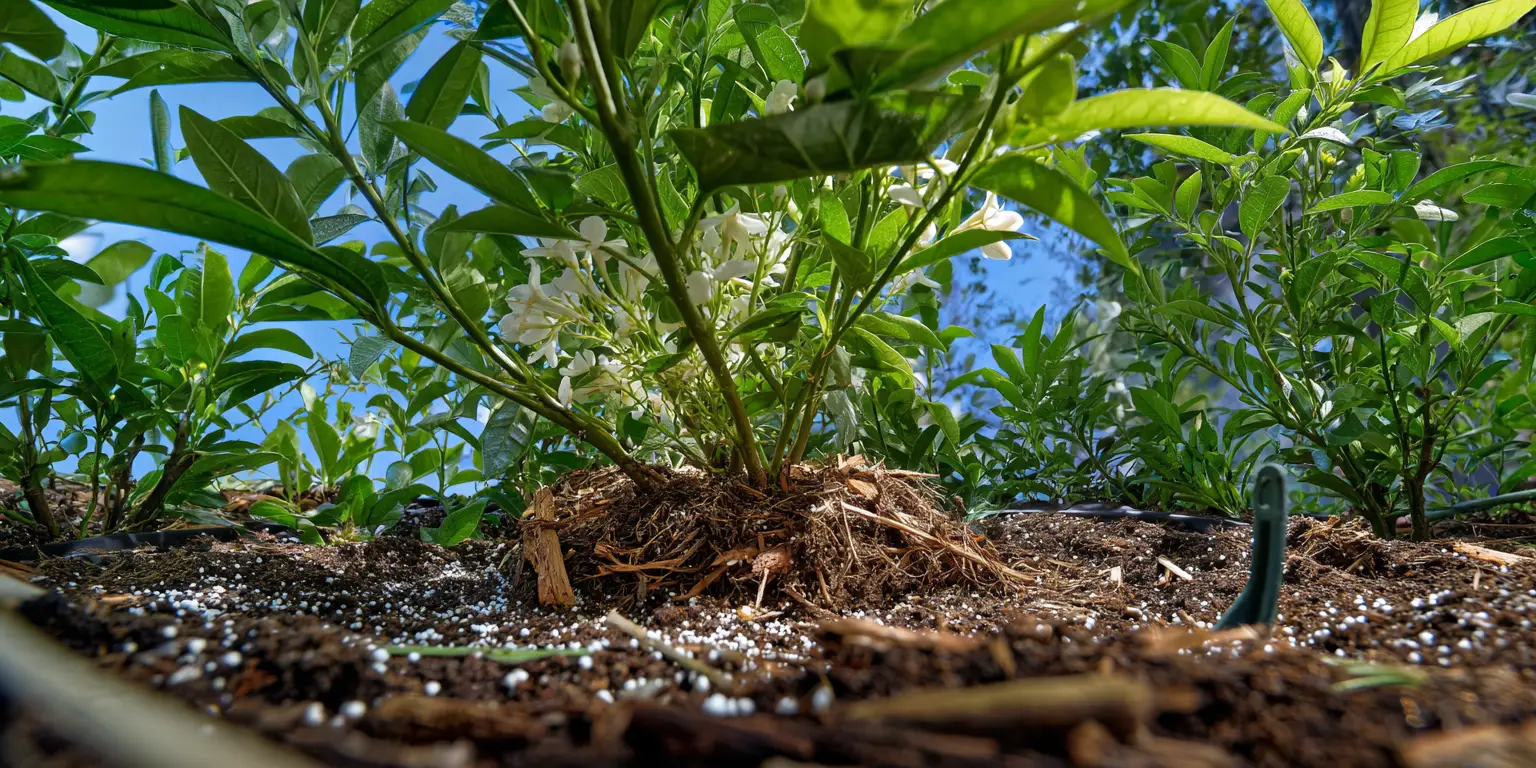
Jasmine thrives in loamy soil that drains well yet holds moderate moisture. Sandy loam is ideal. Heavy clay can work if you improve structure with organic matter and create a raised bed so that water does not pond around the crown. For containers, use a high quality potting mix with bark fines and perlite for air space. Dig a hole 12 inches deep and 12 inches wide. Fill it with water and let it drain. Refill. If the second filling drains in 1 to 2 hours, drainage is acceptable. If water lingers longer, build a raised bed 8 to 12 inches high or choose containers. Jasmine prefers slightly acidic to neutral soil. Target a pH of 6.0 to 7.0 for J. officinale and J. nudiflorum. J. sambac tolerates 6.0 to 7.5. If soil tests show a higher pH, add elemental sulfur in fall and recheck six months later. If pH is low, add finely ground limestone at label rates. Before planting, blend 2 to 3 inches of compost into the top 8 to 10 inches of bed soil. Organic matter improves water holding ability in sandy soils and adds pore space in clay. Avoid peat-heavy mixes in the ground where they can repel water if allowed to dry out. Well finished compost or leaf mold at 20 to 30 percent by volume is a good target in poor native soil. Raised beds warm earlier in spring and drain quickly, which jasmine appreciates in regions with heavy winter precipitation. In hot arid climates, in-ground planting moderates temperature swings and slows evaporation, which reduces stress. Where salts accumulate, leach beds deeply during mild weather and avoid manure that has high salt content. Jasmine does not grow from bulbs or corms. It forms a fibrous root system with a woody crown. The root zone needs oxygen. Avoid compacted soils and avoid burying the crown under mulch. Keep mulch pulled back 2 inches from the main stems to prevent rot.
Planting Calendar by USDA Zone
Zones 9 to 11: Plant container-grown jasmine in fall or late winter when soil is workable. Fall planting lets roots grow through winter so plants establish before heat arrives. In frost-free coastal areas, late fall through early spring planting works well. J. sambac is at home here in the ground and blooms over a long warm season if it receives regular moisture and light afternoon shade.
Zones 7 to 8: Plant in spring after danger of hard frost when soil temperature reaches 55 to 60°F. Early to mid spring is best for J. officinale and J. nudiflorum. If you miss spring, plant in late summer through very early fall and mulch well so roots settle before cold weather. Avoid late fall planting since a sudden freeze after warm spells can heave new root balls.
Zone 6: Choose hardy J. nudiflorum for outdoor planting. Install in late spring after the threat of frost. Plant on a south facing wall that reflects warmth and blocks wind. Add 3 to 4 inches of winter mulch after the ground cools. For J. officinale or J. sambac here, grow in containers that move indoors before freezing weather.
Zones 3 to 5: Treat jasmine as a container plant. Move outside after your last frost date and bring indoors before nights drop to 40°F. Provide a bright window or a grow light for winter.
Bare-root vs container: Jasmine is rarely sold bare-root. You will almost always plant container-grown material. If you receive a division from a friend, plant it in spring once growth starts and keep it shaded for a week while it reestablishes.
Planting: Depth & Spacing
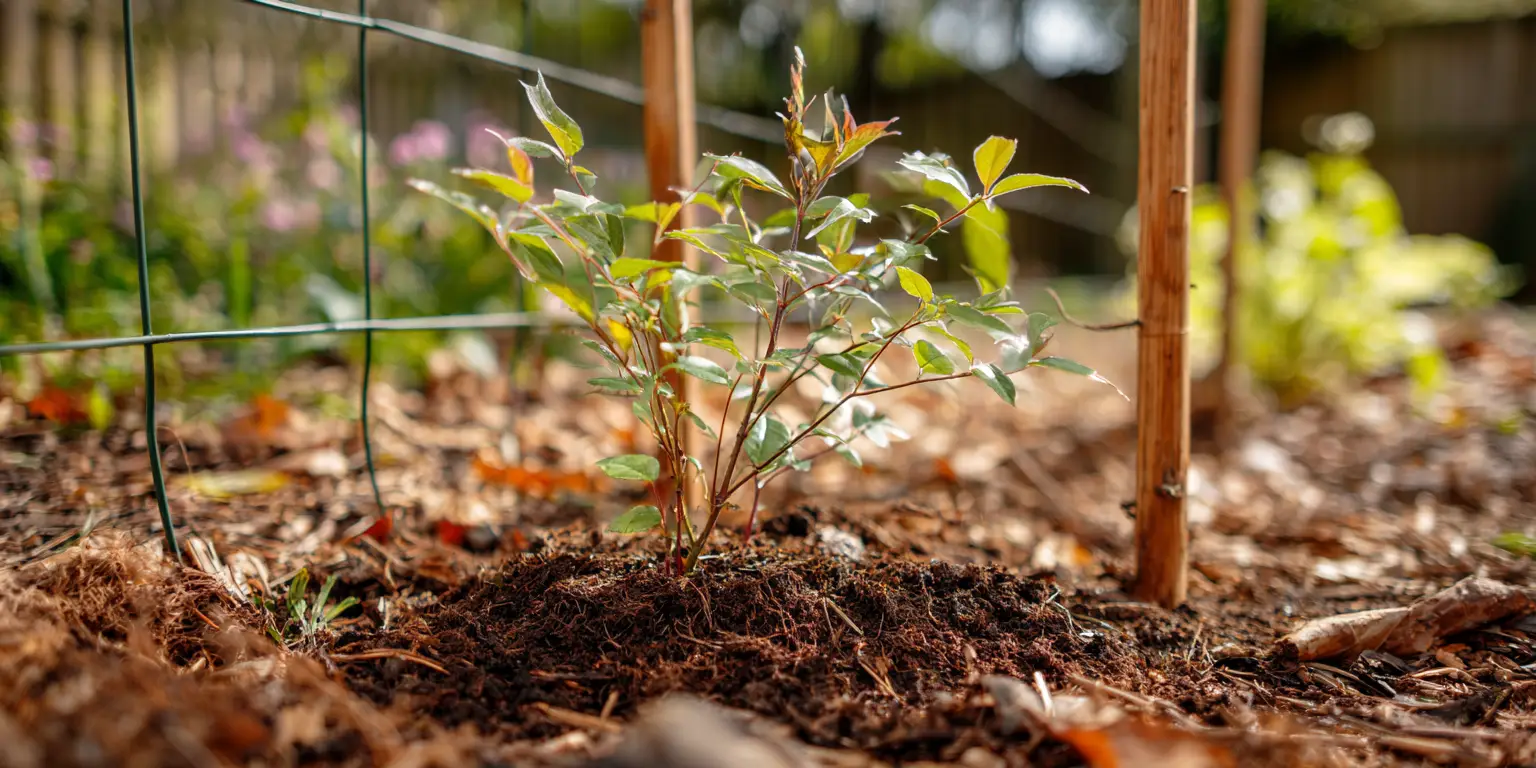
Water the nursery pot so the root ball is moist. Slide the plant out and loosen encircling roots with your fingers. Set the plant so the top of the root ball sits level with the surrounding soil. The crown should sit at soil line. Backfill with the native soil you improved with compost. Firm gently to remove air pockets. Water thoroughly to settle.
If you are planting a rooted layer or a cut section of an older clump, trim damaged roots cleanly. Soak in clean water for 30 minutes. Set the plant so roots spread naturally with the crown at soil level. Backfill in stages and water as you go. Stake loosely if wind is strong during the first month. Do not bury the crown. The top of the root ball should be flush with finished grade. In heavy clay that tends to puddle, set the root ball 1 inch high and slope soil away so water drains. In containers, leave 1 to 2 inches of headspace for watering.
For climbing Jasminum officinale on a fence or trellis, space plants 6 to 10 feet apart depending on cultivar vigor and the width of the structure. For shrubby J. nudiflorum, space 4 to 6 feet on center. J. sambac in containers can be positioned 3 to 4 feet from neighboring plants to allow airflow and to keep fragrance enjoyable, not overwhelming. Good spacing limits foliar disease in humid summers.
When training jasmine along wires or a fence, run two to three horizontal wires 18 to 24 inches apart from 18 inches off the ground to the top of the support. Tie new shoots with soft ties every 8 to 12 inches as they grow. Keep ties loose to avoid girdling. Plant on a cloudy day or in late afternoon if possible. Water deeply the day before planting and again right after. Shade new transplants for three to five days with a piece of shade cloth or a lawn chair to reduce leaf scorch. Do not fertilize at planting. Wait four to six weeks until you see new growth. Maintain even moisture during the first growing season so roots colonize the site rapidly.
Watering & Mulching
For the first three months in the ground, water deeply whenever the top 2 inches of soil feel dry. A general target is 1 inch of water per week from rainfall and irrigation combined, which equals about 0.6 gallons per square foot. Apply water slowly at the drip line so it soaks to 8 to 12 inches deep. In containers, water when the top inch is dry. Expect to water two to four times per week in summer depending on pot size, wind, and heat. Once established, most jasmines prefer soil that stays evenly moist but not wet. In typical loam, a weekly deep soak is enough during mild weather. In heat waves, water every three to four days. For J. sambac in bloom, avoid prolonged drought because flower buds abort if the plant experiences a dry spell. Lay a 2 to 3 inch layer of shredded bark, pine straw, or leaf mold over the root zone, keeping mulch 2 inches away from stems. Mulch moderates soil temperature and reduces evaporation. Replenish annually to maintain depth. In alkaline soils, composted pine bark can help buffer pH slightly. Avoid stone mulch in hot regions because it radiates heat into the root zone. Ensure water can drain away from the crown. Do not pile mulch against stems. Use soaker hoses or drip irrigation rather than frequent light overhead watering, especially in humid climates. In containers, choose pots with large unobstructed drainage holes and use a free draining mix. Empty saucers after watering.
During extreme heat, water early in the morning. Add a temporary shade cloth over the plant for a few days if leaves bleach. Reduce fertilizer until cooler weather returns. For prolonged droughts, widen the drip zone by irrigating beyond the canopy edge so roots chase moisture outward.
Jasmine may show interveinal chlorosis in very alkaline or high bicarbonate water. If this occurs, collect and use rainwater when possible, or apply an iron chelate labeled for high pH soils to correct temporary iron deficiency. Leach containers monthly by watering until excess drains to flush salts.
Feeding
Base fertilizer on a soil test when possible. In the absence of a test, apply a light dose in early spring after danger of frost and again in midsummer if growth is pale or flowering is light. Container plants benefit from a regular but modest plan during active growth from spring to early fall. Do not feed in late fall or winter.
New plantings do not need fertilizer until they put on new growth. Skip feeding entirely if plants show deep green color and good bud set. Overfeeding increases pest pressure and reduces fragrance density.
Aim for 3 to 5 percent organic matter in mineral soils. Maintain a living mulch where possible and avoid frequent tilling that breaks fungal networks. Re test soil every two to three years, especially if leaf color fades or if pH drifts due to irrigation water.
Pruning & Support
Time your cuts based on bloom season. Spring flowering jasmine, such as J. nudiflorum, sets flower buds on old wood. Prune right after flowering to shape and to remove winter damage. Summer flowering jasmine, such as J. officinale and J. sambac, blooms on new wood. Prune in late winter to very early spring before growth begins, then tip prune lightly after the first flush of bloom to encourage branching and a second flush. Many jasmines drop spent blossoms cleanly. If old flowers cling in humid weather, shear lightly right after peak bloom to tidy the plant and to redirect energy to new buds. Do not cut hard during extreme heat. Climbing jasmine needs a trellis, wires, fence, or an arbor. Tie young shoots horizontally to encourage more lateral flowering spurs, which increases bloom density. For J. nudiflorum, which is a lax shrub with arching canes, tie stems to a low fence or allow them to drape a wall. Provide a sturdy support because mature plants can reach 10 to 15 feet in length and become heavy after rain. Use bypass pruners for clean cuts. Disinfect blades before you start and between plants with 70 percent isopropyl alcohol or a bleach solution of 1 part bleach to 9 parts water. Wipe dry to prevent corrosion. Avoid pruning when foliage is wet to limit disease spread.
If a mature plant becomes woody with reduced bloom, cut one in three of the oldest canes to 6 inches from the base right after flowering for spring bloomers, or in late winter for summer bloomers. Repeat over two to three years. This staged renewal keeps the plant flowering while you encourage fresh growth.
Overwintering
In ground plants in Zones 7 to 8: After the ground cools in late fall, apply 3 to 4 inches of mulch over the root zone. Use leaves or pine straw for easy spring removal. In exposed locations, wrap young vines with burlap to reduce windburn. Avoid heavy pruning in fall because cuts can stimulate tender growth that is vulnerable to cold.
In ground plants in Zone 6: Choose protected microclimates such as south facing masonry walls that radiate heat. After the first hard frost, mound mulch 6 inches deep over the crown of J. nudiflorum. Remove most of the mulch gradually in early spring as soil thaws. Be prepared for some cane dieback after harsh winters.
Containers in cold regions: Move pots indoors before nights reach 40°F. Overwinter near a bright east or south window where temperatures hold near 55 to 65°F. Water when the top inch of mix is dry. Fertilize only at a very dilute rate once a month if plants are actively growing under lights. If growth slows and light is weak, hold fertilizer until spring. Rotate pots every few weeks so growth stays even and check for aphids, whiteflies, or spider mites on the undersides of leaves.
Freeze thaw management: In climates with alternating thaws and freezes, keep soil evenly moist through winter dry spells so roots do not desiccate. Avoid plastic covers that trap moisture against stems. Remove winter protection when new buds swell and the forecast shows a warming trend.
Growing Environments
Climbing J. officinale and J. sambac perform well in containers if roots have room. Choose at least a 16 inch wide pot that holds 5 to 7 gallons of mix for the first two to three years. Upgrade to 20 inches and 10 to 15 gallons as the plant matures. Winter jasmine can grow in a 14 inch container for several years with regular root pruning. Large containers insulate roots and buffer watering frequency. Use a bark based potting mix with coarse perlite for air space. A simple blend is two parts pine bark fines to one part peat or coir to one part perlite. Add a small amount of compost for biology. Do not add gravel at the bottom of the pot. It does not improve drainage and can raise the perched water table. Ensure drainage holes run clear and set the pot on pot feet to prevent blockage. Give morning sun with dappled afternoon light in hot summers. Avoid west facing walls that reflect heat. In windy sites, position plants where fences or hedges break gusts so new shoots do not snap. On shaded porches, use bright white walls or reflective surfaces to increase light quality. Indoors, use a small fan on low for a few hours a day to strengthen stems and discourage pests. Many jasmines grow best outside in summer. If you bring a plant indoors for winter fragrance, place it in bright light and cooler night temperatures of 55 to 60°F to encourage bud set. Good air movement keeps scent pleasant and helps flowers last longer.
Companion Planting & Design
Pair jasmine with plants that carry color when jasmine rests. J. officinale and J. sambac bloom in warm months, so mix them with mounding annuals or perennials that flower in early spring and fall. Winter jasmine blooms in late winter to early spring with yellow flowers that brighten bare gardens, so add evergreen structure and spring bulbs nearby for a seamless show. Jasmine flowers attract bees and beneficial insects. Surround with nectar plants that keep pollinators present from spring through fall. Consider salvias, verbenas, and small flowered lantanas in warm zones. In cooler zones, add catmint and coneflower. Keep spacing generous so air moves and leaves dry after rain.
Train J. officinale along a pergola or fence where the fragrance drifts through seating areas. Let J. nudiflorum spill over a low wall for a waterfall effect of early color. Grow J. sambac in a handsome ceramic pot near a doorway where evening scent is easy to enjoy. Repeat foliage textures and use variegated companions sparingly so they do not compete with jasmine’s flowers.
Winter jasmine can have a twiggy look after bloom. Shear lightly and hide the framework with evergreen shrubs, such as boxwood or small hollies, or with perennials that rise in summer. For climbing types, keep lower stems trained and leafy by pinching tips and redirecting long shoots sideways on the support.
If you enjoy fragrance driven gardens, explore our guides on roses, lilacs, and lavender for more scent near paths and patios. For color planning by hue, browse white, yellow, pink, blue flowers, and purple flowers to build a long season border with jasmine as the anchor. If you are planning event plantings or romantic spaces, the wedding flowers guide offers design ideas you can adapt to home gardens.
References
- North Carolina State Extension, Plant Toolbox. Jasminum officinale (Common Jasmine).
- ASPCA. Toxic and Non-Toxic Plants: Jasmine (Jasminum spp.).
Written by: Your Flowers Guide editorial team
We are a small independent group of flower lovers who research and review each guide using trusted horticultural and educational sources. Learn more about us