How to Grow and Care for Globe Thistle
Contents
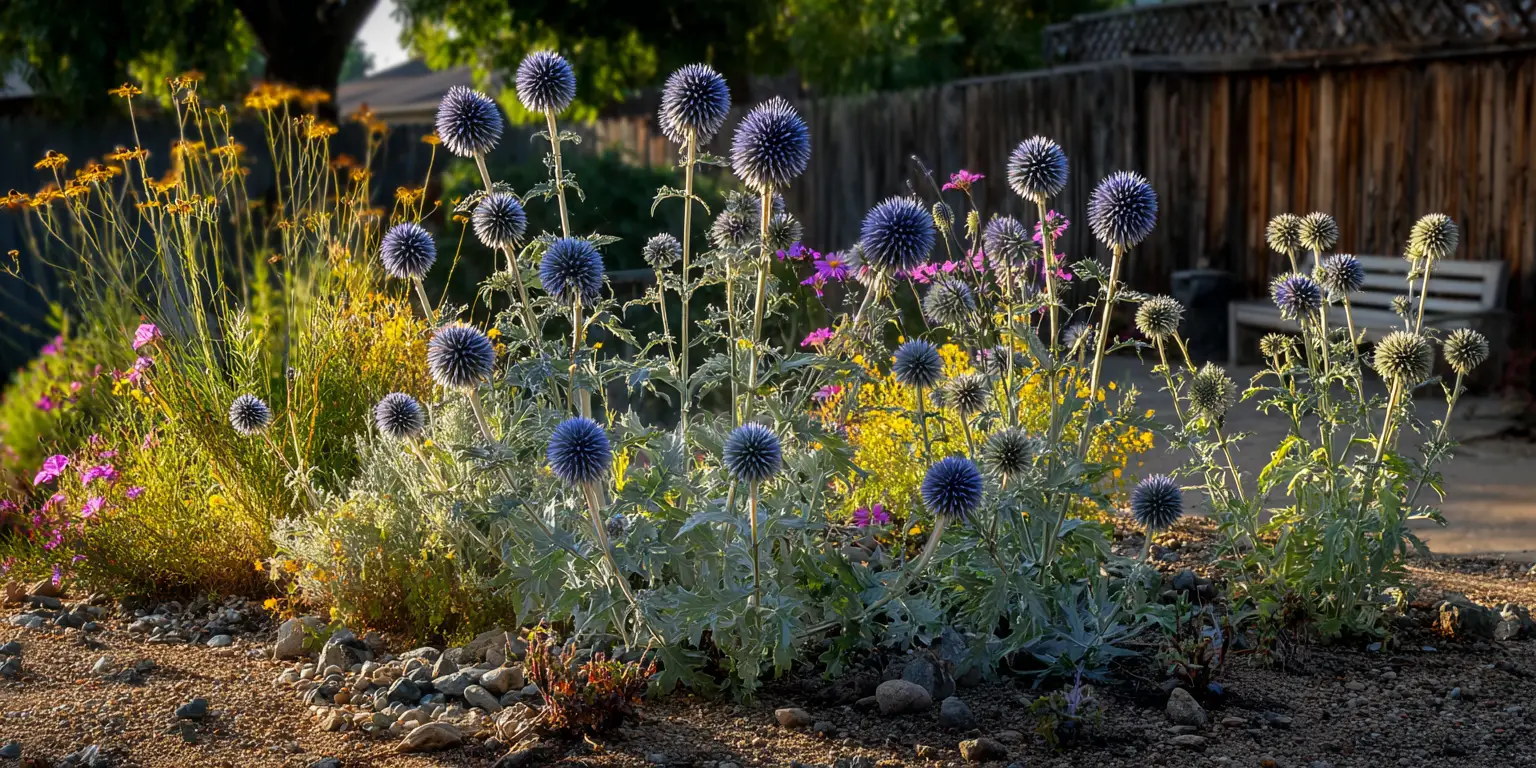
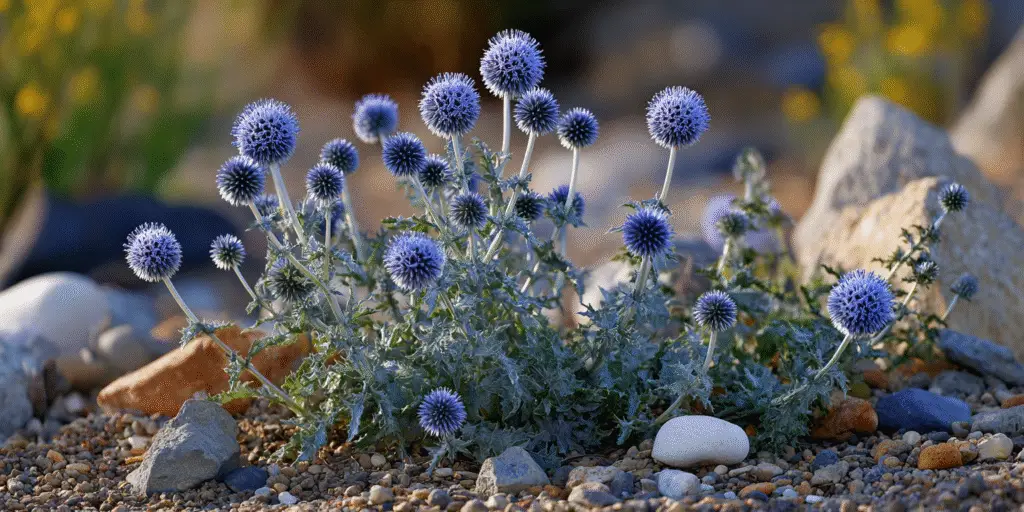
Globe thistle is a tough perennial that earns its place in sunny beds with steel blue flower spheres that hold color through summer and early fall. The accepted botanical name is Echinops ritro, although nurseries may also offer Echinops bannaticus and selections bred for deeper blue or taller stems. These are members of the Asteraceae family with spiny, deeply divided leaves and globe shaped flower heads that dry neatly on the stem. Globe thistle thrives in full sun, lean soil, and open airflow, and it is widely hardy in much of the northern and interior United States. When gardeners talk about globe thistle care, they are usually describing a simple recipe: plenty of sun, good drainage, conservative watering once established, and a light touch with fertilizer.
Globe thistle is valued for long lasting color in perennial borders and cut flower gardens. Plants are hardy in most cold winter regions where winters are dry or soils drain freely. Expect a mature height of 24 to 48 inches (60 to 120 centimeters) depending on species and cultivar, with a spread of 18 to 30 inches (45 to 75 centimeters). In hot humid parts of the Southeast, success improves in raised beds with extra drainage and careful spacing for air movement. If you want a low maintenance, pollinator friendly perennial that offers a bold texture and unusual color, Globe thistle belongs on your shortlist.
Where it shines
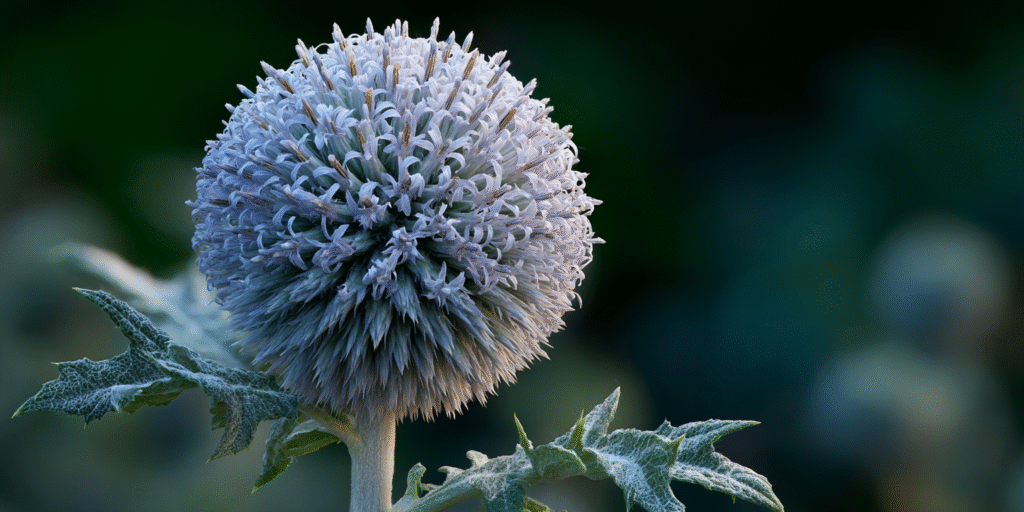
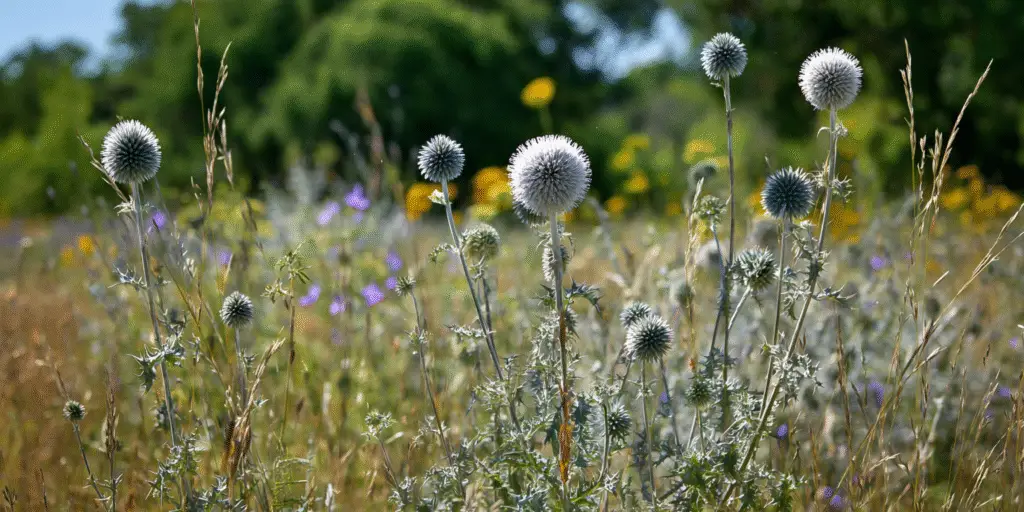
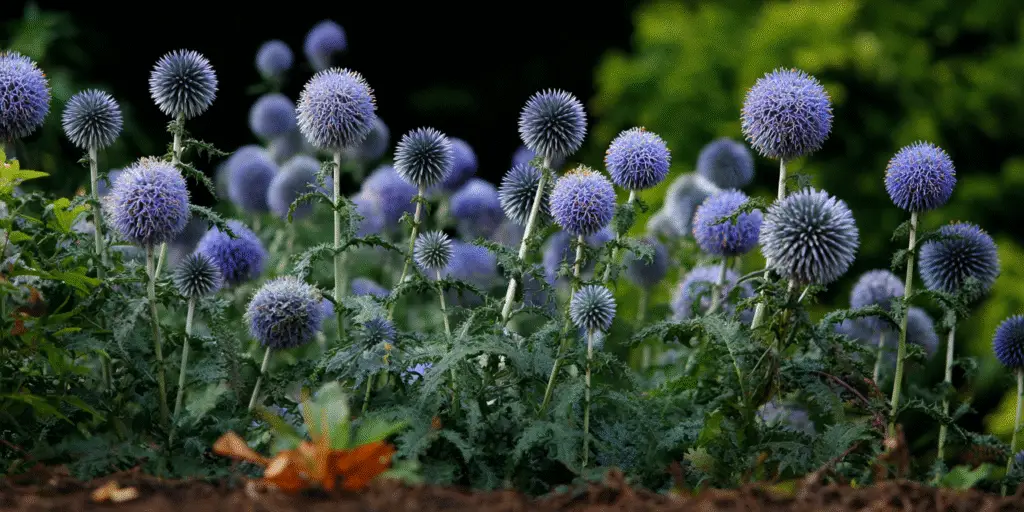
The flower heads are tight spheres of many small florets that open in a sequence, which extends the bloom period over several weeks. Color is typically a cool blue to steel blue, although some cultivars lean toward violet or white. The leaves have a silver cast beneath that adds contrast even when plants are out of bloom. Cut stems last well in vases and the seed heads can be dried for arrangements. In the garden, the clean geometry pairs beautifully with feathery grasses and flat topped summer bloomers. For readers exploring border design themes or color families, see blue, purple, white flowers, and the broader hub types of flowers for context you can apply across your beds.
A quick snapshot for success
Give globe thistle full sun for at least 6 to 8 hours daily. Plant in soil that drains quickly and stays on the lean side. Water to establish, then water deeply but infrequently in summer dry spells. Avoid heavy feeding and heavy mulches on the crown. Deadhead if you want a tidy look and fewer volunteers, or leave seed heads through early winter for birds. With those basics, globe thistle care is refreshingly straightforward.
Soil & Bed Preparation
Texture and drainage needs
Globe thistle prefers sandy loam to loam with rapid drainage. Heavy clay that holds water around the crown leads to crown rot and short lived clumps. If your site has clay, do not simply add compost to the planting hole. Instead, prepare a wide bed by loosening 8 to 12 inches (20 to 30 centimeters) of soil and blending in coarse mineral amendments such as expanded shale, crushed lava fines, or coarse sand. A small amount of finished compost can aid structure, but keep organic matter in the moderate range. A target of 3 to 5 percent organic matter is appropriate, which is much leaner than many vegetable beds. Raised beds can make the difference in wet spring climates, and they also warm earlier.
pH range and adjustments
Aim for a soil pH between 6.0 and 7.5. Globe thistle tolerates slightly alkaline soils, which is helpful in the Mountain West and Plains. If your pH is below 6.0, blend in ground limestone according to a soil test recommendation. If your pH is above 7.5, you can incorporate small amounts of elemental sulfur in fall to nudge pH down over time. Focus more on drainage and structure than chasing exact numbers, because good drainage is the bigger success factor.
Drainage Test and pH Targets
Dig a hole 12 inches deep and 12 inches wide. Fill it with water and let it drain completely. Refill and time the drainage. If the water level drops 1 inch or more every 15 minutes, drainage is excellent. If it takes more than 2 hours to drain, create a raised bed 8 to 12 inches high and amend with coarse mineral material. For pH, use an at home test kit or send a sample to your local Cooperative Extension. Target 6.0 to 7.5, then retest 12 months after any major adjustment.
Raised beds versus in ground
Raised beds are helpful where spring soils stay wet or where native soil is heavy. Build beds at least 8 inches high and 3 feet wide to give roots room to spread. In arid regions, in ground planting conserves moisture while still providing excellent drainage if the ground is rocky or sandy. In coastal zones with wind exposure, in ground beds moderate temperature swings and reduce the need to water.
Special planting medium considerations
Globe thistle grows from a fibrous root system with a sturdy crown rather than a bulb, tuber, rhizome, or corm. The plant tolerates poor soils better than rich ones. Overly fertile conditions push lush growth that flops and flowers sparsely. A gritty, open medium is the safest choice in containers and raised beds. Think of the mix you would use for Mediterranean perennials and silver leaved plants.
Planting Calendar by USDA Zone
Zones 3 to 4
Plant container grown globe thistle in late spring after the soil warms and risk of hard freeze has passed, usually late May to early June. Early fall planting is possible in late August to early September if you can water during dry spells and add winter mulch. Divisions are best made in spring to allow a full season of root growth before deep cold.
Zone 5
Plant in mid spring once the soil is workable, typically April to May. Fall planting is reliable in September to early October if drainage is excellent. Space transplants so airflow remains open. In cold snowbelt areas, fall planted crowns appreciate an extra layer of mulch after the ground freezes.
Zone 6
Transplant in March to April or in fall during October to early November. Fall plantings take advantage of warm soil and autumn rains. Avoid low spots where winter wet lingers. In regions with clay subsoil, consider a raised bed approach.
Zone 7
Set out plants from February to March or in fall from October to November. In humid parts of the Mid Atlantic and the South, prefer fall so roots establish before summer heat. Choose sites that get morning sun and a breeze. Avoid overhead irrigation in summer to limit disease pressure.
Zone 8
Plant in late winter to early spring, February to March, or in late fall, November to December. In hot summers, the plant may act short lived. Renew vigor by dividing every few years or replanting young divisions. Raised beds or berms improve survival through wet winters on heavy soils.
Zone 9 and mild coastal zones
Globe thistle can struggle with prolonged summer humidity or mild wet winters. Treat it as a short lived perennial. Plant in late fall to mid winter, November to January, so roots develop in cool weather. Provide sharp drainage, morning sun, and afternoon shade where temperatures routinely exceed 95 degrees Fahrenheit (35 degrees Celsius). If summers are very humid, consider the species Echinops bannaticus, which often handles heat slightly better than some selections of Echinops ritro.
Seed sowing windows
Start seed indoors 6 to 8 weeks before your average last spring frost. Sow shallowly 1 eighth to 1 quarter inch deep (3 to 6 millimeters) in a well drained seed mix. Barely cover the seed and keep at 65 to 70 degrees Fahrenheit (18 to 21 degrees Celsius). Transplant after frost when seedlings have several true leaves. Direct sow in late spring once soil is warm, or in fall in mild winter regions for natural stratification.
Planting: Depth & Spacing
Bare root or divisions
Globe thistle is most often sold in containers, but gardeners with mature clumps can lift and divide. Divide in early spring as new growth begins or in very early fall. Use a sharp spade or knife to separate the crown into chunks with several buds and a healthy root mass. Plant divisions with the crown level with the surrounding soil. Do not bury the crown. Water to settle soil, then mulch lightly around but not on the crown.
Container grown plants
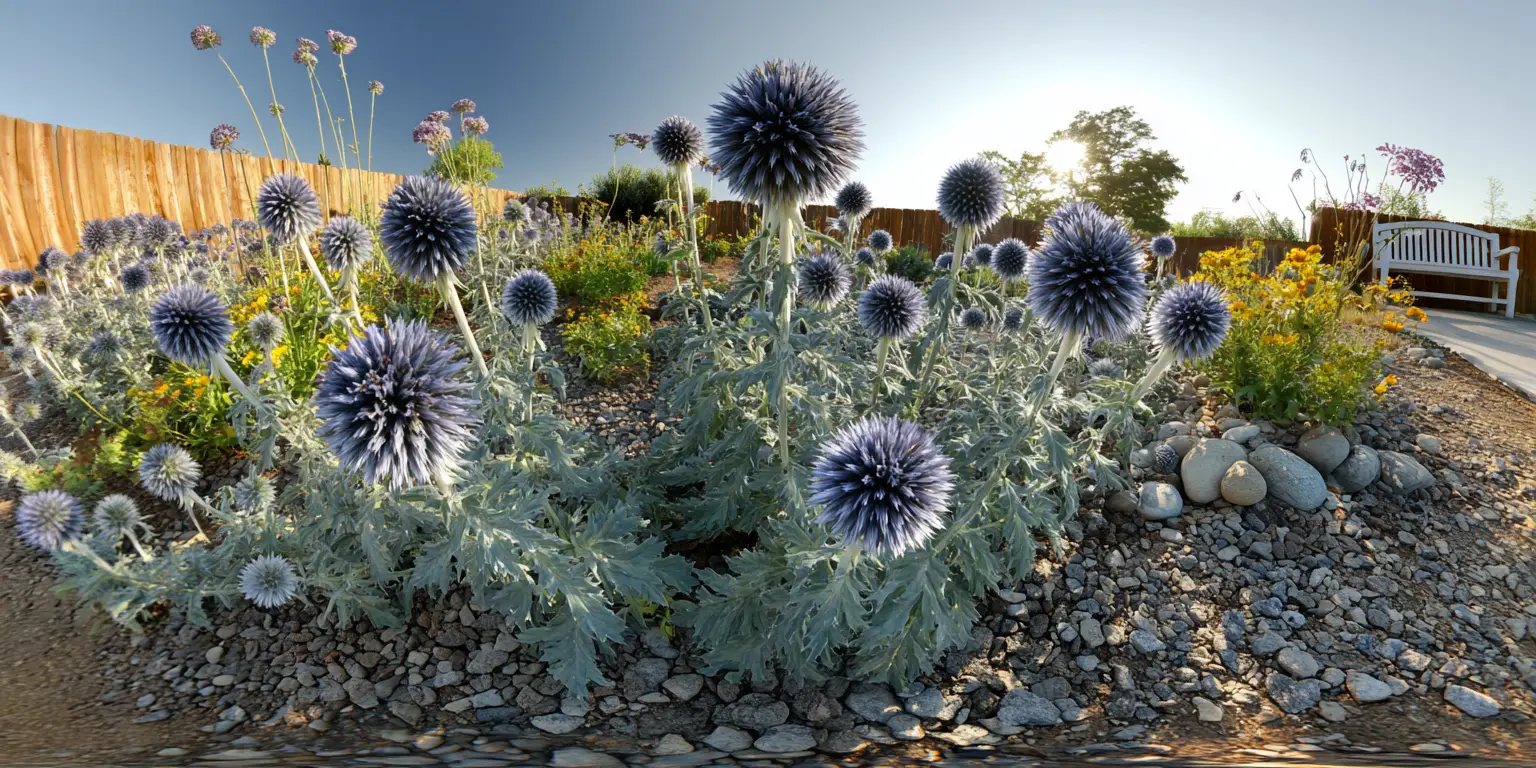
Plant at the same depth as in the pot. Gently loosen circling roots without tearing the root ball. Set the plant so the crown sits even with the soil line. Backfill with your prepared soil, firming lightly so there are no air pockets. Space 18 to 24 inches apart (45 to 60 centimeters) to allow airflow and room to mature. In larger borders with tall companions, spacing up to 30 inches (75 centimeters) is appropriate. For block plantings, stagger rows 18 to 24 inches apart so flower heads have light on all sides.
From seed
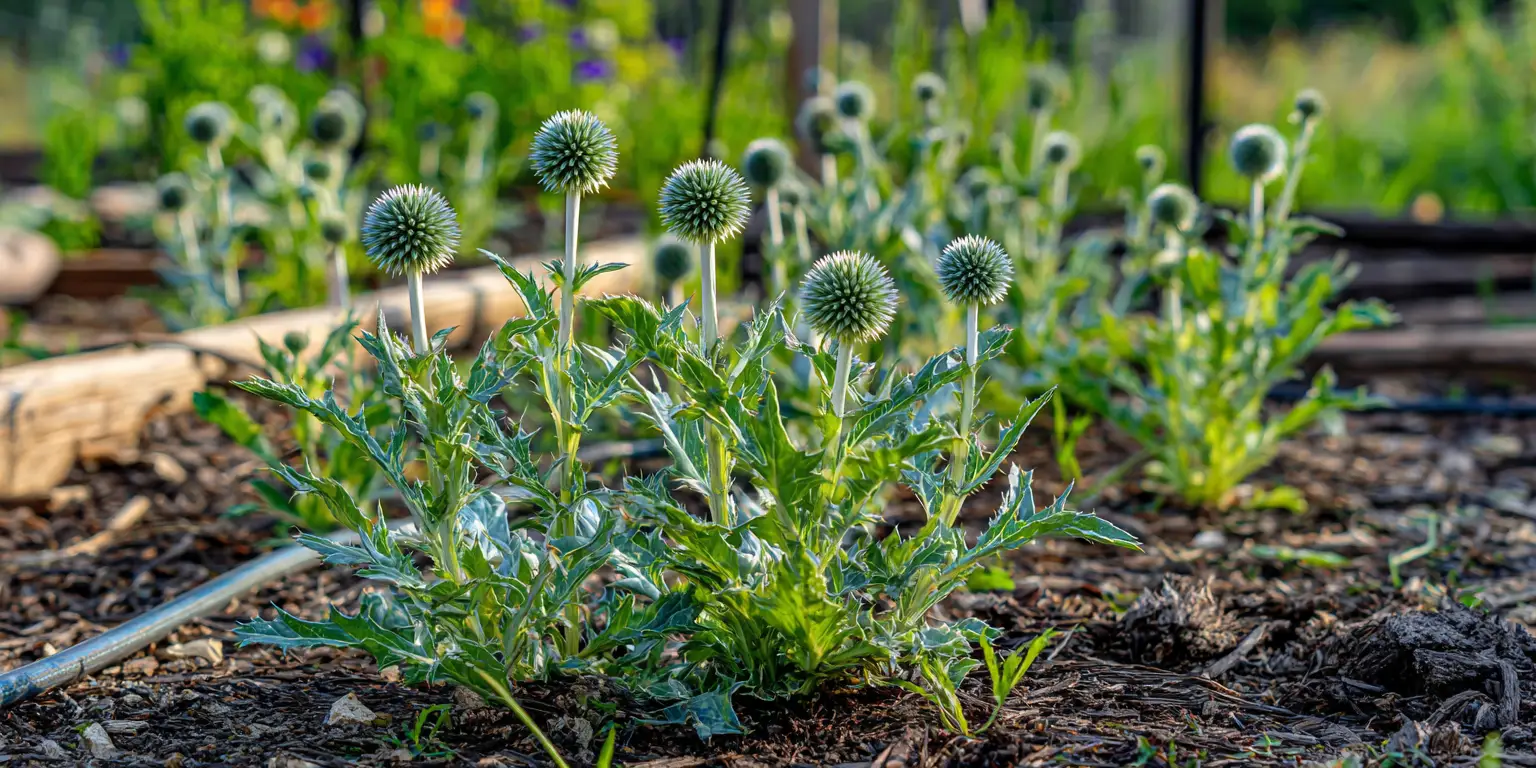
Sow seeds shallowly and lightly cover. If direct sowing, mark the area because seedlings resemble thistles and may be mistaken for weeds. Thin to 18 to 24 inches apart when seedlings are 3 to 4 inches tall (8 to 10 centimeters). Seed grown plants can bloom the first full season in many climates, although best show often arrives in the second year.
Minimizing transplant shock
Water the planting hole before setting the plant to create a cool, moist environment. Transplant on a cool, overcast day. Shade new transplants with a lightweight fabric or a simple board leaned on stakes for two to three days during heat spells. Keep first week soil moisture even. Do not use high nitrogen starter fertilizers. Allow roots to search, then resume a normal watering rhythm.
Acclimation steps
If you raised plants indoors, harden them off for 7 to 10 days before planting out. Set trays or pots outside for a few hours at first, then extend exposure daily. Protect from midday sun and strong wind during the first days. This gradual exposure reduces leaf scorch and wilting.
Watering & Mulching
Water deeply at planting to settle soil. For the first six to eight weeks, water once or twice weekly depending on weather so the top 6 to 8 inches of soil (15 to 20 centimeters) are moistened. The goal is deep roots. After the plant sends up vigorous new stems, extend the interval. In most regions, a deep soak every 7 to 14 days during summer dry spells is enough. Check soil with your finger. If the top 2 inches (5 centimeters) are dry and plants flag in afternoon sun, provide a deep soak.
Mature plants
Once established, globe thistle is drought tolerant. Water long and infrequently, not little and often. In arid climates, a deep soak every 10 to 14 days maintains flowering. In humid climates, water less often and only at the base to keep foliage dry. Avoid overhead irrigation during bloom. If prolonged drought and high heat arrive, expect some lower leaves to bronze or crisp. This is cosmetic. Prune off tired foliage and keep the root zone watered deeply to encourage fresh growth.
Mulch types and thickness
Use a thin layer of gravel, crushed granite, or a light organic mulch like shredded bark around but not on the crown. Limit mulch to 1 to 2 inches (2.5 to 5 centimeters). Pull mulch back 3 to 4 inches from the crown to prevent rot. In very hot dry regions, a gravel mulch reflects light and keeps leaves dry while conserving soil moisture. A thick, damp mulch that touches the crown is the most common cause of decline.
Heat spikes and prolonged drought
During heat waves above 95 degrees Fahrenheit (35 degrees Celsius), water the evening before the hottest day to buffer stress. Do not overwater. If leaves flag, provide temporary shade using a breathable cloth on hoops. In sustained drought, extend intervals between waterings but water more deeply each time. Prioritize mornings so foliage dries quickly.
Water quality notes
Globe thistle tolerates moderately alkaline irrigation water. Salinity sensitivity is low to moderate. If you garden near the coast where spray occurs, site plants with protection from direct salt spray and use fresh water to rinse foliage after storms.
Feeding
Globe thistle performs best with minimal feeding. In early spring as growth emerges, scratch a small amount of balanced slow release fertilizer into the top inch of soil, or top dress with a light layer of compost. If growth is pale or weak on lean soils, apply a low nitrogen product in spring. Avoid mid summer feeding which promotes soft growth that flops.
N P K ranges
Use a product in the range of 4 6 3 to 5 10 10 at a light label rate in spring only. Excess nitrogen reduces flower production and can lead to sprawled stems. In many gardens, a spring top dress with one half inch of compost is enough, especially where soils already test in the adequate range for phosphorus and potassium.
Organic matter and soil biology
Aim for a steady state of moderate organic matter rather than rich soil. Incorporating 1 to 2 inches (2.5 to 5 centimeters) of compost into the top 6 inches during bed preparation is usually sufficient for several years. Let leaf litter from nearby perennials decompose in place over winter if you do not have disease concerns. Retest soil every 3 to 4 years to guide future amendments.
When to skip fertilizer
If clumps are vigorous, upright, and bloom generously, skip fertilizer and simply refresh mulch and tidy stems. Overfed globe thistle looks lush early, then collapses. Lean and bright is the goal with this plant.
Pruning & Support
Decide whether you want pristine borders or seed heads for wildlife and winter texture. For the neatest look and to reduce self sowing, cut stems just above a leaf node as the globes fade from rich blue to dull gray. If you grow a large drift, leave a few stems for birds and structure. Seed heads can be cut and dried for arrangements by hanging upside down in a dry, airy place.
Seasonal cleanups
In late fall or very early spring, cut old stems back to a basal rosette or 2 inches above the crown (5 centimeters). If you overwinter seed heads for wildlife, cut back in early spring before new growth elongates. Remove lower leaves that crisp in midsummer to keep plants tidy and to improve airflow.
Staking and structural support
Most forms stand on their own in full sun and lean soil. In rich ground or partial shade, stems can lean. Use unobtrusive ring stakes or a string grid placed when stems are 12 to 18 inches tall. Once heads form, do not yank stems upright. Gentle, early support is the trick.
Tool hygiene
Keep pruners clean to limit disease spread. Wipe blades with alcohol between plants or after working on any plant with suspicious spots. A clean cut heals faster and reduces entry points for pathogens.
Overwintering
In zones 3 to 5, apply winter mulch after the ground has frozen to help buffer freeze to thaw cycles. Use 2 to 3 inches (5 to 7.5 centimeters) of shredded leaves, clean straw, or pine needles. Pull mulch back from the crown in early spring as soon as the worst cold passes. Avoid heavy wet mulch before the ground freezes, which can invite rot.
Freeze to thaw management
Raised beds limit heaving during midwinter thaws. Where heaving is common, check plants monthly and gently firm any lifted crowns back into contact with the soil. Re mulch as needed to re insulate.
Rodent protection
Rodents sometimes tunnel in fluffy winter mulches. If this is a problem in your garden, use a coarser mulch or gravel and avoid piling mulch tightly around the crown. Clean fall cutbacks reduce cozy cover for pests.
Tender and container plants
In containers in zones 3 to 6, move pots to an unheated garage, shed, or cold frame after a few hard frosts. Water sparingly, keeping the root ball just slightly moist. In zones 7 to 8, containers can often overwinter in place against a south facing wall. Elevate pots on feet so drain holes stay open. Resume normal watering as growth starts in spring.
Growing Environments
Globe thistle can grow in containers if you give enough soil volume. Choose a container 14 to 16 inches across and at least 12 inches deep as a minimum, about 5 gallons. For multi year specimens, a 7 to 10 gallon container is better. Ensure at least one large drain hole and use a gritty mix. Combine two parts high quality potting mix with one part coarse perlite or pumice and one part small gravel.
Potting mix and drainage
Avoid water holding crystals or heavy peat mixes. Water until it runs from the base, then let the top 2 inches of mix dry before watering again. Containers in all day sun will need more frequent watering than garden plants, but still benefit from a deep then dry cycle.
Microclimate tips
Site globe thistle where it gets morning sun and good airflow. In reflected heat zones along south facing walls, provide a little afternoon shade in the hottest months. Near the coast, shelter plants from salt spray behind hedges or fences. In windy high desert locations, anchor stems with early, low stakes to prevent rocking in the root zone.
Indoor starts and season extension
If you start seed indoors, provide bright light and brush your hand over seedlings daily to strengthen stems. Harden off outdoors as described above. In cold spring climates, cloches or low tunnels can give a two to three week head start, but be sure to vent daily so stems do not stretch.
Companion Planting & Design
The blue spheres of globe thistle pop against warm colors and echo other cool tones. Pair with coneflowers, yarrow, and rudbeckia for a classic prairie blend. For a cool palette, interplant with catmint, Russian sage, and salvias. In cottage borders, it sits comfortably near roses, tulips, and lilacs where the graphic form balances softer flowers. For a theme bed with harmonious blues and whites, explore ideas from hydrangea macrophylla, lavender, sunflower, and daffodils guides to coordinate bloom timing and height.
Pollinator friendly options
The florets provide nectar and pollen that attract bees and butterflies. Plant in groups of three to five for a bigger target. Combine with other long blooming perennials that offer staggered resources, like coneflower for mid to late summer and aster for fall. Keep pesticides out of the bloom zone. If you must treat nearby plants for pests, choose targeted products and apply at dawn when pollinators are least active.
Spacing for airflow
Good spacing is the easiest disease prevention. Resist the temptation to crowd. At 18 to 24 inches between plants, leaves dry quickly after rain and fungi struggle to gain a foothold. In humid regions, avoid planting right up against solid fences or walls where air movement is limited. Keep sprinkler heads oriented to avoid wetting foliage.
Hiding dieback and extending color
Globe thistle’s basal leaves can look tired by late summer, especially in drought. Hide the base with front edge plants that enjoy the same lean conditions, such as low growing thyme or sedums. For color when globe thistle finishes, design a hand off to fall bloomers like hardy mums and asters. Dry a few seed heads to carry your color story indoors for arrangements.
References
- North Carolina State Extension Gardener Plant Toolbox. Globe thistle (Echinops ritro). North Carolina State University.

Written by: Your Flowers Guide editorial team
We are a small independent group of flower lovers who research and review each guide using trusted horticultural and educational sources. Learn more about us