Morning light streaming through a bridal suite window often catches on the delicate details of tulle and silk, but it behaves differently when it meets a calla lily. The thick, waxy surface of the flower absorbs and reflects light with a quiet, architectural grace. A bride holding an arm sheaf of these long-stemmed blooms carries a piece of living sculpture down the aisle. The weight of the fleshy green stems resting against her forearm feels grounding during a nervous walk. For generations, the calla lily wedding has defined a specific kind of minimalist sophistication. The smooth, uninterrupted line from the base of the stem to the fluted tip of the flower requires no extra foliage to feel complete. There is a quiet confidence in choosing a flower that stands so firmly on its own, refusing to blend into a chaotic mix of greenery.
The architecture of a single flower
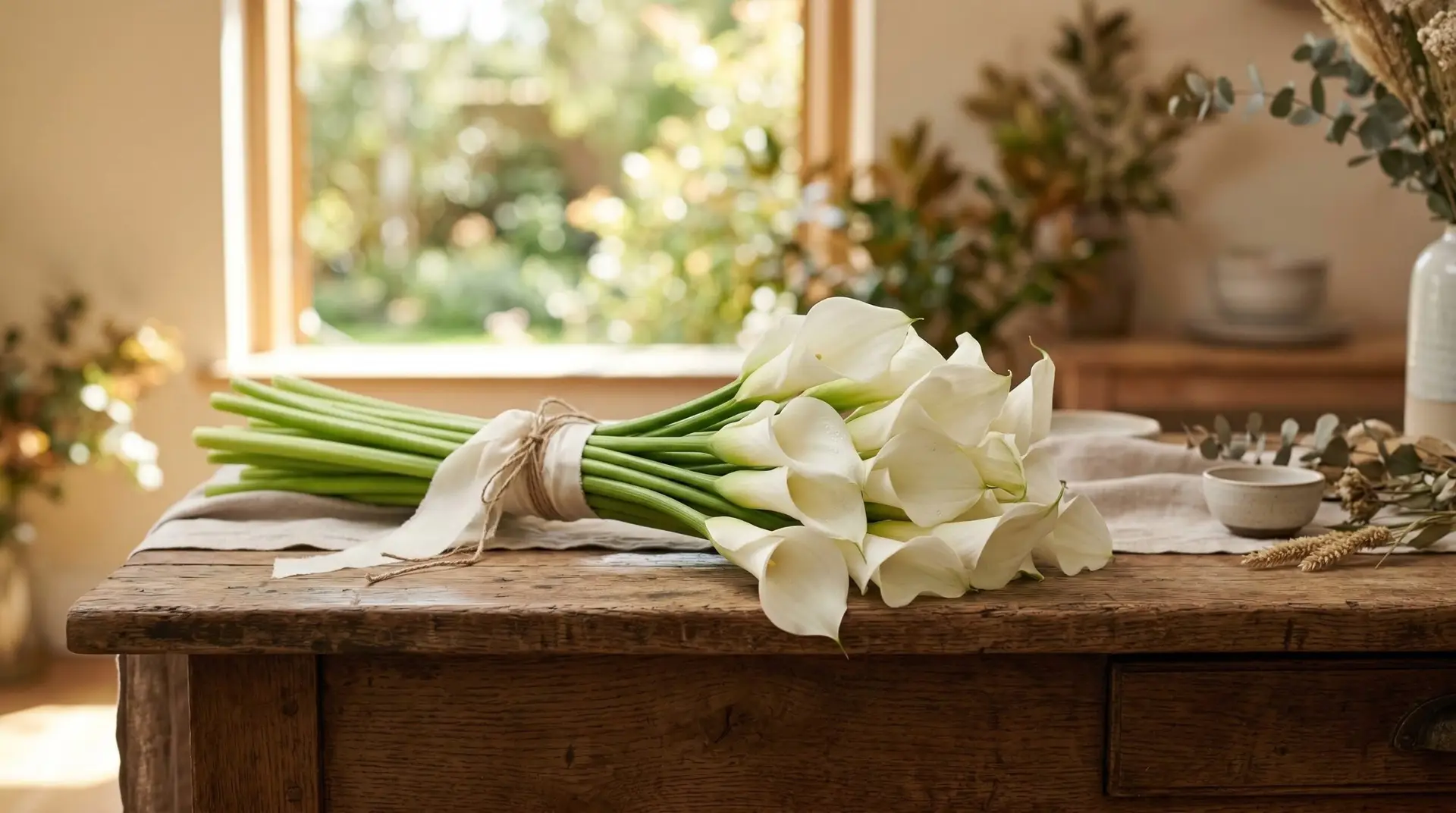
The traditional presentation bouquet, often called an arm sheaf, relies entirely on the natural geometry of the plant. A florist simply layers the long stems so the blossoms rest near the crook of the elbow while the cut ends point toward the floor. This style leaves the entire length of the calla lily bridal bouquet exposed to view, celebrating the thick, water-rich stalks rather than hiding them under ribbon. The design feels inherently relaxed, mimicking the way a gardener might carry a fresh harvest from the cutting garden back to the house.
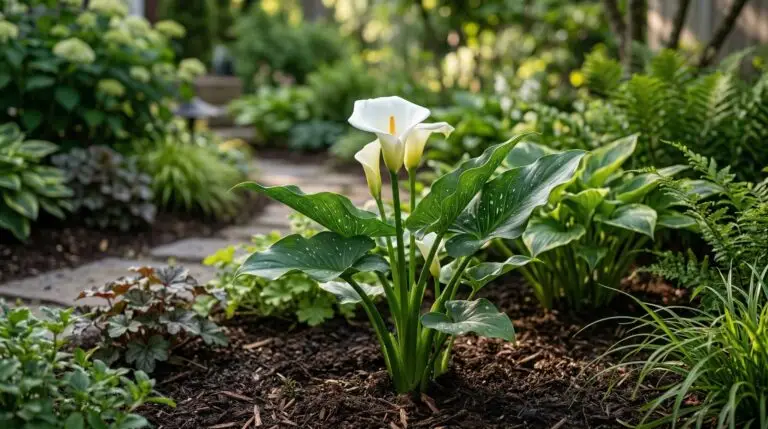
What looks like a single, elegant petal is actually a modified leaf called a spathe, which wraps protectively around the central yellow spike. This botanical structure gives the calla an incredible resilience against the physical demands of a long ceremony and a crowded reception. While delicate garden flowers might crush or wilt when pressed against a wedding gown or passed between bridesmaids, the calla holds its rigid, cup-like shape for hours without a water source. The thick cell walls of the plant retain moisture, keeping the bloom looking freshly cut long after the vows are spoken. Brides who want a flawless appearance from the first photograph to the final dance often gravitate toward this dependable strength. The flower simply refuses to droop, maintaining its upward gaze and clean silhouette through every embrace and sudden movement.
Exploring color beyond traditional white
While the creamy ivory calla remains a fixture of formal ceremonies, modern plant breeding has opened a wide spectrum of deeply saturated tones. Growers now cultivate calla lily wedding flowers in shades of crushed blackberry, burnt orange, and pale blush. The darker varieties, particularly the deep purples that border on black, offer a moody, dramatic alternative for autumn or evening events. These pigmented versions often feature slightly smaller blooms, allowing a florist to gather a dense cluster of color that feels rich and velvet-like.
The introduction of warm colors changes the entire personality of the arrangement. A bundle of mango-colored callas brings a bright, tropical warmth to a summer celebration, while soft pink varieties offer a subtle nod to traditional romance without relying on ruffled petals. The colored spathes often exhibit a gradient effect, with a darker throat fading out to a lighter rim, giving the flowers a painted, three-dimensional quality in photographs. Because the surface of the flower is so smooth, the colors read as solid blocks of pigment rather than the dappled shades found in multi-petaled blossoms. This solid coloration makes them highly visible from the back row of a church or across a wide lawn. Gardeners and florists alike appreciate how these saturated varieties hold their color intensity even as the flowers age, never fading into muddy or washed-out tones.
Pairing sculptural stems with softer blooms
A bouquet composed entirely of callas makes a strong statement, but these architectural flowers also serve as excellent anchors in mixed arrangements. The smooth, trumpet-like face of the calla provides a necessary visual resting place when surrounded by highly textured, complex flowers. Placing a few sleek callas among the dense, heavily ruffled layers of peonies creates a compelling contrast between tight structure and loose, bursting petals. This pairing balances the formal, rigid lines of the calla with the soft, ephemeral quality of a classic garden favorite.
Florists often use the distinct shape of the calla to guide the eye through a larger design. The pointed tip of the spathe acts like an arrow, directing attention outward from the center of the arrangement. When combined with the tight, spiraling centers of a classic rose, the calla adds an element of unexpected geometry to an otherwise traditional round bouquet. For a highly detailed, intricate look, designers might tuck small, star-shaped blossoms of stephanotis around the base of the calla stems. The tiny, fragrant white stars contrast sharply against the broad, smooth canvas of the larger flower. This careful mixing of scale and texture ensures the bouquet remains visually interesting from a distance and up close, rewarding guests who lean in to admire the details.
Designing the cascade and structured arrangements
The natural flexibility of the calla stem makes it an ideal candidate for the dramatic cascade bouquet. Rather than forcing stiff stems into awkward angles with wire, a designer can gently massage the fleshy stalks to enhance their natural curve. This technique allows the flowers to spill over the bride’s hands in a fluid, waterfall shape that feels organic rather than rigidly constructed. The teardrop silhouette draws the eye downward, complementing the long, flowing lines of a formal gown or a cathedral-length veil.
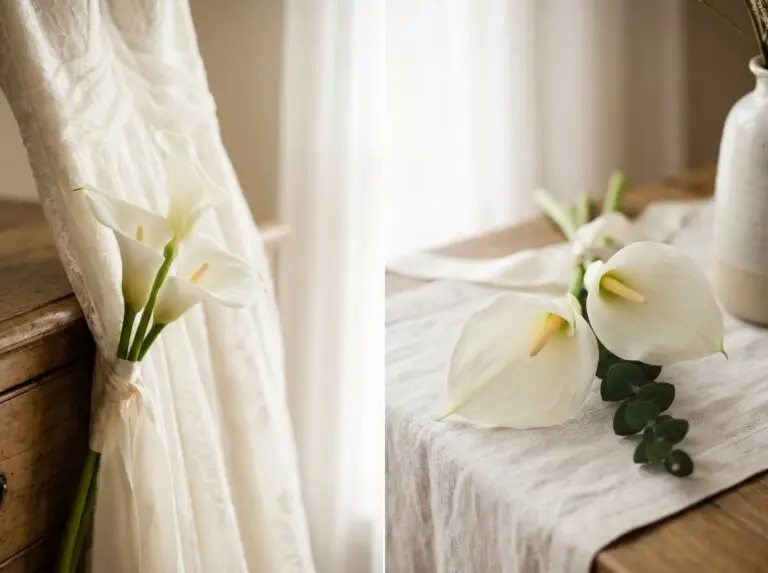
Creating a successful cascade requires an understanding of how flowers move together in space. The heavy heads of the callas must be balanced properly so the bouquet feels comfortable in the hand, rather than pulling awkwardly forward. Florists often place the largest, most open blooms near the top center of the arrangement, allowing the smaller, tighter buds to trail down toward the floor. The physical sensation of carrying such a substantial, artfully balanced arrangement becomes a distinct memory of the day. Long after the ceremony ends, when the bride finally sets her bouquet down on a reception table, the flowers maintain their deliberate shape. The smooth white trumpets, resting quietly against the linens, look just as composed and intentional in stillness as they did moving down the aisle.
More About Calla Lily
Why calla lily leaves are turning yellow and how to revive your plant
Calla lily as a cut flower and how to make arrangements that last over a week
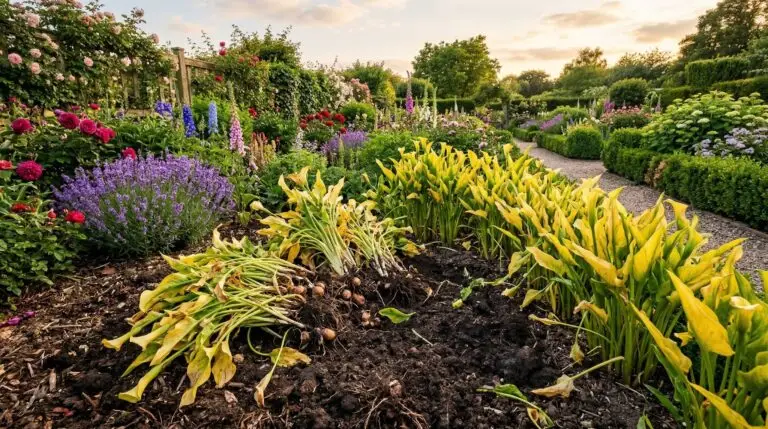
How to store calla lily bulbs over winter and replant them in spring
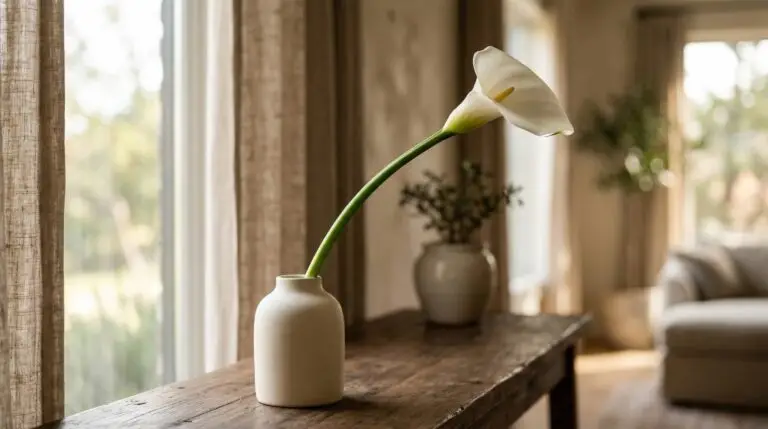
Using calla lilies in modern minimalist floral arrangements that make a statement
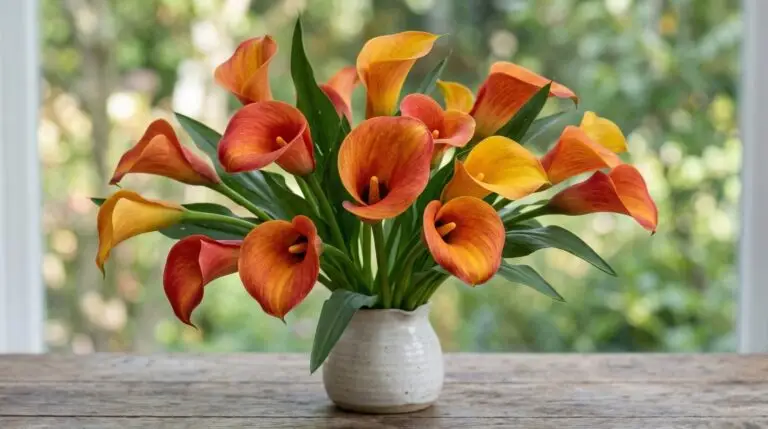
Colorful calla lily varieties that go far beyond the classic white trumpet
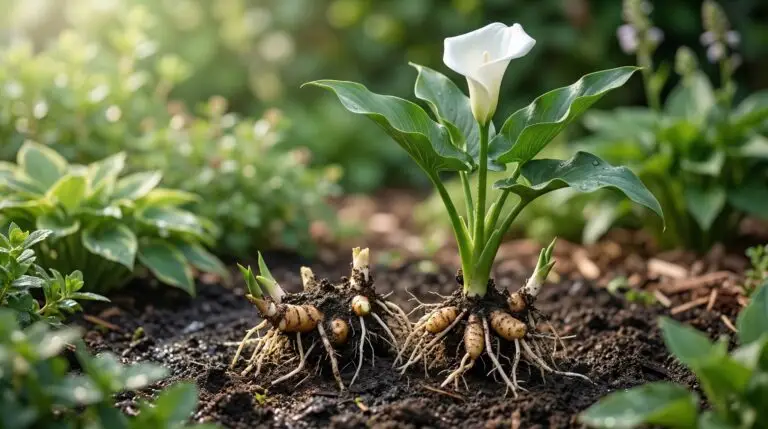
Calla lily propagation by dividing rhizomes for more plants every season
How to grow calla lilies in pots indoors for elegant year-round blooms
Calla lily meaning, from weddings to funerals, honestly explained