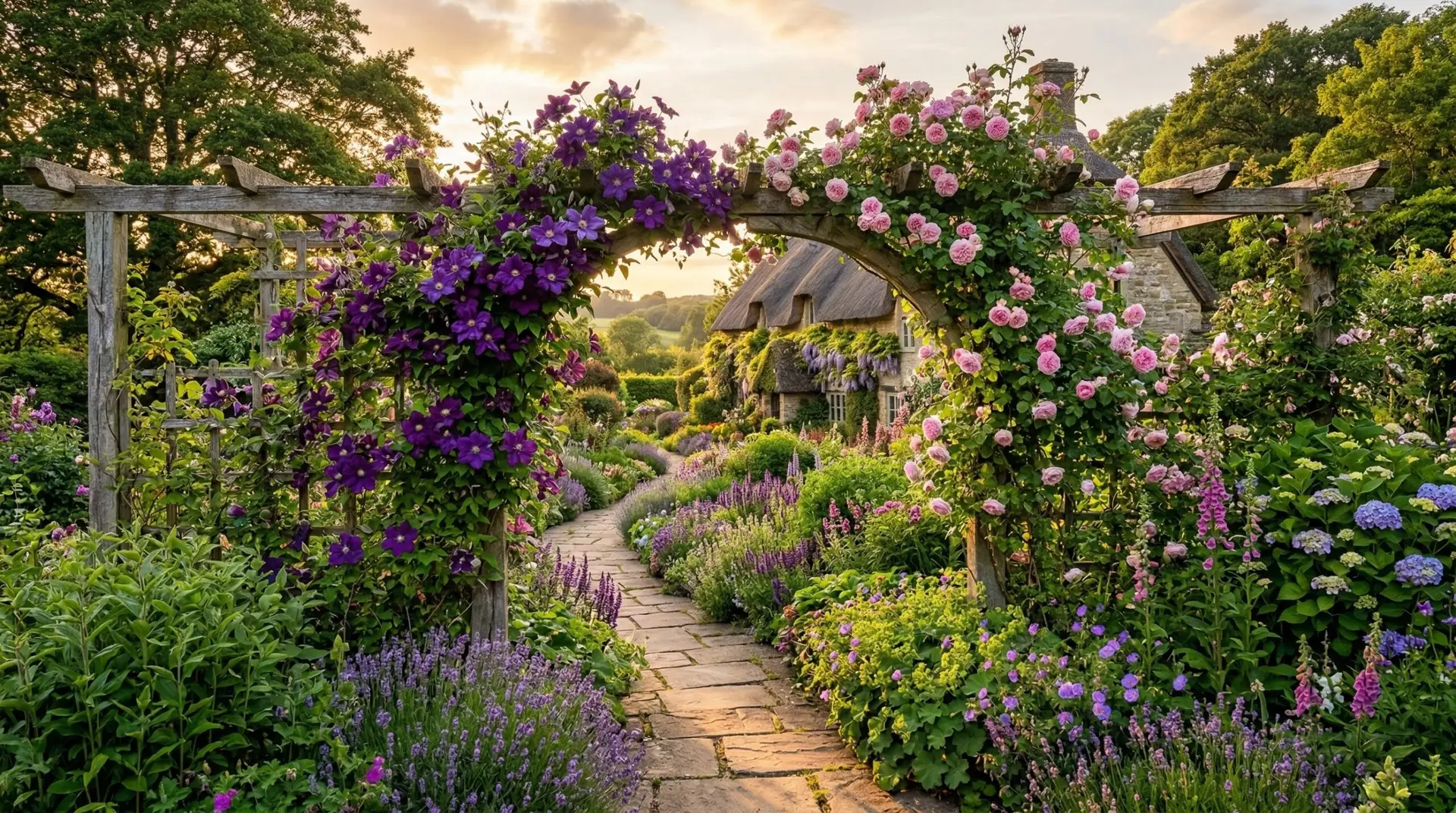
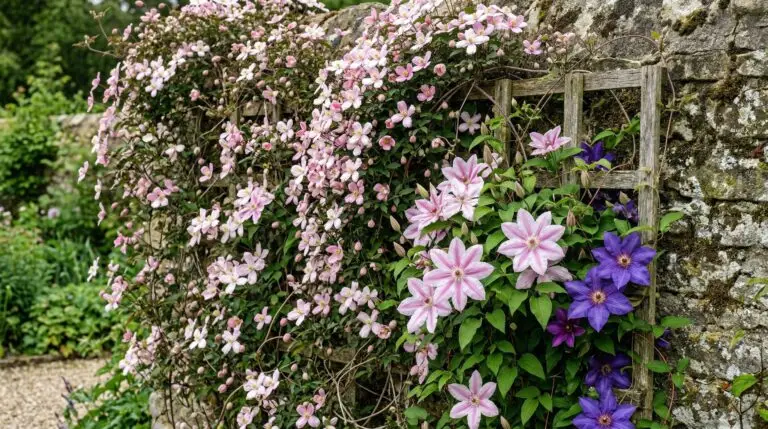
Late spring mornings bring a specific kind of magic to a well-established garden wall. Dew clings to the heavy, tightly furled buds of a climbing rose, while right beside it, the wide, flat petals of a large-flowered clematis open fully to catch the early light. The pairing of these two climbers is a classic English garden tradition that elevates a simple vertical support into a dense wall of continuous color. There is something satisfying about watching the thin, grasping leaf stalks of the clematis weave their way through the sturdy, thorny canes of the rose. They share the same vertical space without competing for the exact same visual attention. The rose provides the structural framework and the classic fragrance, while the clematis adds contrasting flower shapes and an extended season of interest. Gardeners have relied on this specific clematis rose combination for generations to maximize limited trellis space and create a layered effect that a single plant cannot achieve alone.
Growing clematis on roses requires more than simply planting two vines at the base of a post and hoping for the best. The success of this pairing depends heavily on selecting varieties that will play well together over many seasons. A highly vigorous climbing rose can easily swallow a delicate, slow-growing clematis, just as an aggressive clematis can smother a smaller shrub rose under a heavy blanket of foliage. Understanding the growth habits of both plants ensures they behave as true companions rather than competitors fighting for sunlight and air circulation.
Selecting varieties with matching habits
The most critical decision happens before a single shovel touches the soil. You must match the ultimate size and vigor of the rose with a clematis of equal strength. If you are working with a massive rambling rose that shoots up fifteen feet in a single season, you need a robust clematis variety that can hold its own and reach the upper canopy. Conversely, a modest eight-foot climbing rose pairs beautifully with a compact, large-flowered clematis that tops out at six to eight feet. Bloom time is another factor that dictates the visual outcome of your pairing. You can choose varieties that flower simultaneously for an overwhelming burst of early summer color, or you can select a late-flowering clematis to bloom long after the first flush of rose blossoms has faded. Many gardeners prefer the staggered approach, allowing the clematis to provide fresh color over the resting green foliage of the rose in late summer.
Color coordination offers endless possibilities for personal expression in the garden. A pale pink climbing rose is a soft background for a deep, velvety purple clematis, creating a high-contrast focal point. For a more subdued, elegant effect, planting a cream-colored rose alongside a pure white clematis yields a sophisticated monochromatic display that practically glows in the evening light. The key is to avoid colors that clash or muddy each other from a distance, keeping the distinct visual identity of each flower intact.
Preparing the ground for two heavy feeders
Both of these plants demand rich soil and consistent moisture to fuel their upward growth and abundant flowers. Because they will share close quarters, the soil preparation must be generous enough to sustain two heavy feeders indefinitely. Digging a wide, deep hole and amending the native soil with plenty of well-rotted compost or aged manure gives both root systems the resources they need. It is generally best to plant the rose first and let it establish its woody framework for a year or two before introducing the clematis. If you must plant them at the same time, space their root balls at least eighteen to twenty-four inches apart to prevent immediate competition for water. The clematis should be planted slightly deeper than it was in its nursery pot, which encourages the development of dormant buds below the soil surface. This deep planting technique provides an insurance policy, allowing the plant to recover if the top growth is ever damaged by wilt or accidental breakage.
Root competition remains a constant factor when growing two distinct plants on a single support structure. To give the clematis a fair start, many growers place a physical barrier, such as a large piece of slate or a sunken plastic pot with the bottom cut out, between the two root zones. This barrier directs the clematis roots to grow away from the dense, established root mass of the rose. Regular watering is non-negotiable during the first few seasons, as the overhead canopy of rose leaves creates a dense umbrella that deflects natural rainfall away from the base of the clematis.
Training vines on shared support structures
A sturdy trellis, pergola, or wall system is essential to bear the combined weight of mature wet foliage from both plants. The rose canes must be tied in manually, as roses lack the tendrils or twining stems needed to climb on their own. You will need to train the main rose canes horizontally along the trellis wires or wooden slats, which encourages lateral shoots to develop and produce more flowers. Once the woody framework of the rose is securely fastened, the clematis can be introduced to the structure. Clematis climb by wrapping their sensitive leaf petioles around anything narrow enough to grasp. The thick canes of an older rose are often too wide for the clematis to grip directly. You can solve this by tying thin garden twine vertically through the rose branches, giving the young clematis stems a slender ladder to climb until they reach the narrower lateral shoots of the rose.
As the season progresses, the clematis will naturally find its way through the thorny scaffolding provided by its companion. You will still need to intervene occasionally to spread the clematis stems outward, preventing them from bunching up into a tangled knot at the center of the trellis. Gently guiding the flexible green stems toward bare patches on the rose ensures an even distribution of flowers across the entire vertical space. The visual effect is highly rewarding when the star-shaped clematis blooms peek out from beneath the clusters of rose petals, similar to how a jasmine vine might weave its fragrant white stars through a rigid garden fence.
Managing the annual pruning cycle
Pruning a mixed vertical planting terrifies many beginners, but the process becomes straightforward once you understand the natural rhythms of both plants. The secret lies in choosing a clematis from Pruning Group 3, also known as the late-flowering or hard-prune group. These varieties bloom entirely on new growth produced in the current season. Every late winter or early spring, you simply cut all the clematis stems down to a pair of healthy buds about twelve inches above the soil line. This completely removes the old clematis vines from the rose canopy, leaving the rose branches bare and fully accessible for their own annual pruning. You can then thin out the dead wood on the rose, tie in new canes, and shape the framework without wrestling through a birdcage of dead clematis stems.
If you choose an early-flowering clematis from Group 2, the maintenance requires significantly more patience and careful handwork. These varieties bloom on the previous year’s wood, meaning you cannot chop them to the ground without sacrificing the spring floral display. You will have to carefully untangle the dormant clematis vines from the rose canes, prune the rose, and then re-tie the fragile clematis stems back onto the newly shaped framework. Most gardeners discover that the ease of the hard-prune varieties makes them the superior choice for growing clematis with roses on a shared trellis.
A well-tended combination of these two classic plants transforms an ordinary garden boundary into a living wall that changes character from week to week. In early spring, the bare architecture of the rose canes supports the rapid, bright green ascent of the clematis shoots. By midsummer, the structure disappears entirely beneath layers of contrasting foliage and a heavy curtain of mixed blossoms. The scent of the rose drifts through the air while the flat, colorful faces of the clematis catch the eye from across the yard. Maintaining this partnership requires attention to soil moisture, thoughtful pruning, and a sturdy trellis to hold the abundance of the season. The effort yields a garden feature that feels both highly intentional and wonderfully wild. You are left watching the late afternoon sun filter through a dense, intertwined canopy of leaves and petals, waiting for the first cool breeze to scatter the fallen blooms across the soil below.
More About Clematis
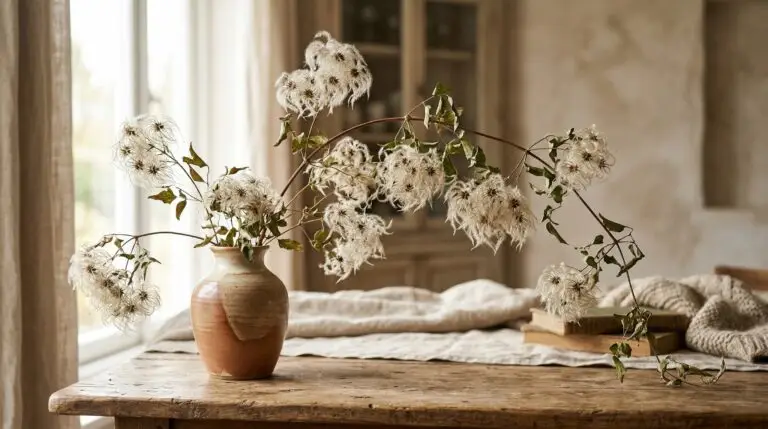
Clematis seed heads as winter garden interest and dried flower arrangements
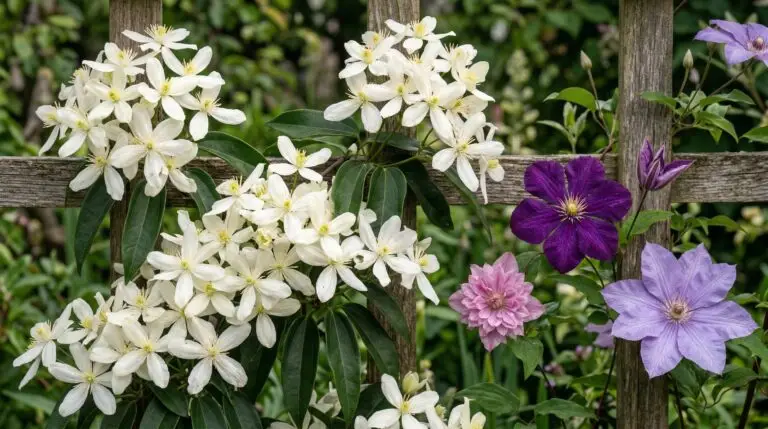
Evergreen clematis varieties that keep your garden looking alive through winter
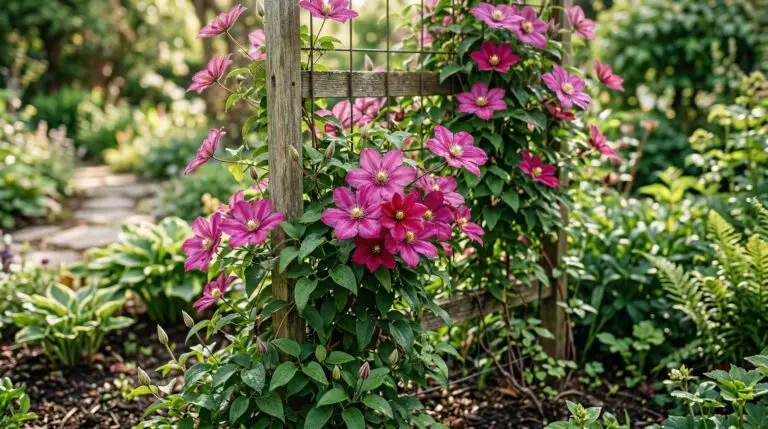
Small-space clematis varieties perfect for containers mailboxes and small trellises
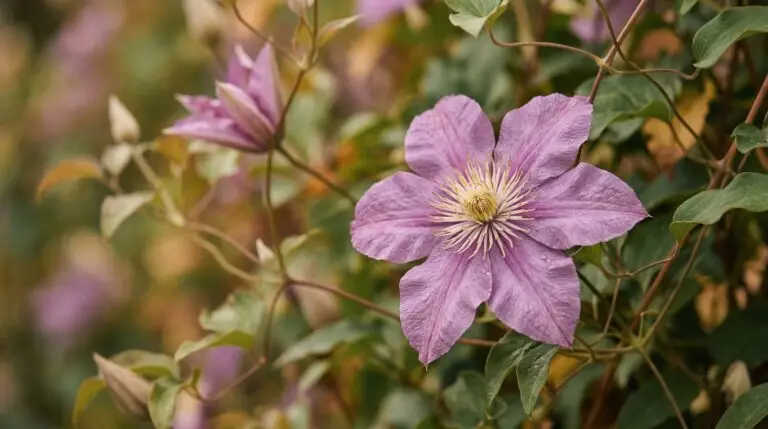
Clematis flower meaning and the symbolism of the traveller’s joy vine
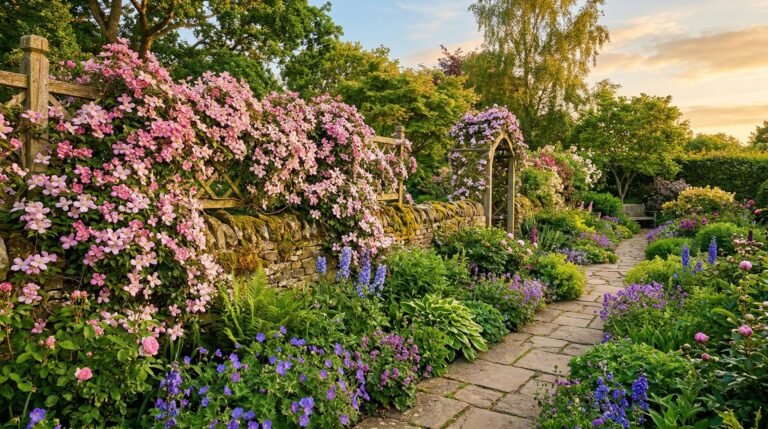
Understanding clematis pruning groups so you never accidentally cut off your blooms
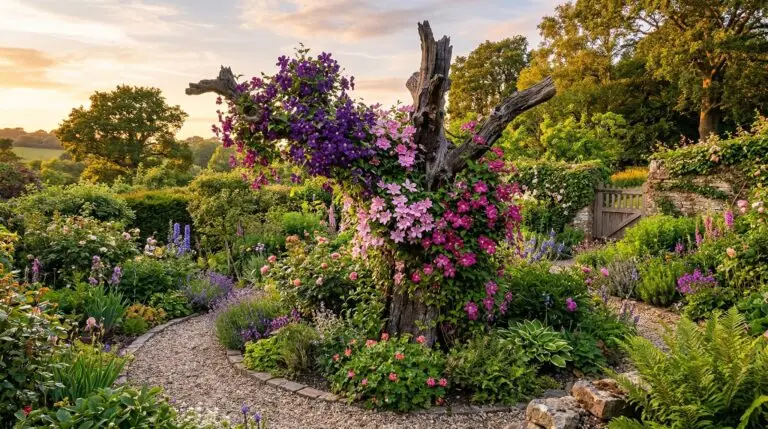
Growing clematis on trees for a naturalistic look inspired by woodland climbing vines
Best clematis varieties for covering fences and trellises with walls of flowers