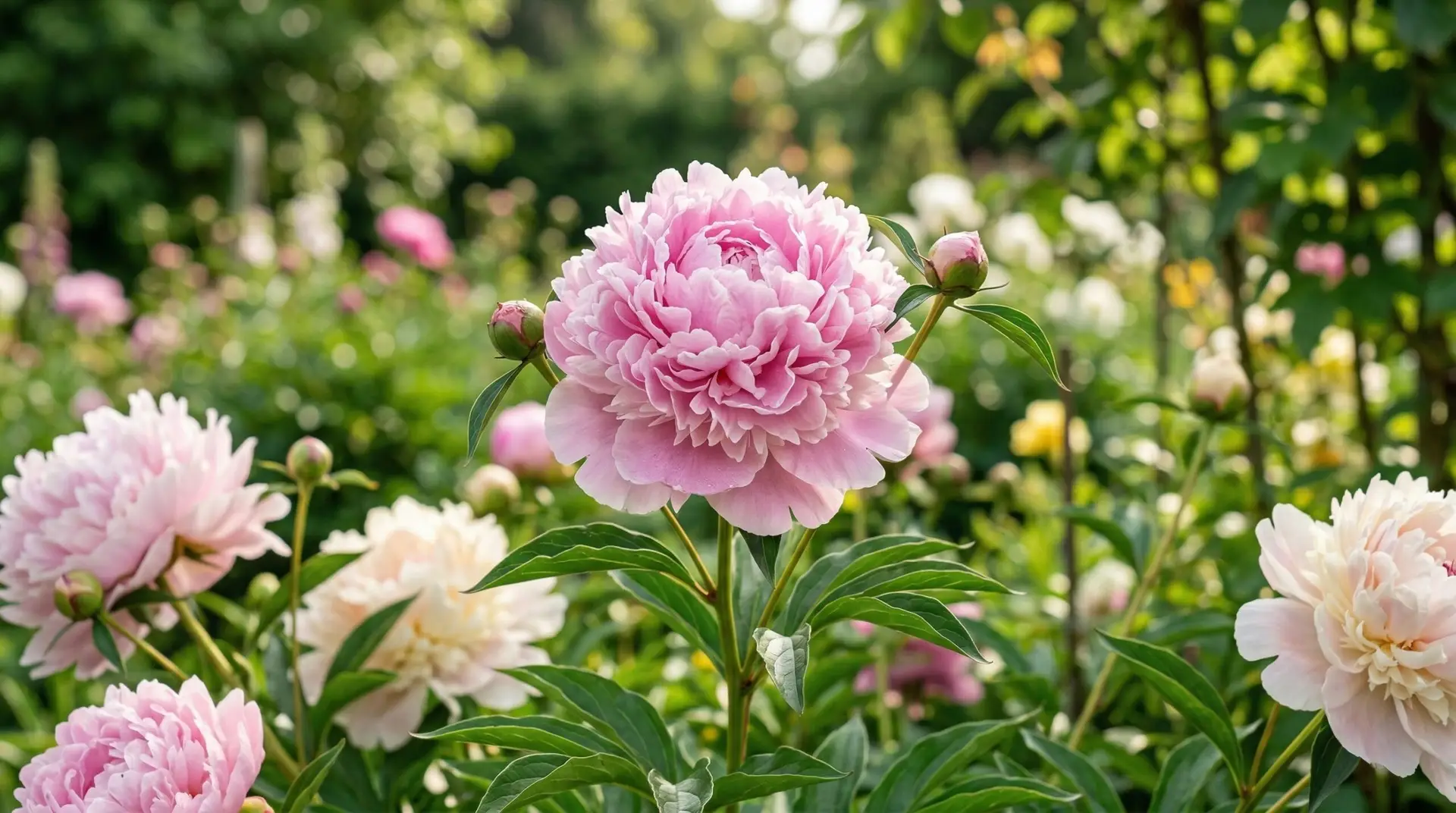
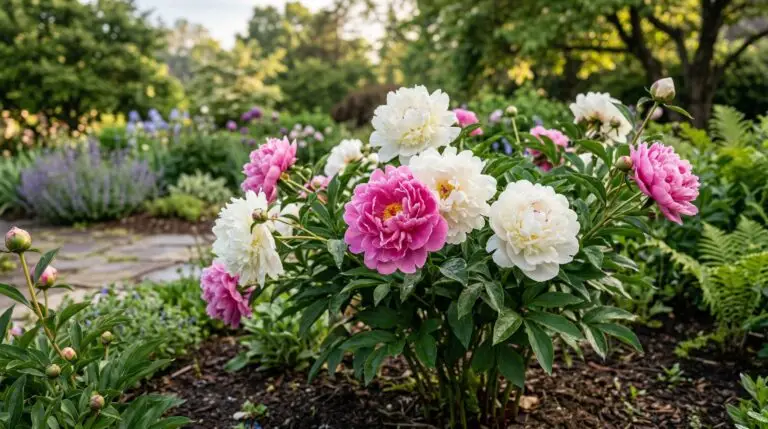
I wish you could stand with me in the garden just as the sun clears the eastern trees, catching the heavy dew on the peony foliage. The air carries the sharp, clean scent of wet soil mixed with a faint sugary perfume rising from the tight flower buds. At this hour, the leaves are a deep, matte forest green, shedding water in perfect spherical drops that magnify the veins beneath. You can see the heavy heads nodding slightly under their own weight on thick, ribbed stems. We are here to gather these blooms before the heat of the day forces them open, capturing a fleeting moment of spring to bring indoors. Cutting peonies requires careful timing, catching the bud exactly when it is ready to release its tightly packed layers of silk. If we wait too long, the petals will shatter on the dining table in a matter of days, but if we harvest them right now, we can hold this morning magic for weeks.
Walking down the row, you will notice how different each variety looks in its infancy, some wrapped tightly in pale green sepals and others already showing a sliver of saturated magenta. The secret to a long peony vase life lies entirely in your fingertips, relying on touch rather than sight to know when the flower is ready. You must reach out and gently squeeze the center of the bud with your thumb and forefinger. Many buds will feel rigid and unyielding, like a glass marble hidden under a layer of soft green tissue. Leave those hard buds on the plant, as cutting them now means they will never open, remaining tightly sealed forever in your vase. We are searching for buds that yield slightly under pressure, feeling exactly like a fresh marshmallow right out of the bag. When the bud gives way with that specific soft resistance, the flower has developed enough to bloom fully once severed from its roots.
Finding the marshmallow stage
The marshmallow stage looks slightly different depending on whether you are growing single, semi-double, or full double varieties. A heavy double peony, packed with hundreds of thin, papery petals, will often show a distinct cap of color pushing through the green casing when it reaches the right softness. You will see a dome of soft blush pink or deep crimson swelling at the top, feeling hollow and squishy when tested. Single varieties might only show a thin line of color along the seams of the sepals, yet they will still offer that unmistakable spongy texture. The morning light reveals small beads of sticky sap clinging to the outside of these ready buds, catching the sun like tiny amber jewels. This sweet nectar is exactly what draws the ants that you see marching up and down the rough green stems. You can almost feel the tension in these soft buds, holding back a mass of ruffled petals waiting for a warm room and a vase of fresh water. Just like when harvesting a rose in the early morning, catching the bloom before it fully opens guarantees the longest possible display inside your home.
Shaking off the garden guests
You cannot bring these spring flowers indoors without addressing the busy trail of ants currently feasting on the sticky sap coating the sepals. These insects are harmless to the plant, simply acting as a cleanup crew for the sugary exudate, but they are rarely welcome on a kitchen counter. Once you cut the thick stem with a sharp pair of bypass pruners, hold the flower upside down by the stalk. Give the stem a firm, gentle shake, watching the loose ants tumble down into the grass below. For the stubborn few that cling tightly to the sticky bud, you will need the help of cool water. Dip the entire flower head into a bucket of clean, cold water, swirling it around for a few seconds. The water dissolves the sugar and washes away the remaining insects without bruising the delicate outer layers of the flower. The bud emerges dripping and perfectly clean, feeling cold and smooth against your skin as you prepare it for the house.
Conditioning stems for the vase
Bringing the clean stems to the potting bench, you will notice the sharp, herbaceous smell of the cut stalks filling the air. The stems are thick and fibrous, requiring a clean, angled cut at the base to open up the vascular tissue for maximum water uptake. Strip away the lower foliage, feeling the waxy, smooth surface of the leaves give way as you snap them downward off the stalk. Any leaves left below the water line will quickly decay, turning the water murky and introducing bacteria that clog the stems and cause the flowers to wilt prematurely. Place the freshly trimmed stems immediately into a clean vessel filled with lukewarm tap water, allowing them to drink deeply after their separation from the main plant. The water should look crystal clear, reflecting the light from the window and offering a pure environment for the flowers to hydrate. You might notice the stems drinking a surprising amount of water in the first few hours, requiring you to top off the vase before evening falls. Much like preparing a freshly cut dahlia for an arrangement, this initial deep conditioning is what gives the flower the strength to hold its heavy head high for days.
Storing buds in the cold
Sometimes you want to save these perfect marshmallow buds for a specific event, delaying their bloom time by several weeks. You can place the freshly cut, dry stems directly into the cold darkness of a refrigerator to hold them in suspended animation. Wrap the stems and buds gently in crisp, dry newspaper, creating a dark cocoon that protects the delicate tissue from the harsh, dehydrating air of the cooling unit. The paper feels rough and dry in your hands, a stark contrast to the smooth, damp buds hidden inside the bundle. Lay the wrapped bundles flat on a shelf, far away from any ripening fruit that might emit ethylene gas and cause the flowers to age prematurely in the dark. The cold temperature halts the opening process entirely, keeping the buds in that exact squishy, colorful state for up to a month. When you finally pull them out into the warm air of your kitchen, the paper will feel cool to the touch and the stems will appear slightly limp.
Waking the sleeping buds requires trimming an inch off the dry, calloused bottom of each stem and plunging them into a tall bucket of warm water. Within hours, you will watch the stems stiffen and draw the water upward, plumping the buds back to their original firm state. The transformation is rapid and entirely visible, as the outer green sepals peel back to reveal the compressed mass of color inside. You will hear the faint rustle of petals sliding against one another as the bloom expands, taking up twice the space it did just hours before. The fragrance begins to pool in the room, a heavy, sweet perfume that smells like old-fashioned face powder and warm sugar. Soon, the flowers are fully open, displaying a center of golden stamens surrounded by ruffled skirts of pink, white, or crimson silk. It is a process as dramatic and rewarding as forcing a ranunculus corm into spring bloom, offering a massive reward for a little bit of careful timing. The final image is a vase overflowing with impossibly large, soft blooms, dropping a single, perfect petal onto the polished wood of the table as the afternoon light fades.
More About Peonies
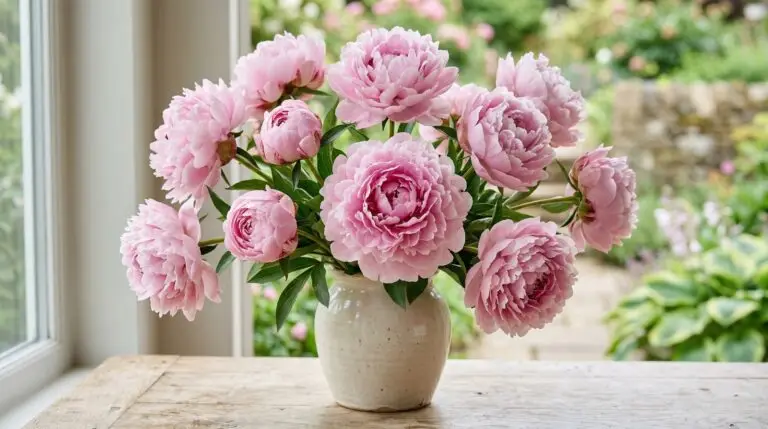
Best peony varieties from classic Sarah Bernhardt to trendy Coral Charm
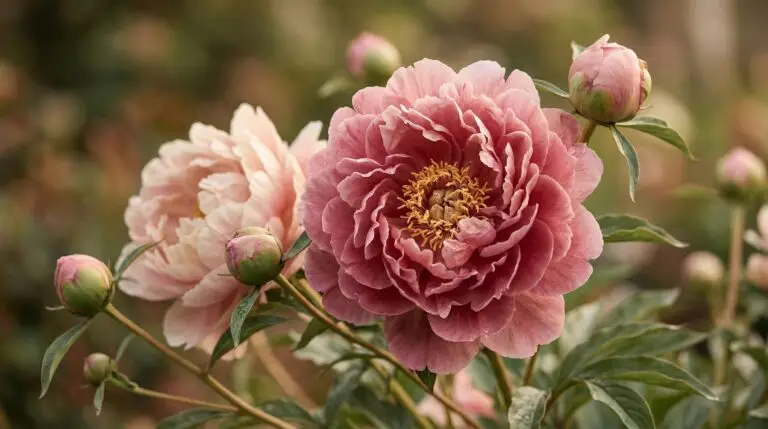
Peony flower meaning and why this bloom represents romance prosperity and good fortune
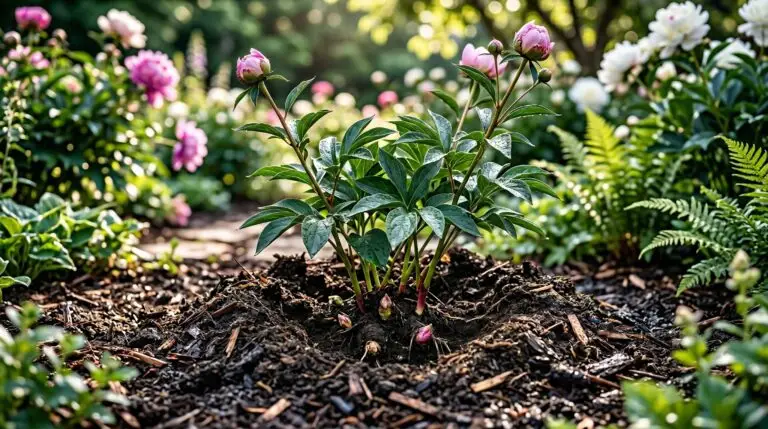
Why peonies fail to bloom and the planting depth mistake that keeps them flowerless
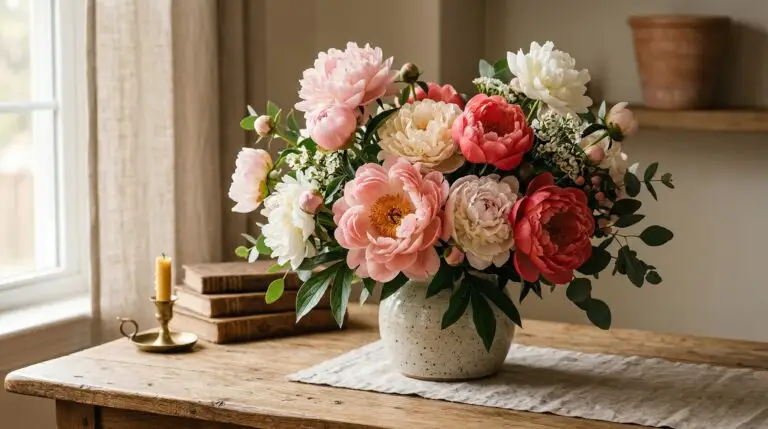
Peonies as the most coveted wedding flower and why brides pay premium for peony season

Companion plants for peonies that extend the beauty season beyond peony’s brief moment
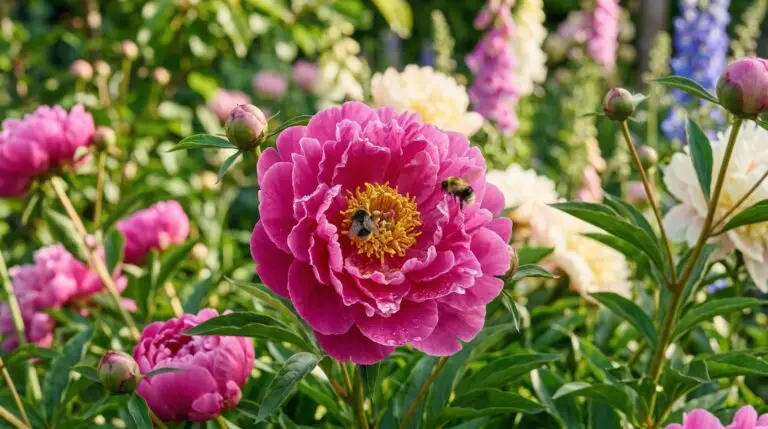
Why peonies need ants and the truth about the ant myth that refuses to die
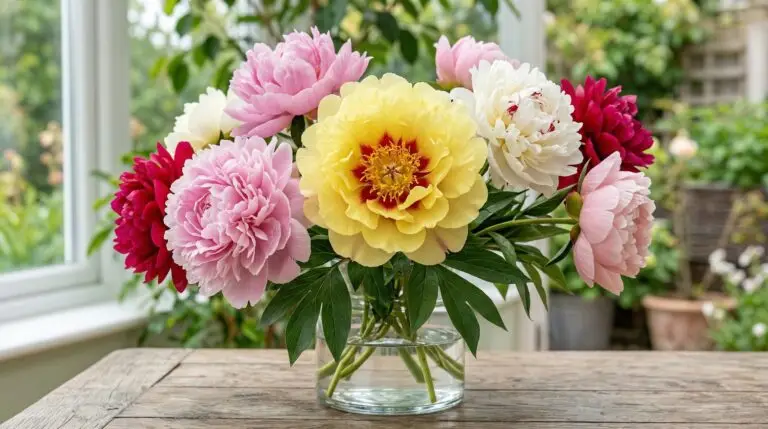
Itoh peonies the hybrid breakthrough that gives the best of both herbaceous and tree peonies
Growing peonies in warm climates and the chill-hour challenge in zones 8 and above