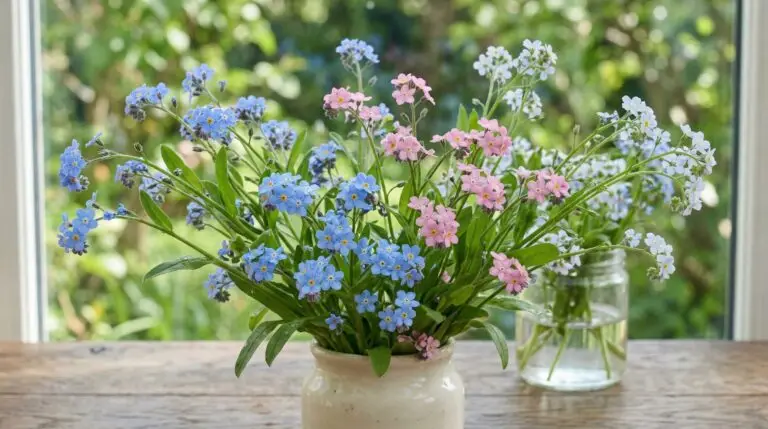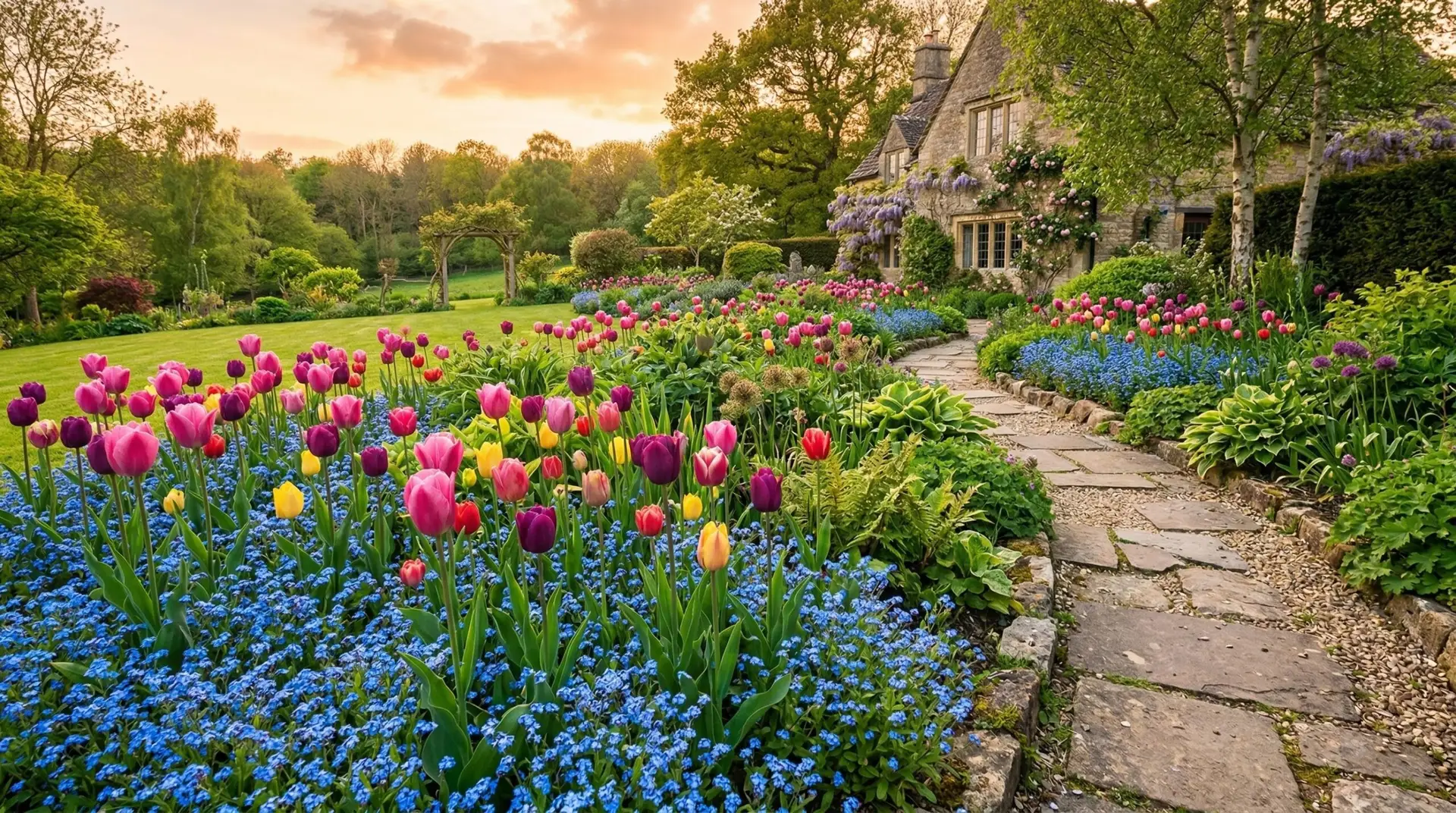
Every garden needs a matrix, a foundational layer that ties disparate elements together into a cohesive composition. When we look at the spring garden, the ground plane often feels disjointed because emerging plants leave too much bare soil visible between them. Forget-me-nots solve this spatial problem by creating a low, continuous cloud of color that builds a unifying base layer for taller structural plants. Instead of viewing spring bulbs as isolated objects floating in mulch, we can use this delicate blue flower to anchor them to the earth. The resulting composition mimics a natural woodland floor, where plants grow in densely interwoven communities rather than distinct, separated clumps. This layered approach transforms a simple bulb display into a complete, immersive garden scene.
Color theory and spring combinations
Blue is a receding color in the garden, which creates an illusion of depth and makes spaces feel larger than they actually are. When you use forget-me-nots as a continuous backdrop, their soft azure tones provide the perfect foil for the saturated, advancing colors of spring bulbs. Planting a classic tulip underplanting with forget-me-nots is a traditional design technique that relies on this exact color principle. The cool blue carpet makes warm-toned tulips in shades of apricot, coral, and pale yellow appear more luminous and intentional. Conversely, pairing the blue ground cover with dark purple or maroon tulips creates a moody, analogous color harmony that feels highly sophisticated. You can manipulate the mood of your spring border entirely by changing the color of the bulbs that rise above this steady blue foundation.
The color dynamics change slightly when we introduce different bulb varieties into the woodland scheme. A daffodil carpeting of pale yellow or pure white cultivars against a sea of blue forget-me-nots creates a crisp, refreshing contrast that defines early spring. Because daffodils have strong, architectural stems, the visual weight of their yellow trumpets needs a substantial base to keep the composition balanced. The forget-me-not ground cover provides this visual weight through sheer volume. It spreads wide to counteract the vertical thrust of the larger bulbs. Earlier in the season, you can achieve a similar effect on a smaller scale by mixing forget-me-nots with a delicate snowdrop drift. The bright white bells of the snowdrops pierce through the emerging green foliage of the forget-me-nots, establishing an early, quiet color palette before the larger bulbs take over.
Form and texture in the woodland layer
Good garden design relies heavily on textural contrast, and the relationship between forget-me-nots and spring bulbs is a perfect study in opposing forms. Forget-me-nots have a fine, almost hazy texture created by their tiny, clustered flowers and soft, slightly fuzzy leaves. They form a mounding, horizontal mass that hugs the ground and blurs the hard edges of pathways or stone borders. Spring bulbs, by contrast, are defined by their rigid, linear foliage and distinct, geometrically shaped flower heads. When a smooth, upright tulip stem emerges through the soft, frothy mass of a forget-me-not companion, the structural qualities of both plants become more pronounced. The fine texture of the ground cover makes the bold form of the bulb look even more architectural and commanding.
Expanding this textural study into the broader shade garden opens up new possibilities for plant combinations. As the canopy trees begin to leaf out, the garden floor shifts into deeper shade, requiring plants that rely on foliage rather than just flowers for visual impact. You can mix forget-me-nots with bold-leaved shade plants like hostas or brunnera to create a dynamic understory layer. The broad, ribbed leaves of a hosta pushing through a mist of tiny blue flowers creates a high-contrast composition that holds the viewer’s attention. If you want a more subtle, harmonious texture, pairing them with the soft, arching stems of Virginia bluebells creates a continuous, flowing wave of cool colors and relaxed forms. The goal is to build a layered plant community where every texture has a counterpoint, ensuring the garden remains visually engaging from the ground up.
Managing the seasonal transition
One of the most persistent design challenges in the spring garden is managing the decline of bulb foliage. Tulips and daffodils require their leaves to photosynthesize and rebuild energy for the following year, but this yellowing foliage is visually disruptive to a manicured garden space. Forget-me-nots offer a highly effective masking strategy for this exact problem. As the bulb flowers fade and their stems begin to droop, the forget-me-nots are usually reaching their peak volume. They swell upward and outward to obscure the declining base of the bulbs. The mounding habit of the ground cover physically swallows the yellowing leaves, keeping the garden looking fresh and intentional while the bulbs complete their natural life cycle. This succession of growth ensures that the visual focus remains on actively growing plants rather than dying foliage.
The utility of forget-me-nots extends beyond their masking abilities, as they also contribute to the late spring and early summer garden structure. Once their blue flowers finally fade, the plants leave behind a dense mat of green foliage that continues to suppress weeds and cool the soil. In a woodland setting, this green carpet provides a transitional layer, holding the space until ferns, astilbes, and late-emerging shade perennials reach their mature size. Eventually, biennial forget-me-nots will set seed and die back, at which point their decaying foliage adds organic matter back into the soil. This process feeds the very bulbs they once supported. Understanding this life cycle allows you to design a garden that embraces change, using the natural progression of plants to maintain continuous ground cover.
Establishing naturalized drifts
To achieve a truly immersive woodland look, you must think about scale and the physical layout of your plantings. Forget-me-nots look most effective when planted in large, sweeping drifts rather than tight, isolated circles around individual trees. You should arrange them in irregular, elongated kidney shapes that follow the natural contours of the land or the curve of a garden path. This asymmetrical planting style draws the eye through the space, creating a sense of movement and encouraging the viewer to explore further into the garden. When placing your spring bulbs within these drifts, avoid planting them in straight lines or rigid geometric grids. Instead, scatter the bulbs in concentrated pockets that gradually thin out at the edges, mimicking the way seeds naturally disperse and colonize a forest floor.
The most successful gardens treat the ground plane as a deliberate design opportunity rather than empty space waiting to be filled. By using forget-me-nots as a living mulch under your spring bulbs, you are practicing the principle of vertical layering. This technique maximizes the biological and visual density of your garden, ensuring that every square inch of soil contributes to the overall composition. The low, horizontal spread of the blue flowers establishes a quiet baseline, which gives the vertical, colorful bursts of tulips and daffodils a proper context. When you stop designing with isolated plants and start designing with interlocking layers, your garden will naturally develop the richness, depth, and cohesion of a mature space.
More About Forget-me-nots
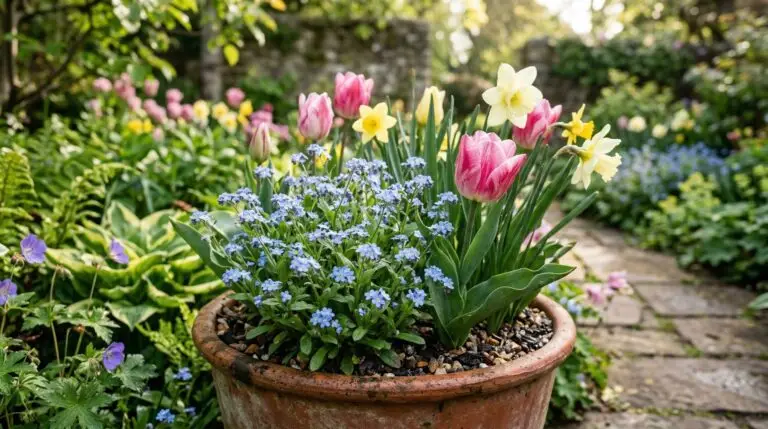
Forget-me-nots in containers and window boxes for spring cottage charm
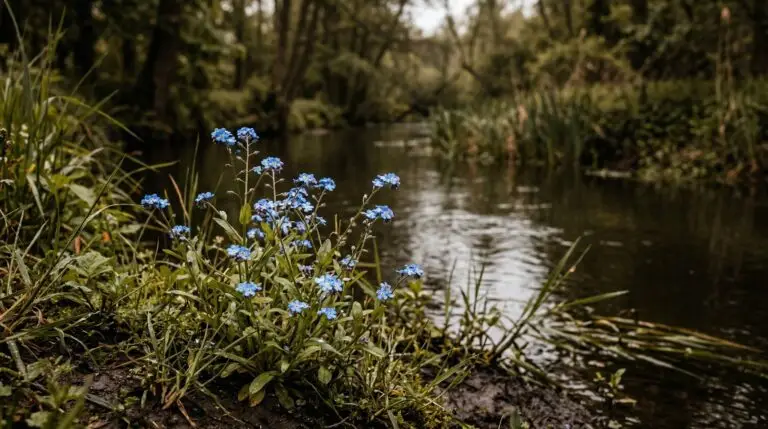
Forget-me-not flower meaning and the romantic legend behind the name
Growing forget-me-nots from seed and the simple trick of fall sowing for spring flowers
How to control forget-me-nots when self-sowing becomes too enthusiastic
How to grow forget-me-nots for clouds of tiny blue flowers in spring gardens
Forget-me-nots in literature and art and their enduring place in cultural memory
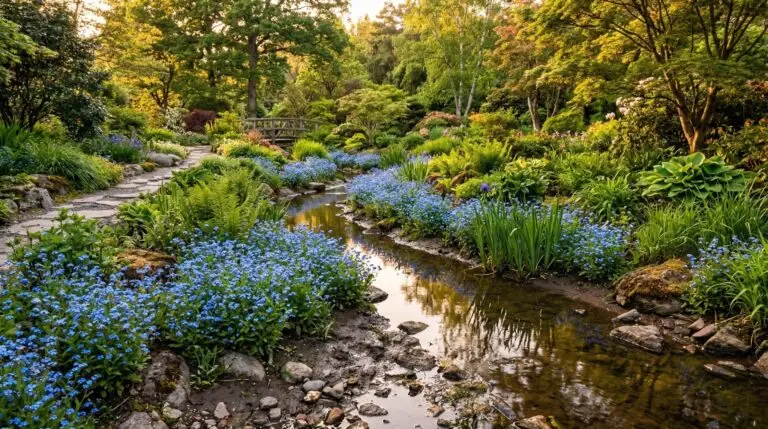
Water forget-me-nots for pond edges and stream banks that stay wet
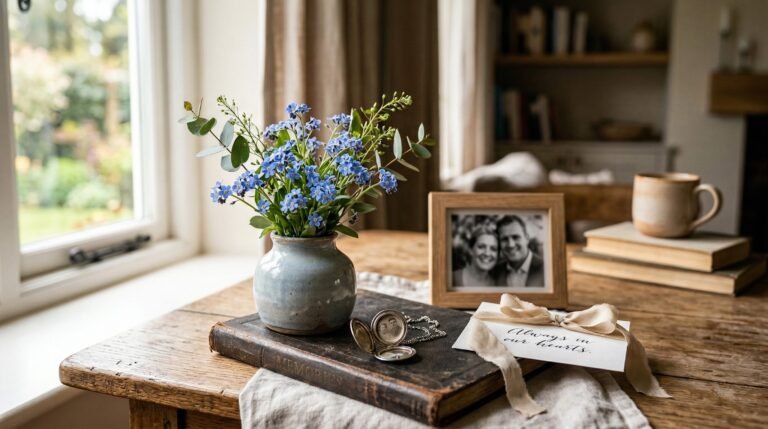
Forget-me-nots for wedding flowers and the sentimental meaning for bridal bouquets