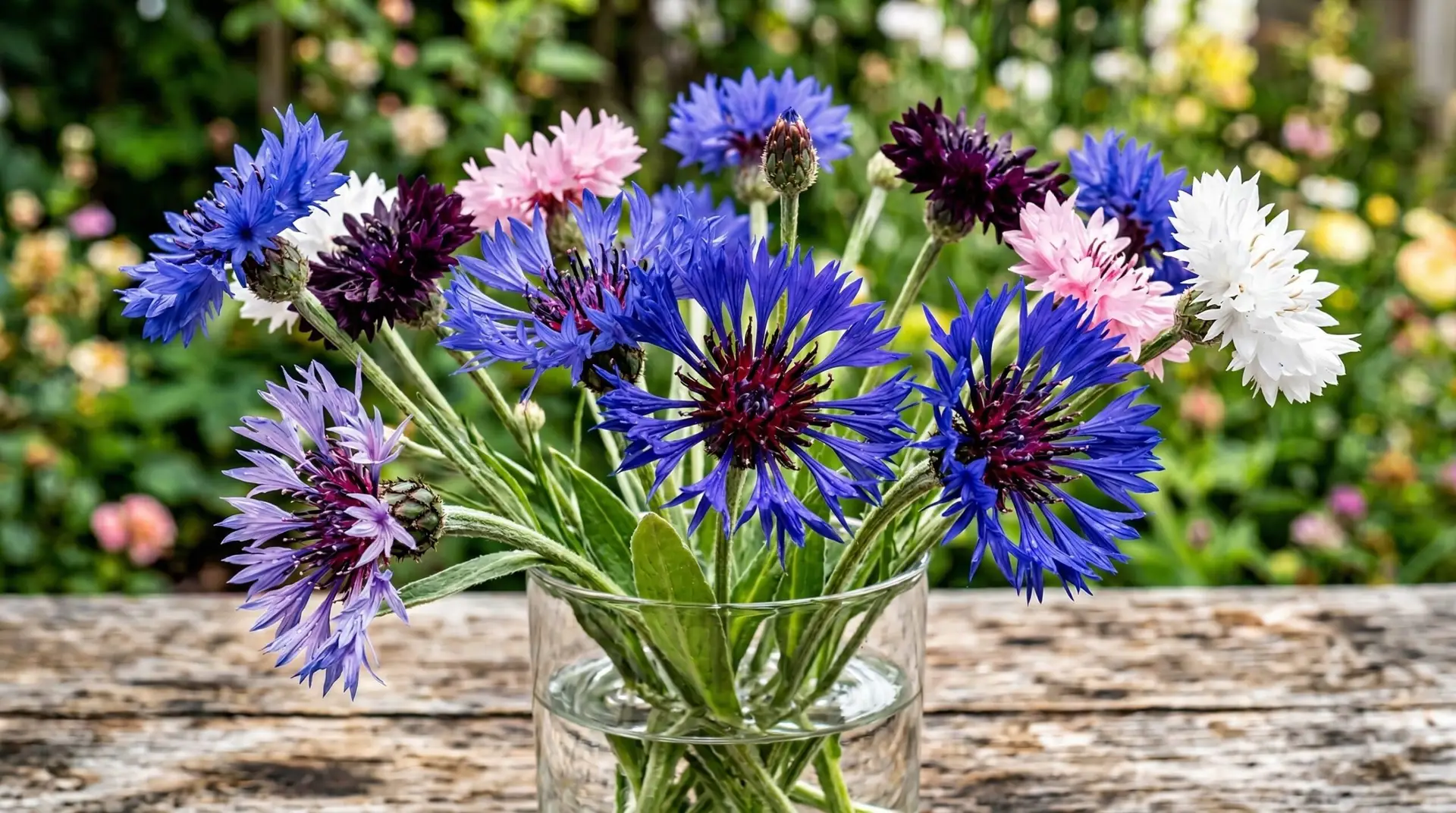
Most gardeners know the classic blue bachelor button, Centaurea cyanus, which completes its entire life cycle in a single season and relies on prolific self-seeding to persist in a cultivated garden. If you look closely at the center of that familiar blue blossom, you will notice it is actually a complex community of tiny individual flowers packed tightly together. This composite floral structure is a hallmark of the Asteraceae family, designed specifically to provide a highly efficient landing pad for foraging insects. While the annual version is familiar, the genus Centaurea holds several rugged, long-lived perennial species that return from their root systems year after year. These perennial cornflowers offer a fascinating look at how plants adapt their underground architecture and reproductive strategies to survive in harsh, competitive environments. By understanding the biology of these perennial species, gardeners can better predict how they will behave, spread, and interact with the surrounding ecology.
The biology of the mountain cornflower
The most widely grown perennial cornflower is Centaurea montana, commonly known as the mountain cornflower. As the scientific name suggests, this species originated in the mountainous regions of Europe, where it evolved to thrive in rocky, well-drained soils with intense sunlight. To survive in environments where surface moisture is transient, C. montana developed a vigorous network of underground rhizomes. These modified subterranean stems allow the plant to store carbohydrates during lean times and push up new shoots at the periphery of the main clump. This rhizomatous habit explains why the mountain cornflower spreads so assertively in a garden setting, often forming dense, weed-suppressing mats of foliage. Understanding this shallow, spreading root system tells us exactly why the plant resents heavy clay soils that hold excess water and suffocate the roots during winter dormancy.
The foliage of Centaurea montana also reveals its evolutionary history in exposed, high-altitude habitats. The leaves are lance-shaped and covered in fine, silvery hairs that create a slightly fuzzy texture. These microscopic hairs, called trichomes, serve a highly specific biological purpose by reflecting intense ultraviolet radiation away from the leaf surface. The trichomes also create a boundary layer of still air right next to the stomata, which significantly reduces the amount of water the plant loses through transpiration on windy days. When you plant a mountain cornflower in the garden, you are utilizing a species perfectly engineered for drought tolerance once its root system is established. This physiological adaptation makes it highly resilient in dry borders where broad-leaved, moisture-loving plants would quickly wilt.
Pollinator adaptations and flower structure
When a perennial cornflower blooms, it presents a masterclass in evolutionary design aimed at maximizing pollination efficiency. What appears to the human eye as a single ragged blue blossom is actually a capitulum, or flower head, composed of dozens of individual florets. The large, deeply fringed outer florets are completely sterile and possess no reproductive organs of their own. Their sole biological function is to act as bright, contrasting flags that signal passing bees and butterflies from a distance. The actual reproductive work happens in the center of the disc, where the smaller, purplish-red fertile florets open in a precise sequence from the outside in. This structural division of labor is common in the Asteraceae family, and you can observe similar mechanics if you study the anatomy of a coneflower in your summer garden.
The way Centaurea montana delivers pollen to its visitors is particularly ingenious and involves a mechanism known as secondary pollen presentation. When a heavy pollinator, like a bumblebee, lands on the fertile central florets, the physical weight and probing action trigger a specialized response. The filaments supporting the pollen-bearing anthers suddenly contract, acting like a microscopic piston that pumps a fresh dose of pollen directly onto the belly of the visiting insect. This active dispensing system ensures that pollen is not wasted on the wind or on ineffective visitors, but is instead attached firmly to a capable pollinator that will carry it to another flower. This co-evolutionary mechanism guarantees a high rate of successful cross-pollination, leading to the production of robust, viable seeds.
Exploring other perennial centaurea species
While the mountain cornflower is common, the genus offers other perennial species with vastly different physical traits, such as Centaurea dealbata, or the Persian cornflower. Originating in the Caucasus mountains, this species features deeply lobed, pinnatifid leaves that look almost fern-like compared to the solid lanceolate leaves of C. montana. The undersides of these divided leaves are coated in a dense layer of white tomentum, another trichome adaptation that helps the plant conserve moisture in its native rocky steppes. The flowers of C. dealbata are typically a bright rosy pink with pale yellow centers, lacking the intense blue pigmentation found in the mountain cornflower. Because it grows from a more centralized, woody crown rather than aggressive running rhizomes, the Persian cornflower forms a tidy, distinct clump that rarely overtakes its neighbors in a mixed border.
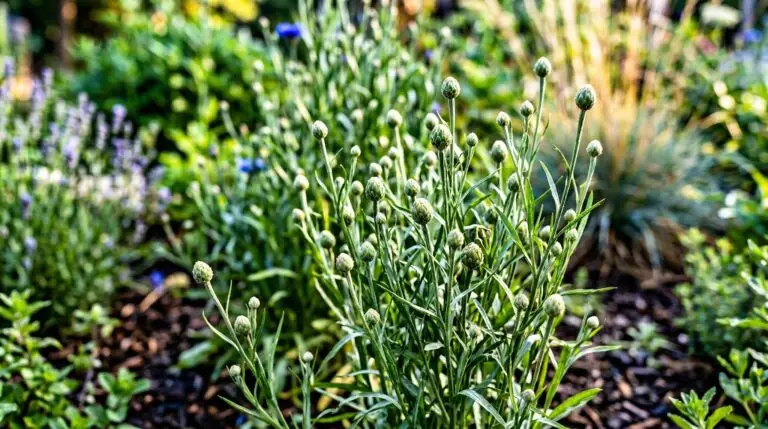
Taking a completely different architectural approach is Centaurea macrocephala, commonly known as the Armenian basket flower or globe centaurea. The species name macrocephala translates directly to “large head,” which perfectly describes the massive, spherical yellow inflorescences that sit atop stiff, three-foot stems. Before the yellow florets emerge, the flower bud looks exactly like a woven wicker basket, an illusion created by the overlapping, papery brown bracts that form the involucre protecting the developing flowers. These tough, overlapping bracts evolved to shield the sensitive reproductive organs from harsh mountain winds and predatory insects until the plant is ready for pollination. The sheer size of the flower head requires a deep, substantial taproot to anchor the heavy plant, making C. macrocephala highly resistant to drought but notoriously difficult to transplant once established.
Cultivating perennial cornflowers in the garden ecosystem
Integrating these perennial cornflower species into a cultivated garden requires matching their wild adaptations to your local soil and light conditions. Because they evolved in lean, mineral-rich soils, applying heavy nitrogen fertilizers will cause them to produce excessive, weak foliage at the expense of flower production. The stems will often flop over, a condition known as lodging, because the plant is growing faster than it can lay down structural lignin in its cell walls. To keep the plants upright and blooming prolifically, they require full sun exposure and soil that drains rapidly, particularly during the wet winter months. Pairing them with plants that share these exact ecological requirements, such as a rugged catmint, creates a stable plant community that requires very little supplemental watering or intervention.
Managing the growth habit of the rhizomatous species, specifically Centaurea montana, is an exercise in understanding plant hormones and apical dominance. As the underground stems spread outward, the older central portion of the root system often becomes woody and less productive, sometimes dying out completely to leave a ring of active growth. You can rejuvenate the plant by digging it up every three years, discarding the exhausted woody center, and replanting the vigorous outer rhizomes. Cutting the entire plant back to its basal foliage immediately after the first flush of spring blooms removes the developing seed heads and alters the hormonal balance within the plant. This pruning directs the plant’s energy away from reproduction and back into vegetative growth, usually resulting in a fresh flush of clean leaves and a secondary round of late-summer flowers.
The true success of perennial cornflowers in the wild, and often in our gardens, relies on a fascinating seed dispersal strategy called myrmecochory. If you look closely at a mature Centaurea montana seed, you will find a tiny, fleshy appendage attached to the base called an elaiosome. This structure is rich in lipids and proteins, acting as a highly nutritious food reward specifically designed to attract foraging ants. The ants carry the entire seed back to their underground nests, consume the elaiosome, and then discard the intact, viable seed in their nutrient-rich waste tunnels. When you find a mountain cornflower popping up several feet away from your original patch, you are observing the direct result of this ancient, underground partnership between plants and insects.
More About Cornflowers

Cornflower companion plants: what to grow, and what to avoid
Cornflower meaning and the bachelor button tradition behind the name
Cornflowers for wildlife gardens attracting bees goldfinches and beneficial insects
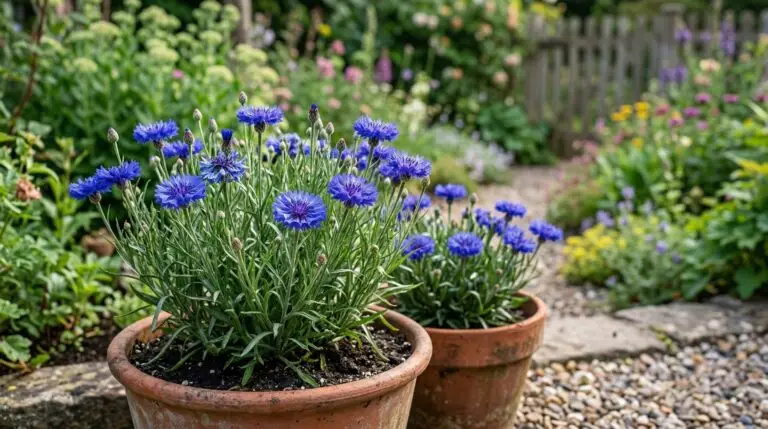
Growing cornflowers in containers for a wildflower look on balconies and patios
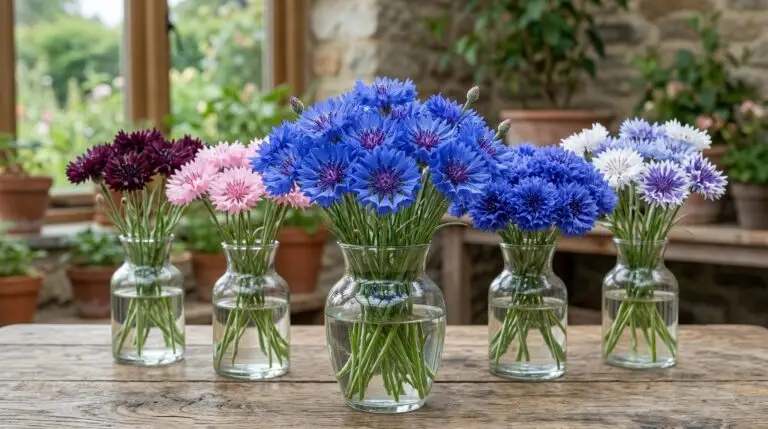
Best cornflower color varieties from classic blue to black and pink for cutting gardens
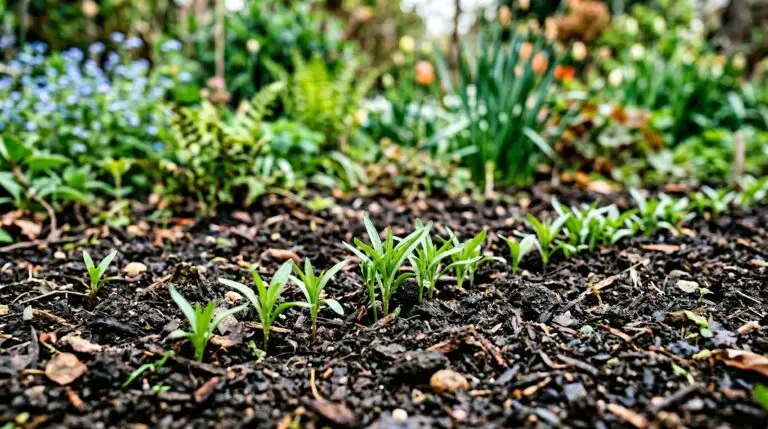
How to grow cornflowers from seed for a wildflower meadow that reseeds every year
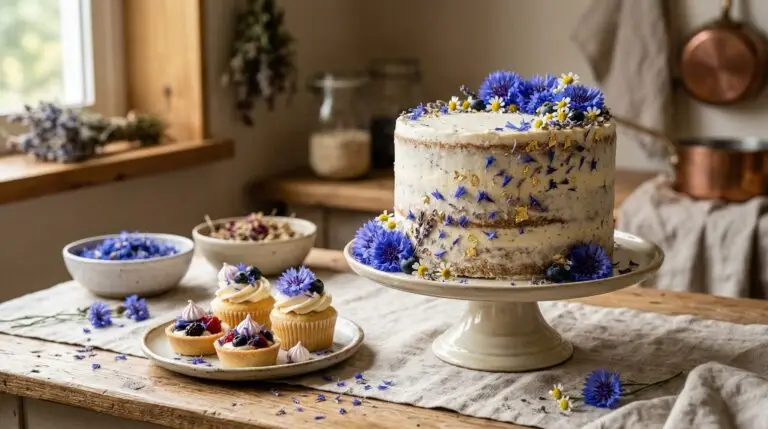
Edible cornflowers for cake decorating cocktails and salad garnishes
Growing cornflowers as cut flowers for charming cottage-style bouquets all summer