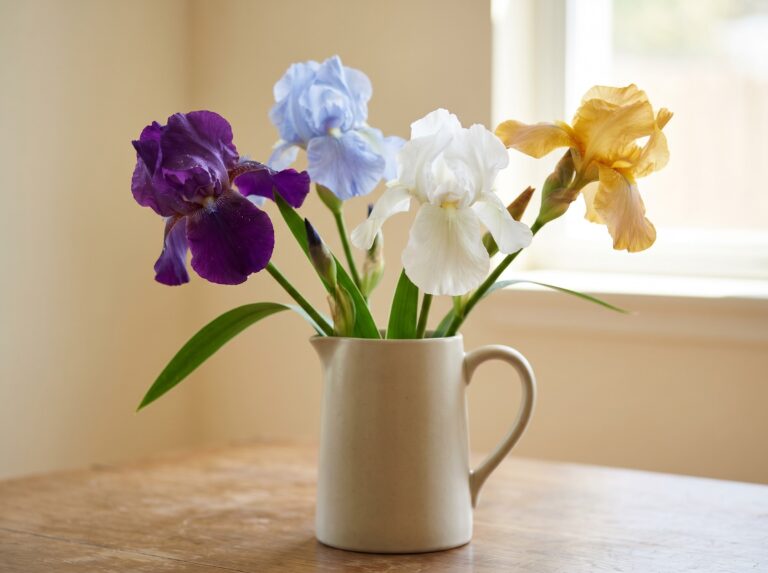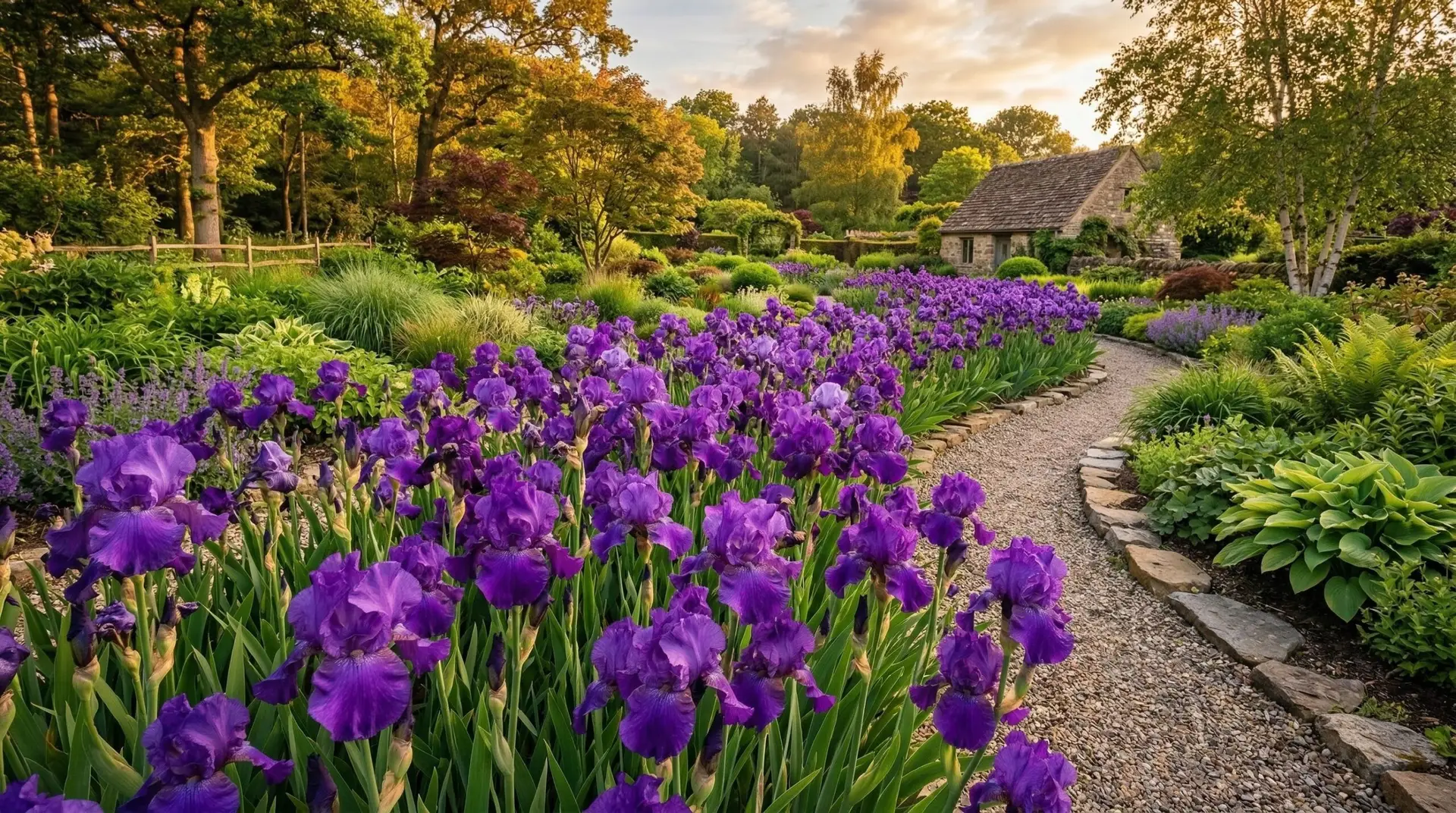
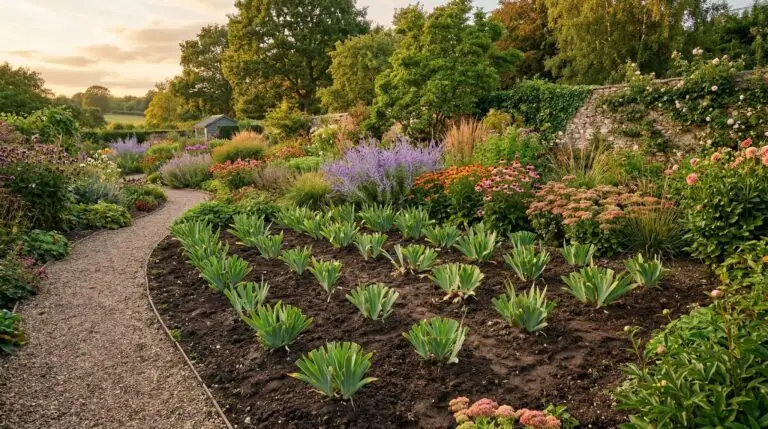
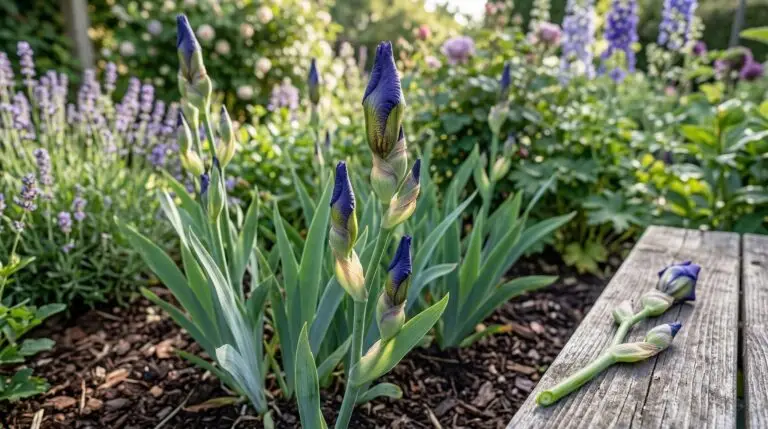
Bearded irises act as commanding architectural anchors in the late spring garden. Their upright, sword-like foliage cuts through the soft, mounding forms of early season perennials. This provides essential vertical structure even before the buds open. When the flowers do appear, they become immediate focal points that demand attention through their ruffled forms and saturated hues. When you approach iris garden design, you must treat these plants as both structural elements and concentrated pools of color. You have to consider how their large blooms interact with the surrounding space, rather than just treating them as isolated specimens. Proper placement along pathways or at the middle of a border ensures their complex forms are visible while their strong foliage grounds the composition.
The physical form of the bearded iris creates a distinct visual rhythm in a planting bed. The stiff, glaucous leaves offer a coarse texture that contrasts sharply with fine-textured companions like ornamental grasses or delicate groundcovers. Because they come in specific height classifications, you can build a tiered composition that maximizes depth. Tall bearded varieties belong near the back or center of a border where their massive blooms can float above lower plants. Intermediate and dwarf varieties step down toward the front edge. This brings the floral structures right to the viewer’s eye level. A stepped approach prevents the flowers from visually overlapping into a confusing mass and allows each stem to stand clearly against its background.
Monochromatic and complementary color schemes
Working with specific iris color combinations allows you to manipulate the mood of a garden space completely. A monochromatic approach uses varying shades, tints, and tones of a single hue to create a sophisticated, harmonious effect that rests the eye. You might combine deep, velvety eggplant purples with medium lavender and pale lilac varieties to build a bed with immense visual depth. When you introduce bicolors or blends that feature your primary hue alongside white or cream, it breaks up the solid blocks of color while it maintains the strict monochromatic rule. This technique prevents a single-color bed from looking flat and encourages the viewer to notice the subtle differences in petal texture and beard coloration.
If a monochromatic scheme brings harmony, a complementary color scheme brings energy and tension to the garden. When you pair colors from opposite sides of the color wheel, like deep violet irises with bright lemon yellow varieties, it creates a high-contrast display that immediately draws the eye across the yard. You can soften this intense contrast by using pastel versions of the complementary colors, such as pale peach paired with soft periwinkle blue. Managing the visual weight is essential when working with strong contrasts, as equal amounts of two bold colors can cause visual fatigue. Using one color as the dominant anchor and the opposing color as a scattered accent creates a balanced composition that feels active but controlled.
Designing a cohesive rainbow progression
Many gardeners collect these plants in every available hue, which inevitably leads to the challenge of bearded iris bed design that incorporates a multitude of colors. A rainbow bed that feels intentional rather than chaotic requires strict attention to color progression and placement. Instead of mixing all the colors randomly, you arrange the plants in a flowing spectrum that transitions smoothly from cool tones to warm tones. You might start with deep blues and purples at one end, fade into pinks and whites, and then build up through yellows into fiery oranges and reds at the opposite end. Blended varieties and bicolors make perfect transitional bridges between the solid color blocks. These transitional bridges help the eye glide naturally down the length of the garden.
Color progression only works if the plants actually bloom at the same time. This makes careful attention to bloom sequence an absolute requirement. Bearded irises are classified as early, mid, or late-season bloomers, and a successful rainbow bed integrates all three timings throughout the entire color spectrum. If all your blue varieties bloom early and all your yellow varieties bloom late, the rainbow effect will never materialize in the garden. You have to interplant early, mid, and late varieties within each specific color block so the overall pattern remains intact from the first bud to the final fading flower. This continuous pacing picks up exactly where the late tulip displays leave off, carrying the garden’s momentum right to the edge of summer.
Companion plantings and seasonal structure
The upright, rigid nature of bearded irises requires companion plants with completely different growth habits to create a balanced composition. Soft, billowing plants provide the perfect foil for the stiff iris fans. These softer shapes relax the overall planting and hide the bare lower stems from the hot afternoon sun. Peonies make classic companions because their rounded, shrub-like forms and lush green foliage contrast beautifully with the vertical gray-green iris leaves. Low-growing perennials like creeping thyme, dianthus, or hardy geraniums can carpet the ground beneath the irises. They act as a living mulch that keeps weeds down while providing a contrasting texture at the base. You must ensure these companions do not crowd the iris rhizomes, as they require good air circulation and sun exposure to thrive and avoid rot.
A well-designed garden space accounts for what a plant contributes when it is completely out of bloom. The distinctive glaucous foliage of the bearded iris remains a strong architectural element through the summer and into the fall. It works as a permanent vertical accent among later-blooming perennials. The gray-green coloration of the leaves forms a neutral backdrop that cools down the hot colors of late summer flowers like rudbeckia and echinacea. The most effective way to use irises is to plant them in asymmetrical drifts of three to five identical rhizomes rather than dotting single plants throughout a bed. A mass of identical plants creates a solid block of color and form that reads clearly from a distance. This establishes a strong, legible geometry that anchors the entire garden composition.
More About Bearded Iris
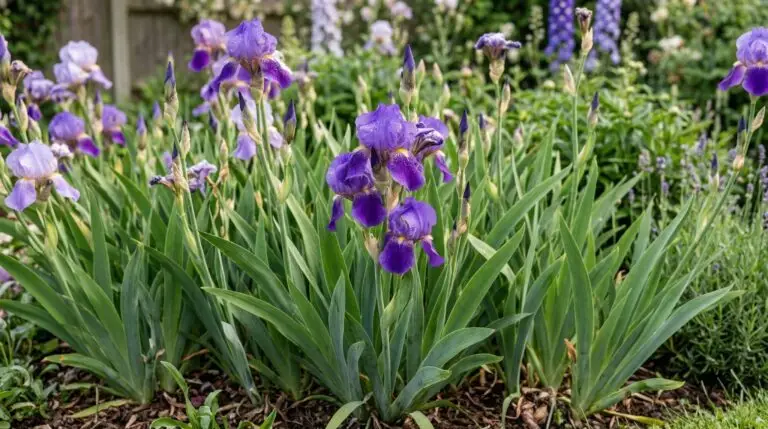
Why bearded iris stops blooming and the six most common causes
Tall bearded iris versus dwarf bearded iris and choosing the right size for your garden
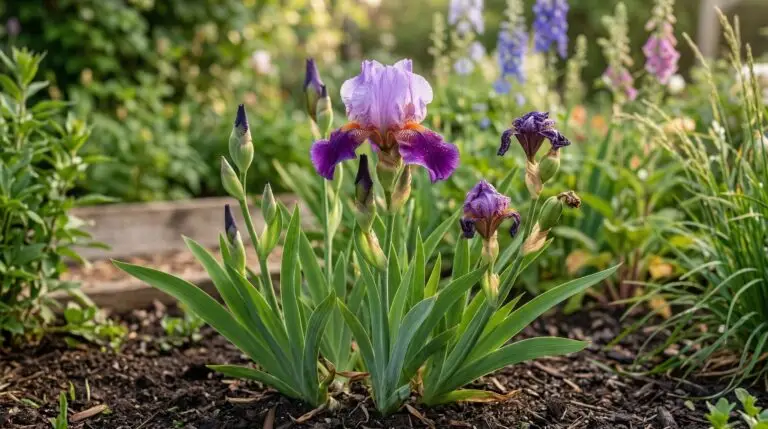
How to identify and prevent iris borer the most destructive bearded iris pest
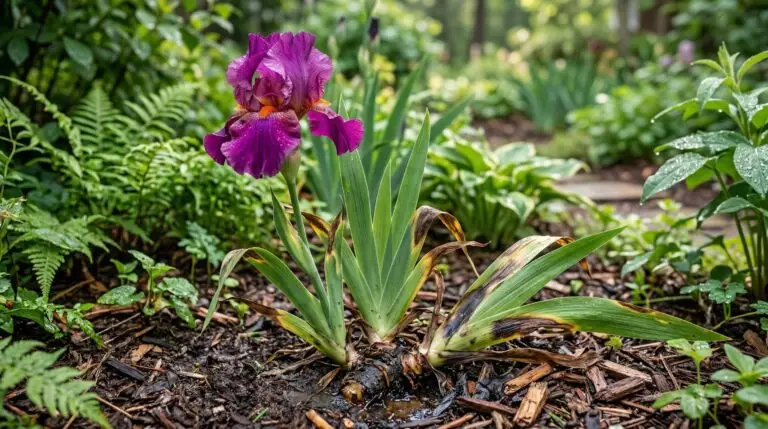
How to grow bearded iris in hot southern climates where summer heat is intense
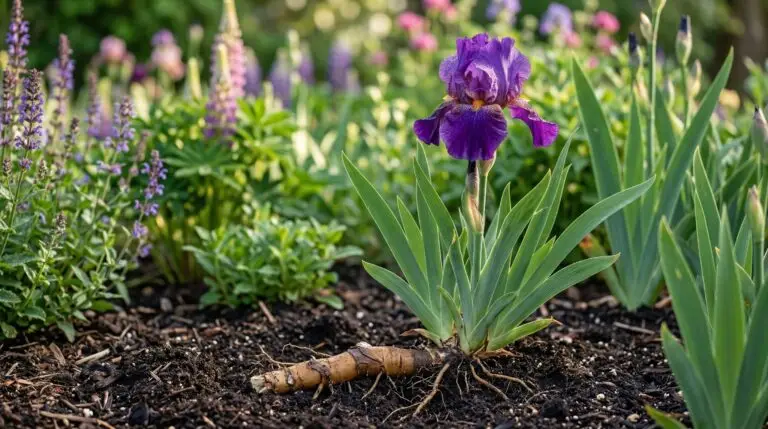
How to plant bearded iris rhizomes for a stunning spring flower show
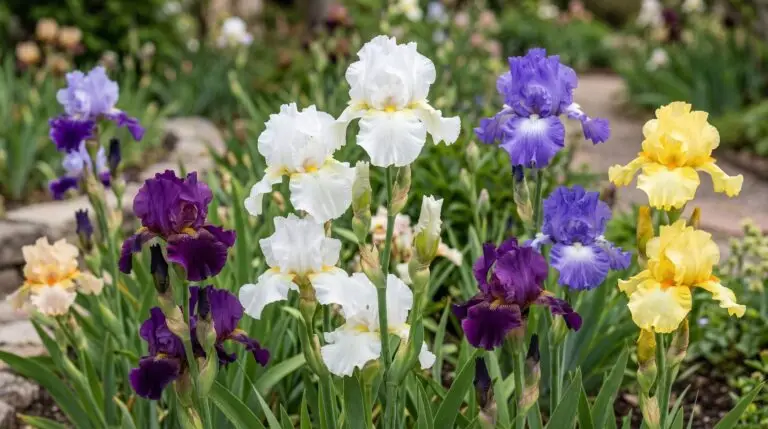
Reblooming bearded iris varieties that flower twice in a single growing season
Dividing bearded iris in summer for healthier plants and more blooms next spring
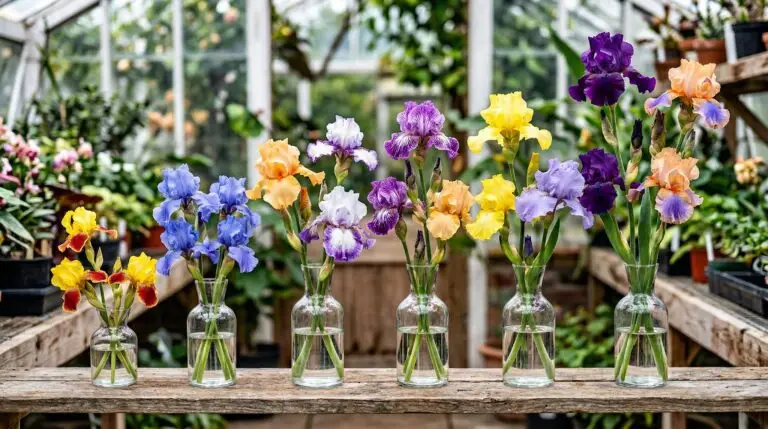
Using bearded iris as cut flowers for elegant spring bouquets and arrangements