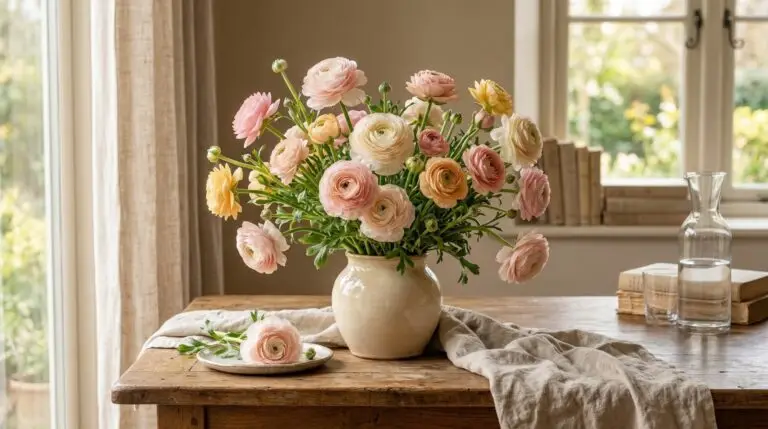
What to plant with Ranunculus
The pairing · pick a flower
All Ranunculus companions
What not to plant near Ranunculus
The best companions for ranunculus, explained
Ranunculus runs on a short, cool calendar, so the honest companion strategy for this corm starts with a matching bloom window before it starts with looks. Anemone is the standout pairing on this list: its full-sun, well-drained, cool-season needs line up with ranunculus almost exactly, and Clemson HGIC names the two directly as a recommended fall-planted border combination, alongside tulips, daffodils, and hyacinths. That last detail matters, because it settles a claim you will see elsewhere on the web that ranunculus and spring bulbs compete when their bloom times overlap. They do not, at least not according to the extension source that has actually tested the pairing, and anemone’s wide, open, dark-centered flower does real design work too, giving ranunculus’s dense ruffled rosette the one thing it lacks on its own: a flat, punctuating counterpoint. Snapdragon does a similar job from a different angle, sharing the same cool-season timing while its rigid vertical spikes supply the architectural structure ranunculus has none of.
Sweet pea and Iceland poppy round out the strongest matches, and both earn their place for reasons beyond a shared calendar. Sweet pea climbs a trellis on tendrils, adding a foliage layer at height that a bare-stemmed corm simply cannot produce, and its ruffled, fragrant flowers echo ranunculus’s own petal texture rather than fighting it. Iceland poppy goes the opposite direction: papery, bowl-shaped petals on thin wiry stems bring genuine movement and airiness against ranunculus’s opacity, a design insight this flower’s own web presence has already gotten right and worth preserving. Larkspur and sweet alyssum fill in the remaining gaps, larkspur for taller vertical structure at cutting-garden scale, alyssum as a low, shallow-rooted edging plant that also happens to be one of the best-documented syrphid-fly attractants available, per Utah State University Extension’s own research on beneficial predator insects. None of these pairings depend on a hidden chemical benefit. They work because the plants want the same light, the same moisture, and the same six-to-eight-week stretch of the calendar, which is a plainer story than most companion advice tells but a more reliable one.
What not to plant near ranunculus
Ranunculus’s real fear is not attack from a hostile neighbor. It is rot, and the wider web’s dominant "avoid" content for this flower gets that backwards often enough that it is worth naming clearly. The single cleanest, best-supported avoid rule here is moisture mismatch: pairing ranunculus with genuinely thirsty, shade-loving annuals like impatiens, begonia, or coleus means keeping soil wet enough and shaded enough to satisfy them, which is exactly the combination that rots a ranunculus corm. Iowa State University Extension is explicit that impatiens perform best in consistently moist soil in partial shade, the opposite profile from a plant that wants full sun and even moisture without ever sitting soggy. The same water-mismatch logic runs the other direction too: lavender and rosemary want to dry out between waterings and develop their own root rot if kept damp, so a watering schedule generous enough for ranunculus stresses them, and a lean, dry schedule suited to them starves the corm. Skip the pH explanation you may read elsewhere for this pairing. Ranunculus’s target pH and lavender’s are close enough that pH is not the real conflict; water is.
The second real mechanism is airflow, and it is one of the better-documented facts available for this flower. Utah State University Extension names ranunculus as highly susceptible to botrytis, blight, and pythium, and identifies adequate spacing and ventilation as the direct countermeasure. That makes tall, dense neighbors like delphinium, hollyhock, or a tall dahlia a genuine placement risk when crowded close, since they can trap humid, still air around the base and shade out the six to eight hours of sun ranunculus needs to bloom well. This is a spacing issue rather than a blanket rule, though; the same plants work fine as a distant backdrop. Aggressive groundcovers like creeping thyme, creeping jenny, and vinca round out a third, softer caution: ranunculus has a small, shallow corm and root system that a running spreader can crowd, though this specific pairing is mostly gardener-observed rather than independently measured, and it earns a Partial tier rather than a Proven one here. What deserves the clearest correction is a widely copied, uncited claim that anemone, hellebore, and columbine should be avoided because they share the buttercup family, Ranunculaceae, and therefore share disease risk. Sharing a plant family is not itself evidence of a shared disease problem, no source ties an actual outbreak to this pairing, and Clemson HGIC recommends anemone specifically as a ranunculus companion. Treat that particular claim as folklore dressed up as science, not as a reason to keep two of the best-matched plants on this list apart.
Do they like the same conditions?
State the ruler plainly, because it is what makes every match above honest rather than decorative. Ranunculus wants full sun, six to eight hours minimum, in soil that stays consistently just moist without ever drying out fully during active growth or sitting waterlogged, in well-drained, gritty or sandy loam with a pH around 5.8 to 6.3. Every plant in the companions list clears that bar in the ways that matter most: anemone, snapdragon, sweet pea, Iceland poppy, and larkspur all share the same cool-season sun-and-moisture profile independently confirmed across extension sources, and sweet alyssum’s shallow, restrained root system asks little of the shared soil. The one condition worth naming honestly, because it undercuts real confusion rather than a myth, is drainage over pH. Drainage is described everywhere as the make-or-break factor for this corm, more decisive than the exact acidity of the soil, so a companion with slightly mismatched pH but genuinely well-drained roots is a safer bet than one with matched pH sitting in heavy, slow-draining ground.
There is a second layer of confusion worth resolving directly: whether ranunculus behaves like a true bulb. It does not. Ranunculus grows from a corm, a solid mass without the layered storage rings that define a tulip or daffodil bulb, and that distinction has real planting consequences. True spring bulbs like tulip, daffodil, and hyacinth can be left in the ground for years in the right zone, while ranunculus perennializes reliably only in USDA zone 7 and warmer; everywhere colder, it is planted fresh each fall or late winter and typically lifted or left to die back as a treated annual. That means the "same conditions" question has a calendar dimension most companion pairings do not: a gardener planning neighbors for tulips is often planning a permanent bulb layer, while the same gardener planning ranunculus’s neighbors is usually replanning the whole bed from scratch, which is exactly why the succession question below matters as much as the sun-and-soil one.
How to plant them together
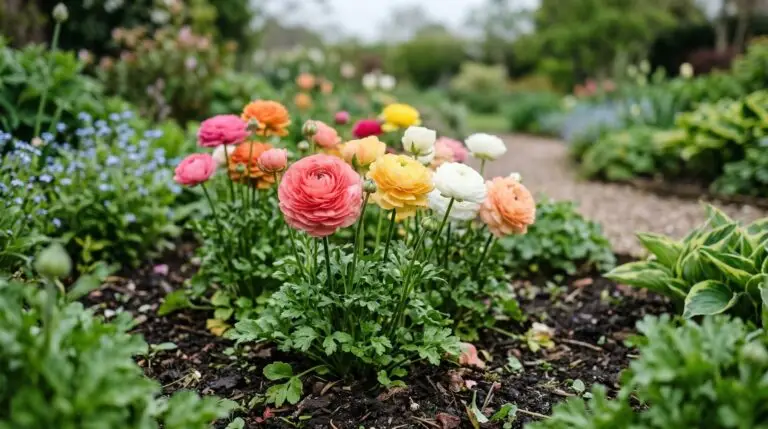
Space true companions 6 to 12 inches from ranunculus’s own 3-to-6-inch spacing, tight enough to read as one bed but loose enough to preserve the airflow the corm needs against botrytis and blight. Anemone and Iceland poppy can sit close, 6 to 10 inches, since neither competes hard for water or shades the other out. Sweet pea wants a trellis or netting set behind the ranunculus rather than beside it, so the vine climbs up and away instead of sprawling across the corms, and larkspur, which grows two to four feet tall, belongs toward the back or north side of the bed so its height does not cut into ranunculus’s sun. Plant ranunculus corms "claw" end down at 2 to 3 inches deep, and stagger true spring bulbs like tulip and daffodil deeper, 6 to 8 inches, so each occupies its own soil layer rather than competing directly for the same root zone.
Timing carries more weight here than it does for most companion pairings, because ranunculus’s calendar is unusually narrow and zone-dependent. In mild-winter regions, zone 7 and warmer, corms go in the fall for spring bloom; in colder zones, they go in late winter or early spring once hard frost risk passes, and flowering runs roughly 90 days from planting through a hard stop once temperatures push past 70 to 80 degrees, typically by early summer. Plant every true cool-season companion, anemone, snapdragon, sweet pea, larkspur, on that same rough window so nothing gets a head start that shades a slower-sprouting neighbor. That hard stop is also the moment the succession question becomes real: once ranunculus foliage yellows and the corm is lifted or left dormant, the bed needs a plan for what fills the space, and this is where hardy geranium earns its spot, planted alongside from the start so it has already filled in by the time ranunculus is cut back, rather than added as an afterthought. In containers, keep drainage holes generous and pair ranunculus with equally shallow-rooted, similarly moisture-tolerant companions like sweet alyssum rather than anything that wants either a drier or a wetter pot.
Does companion planting actually work for ranunculus?
The honest verdict splits along genuine evidence rather than popularity. Proven, and backed by a source actually opened for this page: Clemson HGIC directly recommends interplanting ranunculus with tulips, daffodils, anemones, and hyacinths in a fall-planted border, which settles the calendar question and the "do spring bulbs compete" myth in the same stroke. Also proven: Utah State University Extension’s documentation of ranunculus’s susceptibility to botrytis, blight, and pythium, with spacing and airflow named as the actual, working countermeasure, not a folk remedy. Sweet alyssum’s role as a syrphid-fly and hoverfly magnet is similarly well-sourced, drawn from university research on beneficial predator insects rather than a repeated blog claim. Partial, and worth naming honestly: the shared-conditions logic behind sweet pea, Iceland poppy, larkspur, and calendula holds up well against each plant’s own extension-documented culture, but the specific "this looks good together" design judgment is informed opinion layered on top of real horticultural facts, not a measured finding on its own.
Folklore, and this is the bucket that dominates the wider web’s ranunculus content more than it should: a single uncited blog post is the apparent root of an unusually long avoid list that other sites reproduce without independent verification, and several of its specific claims do not survive contact with a real source. The claim that anemone, hellebore, and columbine should be avoided for sharing the Ranunculaceae family collapses the moment you check it against Clemson’s own recommendation to plant anemone with ranunculus. The claim that lavender and rosemary conflict on pH ignores that the real, better-supported conflict is water, not acidity. The claim that daffodils and tulips compete on bloom timing contradicts the one extension source that has actually weighed in. None of this makes ranunculus a difficult companion plant. It makes ranunculus a clear example of why "what do other sites say" and "what does an opened source actually say" are two different questions, and for this flower specifically, they point in noticeably different directions.
Frequently asked questions
What should you not plant near ranunculus?
Skip genuinely thirsty, shade-loving annuals like impatiens, begonia, and coleus, since keeping soil wet enough for them rots a ranunculus corm, and skip crowding it with tall, dense plants like delphinium or hollyhock that trap humid air and invite the botrytis and blight this corm is documented to be prone to. Drought-loving herbs like lavender and rosemary belong in their own dry bed rather than sharing ranunculus’s watering schedule.
Is ranunculus a bulb or a corm?
A corm, not a true bulb. Unlike a tulip or daffodil bulb, which is made of layered storage scales, a ranunculus corm is a solid mass shaped roughly like a small claw or octopus. That means it does not automatically play by the same long-term "plant once, leave in the ground" rules as a true spring bulb, and in most of the US it is treated as an annual, planted fresh and either lifted or left to die back each year.
Can I plant ranunculus with tulips and daffodils?
Yes, and this is one of the better-sourced pairings available for this flower. Clemson HGIC directly recommends interplanting ranunculus with tulips, daffodils, anemones, and hyacinths for a fall-planted spring border, which also settles the wider web’s unsupported claim that these bulbs compete with ranunculus on bloom timing.
What can I plant after ranunculus dies back for the summer?
Hardy geranium is the strongest option, since its spreading, long-blooming habit fills the gap ranunculus leaves behind as its foliage yellows and the corm is lifted by early summer. Planting it alongside ranunculus from the start, rather than adding it later, means it has already filled in by the time the corm needs to come out.
Does ranunculus need full sun or can it tolerate shade?
Full sun, six to eight hours minimum. A little afternoon shade can help stretch the bloom window in hot-summer climates, but this is not a shade-tolerant plant, and any companion tall enough to cast real shade on it, especially crowded close, will cut into its bloom.
Sources
Add Ranunculus to Your Fall Planting To-do List, Clemson HGIC · Ranunculus Cut Flower Production in Utah, Utah State University Extension · Beneficial Predators: Syrphid Flies, Utah State University Extension · How to grow ranunculus, RHS Growing Guide · Papaver nudicaule, RHS Plants · Growing Impatiens in the Home Garden, Iowa State University Extension · Salvia rosmarinus (Rosemary), NC State Extension Gardener Plant Toolbox
More About Ranunculus
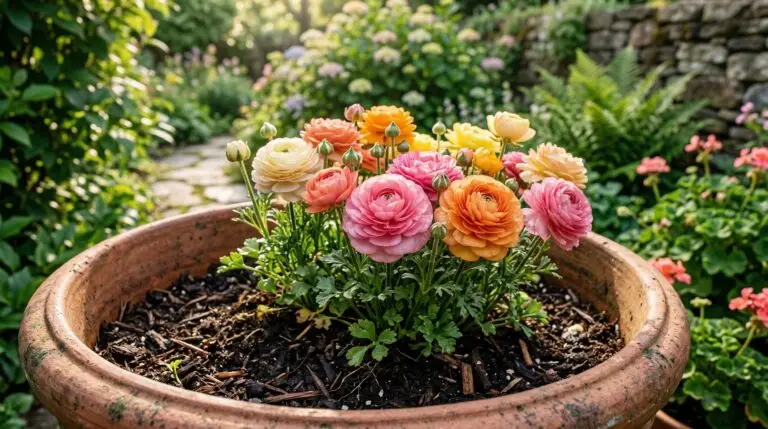
Growing ranunculus in containers for a spring flower show on patios and porches
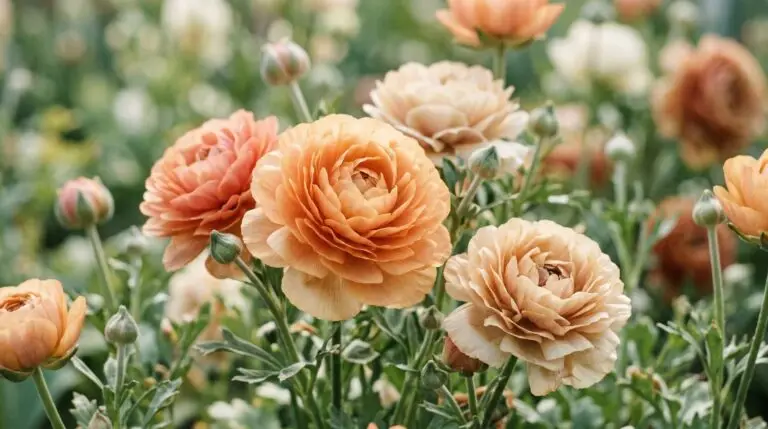
Ranunculus flower meaning and the radiance this buttercup-family bloom symbolizes
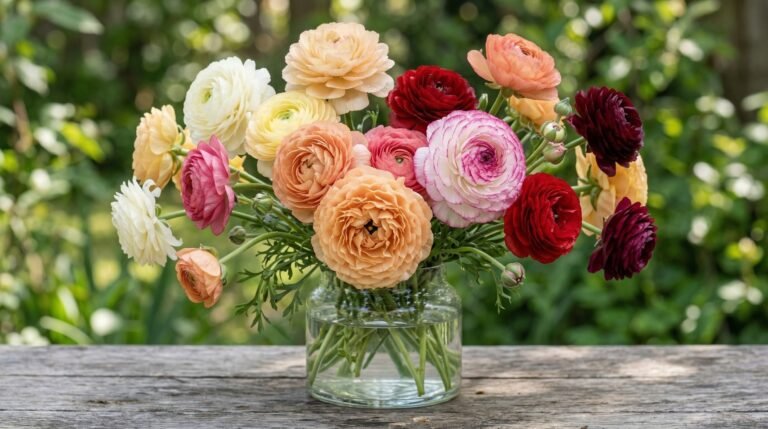
Best ranunculus varieties from classic Italian to ruffled Butterfly and Elegance types
Ranunculus versus garden roses and why these corm flowers compete with the queen of flowers
Ranunculus as the ultimate cut flower and why flower farmers cannot grow enough of them
Why ranunculus melts in summer heat and the fall-to-spring growing trick for warm climates