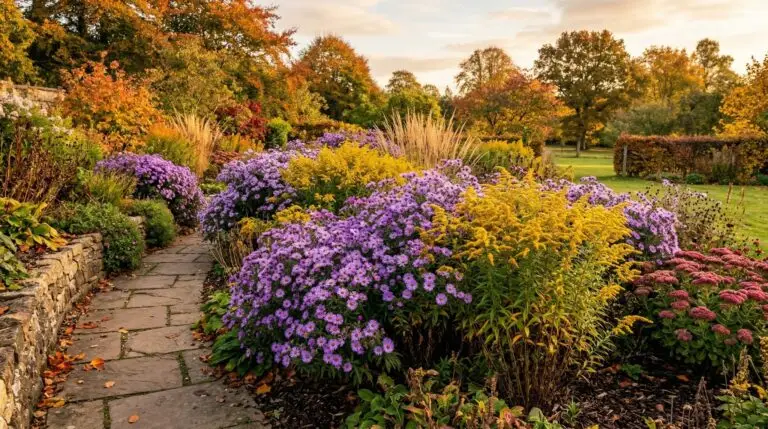
The light in late September takes on a distinct slant, casting long shadows across the grass long before evening arrives. I walked out to the edge of the yard this morning while the dew was still heavy enough to soak through the knees of my trousers. The frost has not yet come, but the air carries the sharp, unmistakable scent of dying leaves and damp earth. In the corner of the border, a massive New England aster stands heavy with purple blooms, bending slightly under the weight of the morning moisture. Clinging to the underside of the flower heads are three bumblebees, perfectly still, waiting for the sun to warm their flight muscles. They slept here overnight, sheltered by the rough leaves and the dense canopy of violet petals. Watching them wake as the light finally touches the plant is a quiet lesson in the fragile, necessary connections that sustain the living world.
The urgency of autumn nectar
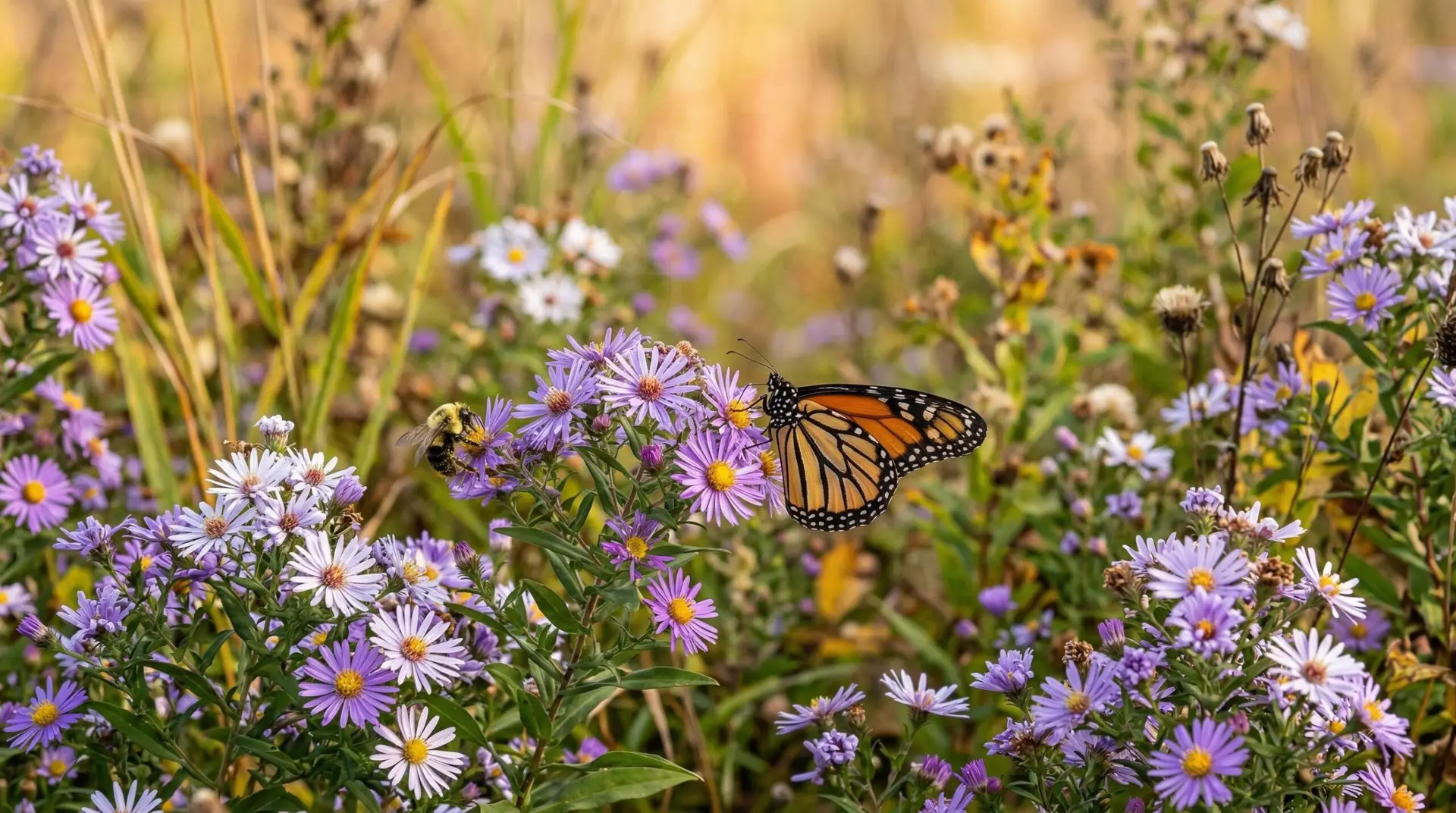
As the season turns cold, the garden undergoes a profound shift in purpose and energy. Summer is a time of casual abundance, but autumn is driven by a deep, biological urgency. Growing asters for bees and other insects provides a critical lifeline when most other blooms have already withered and gone to seed. Migrating monarch butterflies depend heavily on these late season pollinator plants to fuel their long flight south to the mountains of Mexico. A single aster plant becomes a busy intersection of life, visited by honeybees, sweat bees, hoverflies, and painted lady butterflies in a rush to gather nectar before the first killing freeze. They work with a frantic energy that mirrors the closing window of the season. The plant offers its resources freely, drawing the scattered insect populations of the yard into one concentrated hub of activity.
In the wild spaces at the edge of the woods, you will often find asters growing in the company of tall, yellow goldenrod stems. This pairing is a lesson in ecological design, evolved over thousands of years to attract the eyes of passing insects. The sharp contrast of purple and gold signals a rich food source, visible from high in the air to creatures navigating by ultraviolet light. Bringing this natural combination into the home garden creates a reliable food web that extends the active life of the yard by several weeks. While earlier summer staples like coneflower and black-eyed Susan have long since dried into brown seed heads, the aster is just coming into its full strength. The tall stems sway under the weight of foraging insects, a moving, humming mass of life pushing back against the encroaching cold. Planting asters is an act of hospitality for the creatures that share our land.
Choosing plants for the living world
When we plant a garden, we are making choices about who gets to live there. The nursery trade offers countless variations of the aster, bred for shorter stature, unusual colors, or double blooms that resemble small pom-poms. These heavily cultivated varieties might look tidy in a formal border, but they often sacrifice the very traits that make aster pollinators seek them out in the wild. Double blooms, for instance, replace the pollen-rich center disks with extra petals, creating a physical barrier that starves the insects trying to feed. Choosing the straight species or simple, open-faced varieties ensures that the plant can actually participate in the local ecosystem. A native smooth aster or aromatic aster might grow a bit wilder and taller than a compact cultivar, but the reward is a yard that hums with life. Learning to accept a slightly unruly plant is part of the process of gardening for the broader community of creatures.
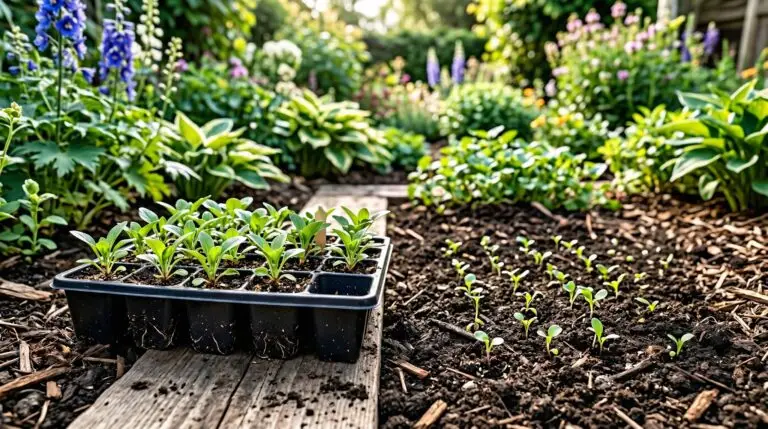
There is a specific kind of patience required to grow these late-blooming natives. For months, the aster is merely a backdrop of green foliage, a quiet presence while the rest of the garden takes the spotlight. You must water it, weed around it, and perhaps stake the heavier stems, all without the immediate gratification of a flower. Thinning seedlings feels like a small act of cruelty, but crowded plants compete for light and water until none of them thrives. The gardener must trust the rhythm of the year, knowing that the real performance is scheduled for the final act. When the blooms finally open in the cooling air of October, the waiting is instantly justified. The plant transforms into a vital resource, proving that good things often require us to step back and let nature take its course.
The quiet work of putting the garden to sleep
The physical work of autumn gardening is often framed as a process of cleaning up, but true ecological tending requires a gentler hand. When the final frost eventually arrives, the purple petals of the aster will curl and turn brown, and the buzzing activity of the bees will cease. The impulse to cut the stems to the ground and tidy the beds is strong, driven by a human desire for order. Leaving the dead stalks standing, however, offers winter shelter for the very insects that visited the flowers in the fall. Native bees burrow into the hollow stems of pithy plants, while birds forage among the dried seed heads when the snow covers the ground. The brown, structural forms of the dead asters hold their own stark beauty against the gray winter sky. Tending the garden becomes an exercise in restraint, a willingness to see the value in decay and dormancy.
Standing by the aster in the fading light of an autumn afternoon, I watch a single monarch butterfly rest on a purple disk. The wind picks up, rattling the dry oak leaves at the edge of the lawn, but the butterfly holds tight to the flower. This plant is a bridge between the seasons, offering the last necessary nourishment before the world goes quiet and still. We plant seeds in the spring with hope, but we tend the autumn garden with a sense of gratitude and acceptance. The aster does not try to outlast the winter, but rather completes its work with perfect timing, feeding the travelers and sheltering the sleepers. The light drops below the tree line, the air turns sharply cold, and the garden prepares to rest.
More About Aster
Aster flower meaning and the September birth flower connection
Why your asters keep getting powdery mildew and how to prevent it for good
Pinching asters in spring for bushier plants and more abundant fall flowers
How to divide and rejuvenate aster clumps for stronger blooms every fall
Best aster varieties for a colorful fall garden that blooms into frost
Growing asters in containers for fall color on porches and patios
How to grow asters from seed for a wildflower meadow look on a budget
Using asters as cut flowers for fall bouquets and Thanksgiving arrangements