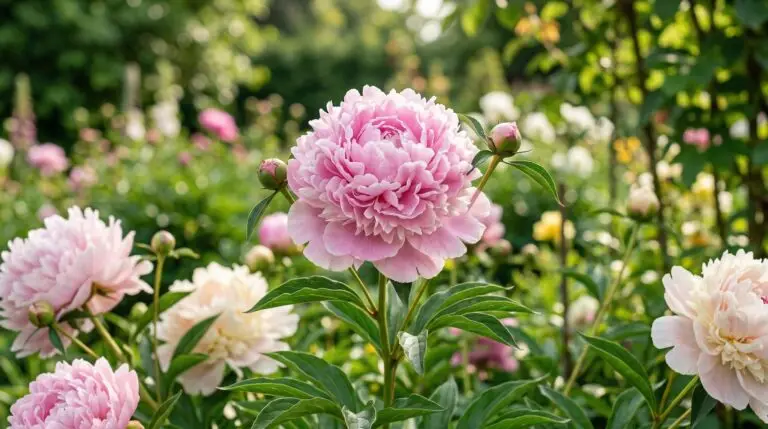
Gardeners write to me every spring with the exact same frustration regarding their peonies. They buy an expensive bare root or a potted plant from the nursery, put it in the ground, and wait for those massive spring blooms. Year after year, the plant grows a beautiful, healthy mound of green leaves but produces absolutely no flowers. This situation drives people crazy because the plant looks perfectly healthy otherwise. When a peony fails to bloom, the problem is rarely a mystery disease or a lack of expensive fertilizer. In almost every case, a flowerless peony is the result of a single mechanical mistake made on planting day or a basic environmental mismatch.
The planting depth mistake that ruins everything
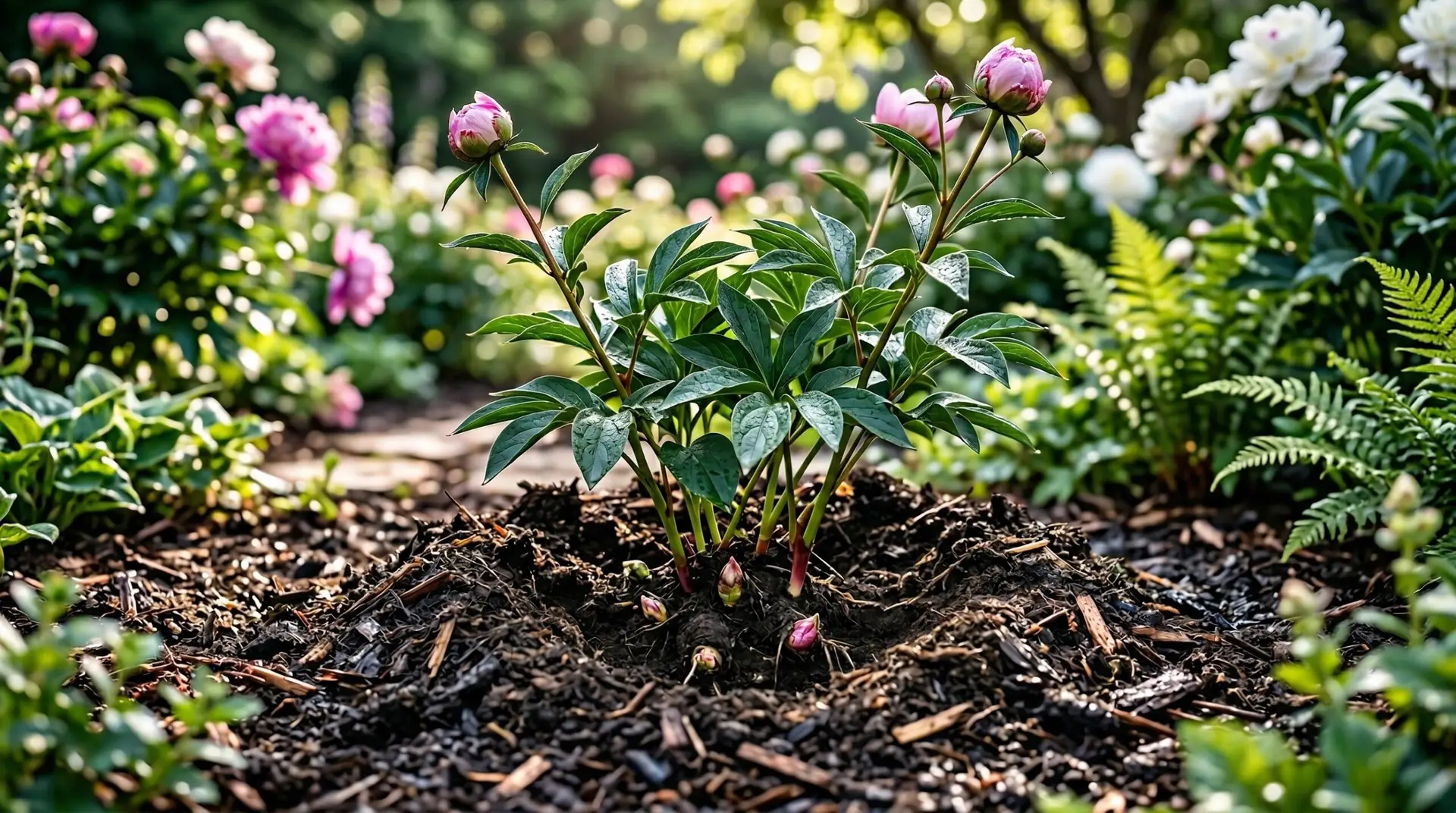
The single most common reason a peony produces leaves but no flowers is that the roots are planted too deeply. When you look at a bare-root peony, you will see thick, fleshy roots and small pink or white nubs at the top called “eyes.” These eyes are the growing points that produce next year’s stems and flowers. If you bury these eyes more than two inches under the soil surface, the plant gets confused by the soil temperature and refuses to bloom. In cold northern climates, the eyes should sit exactly one and a half to two inches below the top of the soil. In warmer southern zones, they need to be even shallower, resting just half an inch to one inch below the surface, similar to the shallow depth required for a healthy rhizomatous iris.
When you bury a peony too deep, it will happily grow lush green foliage every spring while completely skipping the bud production phase. The fix for this problem requires you to dig up the entire plant and reset it at the correct level. You should do this lifting and replanting work in the early fall when the plant is preparing for dormancy. Dig a wide circle around the root mass, lift the whole clump out of the ground, and add fresh soil to the bottom of the hole to raise the base level. Replant the roots so the eyes sit right near the surface, and resist the urge to pile heavy mulch over the top of the crown during the winter.
The waiting game after planting or dividing
If you planted your peony at the perfect depth last fall and it still did not bloom this spring, your problem is simply a lack of patience. Peonies despise being moved, divided, or disturbed in any way. When you take them out of the ground or cut their roots apart, they go into a state of shock that lasts for a considerable amount of time. The first spring after planting, a peony focuses entirely on establishing its root system in the new location. You might see one or two small stems emerge, but you should not expect any flowers during this establishment phase.
It usually takes three full growing seasons for a newly planted or divided peony to produce a normal display of blooms. You can compare this to a resilient daylily, which often bounces back and blooms heavily the very next season after being chopped in half with a shovel. A peony requires much more time to rebuild the energy reserves necessary to push out those massive, heavy flowers. If your plant is less than three years old, looks healthy, and is planted at the correct depth, the best thing you can do is walk away and let it grow. Trying to force blooms with high-phosphorus fertilizers will only burn the young roots and set the plant back even further.
Sunlight shortages and late weather damage
Peonies are sun-loving plants that require a minimum of six to eight hours of direct, unfiltered sunlight every day to form buds. Many gardeners plant a peony in full sun, enjoy years of beautiful flowers, and then slowly watch the blooms decline over a decade. What usually happens is that nearby trees and shrubs grow larger over time, gradually casting more shade over the peony patch. When a peony does not get enough light, the stems become weak and floppy, and the plant simply lacks the solar energy required to develop flower buds. If your once-reliable plant has stopped blooming and the area has become shady, your only solution is to dig it up in the fall and move it to a brighter spot.
Sometimes a peony will form perfectly healthy buds in the early spring, only to have them suddenly turn black and die before opening. This specific failure is usually caused by a late spring frost hitting the plant right as the buds are swelling. The tender bud tissue freezes, dies, and dries up into a hard, dark little knot on the end of the stem. You cannot save the buds once they freeze, so the fix here is entirely preventive. If your local weather forecast predicts a late freeze after your peony buds have formed, you must cover the entire plant with a bedsheet or frost cloth overnight to trap the heat rising from the soil.
Fungal issues that stop buds from opening
There is another common scenario where a peony forms buds that reach the size of a pea but suddenly turn brown and refuse to open. This condition is known as bud blast, and it is almost always caused by a fungal infection called Botrytis blight. Botrytis thrives in cool, wet spring weather, especially in gardens where plants are crowded closely together. The fungus attacks the base of the stems and the developing buds, effectively cutting off the moisture and nutrients the flower needs to open. You will often see a gray, fuzzy mold developing on the dead buds or dark brown spots spreading across the leaves.
Once bud blast strikes, those specific flowers are gone for the year, but you can prevent the fungus from ruining next year’s display. Good sanitation and proper air circulation are your most effective tools against Botrytis. You must cut down all peony foliage to the ground every fall and throw the debris in the trash rather than your compost pile. Spacing your plants far enough apart to let the wind dry their leaves is just as important. Much like managing rot in a crowded bearded iris bed, ensuring good air flow around the base of the plant stops the fungal spores from taking hold in the damp spring weather.
The most useful piece of advice I can give anyone starting out with peonies is to get the location and the planting depth right on the very first day. Find a spot with full sun and well-draining soil, dig a wide hole, and measure the depth of the eyes with a ruler before you fill the dirt back in. Once you have the root in the ground at that perfect two-inch depth, leave the plant completely alone. A properly planted peony can live in the exact same spot for fifty years without ever needing to be divided, fed, or fussed over, rewarding you with decades of reliable spring flowers.
More About Peonies
Best peony varieties from classic Sarah Bernhardt to trendy Coral Charm
Peony flower meaning and why this bloom represents romance prosperity and good fortune

Peonies as the most coveted wedding flower and why brides pay premium for peony season

Companion plants for peonies that extend the beauty season beyond peony’s brief moment
Why peonies need ants and the truth about the ant myth that refuses to die
Itoh peonies the hybrid breakthrough that gives the best of both herbaceous and tree peonies
Growing peonies in warm climates and the chill-hour challenge in zones 8 and above
How to grow peonies for lush romantic blooms that last a lifetime in your garden