Gardeners looking to add structural elegance and globes of blue or white flowers to their beds often turn to agapanthus. When you start shopping for these South African natives, you quickly face a choice between two distinct categories of plants. You must decide whether to plant evergreen agapanthus or deciduous agapanthus. This decision matters because the two types differ significantly in their cold tolerance, winter appearance, and overall growth habits. Choosing the wrong type for your specific climate can lead to a garden bed full of mushy frost-damaged leaves or a plant that fails to return after a harsh winter. Understanding the differences between these two broad categories will help you select the right plant for your specific growing conditions.
The difference between evergreen and deciduous types goes beyond whether the leaves stay green all winter. These two groups evolved in different regions of South Africa, adapting to distinct rainfall patterns and temperature fluctuations. Evergreen types typically originate from winter-rainfall regions with mild temperatures, while deciduous types come from areas with dry cold winters and summer rains. This evolutionary history dictates how they behave in an American garden setting. You have to match the plant’s natural rhythm to your local climate and your personal tolerance for winter maintenance. By looking closely at the foliage, hardiness, and bloom habits of each type, you can make a choice that fits seamlessly into your garden plan.
Understanding the evergreen agapanthus
Evergreen agapanthus varieties maintain a continuous clump of strap-like arching green leaves throughout the entire year. These plants require mild winter temperatures to thrive and generally perform best in USDA hardiness zones eight through eleven. In these warm climates, the foliage provides steady structural interest even when the plant is not actively blooming. The leaves tend to be wider and more robust than their deciduous counterparts, creating a substantial presence in a garden border or large container. Because they never enter a true state of deep dormancy, these plants are highly vulnerable to freezing temperatures. A sudden frost can turn the thick green leaves into a translucent mushy mess that takes months to recover.
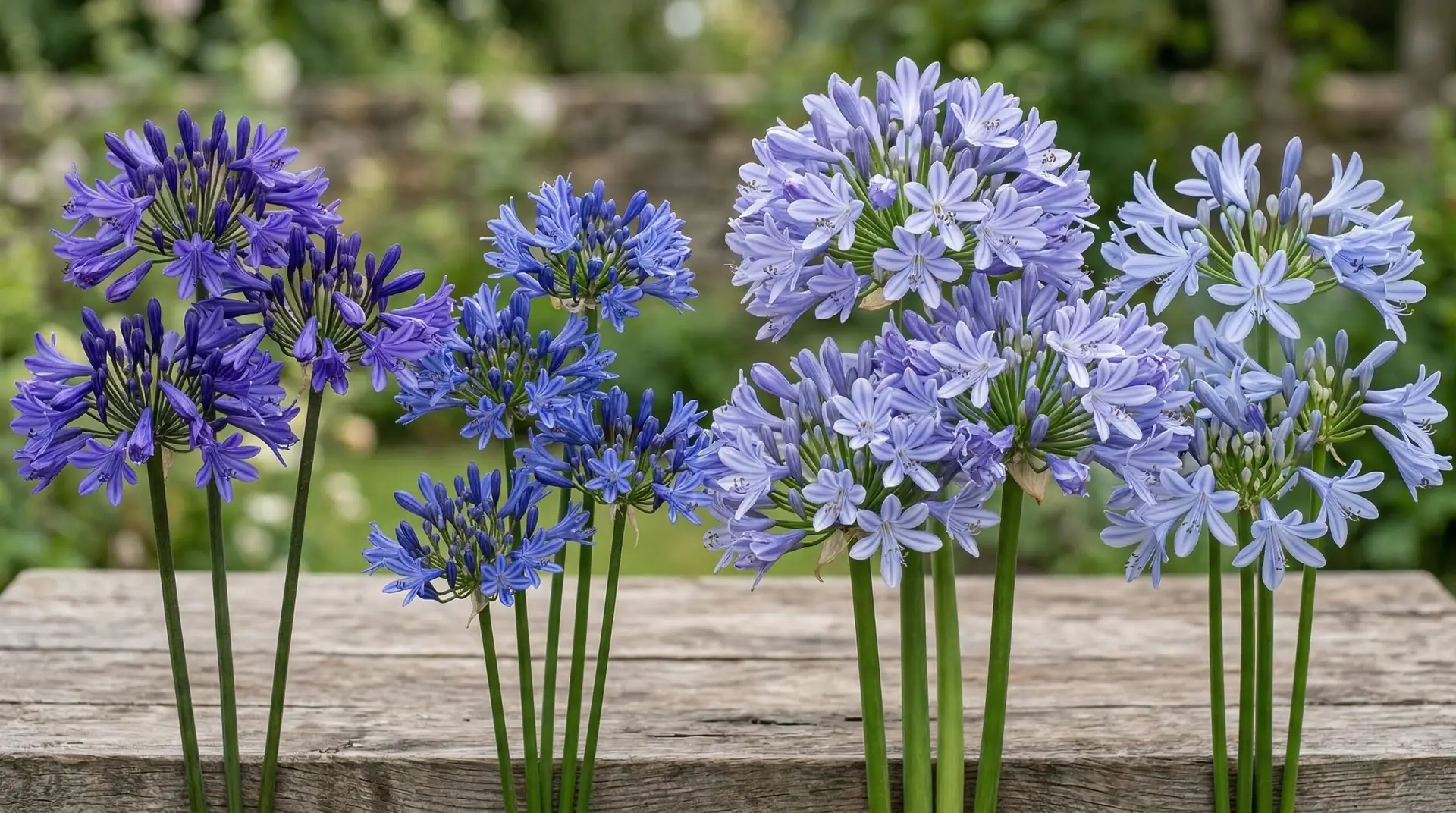
The bloom cycle of evergreen types usually begins slightly earlier in the summer than the deciduous varieties. The flower stalks rise two to three feet above the foliage, carrying spherical clusters of trumpet-shaped blossoms. You will find a wide color range in this category, from pure white to pale blue and deep violet. Popular evergreen varieties include ‘Peter Pan’, a dwarf selection that works well in small spaces, and ‘Tinkerbell’, which offers variegated foliage alongside light blue flowers. ‘Storms River’ is another excellent evergreen choice that produces abundant pale blue flower heads. These varieties often bloom for a longer continuous period, provided they receive adequate water and sunlight.
Maintaining evergreen agapanthus requires consistent attention to soil moisture and winter protection. If you live in a borderline climate like zone eight, you will need to cover the plants with heavy frost cloth during unexpected cold snaps. These plants also require regular division every four to five years to maintain their blooming vigor, as crowded roots will eventually reduce flower production. The trade-off for year-round foliage is the constant risk of winter damage in all but the mildest climates. You also have to groom the plants regularly to remove older yellowing leaves that naturally die off as new growth emerges from the center of the clump. For gardeners in warm coastal areas, this maintenance is a small price to pay for uninterrupted greenery.
Exploring the deciduous agapanthus
Deciduous agapanthus approach the year with a completely different survival strategy by dying back completely to the ground in late autumn. This natural dormancy period allows the plant to survive much colder temperatures, making them reliable perennials in USDA hardiness zones six through eight. The fleshy roots rest safely below the freeze line, protected by a thick layer of winter mulch. In the spring, fresh narrow leaves emerge rapidly from the soil as the ground warms. This cycle means you will have bare spots in your garden design during the winter months where the agapanthus is planted. Gardeners in colder regions rely heavily on these deciduous types to achieve the classic agapanthus look without the need to dig up and store the plants over winter.
When the deciduous varieties push out their summer blooms, they often produce more flower stalks simultaneously than the evergreen types. The resting period seems to concentrate the plant’s energy, resulting in a sudden and prolific floral display in mid to late summer. The flower heads are frequently smaller but more numerous, and the individual tubular flowers tend to have a more nodding pendulous shape. The ‘Headbourne Hybrids’ are the most famous deciduous agapanthus, highly valued for their exceptional cold tolerance and deep violet-blue flowers. ‘Midnight Star’ offers intensely dark blue blooms on tall sturdy stems that resist wind damage. ‘Lilliput’ is a compact deciduous option that produces dark blue flowers on stems reaching only eighteen inches high.
The maintenance routine for deciduous agapanthus is distinctly different from the evergreen varieties. You do not have to worry about throwing frost blankets over the foliage, but you do need to apply a heavy layer of dry mulch in late fall to insulate the dormant crowns. These plants actually resent frequent division and will bloom best when left undisturbed to form dense tight clumps over many years. The main drawback is the visual gap they leave in your winter garden layout. You will need to plan your garden beds carefully to ensure surrounding plants can carry the visual weight when the agapanthus disappears. Planting them near a Hydrangea macrophylla creates a balanced seasonal bed, as both plants enter dormancy and re-emerge on a similar schedule.
Choosing the right type for your garden
Your local climate should be the primary factor guiding your decision between evergreen and deciduous agapanthus. If you garden in zones six or seven, the deciduous types are the only practical choice for in-ground planting. Attempting to grow evergreen varieties in these colder zones requires growing them in heavy pots that must be hauled into a greenhouse or heated garage before the first frost. Conversely, if you live in zone nine or ten, evergreen varieties will thrive effortlessly and provide permanent structure to your yard. In zone eight, you have the luxury of growing both types, though the evergreens will occasionally suffer superficial frost damage during unusually cold winters. Evaluating your average winter temperatures honestly will save you from the disappointment of losing expensive plants.
Once you have determined which type your climate supports, you can consider how they fit into your overall garden design. Evergreen agapanthus excel as permanent border edging or as anchor plants in large mixed perennial beds. Their constant presence makes them excellent companions for other sturdy shrubs that might lose their lower leaves. For instance, you might plant evergreen agapanthus in front of a Hydrangea macrophylla, allowing the strappy green leaves to hide the bare lower stems of the shrub during the winter months. Deciduous agapanthus work beautifully in cottage garden settings where plants weave together and seasonal changes are expected. You can interplant them with spring-blooming bulbs, allowing the emerging agapanthus foliage to hide the fading bulb leaves as the season progresses.
The way you intend to grow the plants also influences which type you should select. Evergreen varieties are exceptionally well suited to permanent container culture on patios or pool decks in warm climates. The foliage drapes elegantly over the edges of large pots all year long. Deciduous types are less ideal for permanent focal-point containers because the pots will look completely empty for four or five months of the year. If you do grow deciduous types in pots, group them with other seasonal containers like a potted Hydrangea macrophylla to create a cohesive summer display that can be moved out of sight in winter. If you want a low maintenance ground cover that you can plant and forget in the soil, the deciduous types often prove more resilient over the long term.
Narrowing down your choice ultimately comes down to balancing your climate constraints against your desire for winter greenery. If you have a small space in a mild climate and want the garden to look lush year round, you should absolutely choose an evergreen variety like ‘Peter Pan’. The constant foliage will keep the space looking intentional and manicured even in January. If you garden in a region with cold wet winters and want reliable summer cut flowers, a deciduous variety like the ‘Headbourne Hybrids’ is the better choice. You will accept the bare winter soil in exchange for a plant that reliably survives freezing temperatures and returns with a massive flush of blooms. By matching the plant’s natural growth cycle to your specific conditions, you will ensure your agapanthus thrives for years to come.
More About Agapanthus
The meaning and symbolism of agapanthus flowers across cultures
Why your agapanthus is not blooming and how to fix it
How to divide and propagate agapanthus for more plants every season
Growing agapanthus indoors as a striking houseplant that actually blooms
Companion plants for agapanthus: what to grow, avoid
How to grow agapanthus in pots and containers for a spectacular patio display
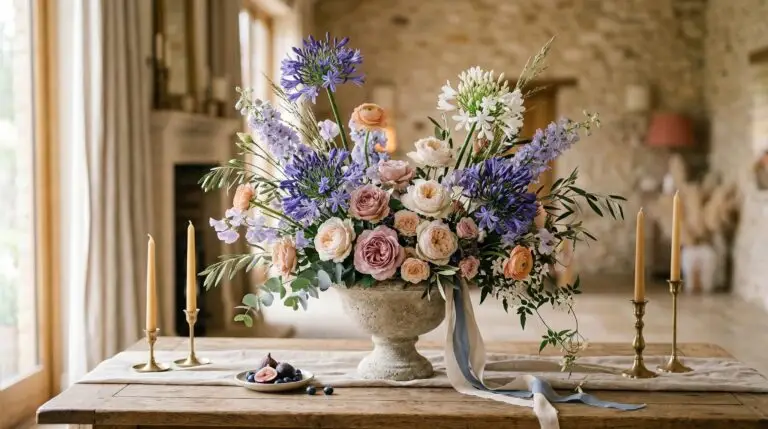
Agapanthus wedding bouquets and floral arrangements that feel effortlessly elegant