Long ago, the ancient Greeks looked up at the sky after a storm and saw a bridge of color arcing across the clouds. They believed this was the goddess Iris, a messenger of the Olympian gods who used rainbows to travel between heaven and earth. Wherever her feet touched the ground, flowers of deep purple, yellow, and white sprang up in her wake. These blooms took her name, becoming earthly reminders of the connection between the mortal realm and the divine. In early gardens, people planted the iris to guide the souls of women to the Elysian Fields, a tradition that wrapped the flower in an aura of reverence. You can still feel a bit of that ancient magic when you watch an iris bud swell and finally burst open on a damp spring morning. The petals catch the light exactly like water droplets suspended in the air after a heavy rain.
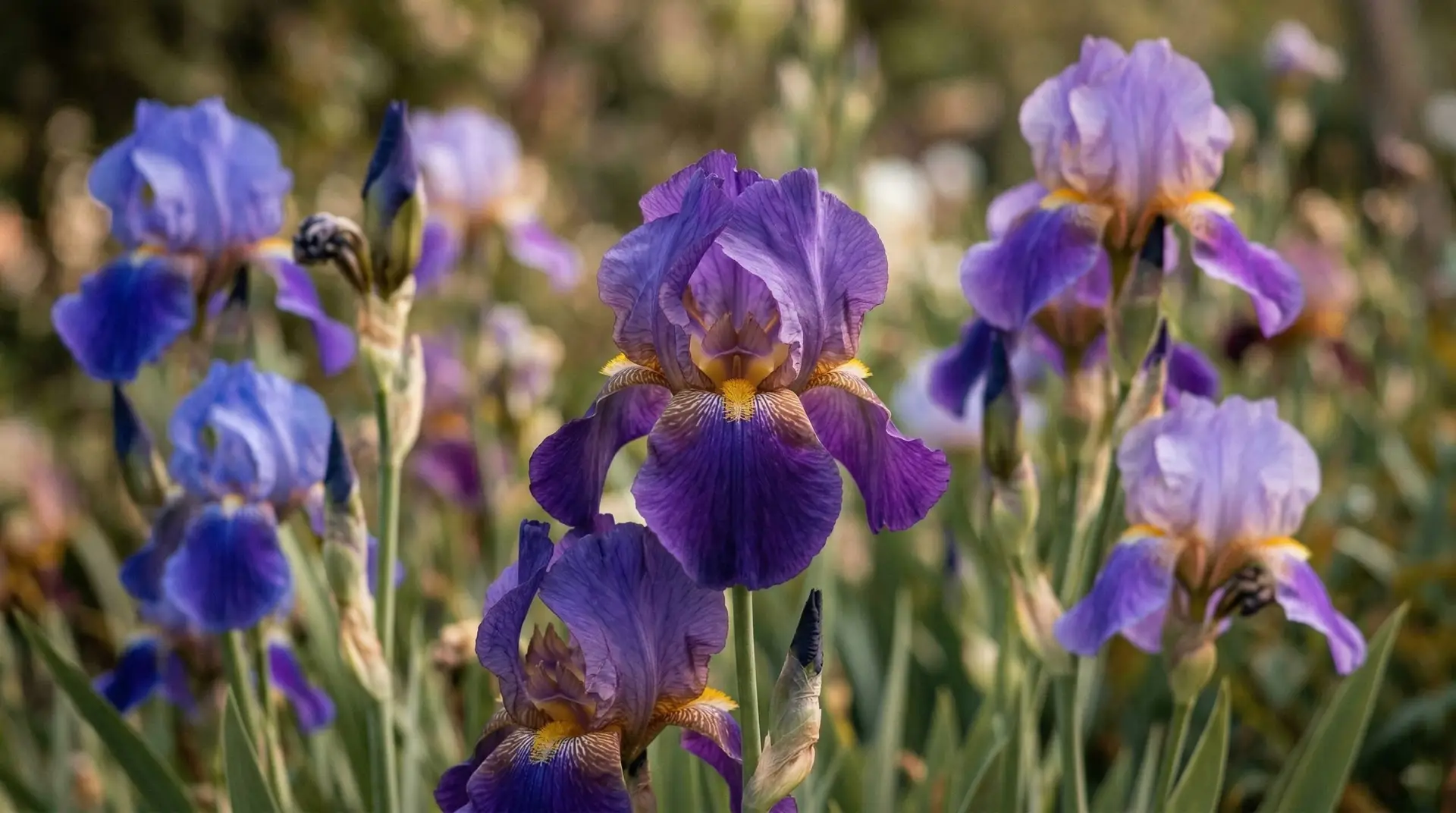
The physical structure of the iris is entirely unique in the garden, built to guide pollinators precisely where they need to go. Each bloom is composed of three upright petals called standards and three downward-hanging petals known as falls. These falls often feature a fuzzy central strip called a beard, which gives the insect a soft place to land before it crawls inside to find the nectar. Beyond its visual appeal, the plant holds a secret in its thick, fleshy rhizome. For centuries, herbalists and perfumers harvested these roots, drying them for years until they developed a scent remarkably similar to violets. This dried rhizome, known as orris root, became a highly valued ingredient in cosmetics, medicines, and the distillation of gin. The process of turning a tough, dirt-covered root into a delicate fragrance requires immense patience and an understanding of how time transforms raw natural materials.
The flower of kings and knights
The flower traveled far beyond the rocky hillsides of Greece, eventually taking root in the royal courts of Europe. By the Middle Ages, the iris had transformed into the fleur-de-lis, an emblem that would dominate French heraldry for centuries. Legend says King Clovis adopted the symbol after water irises helped him find a safe place to cross a river during a battle, saving his army from defeat. This association with military victory gave the iris a reputation for valor, while its complex, three-petaled structure came to represent wisdom and faith. Knights wore the stylized flower on their shields, and kings had it embroidered onto their velvet robes in threads of gold. The iris moved from a wild bloom of the countryside to a cultivated icon of power, yet it never lost its basic resilience. Even in modern gardens, the plant grows with a sword-like foliage that stands rigidly against the wind, looking very much like a guard at attention.
Waiting through the winter months
Before the heavy blooms appear in late spring, the story of the iris begins in the cold, quiet days of late winter. It is the birth flower for February, a month when the earth is often hard and unforgiving. While early daffodils might push through the late snows to signal the coming thaw, the iris rhizome waits patiently just beneath the soil surface. Gardeners know that planting these rhizomes requires leaving the top exposed to the baking sun of late summer, a harsh treatment that somehow prepares the plant for the freezing months ahead. When February arrives, the first green shoots slice through the dead leaves of the previous year. They grow with a slow, deliberate pace as the days lengthen and the soil warms. By the time May arrives, those early shoots have multiplied into thick fans of leaves, ready to support the heavy, ruffled blooms that will soon follow.
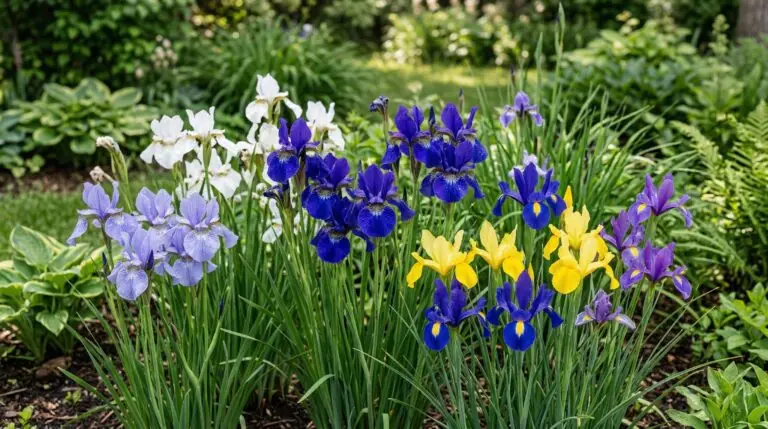
The iris family did not stay confined to one region, spreading its seeds across continents and adapting to wildly different environments. The bearded iris thrives in the well-drained soils of sunny hillsides, demanding dry feet and hot summers to produce its famous ruffled blooms. Meanwhile, the Siberian iris prefers the damp edges of meadows, growing in dense grassy clumps that sway gracefully in the slightest breeze. Further east, the Japanese iris evolved to flourish in the shallow waters of bogs and ponds, producing massive, flat blossoms that look like colorful dinner plates floating above the reeds. Each variety tells a story of survival and adaptation, proving that beauty can emerge from baked clay just as easily as it can from deep mud. A gardener who pays attention to these origins learns to read their garden differently, finding the perfect microclimate for each specific type of plant. By matching the right iris to the right soil, you participate in a continuous history of cultivation that spans the entire globe.
A rainbow of specific meanings
Because the goddess Iris commanded the rainbow, her namesake flower blooms in almost every color imaginable, and each shade carries its own specific meaning. Purple irises hold onto that ancient royal connection, making them a traditional gift to convey deep respect and admiration for someone’s wisdom. Yellow blooms speak of passion and warmth, often given to celebrate a long-lasting friendship or a sudden burst of good news. White irises represent purity and innocence, frequently appearing in bridal bouquets alongside a classic rose or a delicate lily to add an architectural element to the arrangement. Blue irises, which are relatively rare in the botanical world, communicate hope and faith during difficult times. When you plant a mixed bed of these flowers, you are essentially growing a physical vocabulary of human emotion. The garden becomes a place where you can cut a specific message and hand it to a neighbor over the fence.
Growing an iris requires a relationship based on observation and occasional division. After a few years in the same spot, the rhizomes crowd together, pushing each other out of the dirt in a tangled mass that produces fewer flowers. A gardener must dig up the entire clump in late summer, snap the tough roots apart with their bare hands, and replant them with enough space to breathe. This act of breaking the plant down to ensure its survival feels like a metaphor for the harder parts of life. The reward comes the following spring when the newly spaced plants send up tall, sturdy stalks crowned with massive, delicate flowers. You might find yourself standing in the yard at dusk, watching the last light of the day illuminate the dark veining on the falls of a purple iris. In that quiet moment, you understand exactly why the ancients believed a flower could be a messenger from the sky.
More About Irises
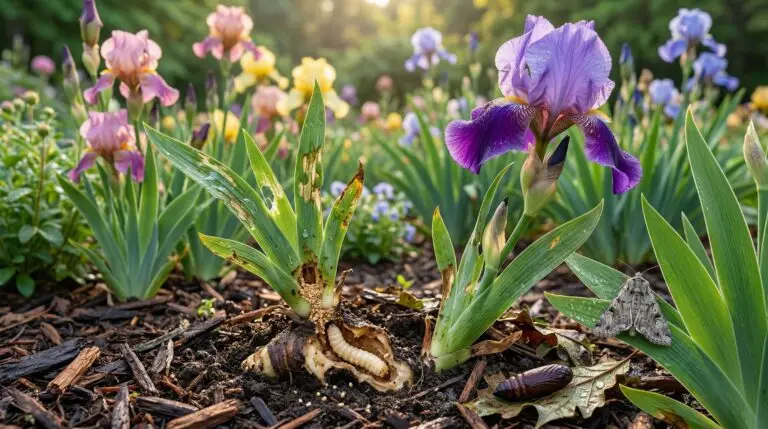
Iris problems from borers to rot and keeping your iris collection healthy
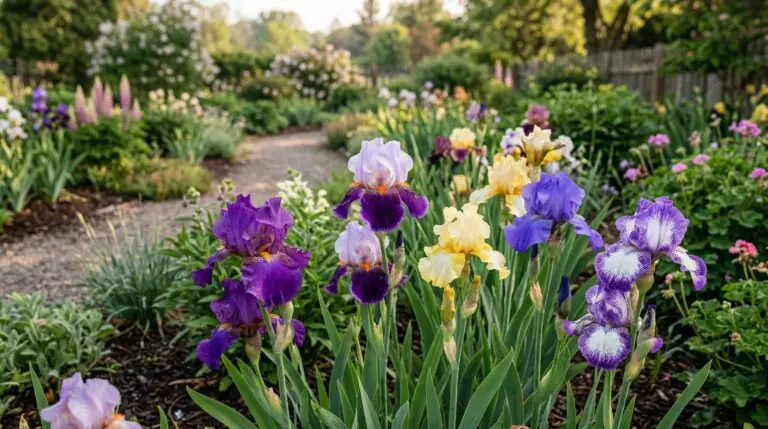
How to grow irises for elegant sword-leaved plants and flowers in every color of the rainbow
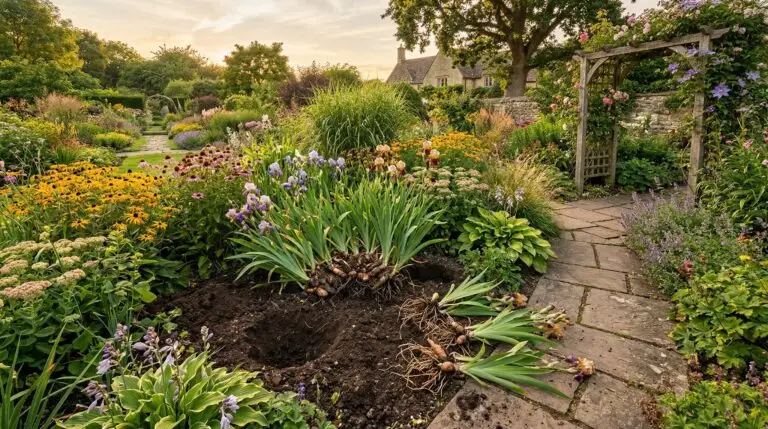
Dividing and transplanting irises at the right time for healthy plants and more blooms
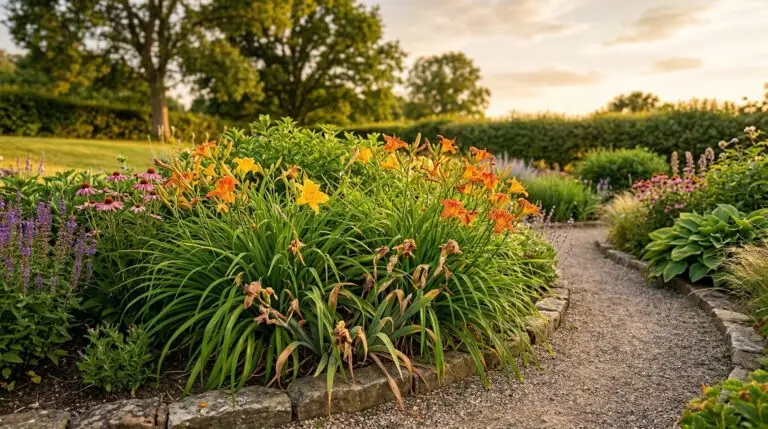
Iris companion plants: what to grow and what to avoid
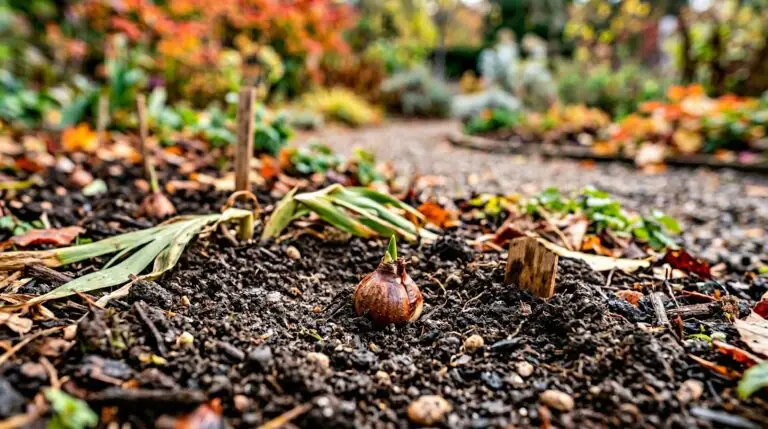
Dutch iris bulbs for spring cutting gardens and the easiest iris to grow in bouquets
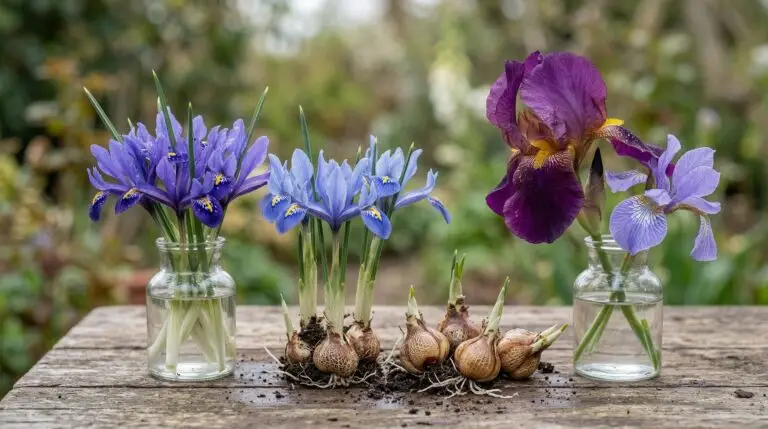
Miniature and dwarf iris for rock gardens and early spring color at ground level
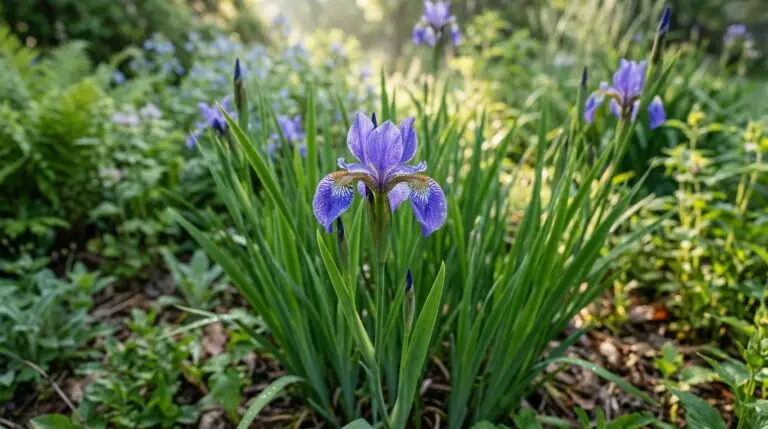
Louisiana iris for southern gardens and warm humid climates where bearded iris fails
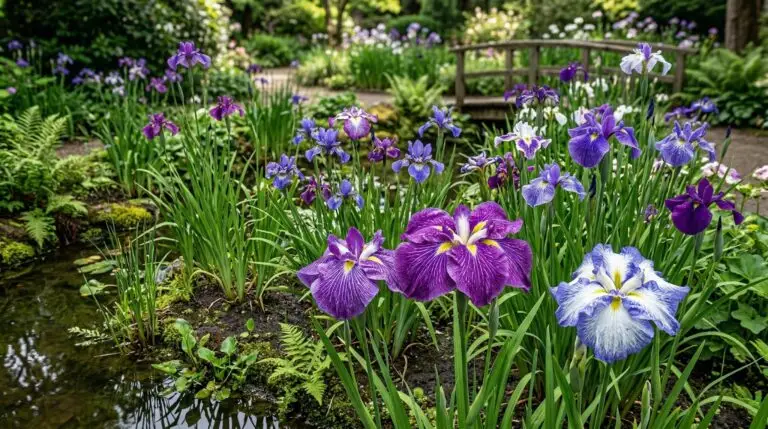
Japanese iris for dramatic waterside blooms with the largest flowers in the iris world