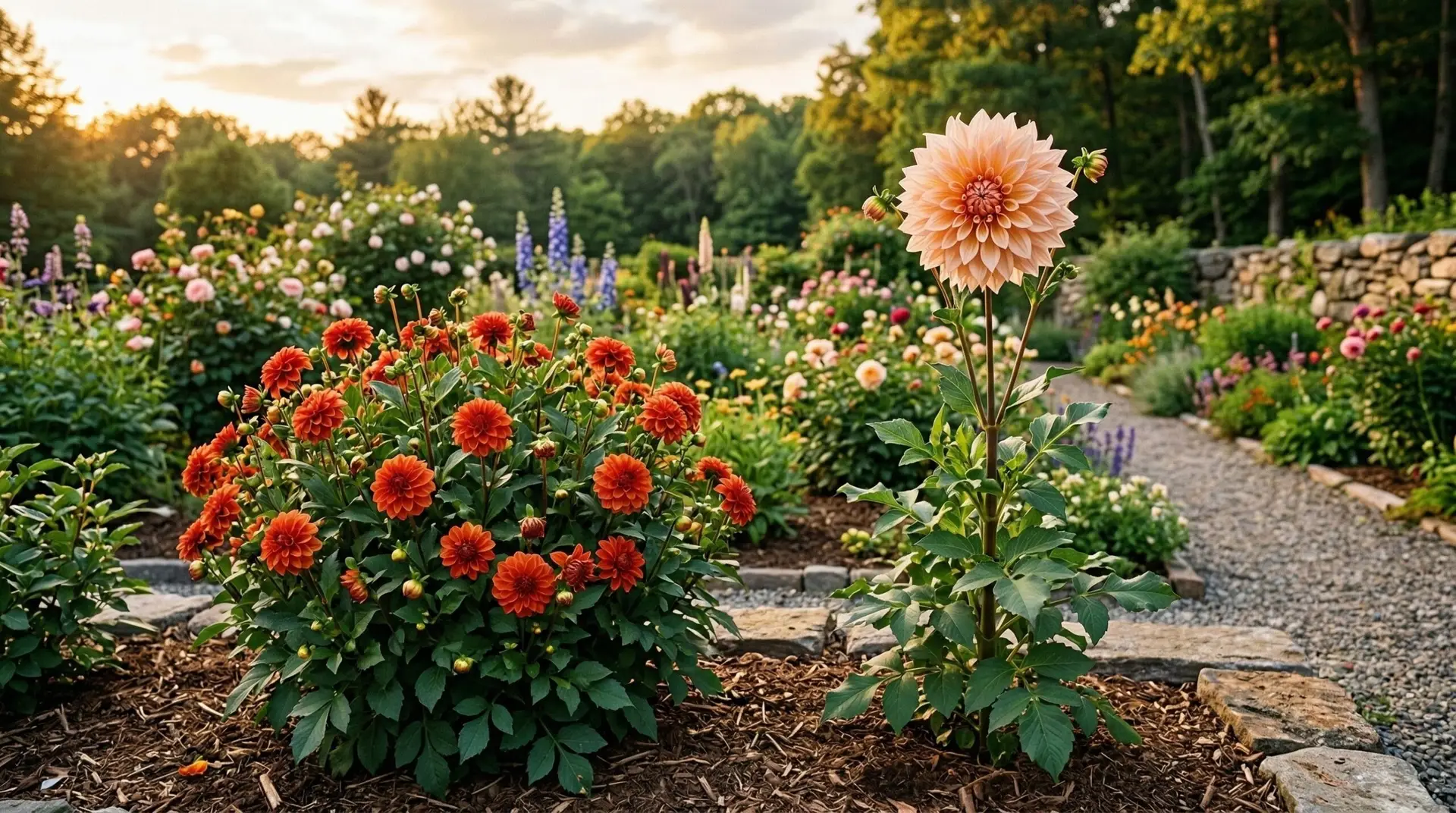
You must force the dahlia to choose between producing many average flowers or a few massive ones. Left alone, a dahlia grows a single thick central stem, produces one early flower, and then struggles to support weak lateral growth. By removing specific growing points, you alter the plant’s hormonal balance to dictate its final shape. Pinching dahlias removes the apical dominance of the main stem to create a bushy plant with dozens of blooms. Disbudding does the opposite, removing side shoots to funnel all energy into a single terminal bud. You cannot have both maximum size and maximum quantity on the same stem.
The mechanics of pinching for total flower volume
Pinching, also known as topping, should happen when the dahlia reaches twelve to eighteen inches tall and has developed three to four pairs of true leaves. Take clean, sharp snips and cut the central stem completely off just above the top set of leaves. Do not crush the hollow stem, as this invites bacterial rot into the crown of the plant. Removing this central growing tip stops the production of auxins, the hormones that suppress lower branch growth. Within days of this cut, the dormant nodes at the base of the remaining leaves will swell and push out strong lateral stems. This single action transforms a top-heavy vertical stalk into a sturdy, multi-branched shrub capable of supporting a heavy flush of late summer flowers.
Many new growers hesitate to cut the top off a healthy plant because they fear it will delay their harvest. Removing the central leader does set the first bloom back by roughly ten to fourteen days. The tradeoff is a final yield that often triples the flower count of an unpinched plant. The lateral stems produced by pinching also grow longer and straighter, making them far superior for cut flower arrangements. You will see a similar structural benefit when applying this method to other cut flowers like cosmos, which also require aggressive early pinching to prevent weak, spindly central stalks. If you skip this step, your dahlia will yield one short, thick-stemmed central flower followed by a chaotic mess of weak side shoots that snap in heavy rain.
Disbudding techniques for maximum flower size
Disbudding redirects the plant’s energy away from lateral growth and into a specific terminal flower. Look at the end of any mature dahlia stem and you will see a cluster of three buds. The center bud is the terminal bud, and the two smaller buds on either side are the lateral buds. To disbud, roll the two lateral buds off the stem using your thumb and index finger as soon as they are large enough to isolate. Work carefully to avoid snapping the central bud, which is brittle at this early stage. You must also strip the vegetative side shoots growing from the leaf nodes directly below this bud cluster, usually moving down the stem for two or three leaf pairs.
This technique is non-negotiable if you are growing dinnerplate varieties and want blooms that reach ten to twelve inches across. Without disbudding, the plant splits its water and nutrient uptake evenly among the three buds in the cluster, resulting in three medium flowers that crowd each other and warp their petal formation. Exhibition growers take this further by removing all lateral growth on an entire branch, treating the dahlia much like a standard chrysanthemum grown for competition. You do not need to go to exhibition extremes for garden display, but removing the immediate side buds guarantees the main flower opens fully and cleanly. The stems will also be much thicker, which helps support the massive water weight of a fully open giant dahlia.
Timing the cuts for your climate and goals
Your local growing season length dictates how aggressively you can manipulate your dahlias. Growers in northern zones with early autumn frosts must be precise with their pinching schedule to ensure the delayed blooms have time to mature. If you plant tubers in late May, you should expect to pinch the plants by late June or early July at the latest. Pinching any later than mid-July in a short-season climate risks pushing the main harvest past the first killing frost. Southern growers have a longer window and can stagger their pinching over several weeks to create a continuous succession of blooms well into November.
Disbudding is not a one-time event but a continuous maintenance task throughout the flowering season. Dahlias grow rapidly during the heat of late summer, and new lateral buds can form and drain energy within a matter of days. Walk your rows twice a week during active growth to rub off new side shoots before they exceed the size of a pea. Once a side shoot requires pruners to remove, it has already stolen significant energy from the terminal flower. Make this task part of your regular harvesting routine, disbudding the younger stems while you cut the mature flowers for the vase.
Managing structural support after pruning
Both pinching and disbudding radically alter the physical weight distribution of the plant, requiring specific support strategies. A pinched dahlia produces six to eight heavy lateral branches that originate from a single lower trunk. As these branches load up with water and heavy double blooms, they act as levers that can split the main stalk straight down the middle during a windstorm. You must corral these branches using a grid support system like Hortonova netting or a sturdy corral of twine wrapped around heavy perimeter stakes. Place your netting or initial twine layer horizontally at about eighteen inches off the ground just after pinching, allowing the new lateral growth to grow up and through the support.
Disbudded plants present a different structural challenge because they carry concentrated weight at the very ends of long, tall stems. These top-heavy stalks are highly susceptible to snapping at the nodes if left unsupported. Tie each main producing stem individually to a rigid bamboo or metal stake using soft garden twine. Secure the stem in at least two places, with the highest tie located just below the terminal bud cluster. Proper support ensures the energy you directed into creating massive or numerous blooms actually results in harvested flowers rather than broken stems rotting on the soil.
More About Dahlia
Dahlia wedding flowers and why brides are choosing dahlias over traditional roses
Dahlia tuber storage over winter so your favorite varieties survive until spring
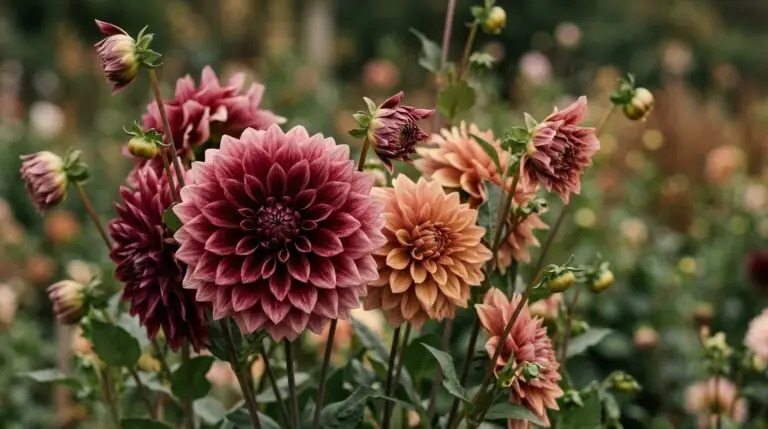
Dahlia flower meaning and the Victorian language of flowers message behind each color
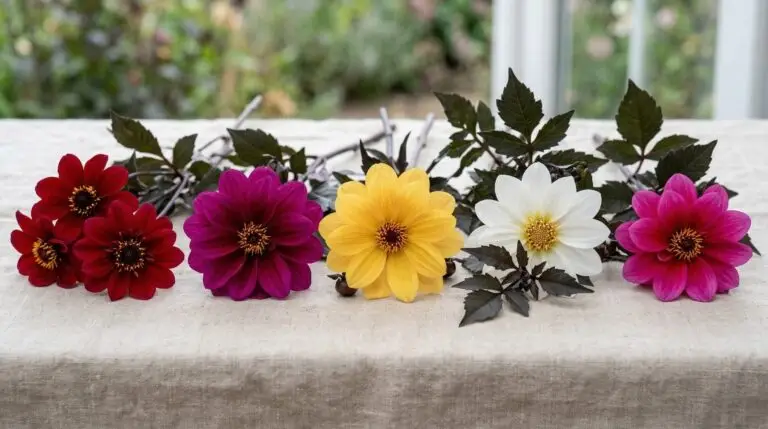
Dark-leaved dahlias that bring drama with stunning foliage and jewel-toned flowers
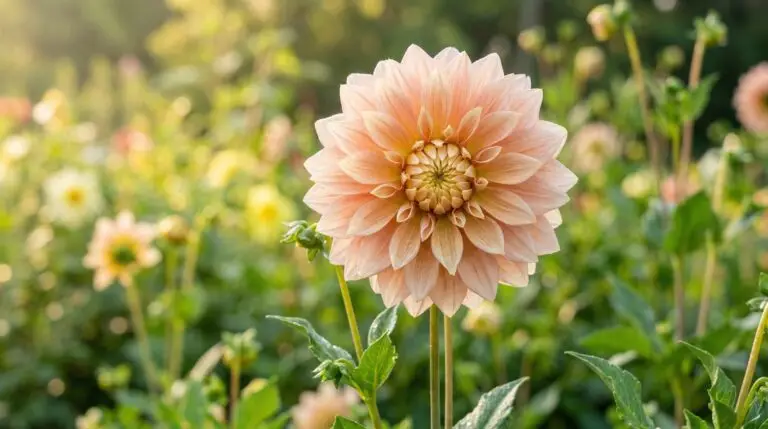
How to divide dahlia tubers in spring for more plants from your collection
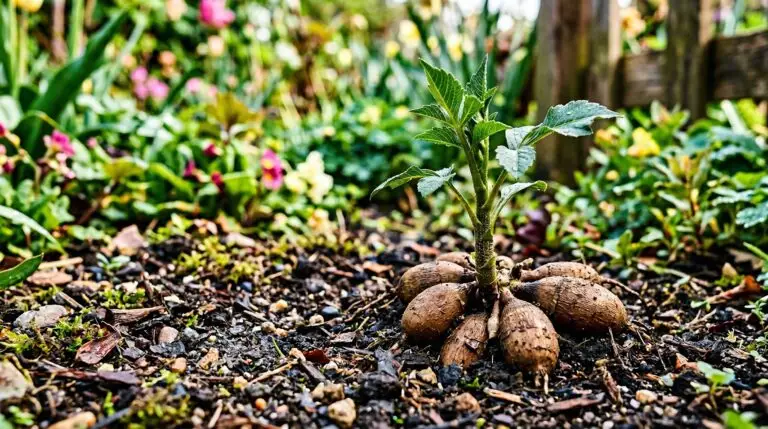
How to grow dinner plate dahlias for enormous blooms that stop people in their tracks
Growing dahlias in containers for a patio flower show from midsummer to frost
Dahlia pests and diseases including earwigs slugs and powdery mildew solutions