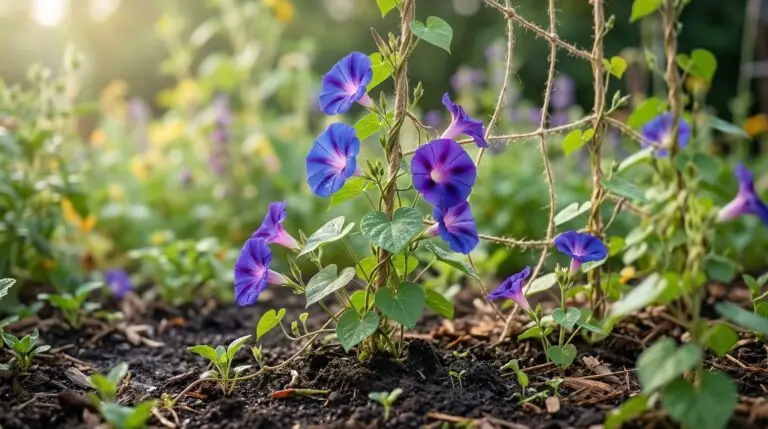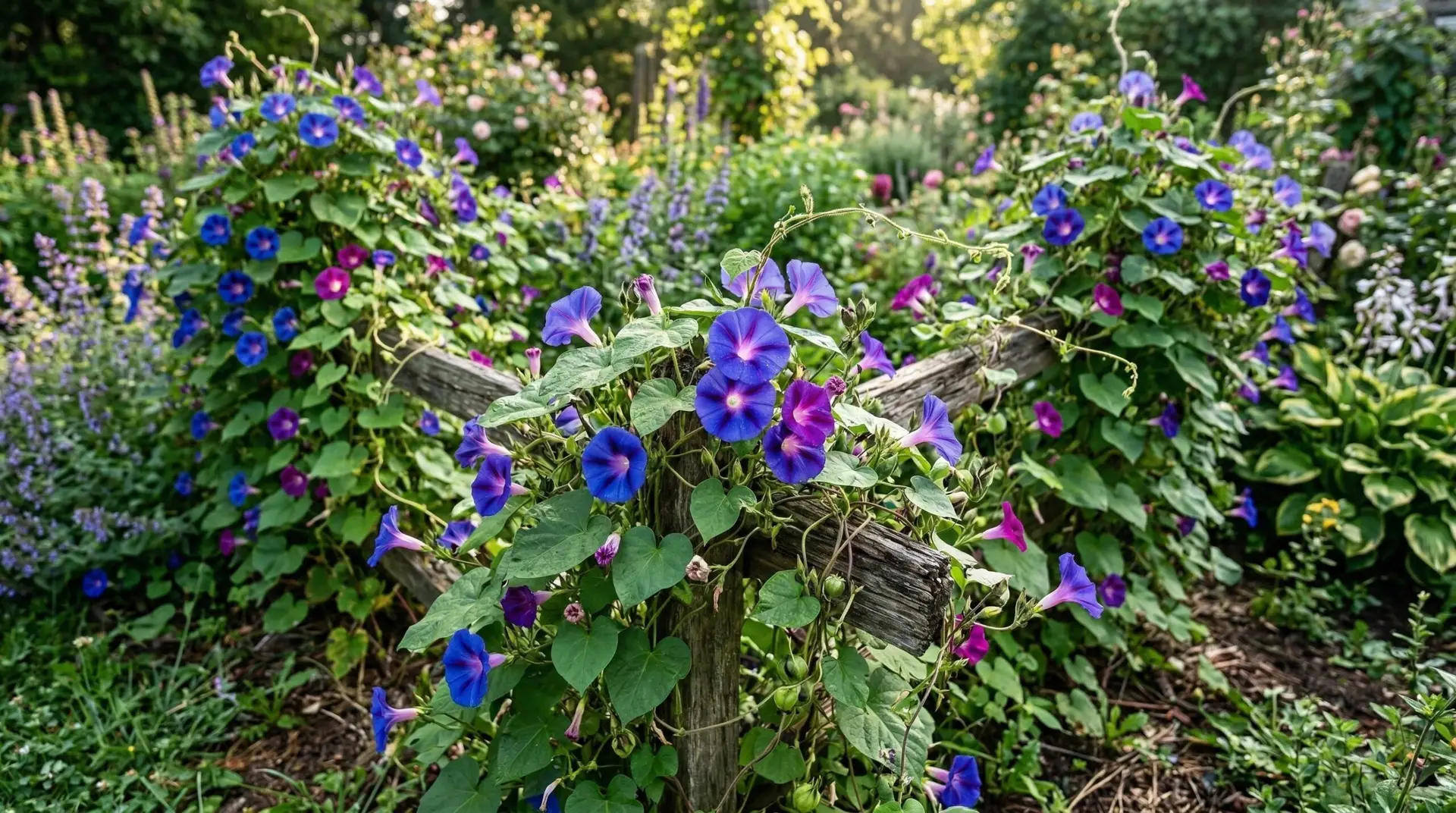
You buy a packet of seeds, plant them at the base of a trellis, and expect to enjoy a summer of bright trumpet-shaped blooms. Then spring rolls around the next year, and you find hundreds of tiny, heart-shaped seedlings choking out every other plant in your garden bed. Morning glories are notorious for this aggressive behavior because they produce thousands of seeds that overwinter perfectly in the soil. Gardeners often come to me panicked when these vines start wrapping tightly around their expensive shrubs and perennial stems. The problem is not that the original plant survived the winter, but rather that its offspring are highly efficient at germinating in any bare patch of dirt. When you ignore these early seedlings, they quickly develop strong twining stems that become incredibly difficult to untangle without snapping the plants they are using for support. Pulling mature vines out of a crowded garden often results in broken branches and damaged foliage on your permanent landscaping.
Identifying your specific vine problem
Before you start ripping vines out of the ground, you need to know exactly what you are fighting because the treatment depends heavily on the plant identity. People frequently confuse true annual morning glories with field bindweed, a highly invasive perennial weed that produces similar white or pink funnel-shaped flowers. When you pull a true morning glory, it comes out of the soil easily with a relatively shallow, stringy root system. If you pull the vine and it snaps off, leaving thick, fleshy white roots that run deep underground, you are dealing with bindweed. Bindweed regenerates from even a tiny fragment of root left in the soil, making it a nightmare to eradicate by pulling alone. True morning glories only return from dropped seeds, which means your entire control strategy needs to focus on stopping seed production rather than digging up deep roots.
Stopping the cycle of self-sowing
The most effective way to stop a morning glory from taking over your yard is to prevent it from ever dropping seeds in the first place. As each flower fades and drops its petals, a small, round green seed pod begins to swell at the base of the stem. If you leave these pods alone, they eventually turn brown, dry out, and crack open to spill dozens of hard black seeds onto the soil below. To break this cycle, you must pinch or snip off the fading flowers before those green pods have a chance to mature. This process requires significant patience and diligence because the vines produce new blooms every single day throughout the summer. If you commit to removing the spent flowers twice a week, you will drastically reduce the number of surprise seedlings you have to deal with next spring.
Growing vigorous vines responsibly
You can still enjoy these vigorous climbers without letting them run rampant through your garden beds by using a strict container strategy. Planting morning glories in large pots keeps their root systems confined and makes it much easier to monitor exactly where the vines are traveling. To prevent dropped seeds from finding soil, place your containers on a solid concrete patio or a wide wooden deck rather than directly over a garden bed or lawn. When the seeds inevitably fall, you can simply sweep them up with a broom instead of watching them sprout in the dirt. This containment method works well for many aggressive plants, whether you are dealing with spreading bulbs like Crocosmia or other fast-growing vines like the night-blooming Moonflower. Keeping the base of the plant isolated on a hardscape surface acts as a physical barrier against unwanted naturalization.
Clearing out an established infestation
When morning glories have already dropped thousands of seeds and taken over a garden bed, your only option is a multi-year campaign of pulling seedlings. The seeds have a hard outer coating that allows them to sit dormant in the soil for several years before conditions trigger them to sprout. You must pull the new seedlings in early spring when they just have their first two butterfly-shaped leaves, long before they start twining around your desirable plants. Whenever you disturb the soil to plant something new or pull a weed, you bring older seeds to the surface where sunlight encourages them to germinate. You have to accept that clearing an infested bed takes time and consistent monitoring rather than a single afternoon of weeding. If you aggressively pull every seedling before it can flower and drop more seeds, you will eventually exhaust the seed bank hidden in your soil.
The single most useful piece of advice I give to anyone considering planting morning glories is to never plant them in the ground near permanent shrubs or delicate perennials. These vines are indiscriminate climbers that will tightly wrap around the branches of hydrangeas, roses, and evergreens, often shading out the host plant leaves and causing severe damage. The twining stems harden as the season progresses, acting like wire ties that can actually girdle and kill young branches on woody plants. If you want to grow them, provide a dedicated, standalone trellis placed in an open area where you can easily reach all sides for maintenance and deadheading. When you give them a designated vertical space away from other plants, you can enjoy the flowers without spending your summer untangling vines from your favorite shrubs. Treating these vigorous climbers with a healthy dose of caution from day one saves you years of frustrating garden cleanup later.
More About Morning Glories
Morning glory flower meaning and the Japanese art of training these blooms to perfection

Morning glories as living sunshade screens for windows and south-facing walls
Why morning glory flowers only last one day and the daily renewal that makes them special
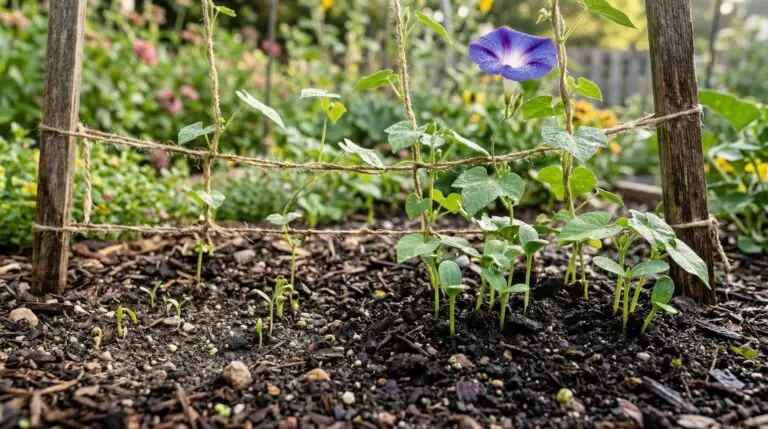
Growing morning glories from seed with the easy soak-and-plant method
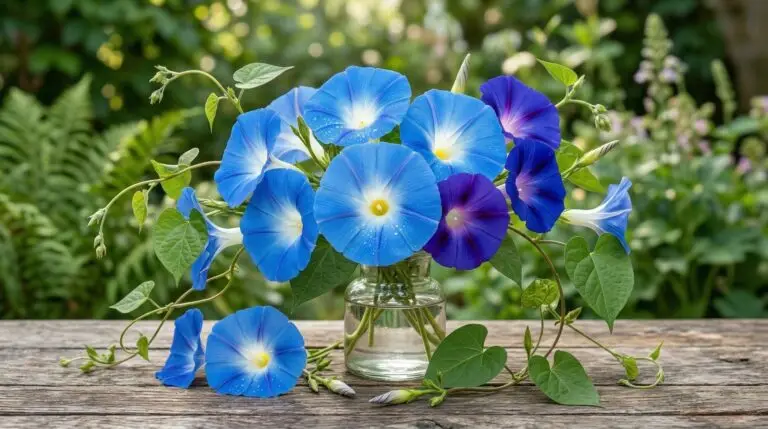
Best morning glory varieties from classic Heavenly Blue to rare chocolate Knowlian’s Black
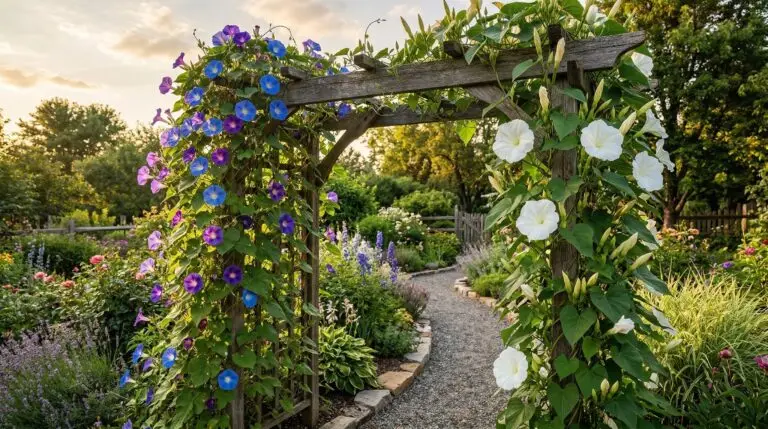
Companion plants for morning glories that create a colorful summer vine garden

Training morning glories on fences mailboxes and trellises for vertical garden magic
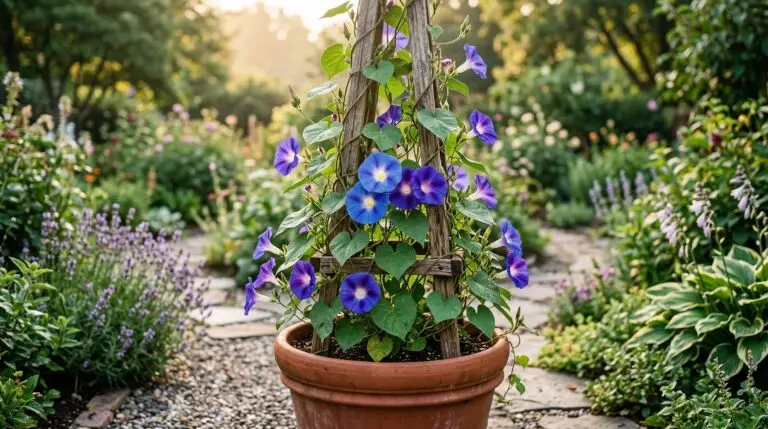
Growing morning glories in containers for balcony vines that bloom all summer