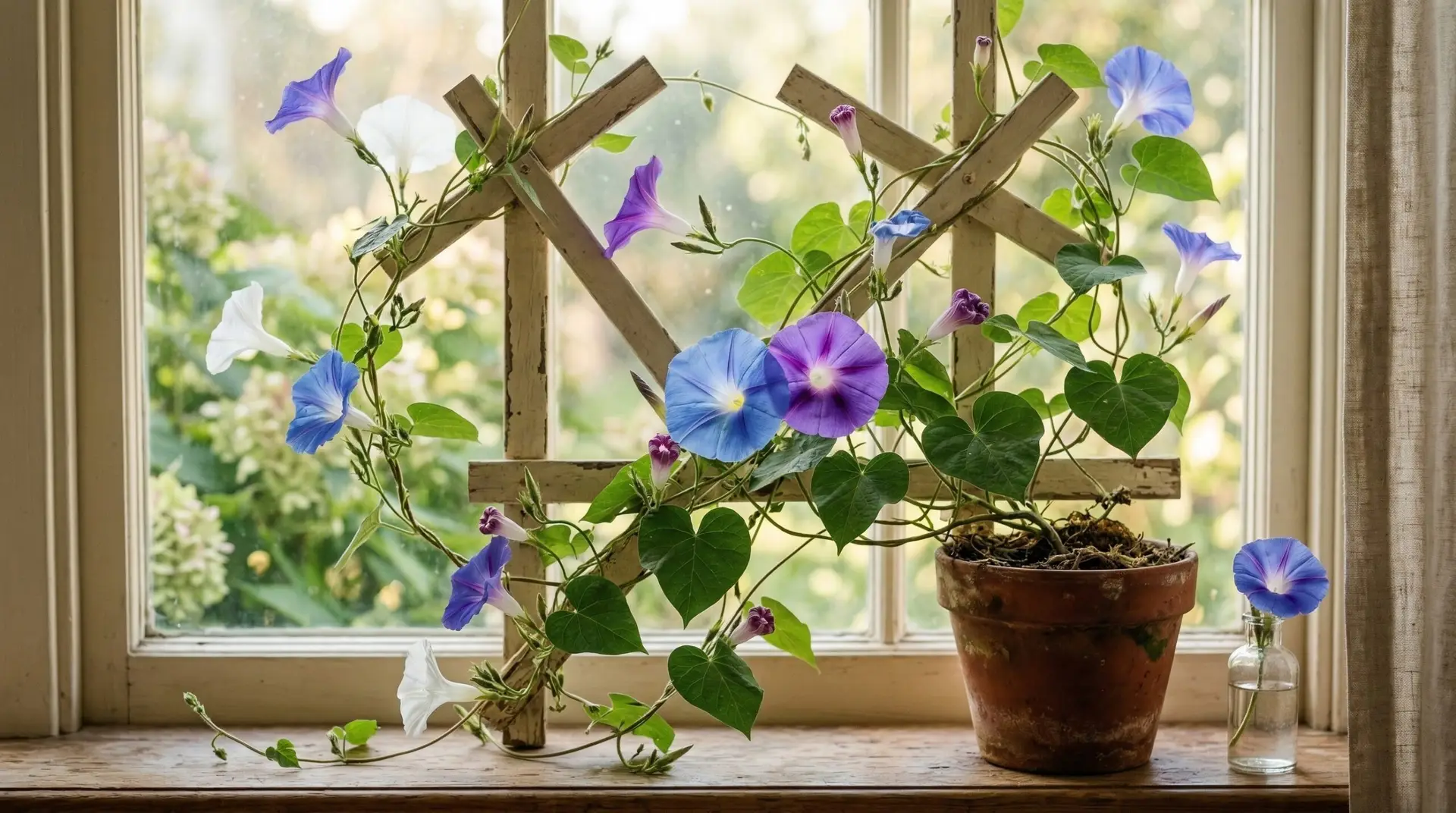
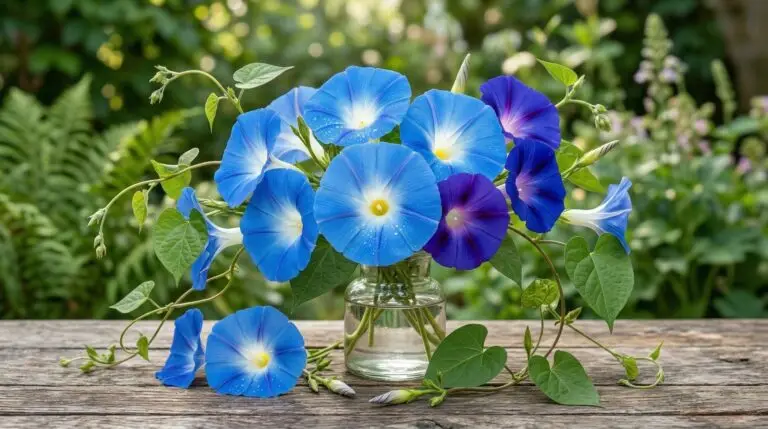
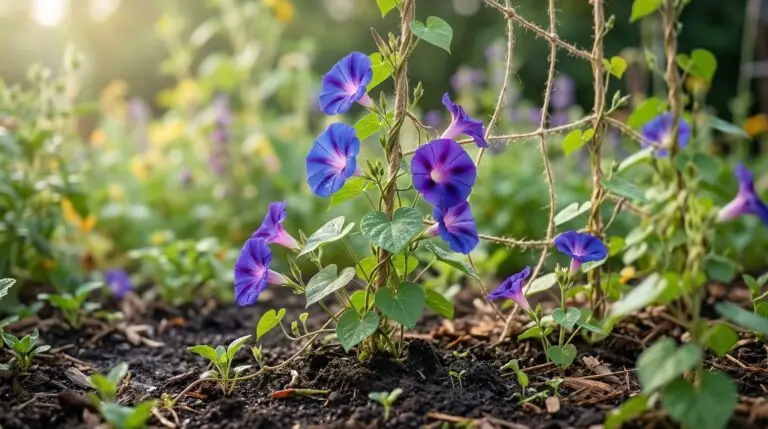
One of the first things gardeners ask when they start growing morning glories is why the bright, trumpet-shaped blooms they admired at breakfast look like shriveled bits of tissue paper by lunchtime. It is a startling realization for anyone expecting the long-lasting displays typical of other garden staples like roses or hydrangeas. The short morning glory flower lifespan is entirely normal and baked right into the genetics of the plant. These vigorous vines are famous for their daily vanishing act, opening fresh faces at dawn and curling them shut as the afternoon heat sets in. A bright blue disk suddenly becomes a tight, twisted cone of pinkish-purple tissue before eventually falling off the vine completely. Watching this rapid cycle unfold often leaves new growers feeling a bit cheated, wondering if they did something wrong with their watering schedule or soil amendments. The truth is that this brief, daily appearance is exactly how the plant is supposed to behave, and understanding the mechanics behind it makes the whole process fascinating rather than frustrating. You are witnessing a highly specialized biological event that repeats itself with clockwork precision every single day of the growing season.
Contents 4 sections
Understanding the daily vanishing act
The natural follow-up question is how the plant actually knows when to perform this rapid daily routine. Morning glories operate on a highly sensitive biological clock known as a circadian rhythm, which reacts specifically to light and temperature changes in the environment. Botanists refer to the mechanism that opens the petals as turgor pressure, and it acts like a microscopic hydraulic system inside the plant tissue. As dawn approaches and light levels begin to shift, the plant pumps fluids into the specialized cells of the flower petals, forcing them to unfurl in a matter of hours. This process is so precise that you can almost set your watch by their opening during the middle of summer. Once the sun climbs higher and temperatures peak, those same cells lose their turgidity, causing the petals to roll inward and seal shut forever. Similar to the daylily, which also puts its energy into a single daily performance, the morning glory relies on environmental cues to dictate exactly when its flowers should be active. The plant is constantly monitoring its surroundings to ensure the petals are only exposed during the most optimal conditions.
The evolutionary reason for a short bloom
This leads to something many growers wonder about, which is why a plant would bother spending so much energy to create a flower that only lasts for a few hours. The answer comes down to extreme efficiency and a highly targeted pollination strategy. Morning glories target early-rising pollinators like bees, butterflies, and certain moths that are most active in the cool morning air. By opening early and advertising a fresh supply of nectar, the plant guarantees immediate attention from these insects before the heat of the day sets in and insect activity slows down. Once the flower has been visited and pollination is likely complete, keeping the delicate petals open and hydrated under the scorching afternoon sun would be a massive waste of water and energy. Every single bloom that successfully attracts an early morning visitor will soon swell into a seed pod, ensuring the next generation of vines. The morning glory one day bloom is essentially a perfect adaptation for surviving hot climates while still achieving reproductive success. The plant has calculated that a short, intense burst of activity is far more effective than maintaining a long-lasting bloom that requires constant hydration.
Creating the illusion of endless flowers
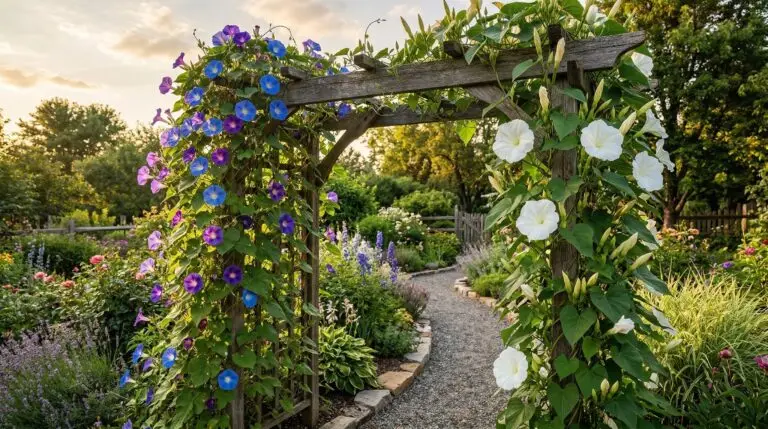
When people realize the flowers die so fast, they frequently ask if their vine will soon be completely bare and finished for the season. This is where the true magic of these ephemeral flowers becomes apparent, because a healthy morning glory is an absolute factory of continuous bud production. While the individual flower only gets one day in the sun, the vine itself produces hundreds or even thousands of tightly spiraled buds along its stems throughout the growing season. If you look closely at the leaf nodes, you will see clusters of these new buds waiting in various stages of development. As yesterday’s blooms fall away, a completely new set of flowers is already positioned and ready to take their place the very next morning. This creates the illusion of a constantly blooming plant, masking the reality that the entire display is completely replaced every twenty-four hours. By the way, if you want to extend this daily cycle into the evening hours, you can plant them alongside a moonflower vine, which is a close relative that waits until dusk to open its large white blooms. Together, these two plants create a continuous cycle of opening and closing flowers that keeps the garden active around the clock.
When the flowers break their own rules
A question you might not have considered is whether the flowers ever break their own rules and stay open longer than a single morning. The rigid schedule actually shifts slightly depending on the weather patterns and the time of year. On heavily overcast, cool days, you will often notice the flowers remaining open well into the late afternoon because the temperature and light triggers that tell them to close have not been reached. As autumn approaches and the days grow generally cooler, the blooms naturally last longer before curling up, sometimes even surviving until the following morning. You might even notice the colors shifting slightly as the day wears on, with deep blues fading to magenta before the petals finally collapse. This daily renewal provides a beautiful lesson in garden observation, teaching you to appreciate the fleeting moments rather than expecting permanent fixtures in your flower beds. Knowing that the specific flower you are looking at right now will never be seen again gives the morning glory a unique, quiet importance. It turns a simple garden vine into a daily reminder to enjoy things exactly as they are right now.
More About Morning Glories
Morning glory flower meaning and the Japanese art of training these blooms to perfection

Morning glories as living sunshade screens for windows and south-facing walls
How to control invasive morning glory and stop it from taking over your garden
Growing morning glories from seed with the easy soak-and-plant method
Best morning glory varieties from classic Heavenly Blue to rare chocolate Knowlian’s Black
Morning glory companion plants: what to grow, what to avoid
Training morning glories on fences mailboxes and trellises for vertical garden magic
Growing morning glories in containers for balcony vines that bloom all summer
How to grow morning glories for a cascade of trumpet flowers that greet the sunrise
Enjoying our flower guides? Add YourFlowersGuide as a preferred source on Google. It helps more readers find us.
Add to Preferred Sources