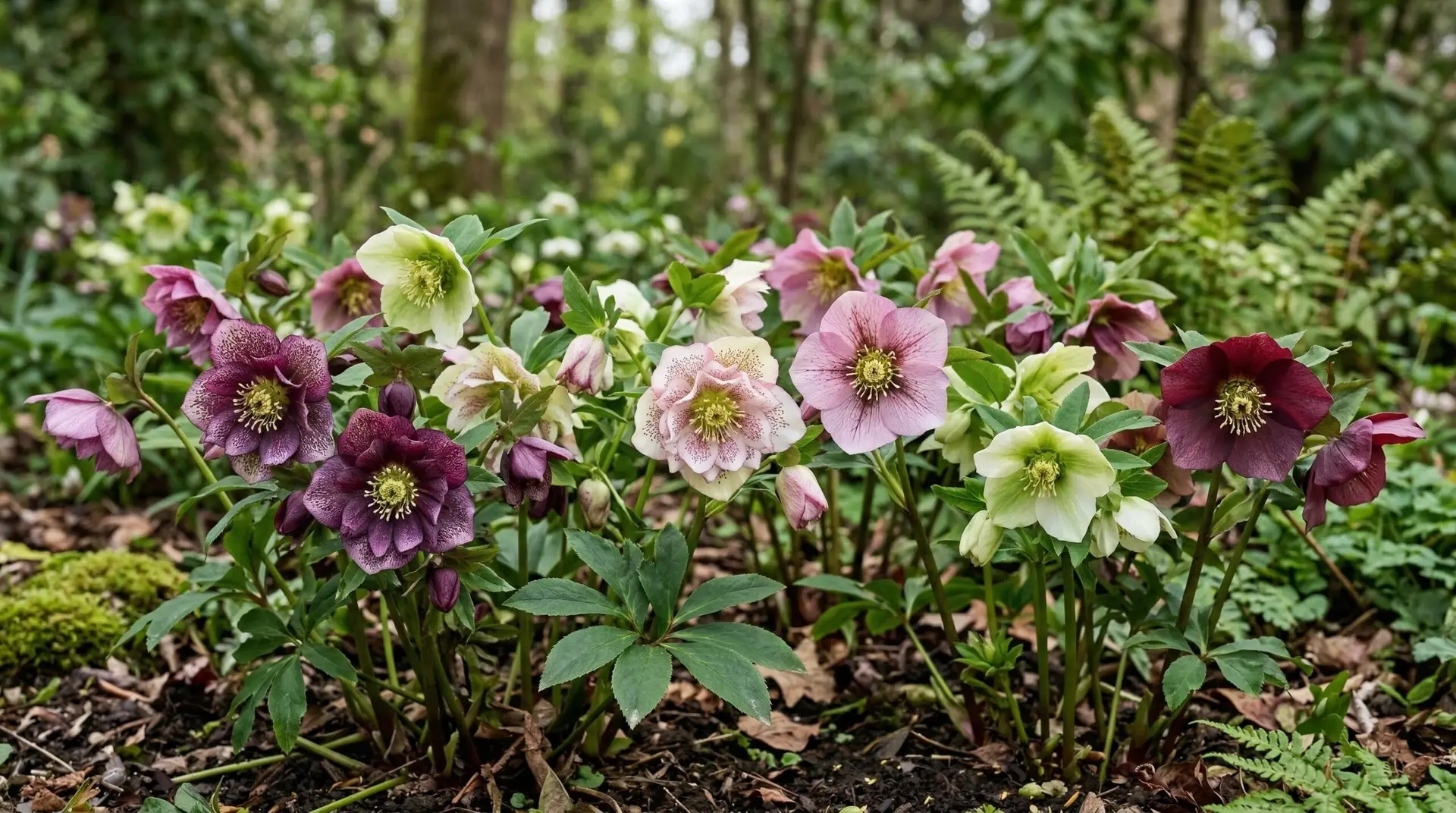
When evaluating hellebore varieties for the late winter garden, the options often seem endless and slightly chaotic. For decades, gardeners relied on unpredictable seed strains that frequently produced muddy, indistinct colors pointing firmly at the ground. Modern breeding has changed this entirely, giving us plants with outward-facing blooms, saturated colors, and vigorous foliage that actually looks good through the summer. Rather than trying to catalogue every available hybrid, we should focus our attention on the specific series and selections that reliably deliver superior performance. A curated collection of the best hellebores requires a discerning eye, favoring clear colors and strong stems over mere novelty. By narrowing our focus to the most refined Lenten rose varieties and the earliest true winter bloomers, we can build a garden display that earns its space.
The pristine standard of the Christmas rose
The foundation of any serious winter garden begins with the true Christmas rose, Helleborus niger. Unlike the later blooming hybrids, this species pushes pure white, flat-faced flowers through the frozen earth in the dead of winter. Many older varieties of this species struggle with leaf spot and general lack of vigor, which makes careful selection essential. The Gold Collection is the absolute pinnacle of breeding for this group, offering plants that are tissue-cultured for perfect consistency rather than grown from seed. These selections produce exceptionally large, pristine white flowers that age gracefully to pale green or soft pink as the temperatures warm. They pair well with other early arrivals like the delicate snowdrop, creating a bright woodland understory when most other plants are entirely dormant. If you only have space for one early white variety, choosing a named plant from the Gold Collection ensures you avoid the weak, disease-prone seedlings that often clutter nursery benches.
Refining the classic Lenten rose
Moving slightly later in the season brings us to the complex world of Helleborus orientalis hybrids, commonly known as the Lenten rose. The most sophisticated choices in this category are often the single-flowered forms, which possess a quiet elegance that the heavier doubles sometimes lack. Among these single-color classics, the picotee types stand out for their delicate precision. A good picotee hellebore has a base color of white, cream, or soft pink, meticulously outlined with a thin margin of deep crimson or burgundy. This fine edge draws the eye inward and highlights the natural cup shape of the blossom. At the opposite end of the color spectrum are the slate and black varieties, which offer a velvety, matte finish that absorbs the weak winter light. These dark selections require careful placement against lighter foliage or stone to prevent them from disappearing into the shadows, but their brooding presence adds necessary visual weight to the early spring garden.
Many comprehensive guides recommend planting mixed color strains of these single hybrids to achieve a natural woodland look. In practice, this approach often yields a high percentage of dull, washed-out purples and muddy greens that fail to make any visual impact. When curating your garden, it is far better to select specific, named Lenten rose varieties with clear, saturated hues. A solid, luminous yellow or a deep, unblemished ruby red will read much better from a distance than a speckled or veined flower. The speckled varieties, while beautiful up close, tend to look dusty or bruised from ten feet away. By insisting on clear colors and strong, upward-facing stems, you elevate the entire planting into a deliberate, thoughtful design.
Evaluating the double-flowered forms
For those who prefer a more robust floral display, the double-flowered hellebores offer a completely different aesthetic. Breeding double hellebores used to result in heavy, drooping flowers that hid their faces in the mud. The Wedding Party series has largely solved this problem, offering plants with strong stems capable of supporting the extra weight of the multi-petaled blooms. These varieties produce flowers that look remarkably like miniature water lilies or a late-season camellia, filling the void before the true spring bloomers arrive. The doubling in this specific series is consistent and symmetrical, avoiding the ragged, uneven petal arrangements found in lesser breeding lines. Selecting a variety from this series ensures a reliable, heavy-blooming plant that brings a touch of formal structure to the otherwise wild late winter border.
Within the Wedding Party series, certain colors perform better than others in a garden setting. The pure white and pale pink doubles capture the light beautifully and stand out well against the dark, leathery foliage. Darker doubles, such as those in deep purple or near-black, are undeniably fascinating when held in the hand, but they often turn into indistinct dark blobs when viewed in the garden. For this reason, I strongly favor the lighter shades with contrasting speckles or edges, which maintain their visual definition even on overcast days. These lighter doubles also drop their spent blooms more cleanly, reducing the amount of manual grooming required to keep the plants looking sharp as the season progresses. By carefully selecting the lighter, more luminous doubles, you gain the structural complexity of the extra petals without sacrificing garden visibility.
After observing countless hellebore varieties across multiple seasons, one specific type consistently proves its worth above all others. The single picotee Lenten rose remains my top recommendation for any serious gardener. While the Gold Collection offers unmatched early whites and the Wedding Party series provides impressive floral weight, the single picotee achieves a perfect balance of architectural grace and visual clarity. The contrasting edge defines the flower shape against any background, and the single layer of petals allows light to pass through, giving the bloom a luminous quality that doubles simply cannot match. It is a plant that respects the quiet, understated nature of the late winter garden while still delivering precise, reliable color year after year. Plant a single picotee hybrid where you can view it easily from a window, and you will understand exactly why it deserves a permanent place in the curated garden.
More About Hellebore
Why hellebore flowers face downward and how to display their hidden beauty
Hellebore flower meaning and the dark legends surrounding the Christmas rose
How to clean up hellebore foliage in late winter for the best flower display
How to grow hellebores for elegant flowers that bloom in the dead of winter
Hellebores in containers for winter interest on patios and doorsteps
Companion plants for hellebore: what to grow, what to avoid
Dividing hellebores and the right time to split mature clumps without killing them