Larkspur flower meaning: Greek mythology, growing, and toxicity
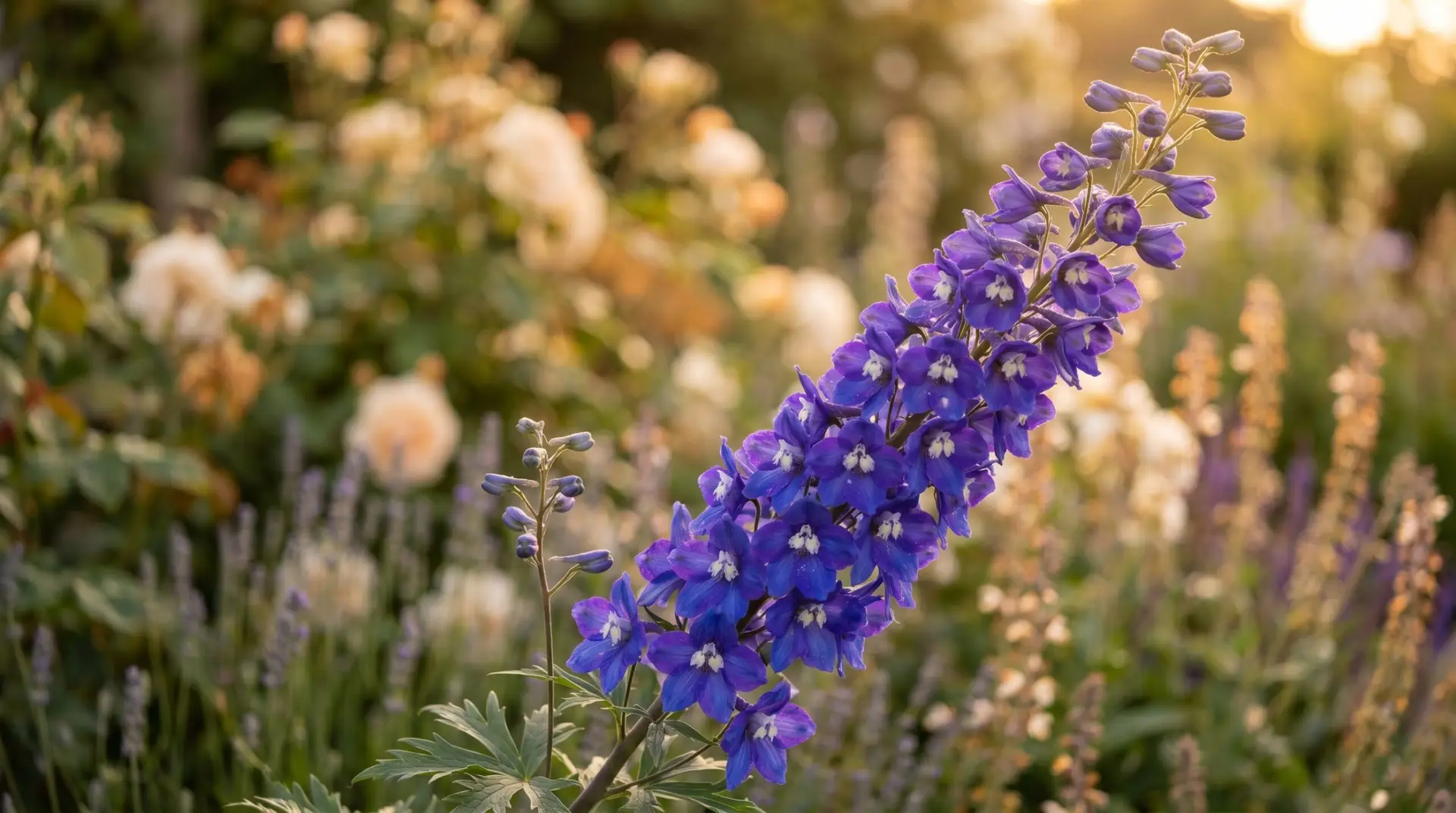
Larkspur is July’s secondary birth flower in Western tradition. Where water lily means purity and rebirth, larkspur signals an open heart, ardent attachment, and joyful affection. The plant refers to two related genera in the family Ranunculaceae: Consolida (the annual larkspur, formerly classified within Delphinium) and Delphinium (the perennial larkspur or “delphinium” in common usage). Both genera contain plants with tall spire-like flowering stems, deeply divided leaves, and dense racemes of small flowers with the characteristic spurred form that gives the genus its common name.
The larkspur holds an unusually dual cultural register. The Greek mythological tradition connects the flower to the Ajax tragedy from the Trojan War (the markings inside the flower were said to spell letters from Ajax’s death), giving the plant a deep classical literary anchor. At the same time, larkspur has documented toxicity that has made it a significant cattle-mortality cause in western US grazing lands and a recognized danger in households with curious children or pets. The combination of beautiful tall spires, ancient Greek symbolic depth, and serious toxicity gives larkspur a more complex cultural character than most ornamental garden flowers.
Larkspur botany: Consolida vs Delphinium
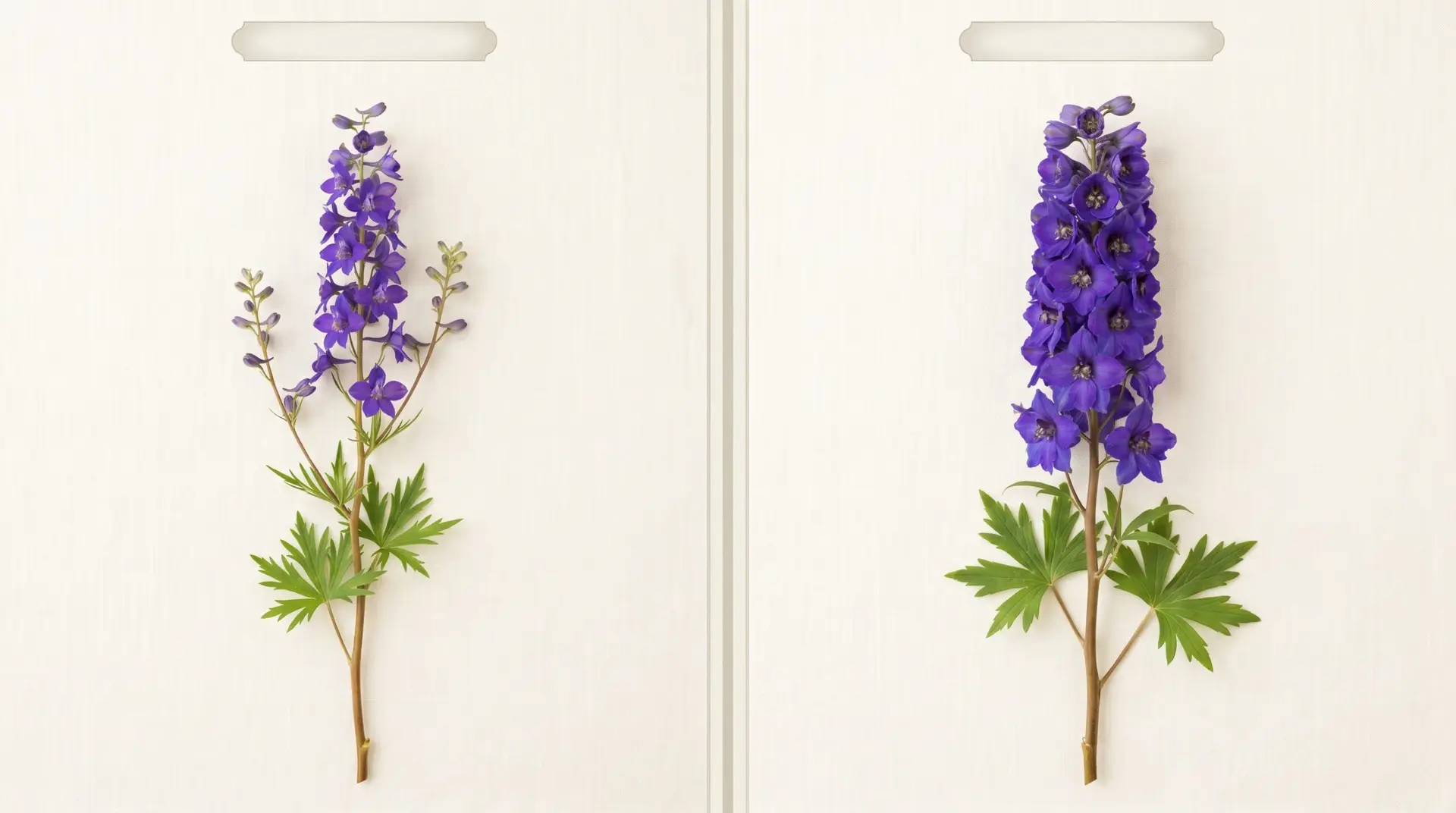
Larkspur and delphinium share so much visual and cultural identity that the distinction between them is often confusing to gardeners. Both belong to the family Ranunculaceae (the buttercup family) and contain plants with tall flowering spires, deeply divided leaves, and small flowers with the distinctive spurred form. The taxonomic and practical differences come down to a few specific characteristics.
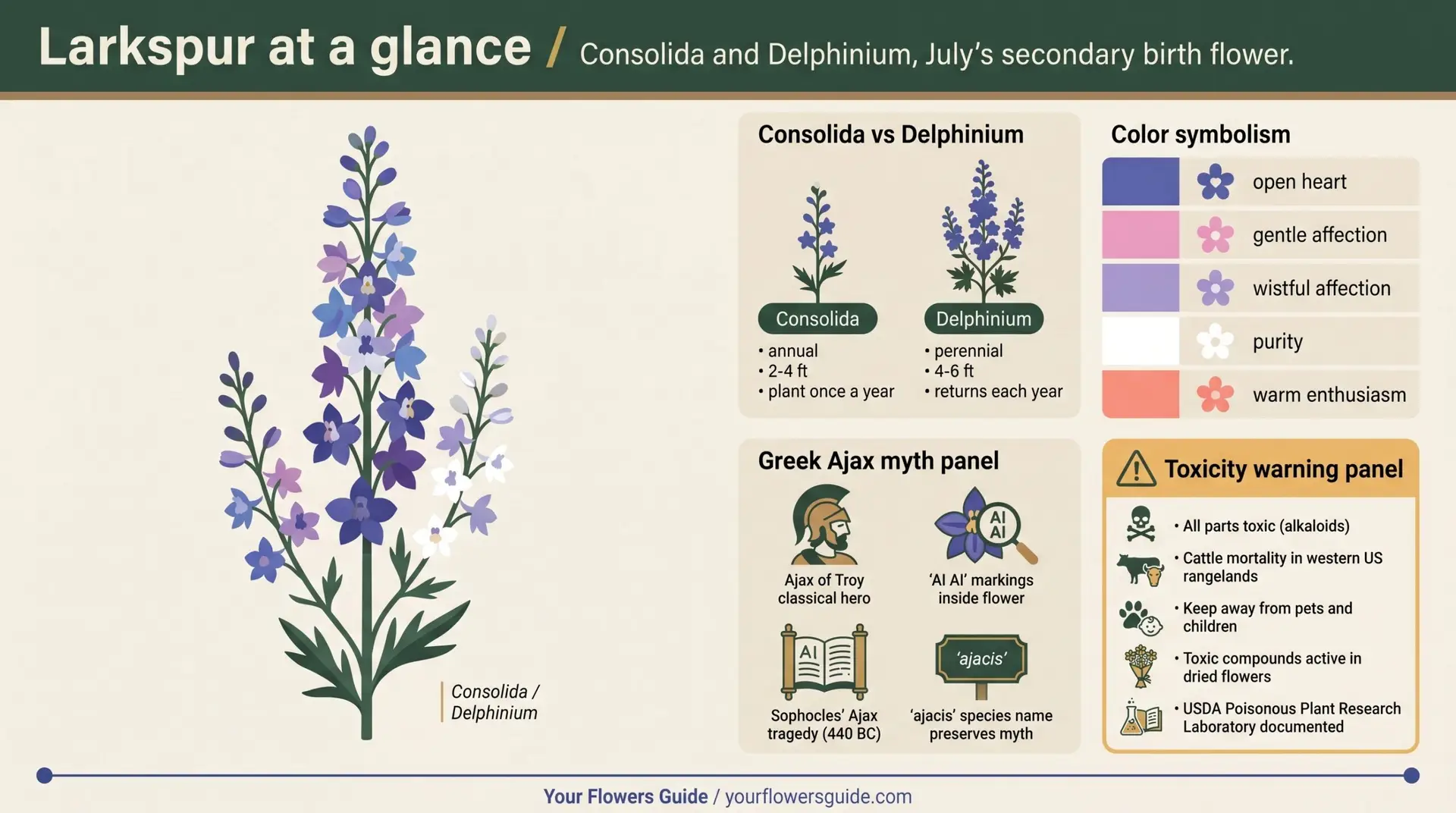
Consolida (annual larkspur). The genus Consolida contains about 40 species, formerly classified within Delphinium and split off as a separate genus in the late twentieth century based on morphological and genetic differences. The most commonly cultivated species is Consolida ajacis (formerly Delphinium consolida, formerly Delphinium ajacis), the “rocket larkspur” of English garden tradition. Consolida species are annuals, completing their full life cycle in one growing season and requiring annual replanting from seed.
Delphinium (perennial larkspur). The genus Delphinium contains about 300 species, with the cultivated garden delphiniums (Delphinium elatum hybrids, English delphiniums, and Pacific Giant strains) representing extensive breeding work. Delphiniums are perennials returning from established plants for several years before declining. They reach larger size than annual larkspur (4 to 6 feet versus 2 to 4 feet for annuals) and produce more elaborate flowering racemes.
The visual distinction between Consolida and Delphinium for non-specialists is difficult. Both have tall flowering spires, similar individual flower form with characteristic spurs, similar leaf shapes, and similar color ranges. Gardeners typically distinguish them by life cycle: if the plant returns reliably from the same roots each year, it is Delphinium (perennial); if it must be replanted from seed each year, it is Consolida (annual larkspur).
The genus name Delphinium comes from the Greek “delphis” (dolphin) because the unopened flower bud was thought to resemble a dolphin’s nose. The genus Consolida derives its name from the Latin “consolidare” (to make solid or whole), referencing the plant’s historical use in healing wounds (consolidare = “to heal together”).
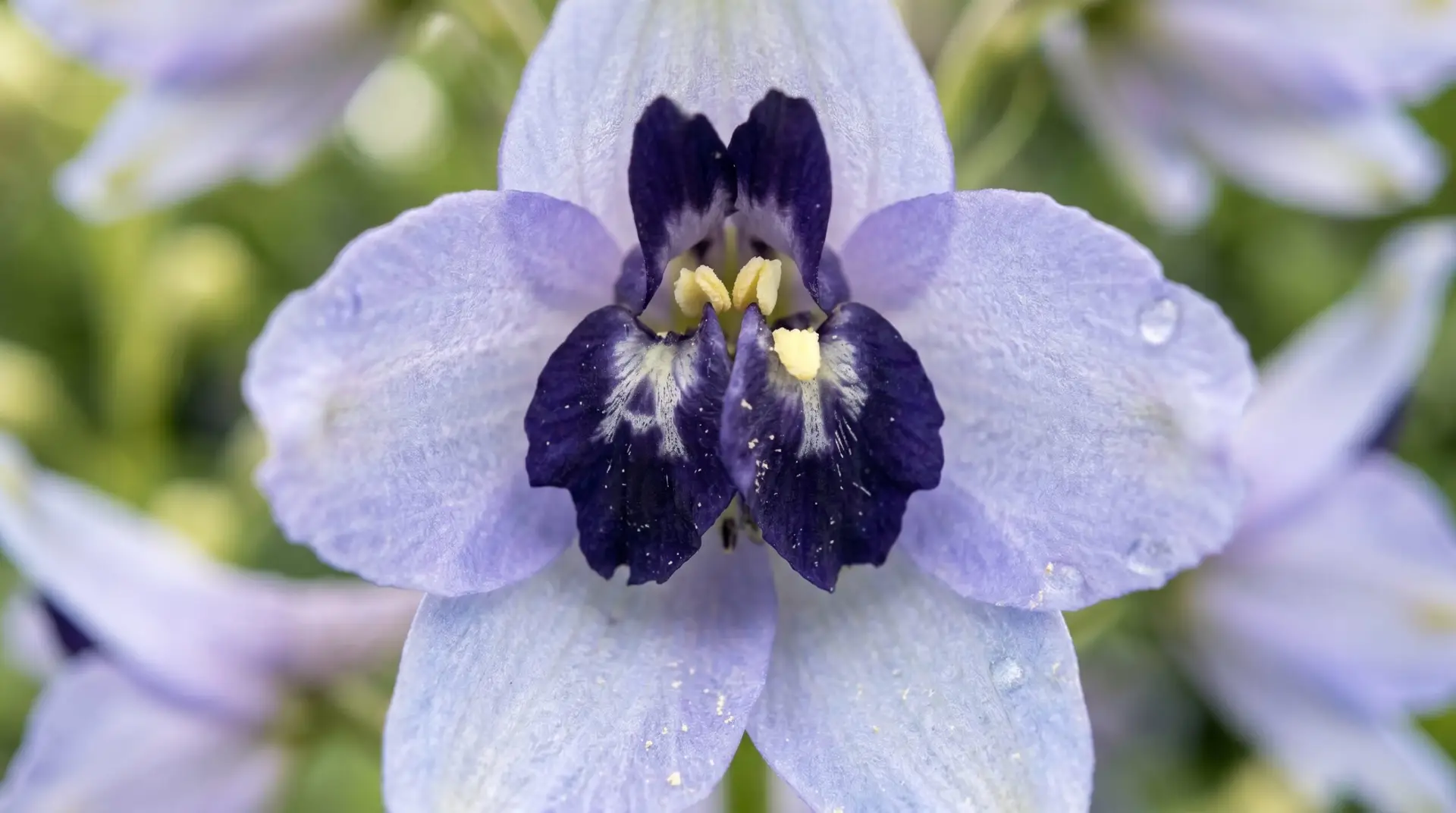
The flowers themselves are similar across both genera. Five sepals form the visible outer flower, with the upper sepal extending backward into the characteristic spur containing nectar. Inside the sepals, smaller true petals form a smaller secondary structure (the “bee” in some traditions) that often shows contrasting color to the outer sepals. The spurred form gave the genus its common English name “larkspur” because the spur was thought to resemble a lark’s claw or spur.
The Greek Ajax tragedy myth
The Greek mythological tradition connects larkspur to the tragic story of Ajax the Greater (Telamonian Ajax), one of the major heroes of the Trojan War. The connection appears in the specific markings inside the larkspur flower, which were said by classical Greek and Roman writers to spell letters from Ajax’s name or his death cry. The “ajacis” species name (Consolida ajacis, formerly Delphinium ajacis) preserves the connection directly.
The Ajax story is one of the most poignant tragedies in classical Greek literature. After the death of Achilles at Troy, the Greek army needed to award Achilles’s magnificent armor to one of the remaining heroes. Two candidates emerged: Odysseus (the cleverest Greek) and Ajax (the strongest, after Achilles, and the man who had carried Achilles’s body off the battlefield). The Greek leaders awarded the armor to Odysseus through a vote or a contest (versions vary). Ajax, deeply hurt by what he saw as injustice, went mad in grief and rage. In his madness he attacked a flock of sheep, mistaking them for the Greek leaders he wished to kill. When he came to his senses and understood what he had done, he killed himself with his own sword.
The flower symbolism connects to Ajax’s death in several ways. The “Α Α” or “ΑΙ ΑΙ” markings inside larkspur flowers were said to spell either the first letters of Ajax’s name (Α Ι Α Σ in Greek) or to spell “AI AI” (alas, alas), the Greek interjection of grief. Either reading connects the flower to mourning, lost honor, and tragic dignity.
Sophocles wrote his tragedy Ajax (about 440 BC) based on this story; the play remains one of the seven surviving Sophoclean tragedies and is regularly studied in classical literature courses. The play’s central themes (honor, the limits of glory, grief that overwhelms reason) give the larkspur an unusually deep literary anchor for a flower secondary to its month’s primary.
The “ajacis” species name and the Ajax mythological connection are documented in classical botanical references including Pliny the Elder’s Natural History (about 77 AD), which discusses larkspur in connection with both the visual markings and the Ajax mythology. The continuing scientific use of “ajacis” as the species epithet preserves the classical mythological connection in modern botanical taxonomy.
Color symbolism within larkspur
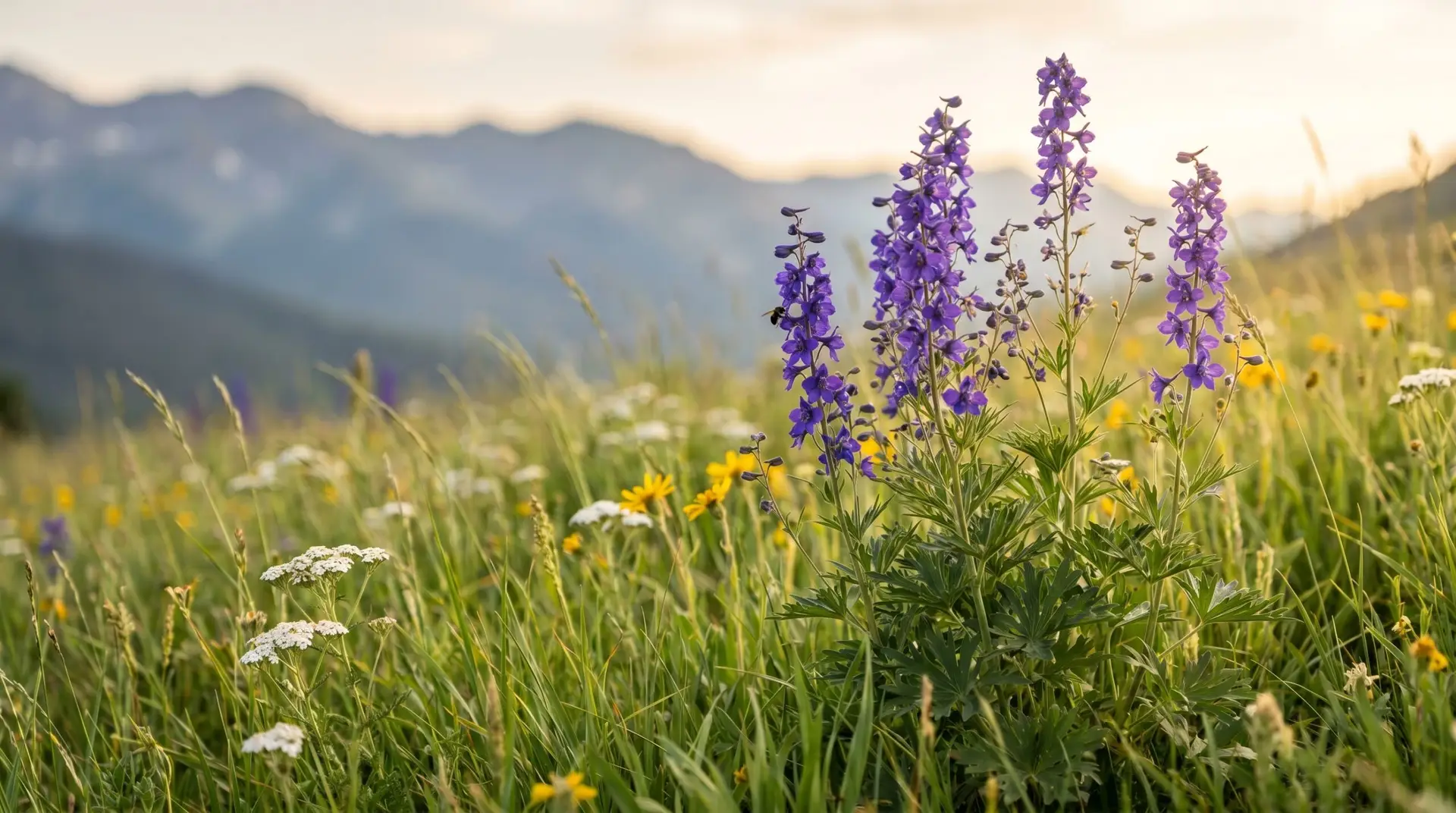
Larkspur color shifts the symbolic reading within the broader theme of open-hearted affection:
Deep blue-purple larkspur: the most iconic and most common color. Open heart, ardent attachment, joyful affection. The classic Victorian reading and the dominant visual identity of garden larkspur.
Pink larkspur: gentle feminine affection. The pink color shifts the symbolic register toward warmer relational warmth.
Lavender larkspur: wistful affection, sweet remembrance. The lavender color reads more contemplatively than the bolder purple.
White larkspur: purity, happy lightness, openness. Often used in wedding bouquets for the symbolic register and the visual contrast with darker spire forms.
Salmon or pink-orange larkspur: warm enthusiasm, joyful celebration. Less common than blue or pink but striking when included in bouquets.
The Victorian color readings sometimes vary across sources. Some Victorian flower books read pink larkspur as “fickleness” or “haughtiness” rather than gentle affection. The modern dominant reading skips these negative interpretations in favor of the positive affectionate symbolism. The “first love” reading sometimes appears for white larkspur in older sources, though modern usage focuses more on the broader open-hearted theme.
Toxicity and the cattle-mortality history
Larkspur and delphinium contain alkaloids that are toxic to humans and livestock. The active toxic compounds include methyllycaconitine, deltaline, and other related alkaloids that affect nerve function. Consumption causes muscle weakness, respiratory difficulty, and in severe cases death through respiratory failure or cardiac arrest.
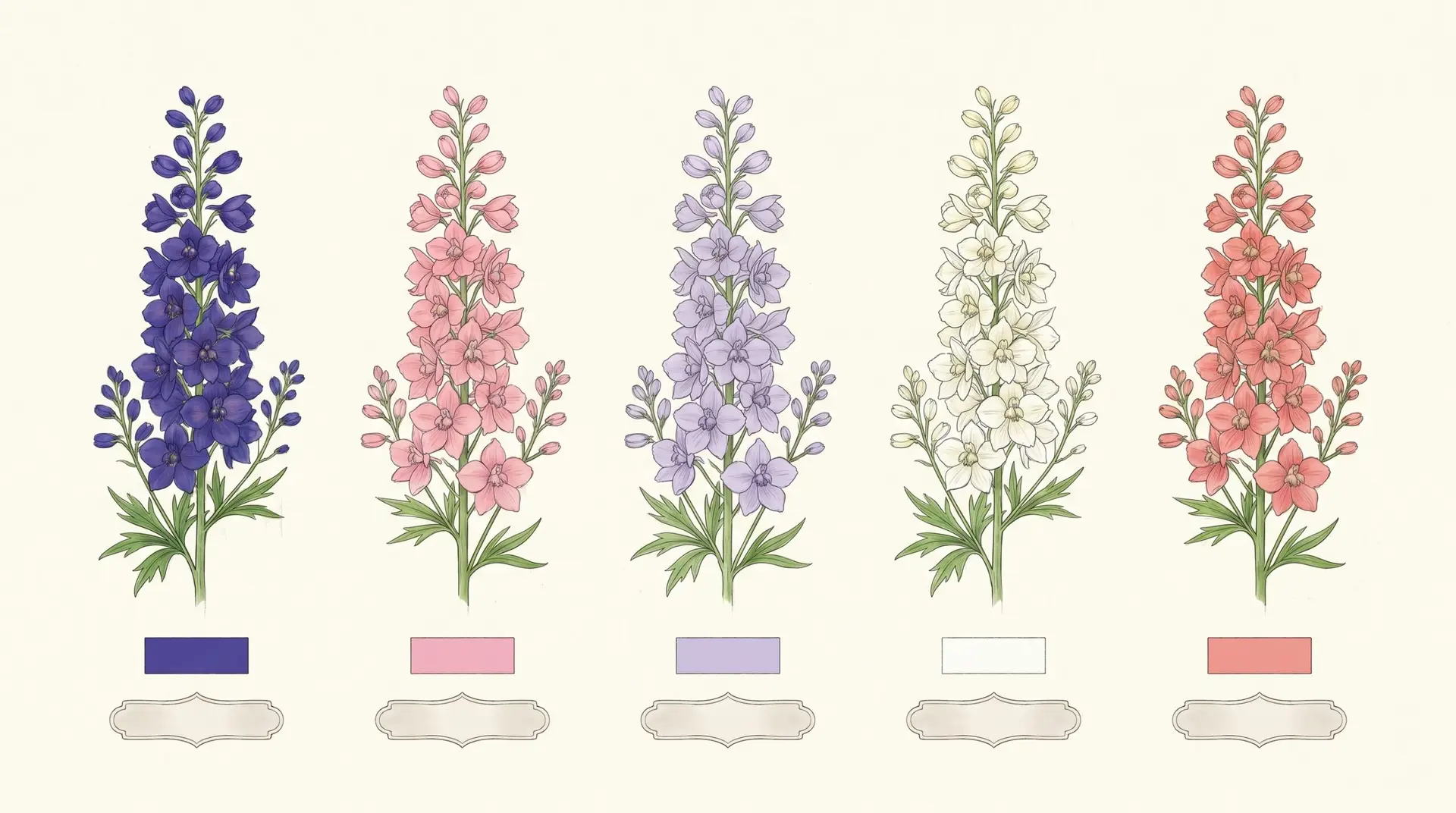
The cattle-mortality history is significant. Across the western United States rangelands (Colorado, Wyoming, Montana, Idaho, Nevada, Utah, and northern New Mexico), wild Delphinium species (particularly D. barbeyi, D. occidentale, and D. nuttallianum) have been documented causing significant cattle losses for over 150 years. The US Department of Agriculture Agricultural Research Service Poisonous Plant Research Laboratory in Logan, Utah has studied larkspur poisoning since the early twentieth century, with documented annual cattle losses estimated in millions of dollars across the affected regions.
The toxicity varies by species and by plant developmental stage. Young plants (early summer) have lower toxin concentrations than maturing plants. Flowering and seed-setting stages typically have peak toxicity. Tall larkspur (Delphinium occidentale and barbeyi) is more toxic than low larkspur (Delphinium nuttallianum and similar low-growing species). Cattle are particularly vulnerable because they will graze on larkspur even when other forage is available; sheep are more selective grazers and have lower larkspur mortality.
For household and garden safety, the relevant warnings include the following. Do not eat any part of larkspur or delphinium. Keep cut-flower stems and bouquets out of reach of children and pets. The toxic compounds remain active in dried flowers. The pollen contains toxins; sensitive individuals can develop allergic reactions from handling or being near flowering plants. Wear gloves when working with larkspur or delphinium plants in the garden, particularly when pruning or deadheading.
Death from human larkspur poisoning is rare in modern times but documented in older medical literature. Historical poisoning cases typically involved children eating seeds or flowers, or accidental contamination of forage and food sources. Modern poisoning cases more often involve livestock than humans.
Growing larkspur and delphinium
Larkspur and delphinium have different cultivation requirements that reflect their different life cycles.
Annual larkspur (Consolida) is one of the easier annual flowers to grow in cool temperate climates. Direct-seed in autumn (October to November in mild climates, March to April in colder climates) for spring and early summer bloom. The seeds require cool stratification (4 to 6 weeks of cold temperatures) for reliable germination, which happens naturally with autumn planting. Spring-planted seeds may need pre-chilling in a refrigerator before sowing. Plants reach 2 to 4 feet tall and bloom in early summer (June to early August). Annual larkspur self-seeds reliably in suitable conditions, producing volunteer plants from year to year without additional planting.
Perennial delphinium is more demanding. The plant requires rich well-drained soil, cool summer temperatures, and adequate moisture without waterlogging. Hot humid summers cause root rot and shortened plant lifespan. The Pacific Northwest, northeast US, UK, and similar cool-summer regions provide the best delphinium-growing conditions; warm-summer regions (US South, much of California, Australia interior) struggle to maintain delphiniums as long-lived perennials.
Tall delphiniums require staking. The 4 to 6 foot flowering stems become top-heavy when fully grown and bend or break in wind without support. Bamboo canes, ornamental metal stakes, or grow-through plant supports work. Staking should be installed at planting time so the supports become invisible as the plant grows around them.
Both genera benefit from regular deadheading (removing spent flowers before seed pods form) which extends the bloom period and prevents excessive self-seeding. Cut individual flowering stems back to ground level when bloom finishes; for perennial delphiniums, the plant may produce a second flush of smaller flowering stems in late summer if cut back promptly.
Pests and diseases for larkspur and delphinium include powdery mildew (particularly in humid conditions), slug damage on young plants, aphids on new growth, and crown rot in poorly drained soils. Standard organic pest management approaches work for all four pest categories.
Larkspur in arrangements and gifts
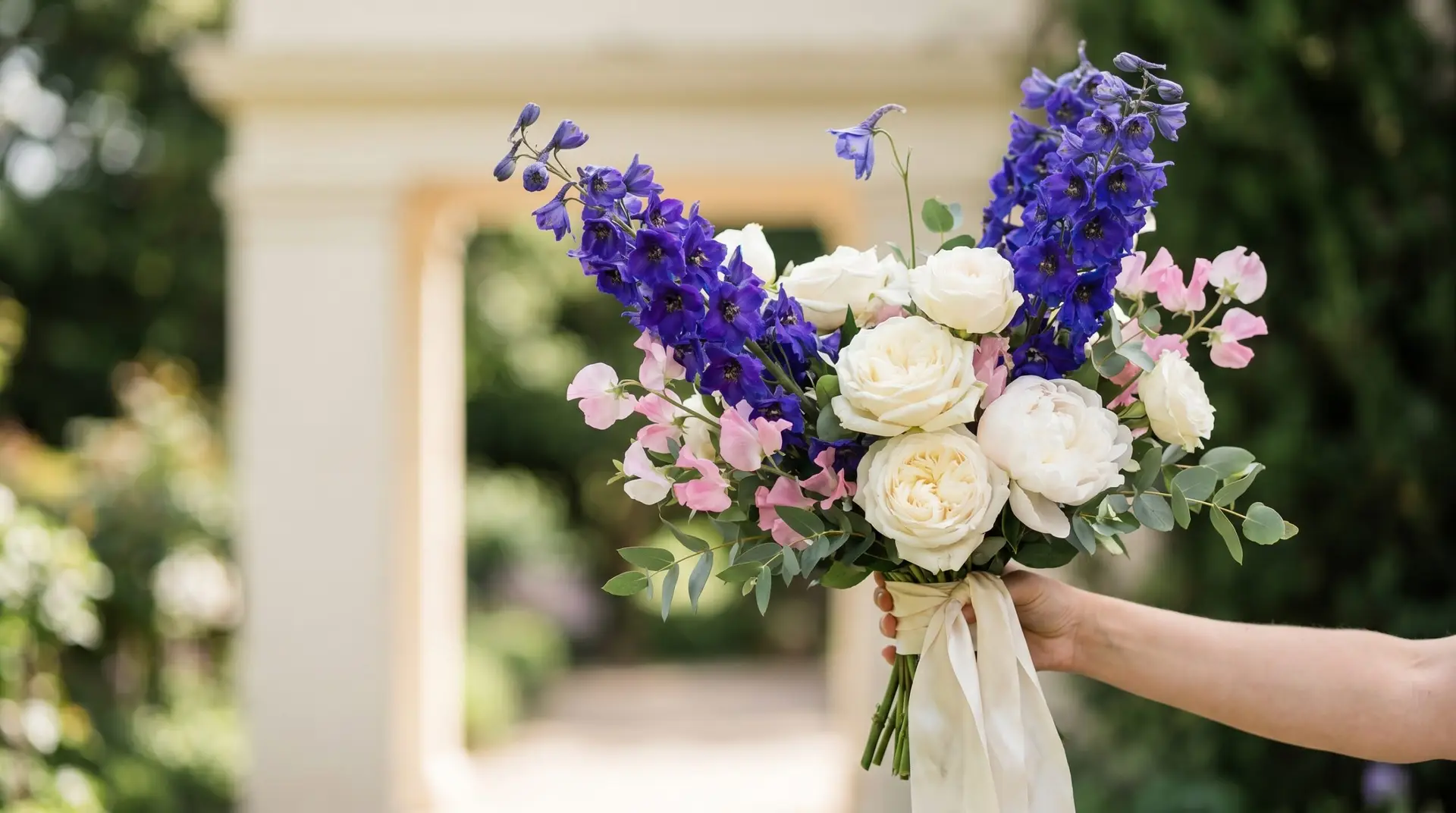
Larkspur as a cut flower is one of the most striking vertical elements in summer florist trade. The tall spire form (3 to 4 feet for cut stems) gives bouquets dramatic height and visual interest that few other summer flowers can match. The deep blue-purple color provides striking contrast against pale-color companions (white roses, pink peonies, cream sweet peas).
Florist availability runs from June through August in temperate climate markets. Specialty florists stock larkspur during this window; large supermarket florists may not carry larkspur reliably outside major metropolitan areas. Cut larkspur lasts 5 to 7 days in the vase with regular water changes.
Common bouquet companions include peonies (peak June bloom timing matches larkspur, color contrast works), roses (rose-and-larkspur summer bouquets work well in mixed-color arrangements), sweet peas (the two flowers share late spring through summer availability), and stock flower (similar vertical spire character supports compound bouquet design).
Larkspur as a memorial flower works because of the Ajax mythological connection and the broader honor-and-loss symbolic register. White larkspur particularly suits memorial bouquets honoring deceased individuals where the wearer wants Greek classical references alongside the floral symbolism.
For gift-giving, a bouquet that combines larkspur as the vertical spire element with water lily (the July primary, where available) and summer roses creates a meaningful July birthday bouquet drawing on both month’s birth flowers. The combination is visually striking and symbolically layered.
Toxicity warnings apply to larkspur in all gift contexts. Do not include larkspur in arrangements going to households with curious children or pets that might chew on flowers. The cut-flower toxicity persists for several days after cutting. Florists in some jurisdictions provide cautionary tags on larkspur arrangements; readers buying larkspur for gift-giving should communicate the toxicity awareness to recipients with vulnerable household members.
Frequently asked
What does the larkspur flower symbolize?
Open heart, ardent attachment, and joyful affection. The Greek mythological connection adds the symbolic layer of honor, tragic dignity, and Greek classical literary tradition through the Ajax myth (the markings inside the flower were said to spell letters from Ajax’s death).
What’s the difference between larkspur and delphinium?
Both belong to the family Ranunculaceae. Larkspur (Consolida, about 40 species) is annual, requiring annual replanting from seed. Delphinium (about 300 species) is perennial, returning from established plants for several years. The two were classified together until late twentieth century taxonomic revision split Consolida from Delphinium based on morphological and genetic differences.
What is the Ajax larkspur Greek myth?
Greek mythology connects larkspur to Ajax the Greater (Telamonian Ajax), one of the major Trojan War heroes. After the Greek army awarded Achilles’s armor to Odysseus rather than Ajax, Ajax went mad with grief and killed himself. The markings inside the larkspur flower were said to spell letters from Ajax’s name or his death cry “AI AI” (alas, alas). The “ajacis” species name preserves the mythological connection in modern botanical taxonomy.
Is larkspur poisonous?
Yes, very. All parts of larkspur and delphinium contain alkaloids (methyllycaconitine, deltaline, and others) toxic to humans and livestock. Consumption causes muscle weakness, respiratory difficulty, and in severe cases death. Wild Delphinium species have been documented causing significant cattle mortality across western US rangelands for over 150 years. The toxic compounds remain active in dried flowers.
Can I grow larkspur in my garden?
Yes. Annual larkspur (Consolida) is one of the easier annual flowers to grow in cool temperate climates; direct-seed in autumn for spring bloom. Perennial delphinium is more demanding and requires cool summer temperatures, rich well-drained soil, and adequate moisture. Both require careful pest management (powdery mildew, slugs, aphids) and benefit from regular deadheading.
What color larkspur is best for July birthdays?
Deep blue-purple is the most traditional and iconic larkspur color, suiting standard July birthday bouquets. Pink larkspur suits warmer feminine affection. White larkspur suits memorial or wedding contexts. The choice depends on the recipient’s preferences and the symbolic register the giver wants.
How long does cut larkspur last?
Five to seven days in the vase with regular water changes. The cut larkspur stem holds the bloom progression from bottom to top of the flowering spire; flowers continue to open during vase life. Remove spent lower flowers as they fade to extend the visible bloom period.
What is the difference between annual larkspur and rocket larkspur?
Both refer to the same plant: Consolida ajacis (formerly Delphinium ajacis or Delphinium consolida) is called “annual larkspur,” “rocket larkspur,” or “field larkspur” interchangeably in English garden tradition. The “rocket” name refers to the upright fast-growing form rather than to any difference from generic annual larkspur.
Should I worry about larkspur toxicity for pets?
Yes, if you have pets that may chew on plants or cut flowers. Cats, dogs, and other household pets can develop serious toxicity from consuming larkspur or delphinium. Keep cut-flower arrangements out of reach of pets. Be cautious with cut-flower water (toxic compounds leach into the water). Consult a veterinarian immediately if you suspect pet larkspur consumption.
Sources
- Larkspur (Consolida, Delphinium) · Encyclopedia Britannica
- Delphinium growing guide · Royal Horticultural Society
About this article. > Written and reviewed by the Your Flowers Guide editorial team. Botanical content from Britannica and the Royal Horticultural Society. Larkspur toxicity references from USDA Agricultural Research Service Poisonous Plant Research Laboratory documentation. Greek mythological references from Sophocles’s Ajax (about 440 BC) and Pliny the Elder’s Natural History (about 77 AD).