
Contents
Coneflower
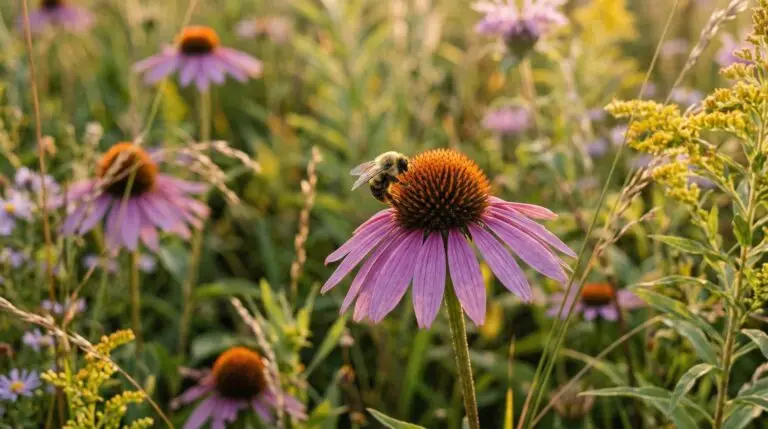
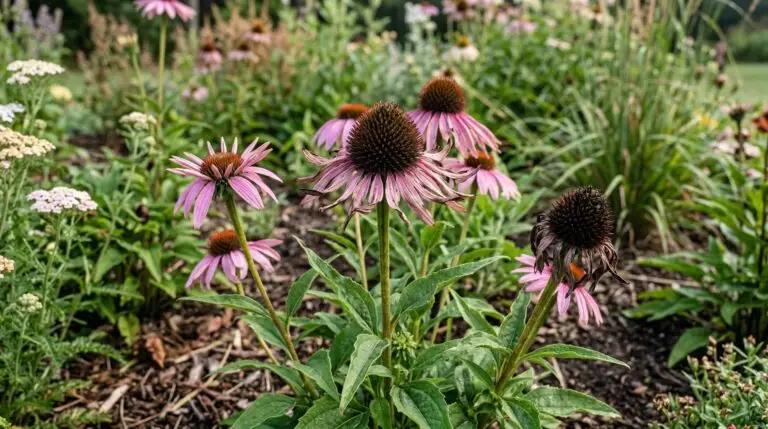
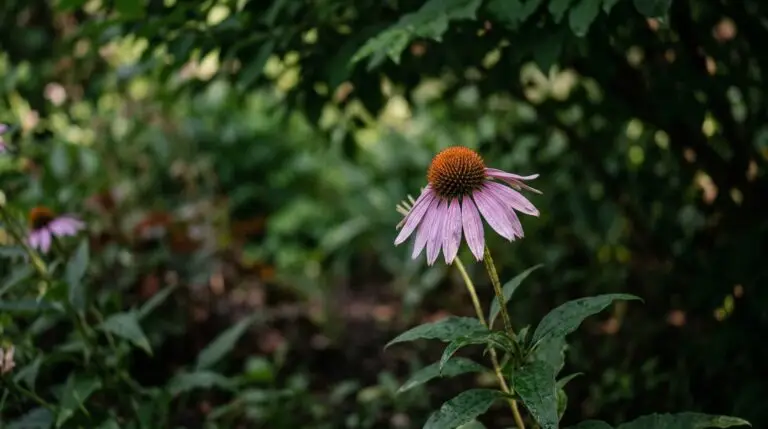
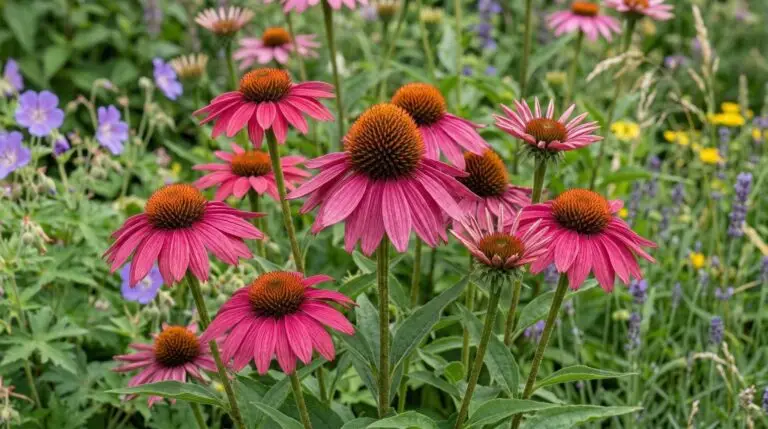
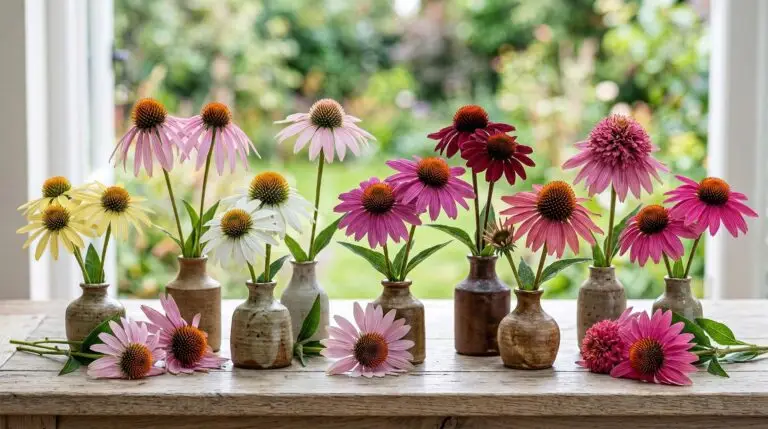
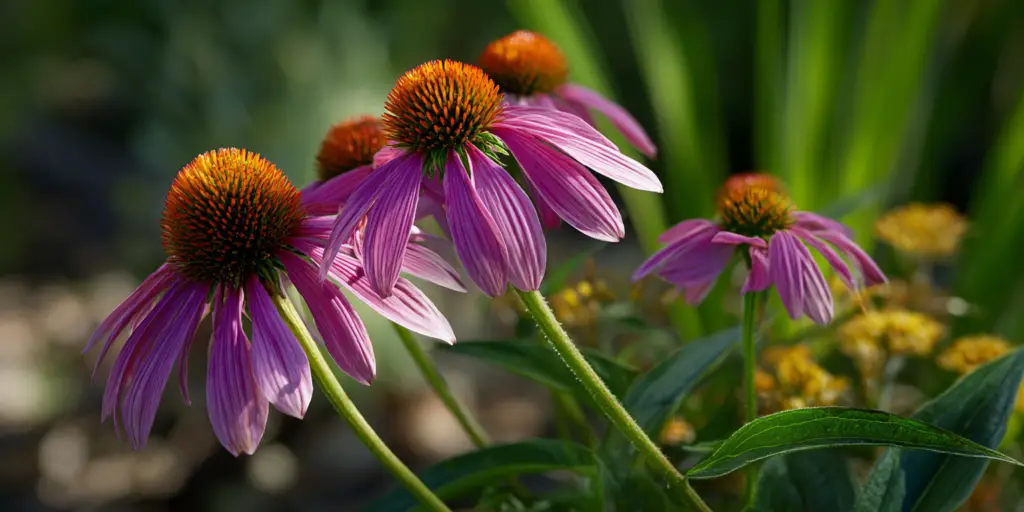
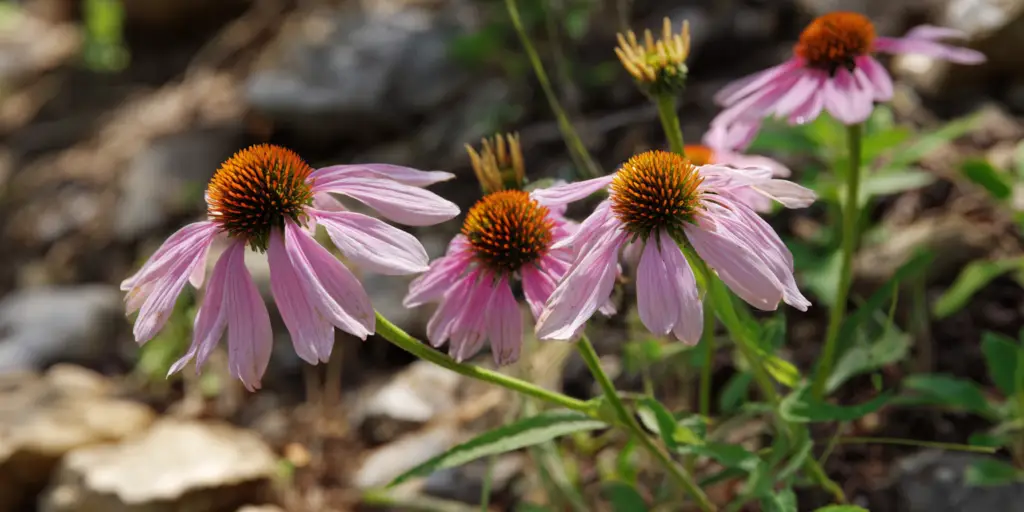
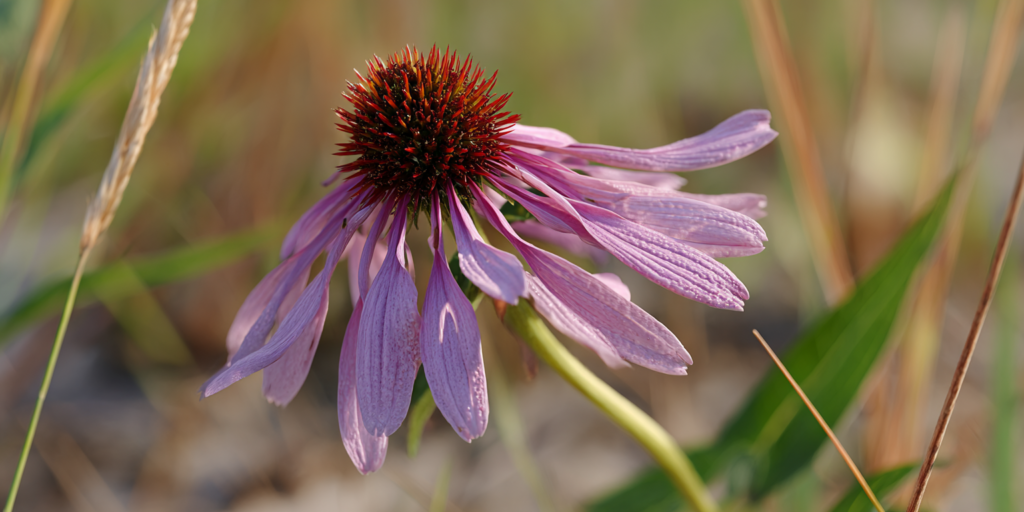
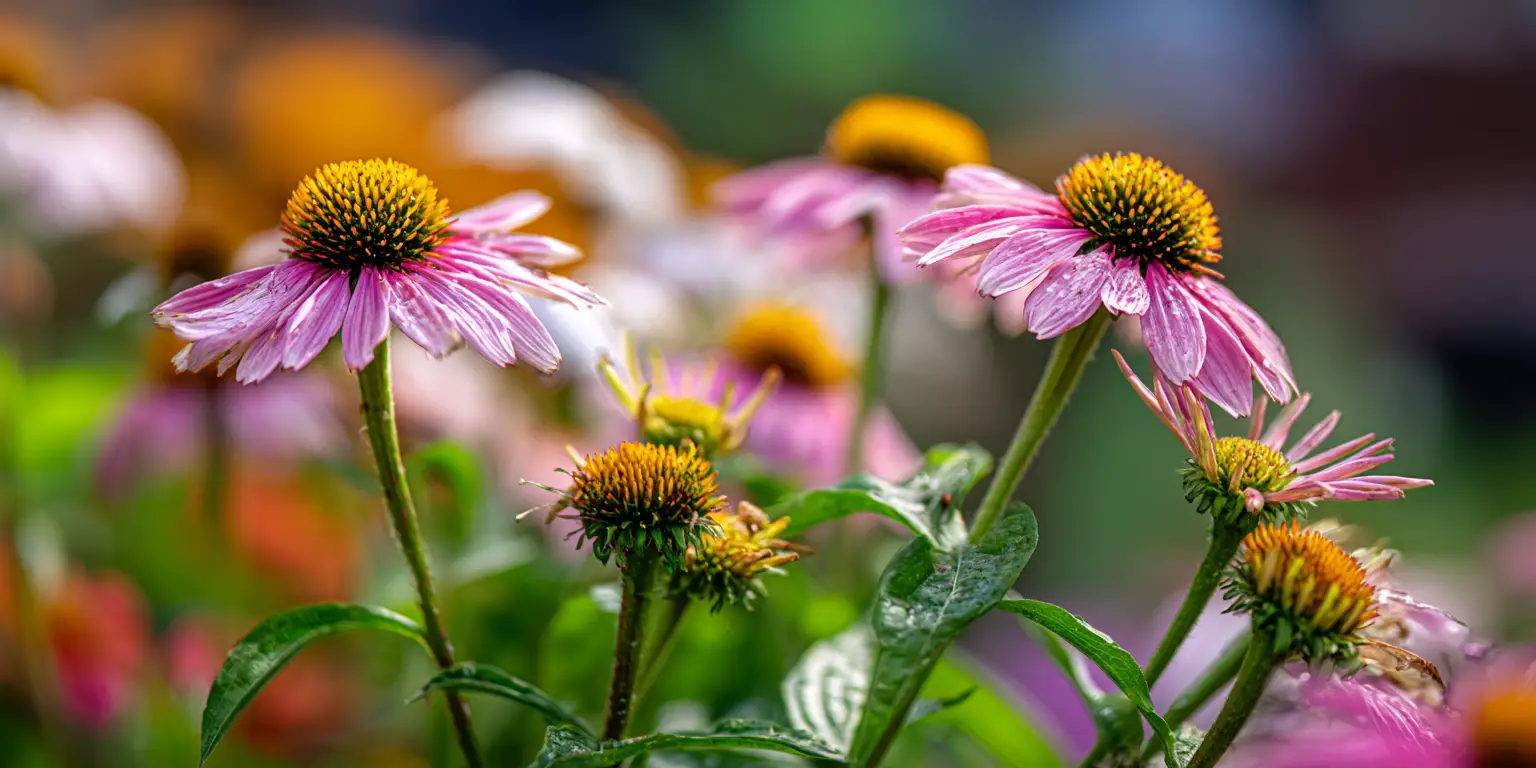
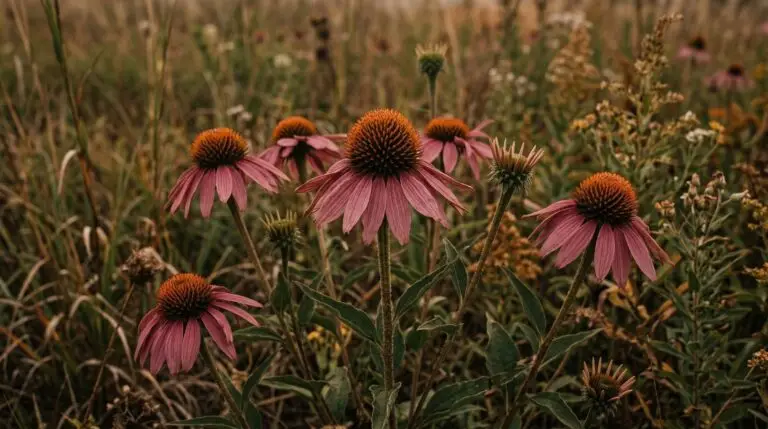
Coneflowers (Echinacea) are hardy perennial wildflowers with daisy-like petals and a raised, bristly cone in the center. They belong to the daisy family (Asteraceae). Most gardeners picture them as purple flowers, especially the purple coneflower (Echinacea purpurea), but species and modern hybrids also come in pink, white, yellow, orange, and red tones. What you will not find are true blue or black coneflowers. Those colors do not occur naturally in this genus. Native to North American prairies and open woodlands, coneflowers bloom through summer and draw in bees and butterflies. After the petals fade, the spiky seed heads stay put into fall, and birds such as finches often pick out the seeds. They are a steady choice for borders, meadow-style gardens, and wildflower plantings when you want long-lasting color without fuss.
A clear, step-by-step guide to soil, planting, watering, feeding, pruning, and winter care. Includes zone timing, container tips, companions, and quick fixes for common problems.
Bouquet Ideas
Explore simple, beautiful bouquet ideas for the home, gifts, and special occasions from romantic mixes to clean, minimal styles. Each idea includes suggested flower combinations, color palettes, and sizes, with photos for quick inspiration.
🌱 Taxonomy and origin
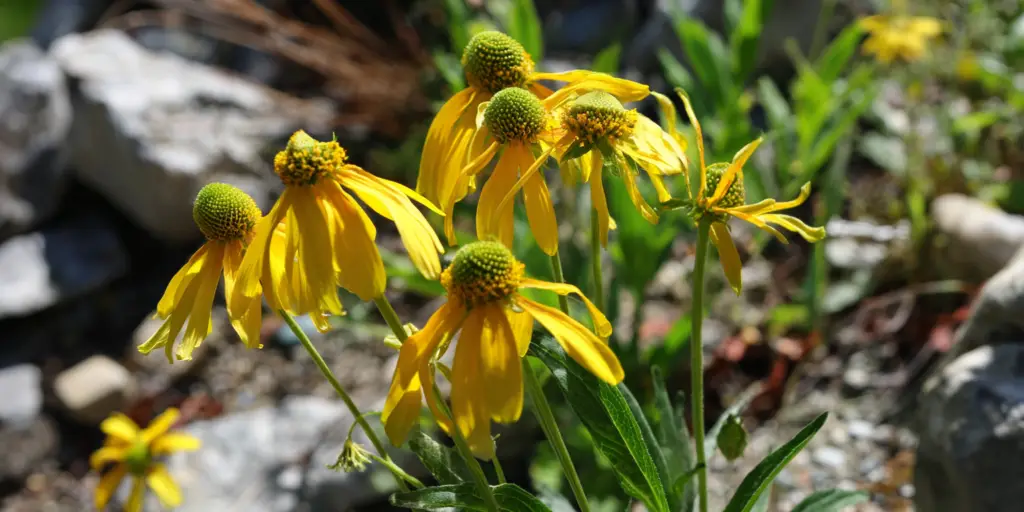
The genus Echinacea includes about nine species of herbaceous perennials native to central and eastern North America. In botanical classification, they sit in Asteraceae, the sunflower family. The name comes from the Greek word “echinos,” meaning “hedgehog,” which fits the prickly central cone. European botanists began describing coneflowers in the 1700s, and the plants later moved into gardens for ornament and for traditional herbal use. Common species include Echinacea purpurea (eastern purple coneflower), E. pallida (pale coneflower), E. angustifolia (narrow-leaved coneflower), and E. paradoxa (yellow coneflower). They share the same basic flower shape, but petals can be thinner, more drooping, or naturally yellow depending on the species. Their home habitats, tallgrass prairies, meadows, and open woods, help explain their toughness and their comfort in open, sunny sites.
🌸 Bloom time
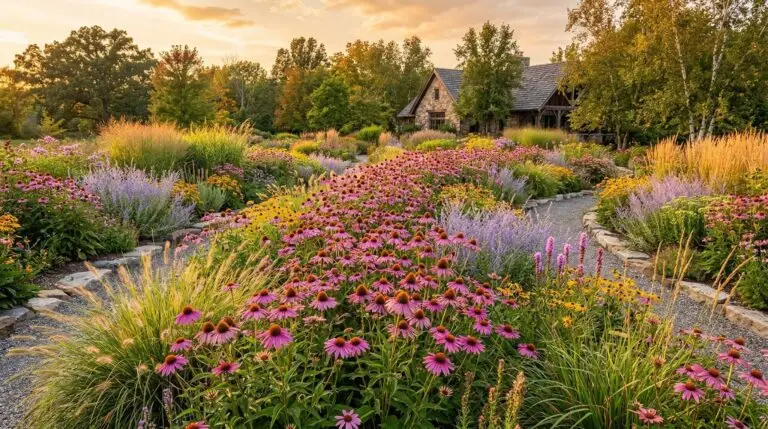
Coneflowers usually start blooming in June or July and can keep going into September. Many varieties flower for weeks at a time, and trimming off spent blooms often encourages more. Some hybrids start earlier or repeat in waves through late summer. In a mixed border, coneflowers pick up right as spring bulbs and early perennials fade, then overlap with late-season plants like asters and mums. Leave a few seed heads if you like the look, and you will also feed birds later in the season.
📏 Height and spread
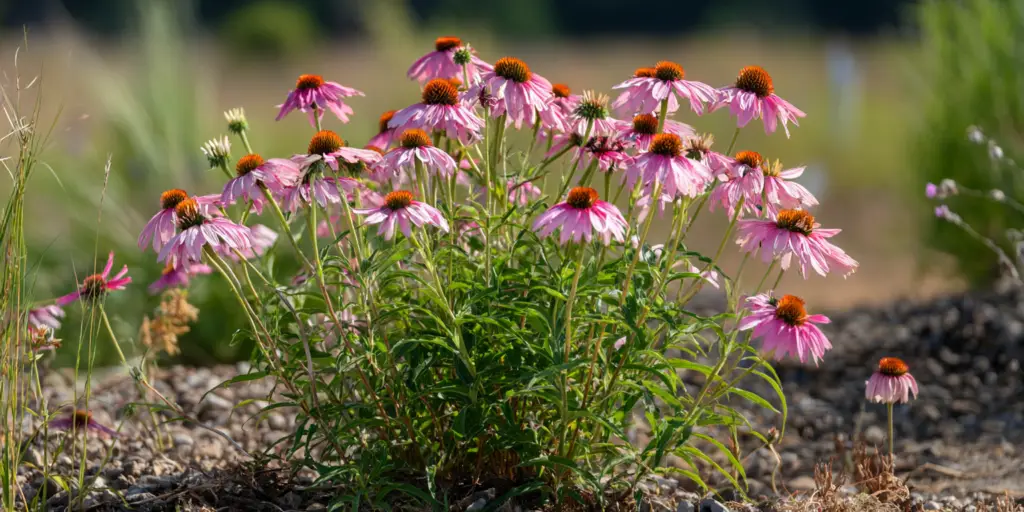
Most garden coneflowers grow about 2 to 4 feet tall (0.6 to 1.2 m) while in bloom. Dwarf cultivars may stay closer to 1 to 2 feet (0.3 to 0.6 m), while some wild species can run taller in rich conditions. Plants form upright clumps about 1.5 to 2 feet wide (45 to 60 cm), with rough, lance-shaped leaves at the base and sturdy flower stems. This shape makes them easy to place in the middle or back of a border, and they layer well behind shorter summer flowers such as zinnias or summer phlox. They do not spread by runners, but they can drop seed and pop up nearby if you let cones mature. Space plants about 1 to 2 feet apart so each clump has room to fill out.
☀️ Light
Coneflowers do best in full sun, usually at least 6 hours of direct light each day. With plenty of sun they stay sturdier, bloom more, and keep a tighter shape. They can handle partial shade, especially in hot climates, but too much shade means fewer flowers and taller, weaker stems. If summers are intense where you live, morning sun with a bit of late-day shade can work, but in most gardens, more sun brings better bloom.
💧 Water
After planting, coneflowers need regular water while roots settle in. Once established, they handle dry spells well and often get by on normal rainfall. They look best with moderate moisture and soil that drains well, similar to prairie conditions where rain is followed by dry periods. The main risk is soggy ground, which can lead to root and crown rot. When you do water, a deeper soak now and then is usually better than frequent light watering. In long, hot droughts, an occasional drink helps plants keep blooming.
🌍 Soil and pH
Coneflowers are flexible about soil as long as it drains. They grow in loam, sand, and even clay if it is not waterlogged. In the wild, many Echinacea species live in lean, rocky prairie soils, so they do not need rich beds to survive. A reasonably fertile, well-drained loam will produce bigger clumps and more flowers, but average garden soil can be enough. They also tolerate a wide pH range, doing fine in neutral to slightly acidic soil and handling mildly alkaline conditions. A range around 6.0 to 7.5 suits most plantings. If your soil stays wet, improving drainage matters more than chasing the perfect pH.
❄️ USDA hardiness
Most coneflowers are reliable perennials in USDA Hardiness Zones 3 through 8. Many gardeners also grow selected types in zone 9 with some afternoon shade and steady moisture, and plants in colder spots can survive with protective snow cover. In winter the tops die back, then new growth emerges from the roots in spring. At the warm end, long stretches of heat and humidity can stress plants, so spacing and airflow help. For most temperate climates, coneflowers are a dependable perennial that returns each year.
🌼 Propagation and longevity
Coneflowers grow readily from seed. Let cones dry on the plant, collect the seed heads in fall, and sow outdoors or start seeds after a cold period. Seed-grown plants usually bloom in their second year. Many types also self-seed, which can be a plus in meadow-style plantings. Some species, especially Echinacea purpurea, can be divided when clumps get large, typically in early spring. Species with a strong taproot, such as E. angustifolia, are harder to divide. As for longevity, straight species often last for many years, while some modern hybrids can fade after a few seasons. Allowing a few seedlings to replace older plants keeps a patch going with little effort.
👃 Fragrance
Coneflowers are not grown for fragrance. Most Echinacea blooms have little scent to people, even though pollinators find the nectar. A few cultivars are described as lightly scented, but the fragrance is subtle and easy to miss unless you lean in close. If scent is the goal, coneflowers work better as a color and texture plant than as a perfume plant.
⚠️ Toxicity and pet safety
Coneflowers (Echinacea species) are generally considered non-toxic to dogs, cats, and people. A curious pet that chews a leaf or flower can still end up with mild stomach upset, simply because plant material can be irritating, but coneflowers are not known for serious poisoning. People also grow Echinacea in herbal gardens, though you should not eat anything from the garden without proper identification and guidance. If a pet eats a large amount of any plant and seems unwell, contact a veterinarian.
🌿 Vase life
Coneflowers can be used as cut flowers, especially in loose, wildflower-style bouquets. Cut stems when the petals are fully open but still firm, and you can expect about 5 to 7 days in a vase in most homes. The petals can wilt faster in warm rooms, while the central cone stays interesting longer. Fresh, clean water and removing leaves below the waterline help the stems last. You can also dry the seed heads for everlasting arrangements.
🐛 Pests and diseases
Coneflowers usually have few serious problems, but a handful of pests can show up. The Japanese beetle is the one many gardeners notice first. It chews petals and leaves cosmetic damage on blooms. Aphids sometimes gather on young growth, and caterpillars or grasshoppers may nibble foliage. There is also a tiny mite, often called the coneflower rosette mite, that can distort flower heads so the centers look tufted or misshapen. If blooms come out strangely deformed, mites are one possible cause.
A disease to watch for is Aster Yellows, caused by a phytoplasma spread by leafhoppers. It can turn flowers green, stunt growth, and create odd, misshapen blooms, and infected plants should be removed since there is no cure. Powdery mildew may appear in humid, still air as a white coating on leaves. Root and crown rots can happen in persistently wet soil, and leaf spot fungi may leave brown or black marks on foliage, usually more of an eyesore than a threat. Good sun, drainage, and airflow prevent most of these issues, which is why coneflowers are often seen as low-maintenance perennials.
FAQ
Are coneflowers annuals or perennials?
Coneflowers are perennials in their native range and anywhere they are hardy. They return each year from the roots. In places outside their hardiness range, gardeners sometimes treat them like annuals and replant.
Do coneflowers spread or invade the garden?
Coneflowers are not invasive. They grow in clumps that slowly widen, and they may self-seed if seed heads are left to mature. Seedlings are easy to pull or move if they pop up where you do not want them.
Can coneflowers grow in shade?
Coneflowers prefer full sun. They tolerate partial shade, but in too much shade they bloom less and get leggy as stems reach for light. Aim for at least half a day of sun if that is your only option.
Should I deadhead my coneflowers?
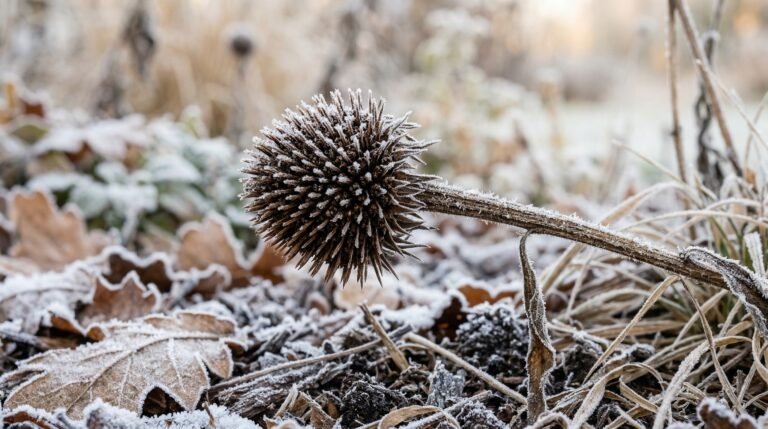
It depends on what you want. Removing spent blooms often extends flowering and encourages more buds. Leaving some cones in place feeds birds such as goldfinches and adds winter texture, and it also lets plants reseed.
Are coneflowers deer resistant?
Coneflowers are often described as deer resistant because deer tend to avoid the rough, hairy leaves and spiky cones. No plant is truly deer-proof, especially when food is scarce, but coneflowers are usually a safer bet than many soft-leaved perennials.
Can I grow coneflowers in containers?
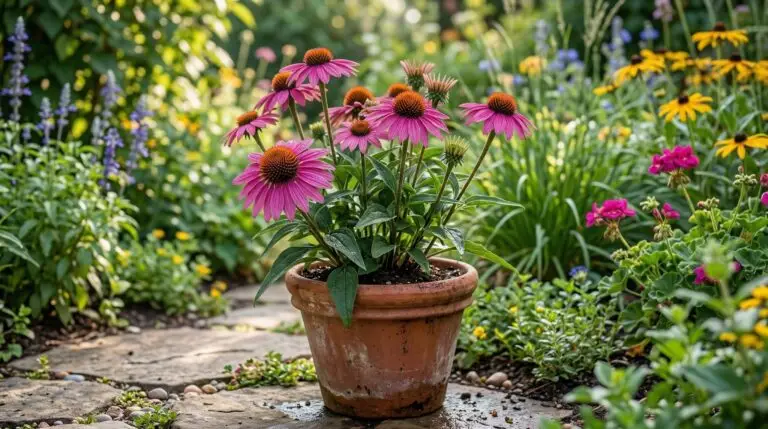
Yes, many coneflowers grow well in large pots as long as there is depth for the roots. A container about 12 to 16 inches wide and deep (30 to 40 cm) works for most types, with drainage holes and a well-draining potting mix. Containers dry out faster than garden beds, so you will water more often, and in very cold winters the roots may need extra protection.
How do I propagate coneflowers?
? Seed is the simplest route. Collect seed from dry cones and sow it, or let plants self-seed. For clumping types such as Echinacea purpurea, you can also divide an established clump in early spring. Taprooted species do not divide as easily, so seed is usually the most reliable option.
Are coneflowers the same as black-eyed Susans?
No. Coneflowers (Echinacea) and black-eyed Susans (Rudbeckia, often Rudbeckia hirta) are different plants, even though both look daisy-like. Coneflowers usually have a raised cone center and petals that may droop. Black-eyed Susans typically have yellow petals with a dark central disk and petals that sit more flat. They are in the same family (Asteraceae) and combine well in plantings, but they are not the same genus.
Interesting tips
- Coneflowers earn their keep in pollinator gardens. Bees and butterflies visit the blooms, and finches clean out the seeds later.
- The spiky cones of Echinacea dry well. Cut stems at season’s end and hang them upside down for dried arrangements or simple crafts.
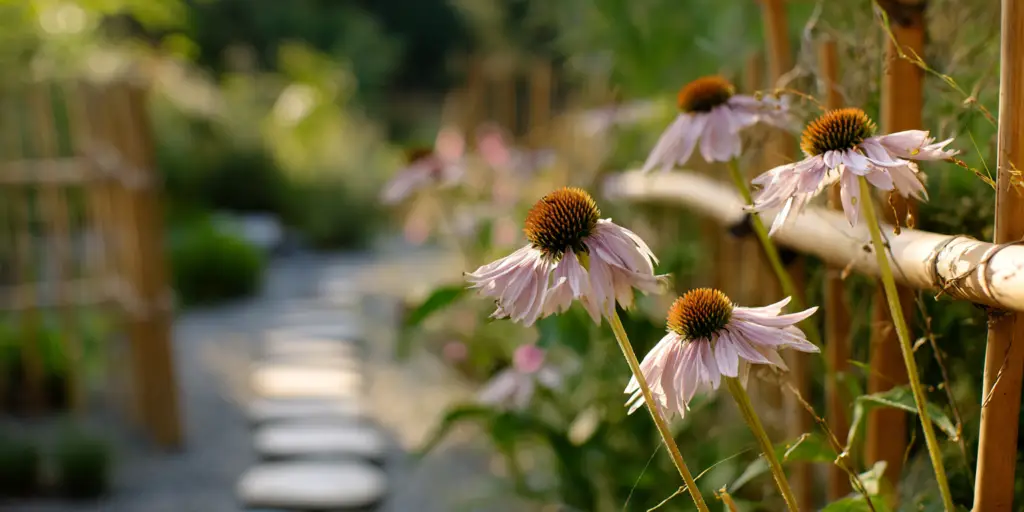
- Different species have noticeably different flowers. Pale coneflower has narrow, drooping petals, while some hybrids of purple coneflower make doubles or unusual color blends.
- If you can, leave a few coneflower stalks standing over winter. The cones feed birds, and the dry stems look great with frost or snow.
- For a prairie-style mix, pair coneflowers with plants that enjoy similar sun and soil, such as salvias, black-eyed Susans, and ornamental grasses.
Related Guides & Flowers
- Yarrow
Short description: Flat-topped blooms and ferny foliage that pair well with coneflower in sunny, low-water borders and pollinator beds. - Goldenrod
Short description: Late-summer to fall color with strong pollinator value, useful for extending the season after coneflower peak bloom. - Coreopsis
Short description: Bright, long-blooming daisy-type flowers that create a similar meadow look and mix easily with echinacea-style plantings. - Black eyed Susan
Short description: A close visual match with the same bold cone and ray-flower shape, great for prairie-style combinations. - Aster
Short description: A classic late-season companion that keeps beds looking full when coneflower seed heads start to form. - Globe Thistle
Short description: Spiky, architectural texture in the same daisy family, strong contrast with coneflower cones and excellent for bees. - Catmint
Short description: Soft, haze-like blue flowers that calm down hot coneflower colors and fill gaps between taller perennials. - Russian Sage
Short description: Airy lavender-blue bloom spikes and silver foliage that thrive in similar sun and drainage conditions as coneflower.
References
- NC State Extension Plant Toolbox: Echinacea purpurea
Use for: light, soil, drought tolerance, bloom season notes, and general plant profile facts. - Clemson University HGIC: How to Grow Echinacea
Use for: care basics plus common pests and diseases (powdery mildew, anthracnose, aster yellows) and practical prevention. (hgic.clemson.edu) - Iowa State University Extension and Outreach: Growing Coneflowers in Iowa
Use for: species notes, zones, site needs, and bloom timing details by type. - University of Minnesota Extension: Diagnose coneflower leaf spots
Use for: symptom-based guidance for powdery mildew and other leaf issues, helpful for troubleshooting photos and reader questions. - NC State Extension Plant Toolbox: Echinacea pallida
Use for: pet safety line stating no known toxic effects to cats and dogs (useful as a citation for toxicity sections).
Written by: Your Flowers Guide editorial team
We are a small independent group of flower lovers who research and review each guide using trusted horticultural and educational sources. Learn more about us