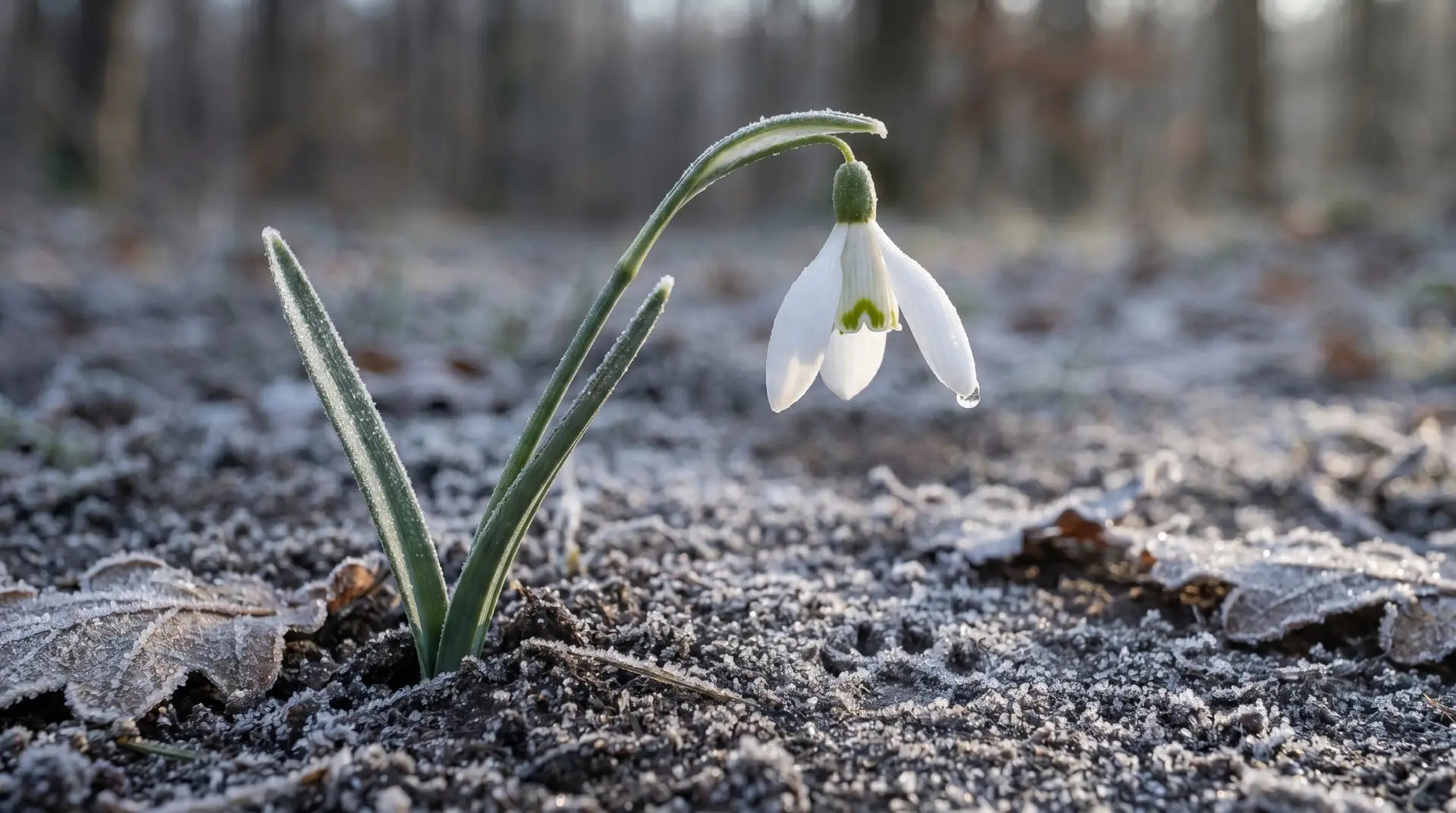
Snowdrop is the secondary January birth flower in Western tradition, paired with carnation as the month’s primary. While carnation is the indoor Mediterranean flower available in florist supply year-round, snowdrop is the wild outdoor pioneer: a small cold-tolerant bulb that pushes through frosted topsoil and patches of snow in late winter, often before any other flower.
The botanical name Galanthus nivalis literally means “milk flower of the snow,” combining the Greek words for milk and flower with the Latin word for snow. The plant blooms across late January, February, and into early March depending on climate, with peak bloom often coinciding with the Christian feast of Candlemas on February 2. This timing gave snowdrop its other common name (Candlemas bells) and shaped much of its Western symbolic tradition. Snowdrops also carry deep cultural meaning beyond Christianity: fairy folklore in Ireland and Wales, a small but real collector subculture called galanthophilia, and a surprising modern medical use as the source of galantamine, the active compound in the Alzheimer’s drug Razadyne.
In this guide 9 sections
Snowdrop botany: Galanthus nivalis
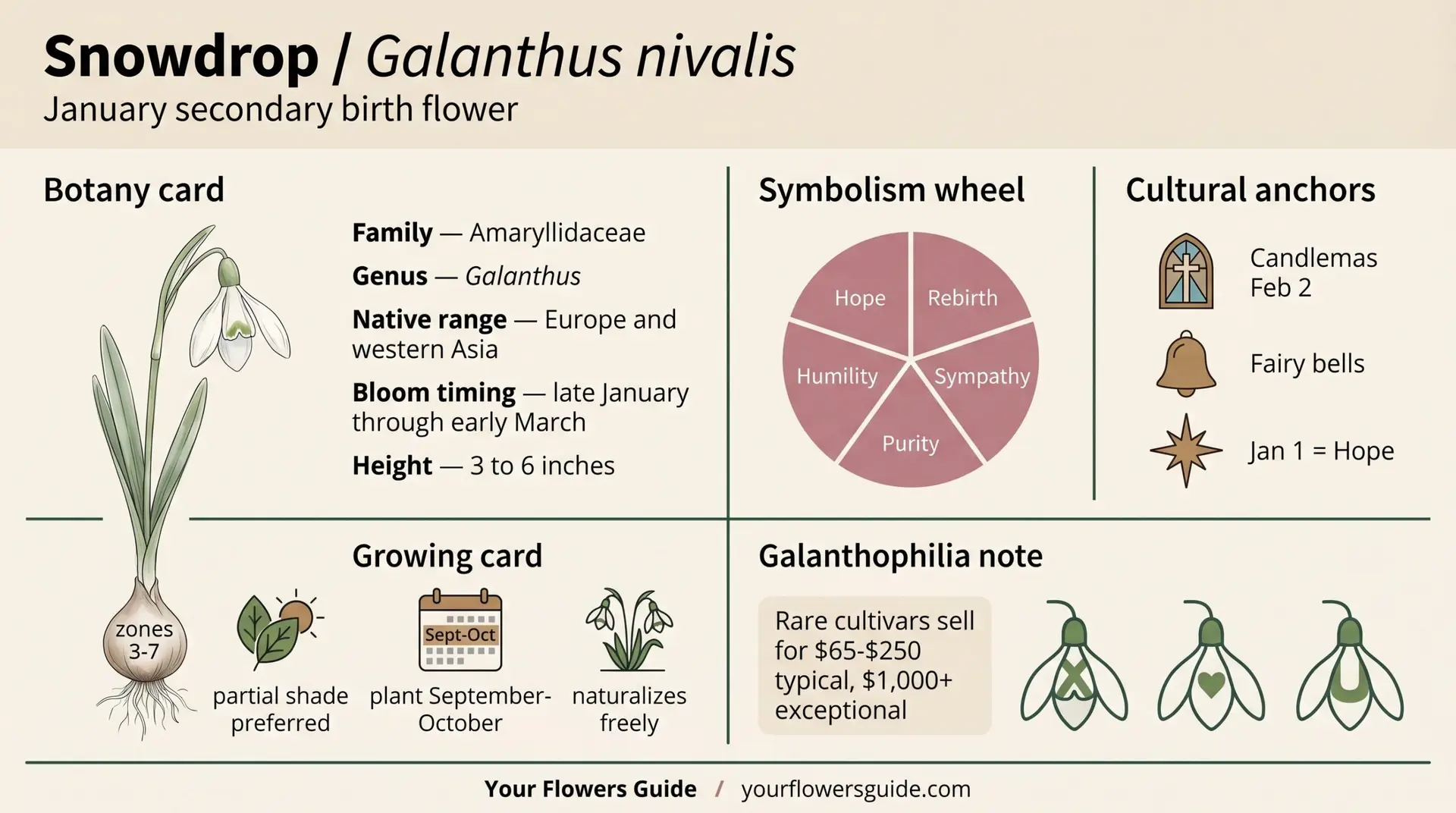
Galanthus nivalis belongs to the family Amaryllidaceae, the same family as daffodils and amaryllis. The genus contains about 20 cold-climate bulb species, all small in stature and all native to Europe, the Mediterranean, and western Asia. Galanthus nivalis is the most common species in cultivation and the one most often meant when someone says “snowdrop” without qualification.
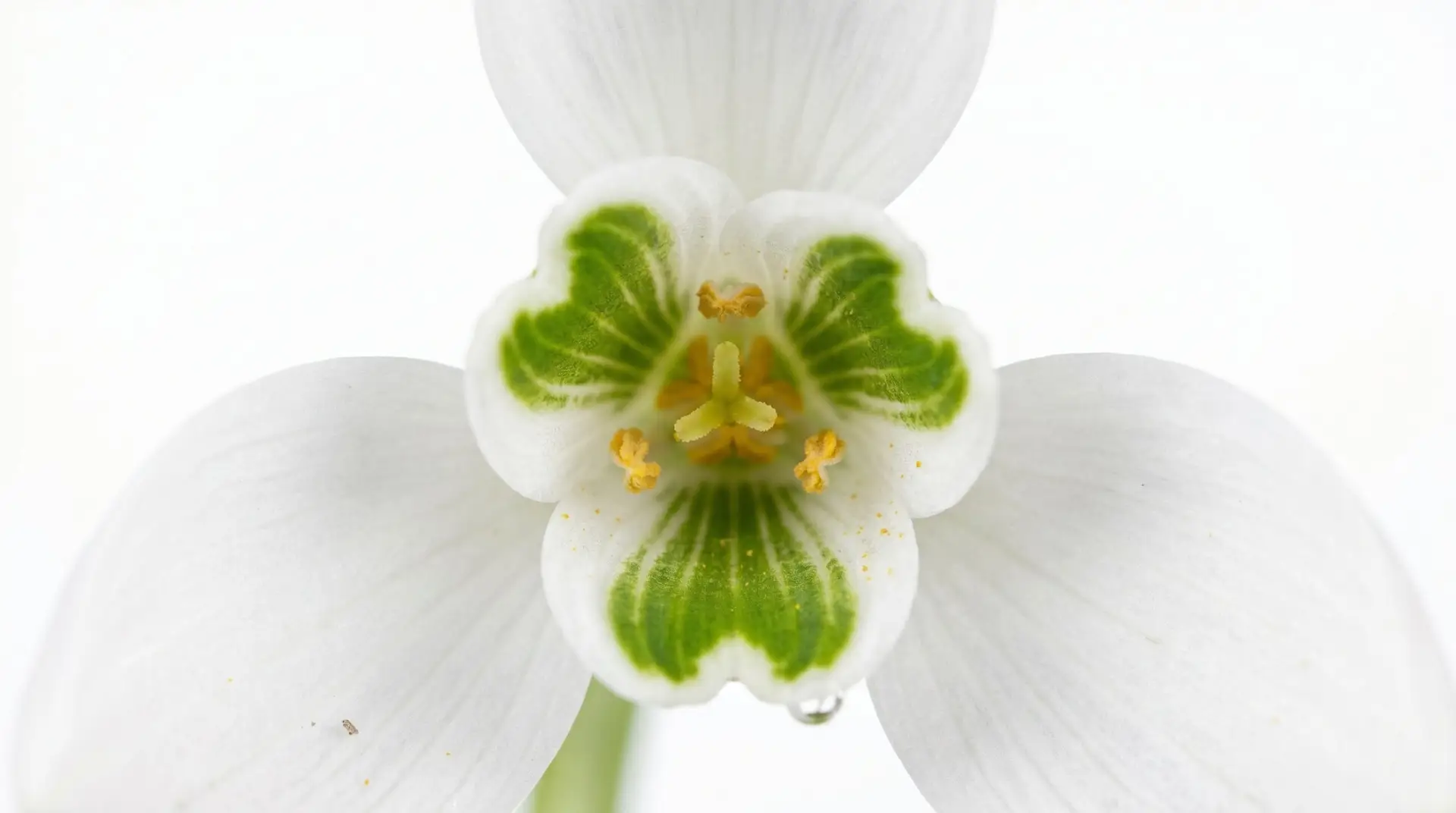
A snowdrop plant grows from a small underground bulb, sending up two narrow grey-green leaves and a single flower stalk in late winter. The flower is a drooping bell of pure white, typically about an inch tall, hanging from the top of the slender stalk. The bloom anatomy is unusual: three outer tepals (petal-like structures) are pure white and bell-shaped on the outside, while three shorter inner tepals carry distinctive green markings on the inside. The exact pattern of these green markings differs between cultivars, and trained collectors can identify hundreds of named varieties from these inner markings alone.
The plant is small overall: typically 3 to 6 inches tall in bloom, with leaves and flower stalks all of roughly the same height. After flowering, the leaves persist for several weeks while the bulb stores energy for next year’s bloom, then the leaves die back and the bulb stays dormant through summer and autumn. Snowdrops are perennial: an established planting returns reliably every year and spreads over time through both bulb division and seed dispersal.
How snowdrop blooms through frost
Snowdrops bloom in conditions that would kill most other flowering plants. The plant has three biological adaptations that make this possible.
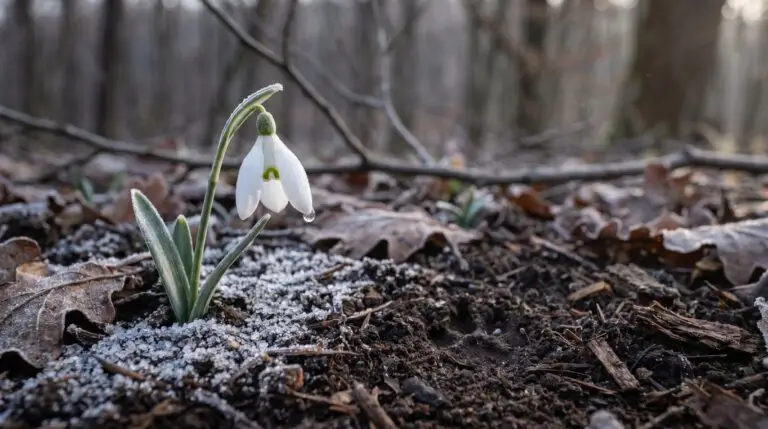
First, the bulb sits below the frost line in most climates (typically 4 to 6 inches deep), so the storage organ stays above freezing even when surface soil is frozen. What the flower stalk pushes through is the frozen surface crust, not the deeper frozen ground. The hardened tip of the stalk is reinforced enough to crack thin ice and lift small clumps of frosted soil out of the way as it emerges.
Second, the plant is reported to carry antifreeze proteins in its tissues. These proteins are thought to prevent ice crystal formation inside cells at temperatures below freezing, helping protect the delicate flower structure from the kind of cellular damage that destroys most other plants exposed to the same conditions. Similar antifreeze proteins appear in cold-tolerant fish and insects.
Third, some Galanthus species are reported to generate small amounts of heat through respiration, a process called thermogenesis. The heat may be enough to soften a thin zone of snow around the opening flower, helping the bloom to open and to attract the few pollinators active in late winter (mostly bumblebees that emerge briefly during warm spells). Any thermogenic effect is small and varies by species, but it would add an active dimension to snowdrop’s frost survival beyond passive antifreeze.
The flower closes at night and opens again at dawn, repeating this cycle for two to three weeks before the petals drop. The closing behavior conserves moisture and heat during the coldest hours and reopens to catch the brief midday warmth that allows pollination.
The Christian Candlemas tradition
Snowdrop’s main cultural anchor is the Christian feast of Candlemas, observed on February 2. The feast commemorates the Presentation of Christ at the Temple and the ritual purification of Mary forty days after Jesus’s birth. In the Christian liturgical year, Candlemas marks the end of the Christmas-Epiphany season and the transition toward Lent.
Snowdrop blooms reach peak in much of Europe right around February 2, which gave the flower its English common name “Candlemas bells.” The pure white color of the snowdrop bloom matched the symbolic registers of the feast: Mary’s purity, the light of Christ, and the white candles blessed and distributed in churches during the Candlemas service (the source of the feast’s name).
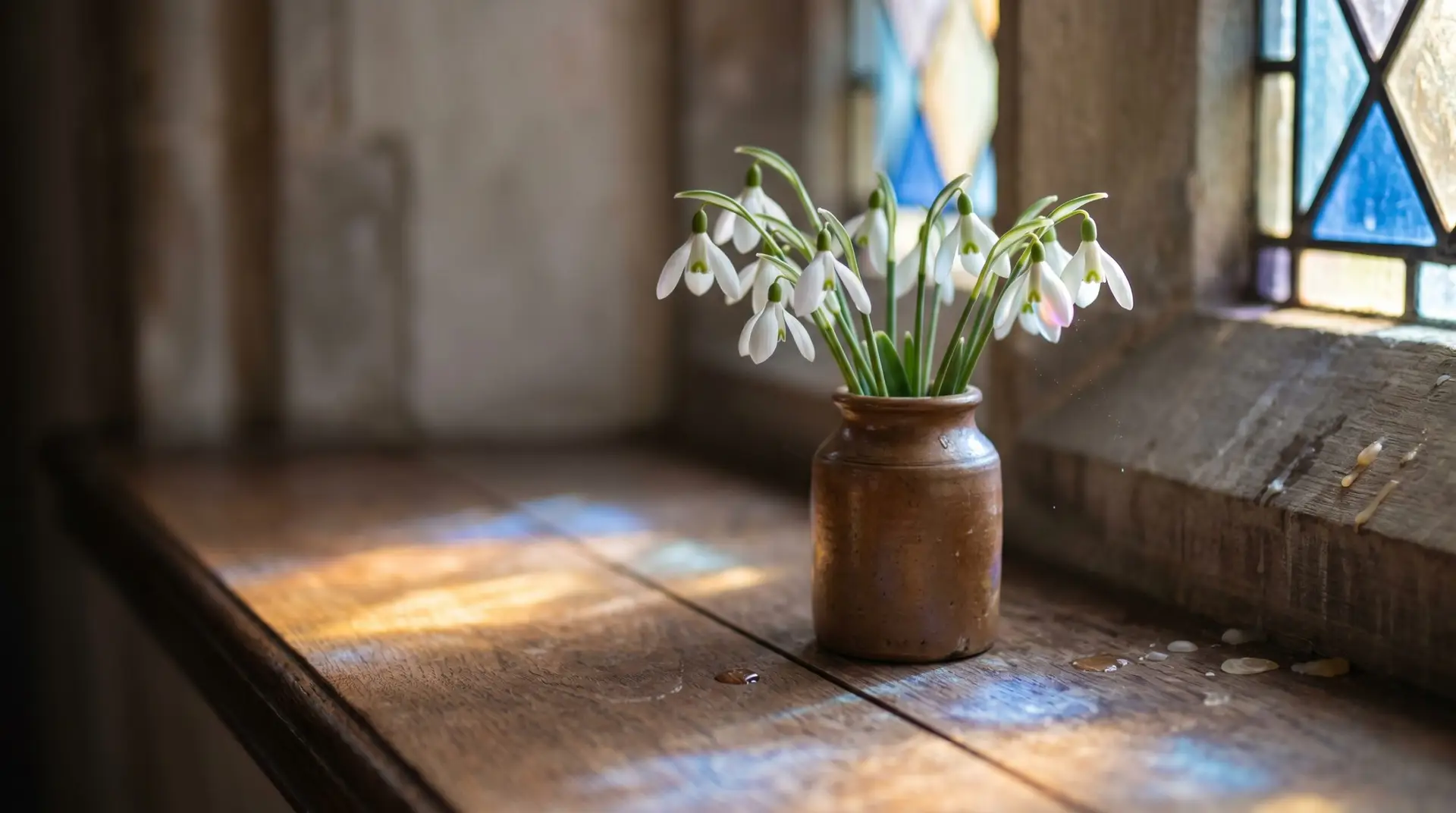
In English and continental European Catholic and Anglican tradition, snowdrops were gathered and brought into churches on Candlemas Eve, replacing the Christmas evergreens that had decorated churches through the holiday season. The visual transition from dark green Christmas ivy and holly to clear white snowdrops marked the symbolic transition from the introspective Christmas season to the lengthening light of Lent and spring. The snowdrop’s drooping form also reads as a humble bow, a posture matching Mary’s role in the Presentation story.
The Catholic tradition called snowdrop “Mary’s Candle” in some regional usages, drawing on both the Candlemas connection and the bloom’s white candle-like appearance when seen from a distance. This naming reinforced snowdrop’s association with the broader Marian flower tradition that also includes lily of the valley, white lily, and white rose.
Snowdrop folklore: fairies, death omens, purity
Beyond the Christian tradition, snowdrop holds layers of older folk symbolism that survive in regional European traditions.
In Irish and Welsh folklore, snowdrops are sometimes called fairy bells or fairy lanterns, and the flower’s early appearance was read as a sign that the fairy world was active even when surface life seemed dormant. Folk beliefs varied by region: some traditions treated snowdrops as protective flowers that kept malicious fairies away from homes, while others treated them as portals through which benevolent fairies could pass into the human world.
A darker folk tradition exists alongside the protective readings. In some rural English and Scottish folklore, a single snowdrop brought into the house was considered a death omen, predicting illness or loss for someone in the household within the year. This superstition likely originated in the plant’s actual toxicity (the alkaloid galantamine in the bulb and other parts is genuinely poisonous if eaten in quantity), but the folk reading was symbolic rather than chemical. Bringing a small bouquet of snowdrops was usually fine; bringing a single isolated stem was the specific bad-luck signal.
The modern reading has largely overridden the death-omen tradition. Snowdrop is now read primarily as a symbol of hope and the return of life after winter, with the Candlemas connection providing the dominant cultural register. Most modern florists do not hesitate to sell single snowdrop stems, and the bloom appears in modern sympathy bouquets without any negative association.
In alpine and Eastern European traditions, snowdrop has a third reading focused on purity and the beauty of restraint. The flower’s small size, pure white color, and willingness to bloom in harsh conditions were read as symbols of inner strength expressed through outward modesty. This reading connects snowdrop to the broader European tradition of valuing wildflowers above hothouse cultivars.
Symbolism in detail
Snowdrop’s standard Western flower-language readings cluster around five related meanings.
Hope is the primary reading. The bloom’s appearance during the year’s coldest weeks, often before any other flower, gave snowdrop its position as the symbolic first sign of life returning. The Korean tradition agrees: snowdrop is the January 1 flower in the Korean 365-day system with the meaning of hope, a rare direct cross-cultural alignment.
Rebirth and new beginnings extend the hope reading. Snowdrop opens the year’s first wild bloom cycle, and many gardeners track first-bloom date as the unofficial start of the gardening year. Wedding florists occasionally use snowdrop in early-spring weddings for this new-beginnings register, though the flower’s small size limits its use in formal bridal arrangements.
Sympathy and consolation emerged from the Christian Candlemas tradition. Snowdrops appear in modern Western sympathy bouquets, particularly for winter funerals, where the bloom’s combination of purity and resilience matches the symbolic needs of grief. White snowdrop arrangements at funerals work especially well alongside white lily or white rose, building a coherent palette of white winter flowers.
Purity is the most direct reading from the bloom’s appearance. The pure white outer tepals, drooping form, and small size all combine to create the visual register of modesty and innocence. The Christian Marian associations reinforced this reading throughout the medieval period.
Humility rounds out the standard readings. The flower’s downward-drooping posture reads as a humble bow, in contrast to the upward-reaching forms of tulips and daffodils that follow snowdrop in the spring bulb cycle.
Growing snowdrops
Snowdrops thrive in conditions that match their natural habitat: dappled shade under deciduous trees, moist but well-drained humus-rich soil, and cold winter dormancy followed by cool spring growing conditions. The plant grows well in USDA hardiness zones 3 through 7 and struggles in zones warmer than that because the bulbs need a sustained period of winter chill to flower reliably.
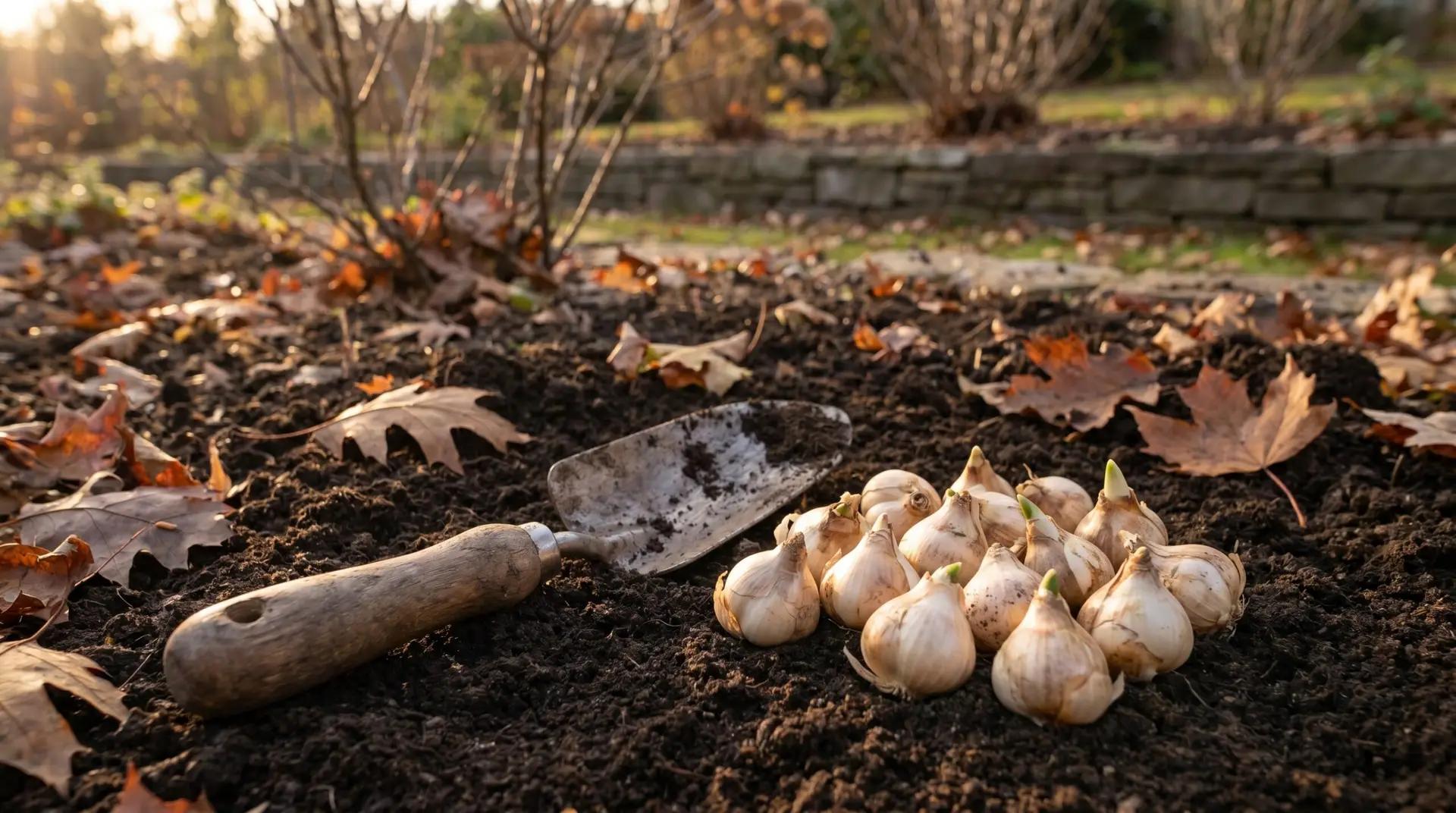
Plant snowdrop bulbs in autumn, September through October in most climates. Bulbs should go in about 3 inches deep with the pointed tip facing up. Snowdrops do not like to dry out completely, so unlike many other spring bulbs they should be planted as quickly as possible after purchase rather than stored dry through the season. A better option than dry bulbs is “in the green” planting: buying snowdrops just after flowering with leaves still attached and transplanting them immediately. In-the-green transplanting has a much higher success rate than dry bulb planting and is the preferred method for serious gardeners.
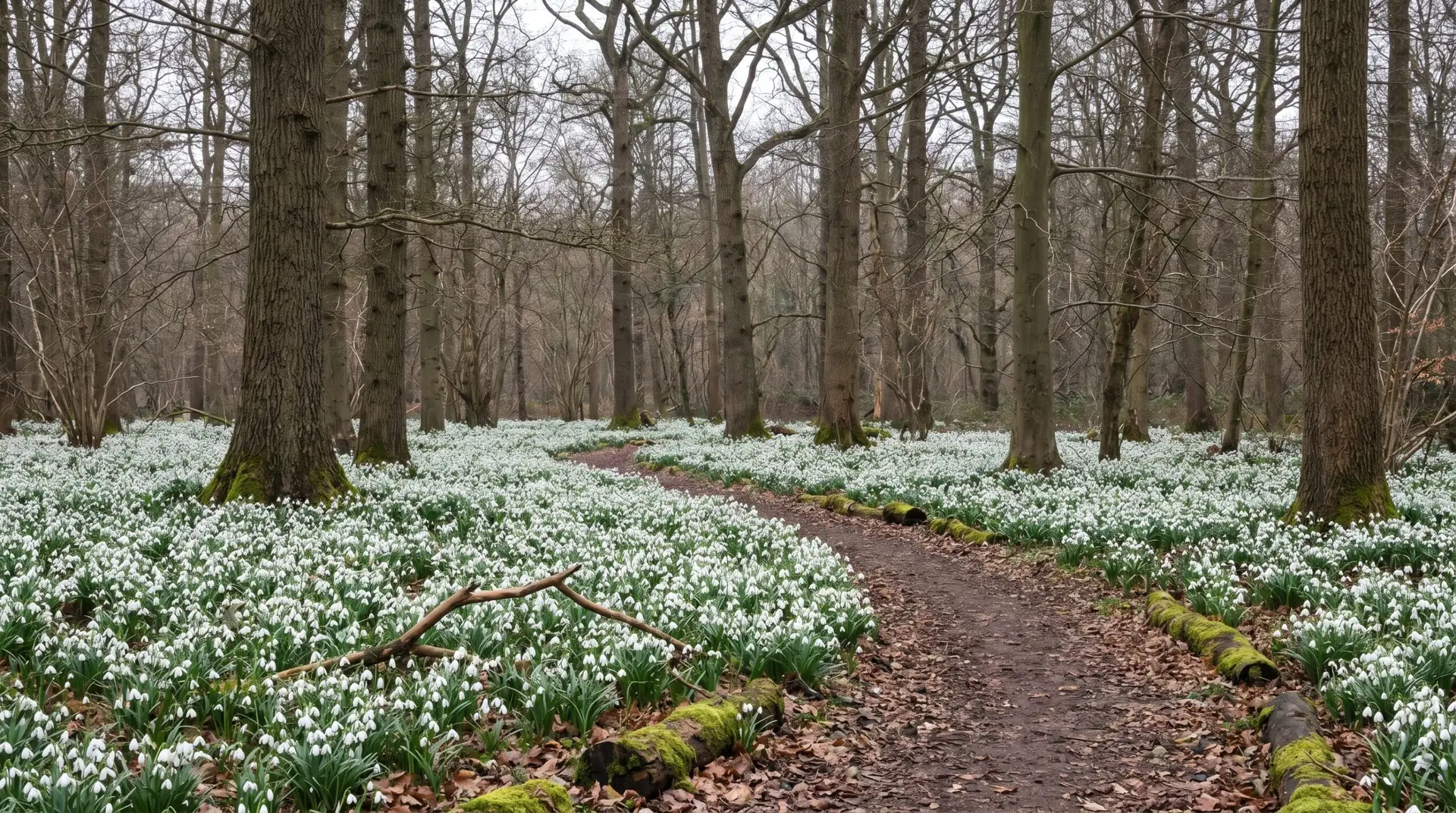
Once established, snowdrops naturalize freely. Established patches send out new bulbs around the original planting, and seed-grown plants appear in the surrounding area over years. A planting of 50 bulbs can become a drift of several hundred plants within a decade with no further intervention from the gardener. This natural spread is one of snowdrop’s main charms in woodland gardens, where the slowly-expanding drifts mark long-term garden establishment.
Pairing snowdrops with other early bulbs extends the late-winter color window. Snowdrops naturalize well alongside winter aconite (Eranthis hyemalis, yellow flowers), Cyclamen coum (pink winter cyclamen), and early crocus species. The mixed planting gives 4 to 6 weeks of continuous bloom from late January through early March in most temperate climates.
Galanthophilia: the snowdrop collector subculture
Galanthophilia is the formal term for snowdrop collecting obsession, and it is one of the most documented horticultural subcultures in the English-speaking world. The subculture is centered in the United Kingdom, with particularly strong activity in southwest England, and operates through a network of specialist nurseries, annual galas, and a small but active trade in rare cultivars.
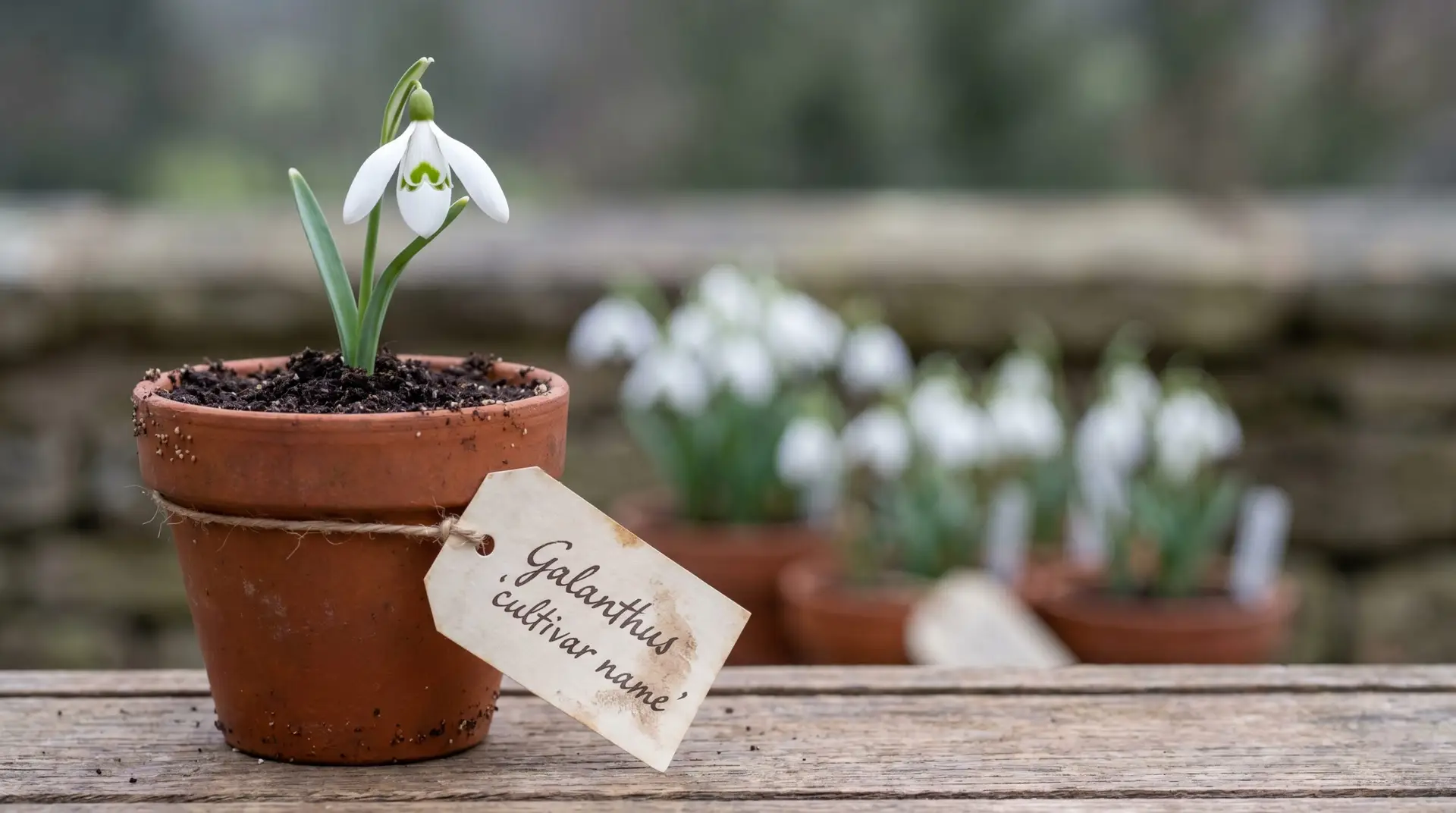
The economics of galanthophilia are notable. Common snowdrop bulbs sell for a few cents each in bulk. Rare named cultivars regularly sell for around $65 to $250 per bulb. Truly exceptional cultivars can reach much higher: Galanthus ‘Golden Fleece’, a yellow-marked cultivar associated with Joe Sharman of Monksilver Nursery, reportedly sold for a record sum (around $1,800) in 2015. Other premium cultivars trade in roughly the $650 to $1,300 range.
The collector identification skill rests on the precise pattern of green markings on the inner tepals of each cultivar. Trained galanthophiles can identify hundreds of varieties at a glance, distinguishing subtle differences in mark size, shape, and color saturation that escape casual viewers. Several reference texts catalog the named cultivars, with the Royal Horticultural Society maintaining a partial registry and specialist publications updating annually.
The annual galanthophile calendar centers on snowdrop galas hosted at historic English gardens during peak bloom (late January through February). Colesbourne Park in Gloucestershire and Anglesey Abbey near Cambridge host the best-known galas, with collectors traveling internationally to attend. The galas combine garden tours, lectures from horticultural experts, and rare bulb sales.
The comparison to the seventeenth-century Dutch tulip mania comes up regularly in discussions of galanthophilia, but the modern snowdrop trade operates at much smaller scale and without the speculative bubble dynamics of the tulip case. Galanthophiles are mostly retired professional horticulturists, garden writers, and serious amateur gardeners who treat collecting as a long-term hobby rather than as financial speculation.
Snowdrop toxicity and the galantamine medicinal use
Snowdrop carries mild to moderate toxicity in all parts of the plant. The active compound is galantamine, an alkaloid concentrated most heavily in the bulb. Eating snowdrop bulbs in quantity causes vomiting, diarrhea, and drowsiness, with rare severe cases involving cardiac symptoms. Gardeners should plant snowdrop bulbs with awareness of the toxicity, particularly around small children and pets that might dig up and chew bulbs.
The same alkaloid that makes snowdrop bulbs toxic is also the active compound in the Alzheimer’s disease drug marketed as Razadyne (generic name galantamine). The drug works by inhibiting the enzyme acetylcholinesterase, which prolongs the action of acetylcholine in the brain and can help maintain cognitive function in mild to moderate Alzheimer’s disease. Razadyne was approved by the FDA in 2001 and remains a standard treatment option.
The medicinal galantamine used in Razadyne is now mostly produced through semi-synthesis from precursor compounds rather than direct extraction from snowdrop bulbs, but the original isolation came from Caucasian snowdrop (Galanthus woronowii) and the broader Amaryllidaceae family. The connection gives snowdrop the unusual distinction of being both a folk warning flower and the original source of an FDA-approved medication.
For gardeners, the toxicity message is simple: enjoy snowdrops visually and handle them briefly without concern, but do not eat any part of the plant and keep bulbs away from children and pets. The medicinal use is interesting context but does not change practical garden safety guidance.
At a glance
Questions
Frequently asked
What does a snowdrop flower mean?
Hope, rebirth, sympathy, purity, and humility. Hope is the primary reading, drawing on the flower’s position as the first wild bloom of the year. The sympathy and consolation readings come from the Christian Candlemas tradition.
Why is snowdrop January’s secondary birth flower?
Snowdrop blooms outdoors in late January through early March in most temperate climates, making it the earliest wild flower available in the January window. The Western birth flower tradition assigned snowdrop to January based on this bloom timing and the symbolic registers (hope, rebirth) that came with the early-bloom position.
Why is snowdrop called Candlemas bells?
The bloom’s timing coincides with the Christian feast of Candlemas on February 2. Snowdrops were traditionally gathered and brought into churches on Candlemas Eve, replacing the Christmas evergreens. The “bells” part of the name refers to the bloom’s drooping bell shape.
Is snowdrop a death omen?
In some older rural English and Scottish folklore, a single snowdrop brought into the house was considered a bad-luck signal predicting illness or loss. The modern reading has largely overridden this superstition. Snowdrop is now read primarily as a symbol of hope, and modern florists sell single stems without any negative association.
How do snowdrops bloom through frost?
Several adaptations: the bulb sits below the frost line so the storage organ stays above freezing, the plant is reported to carry antifreeze proteins that may protect cells from ice damage, and some species are reported to generate small amounts of heat through respiration.
Are snowdrops poisonous?
Yes, mildly to moderately. All parts of the plant contain the alkaloid galantamine, with the bulbs most concentrated. Eating any quantity causes vomiting, diarrhea, and drowsiness. Keep bulbs away from children and pets during autumn planting.
What is galanthophilia?
Galanthophilia is the formal term for snowdrop collecting obsession. The subculture is centered in the United Kingdom and operates through specialist nurseries, annual galas at historic gardens, and a small but active trade in rare cultivars. Rare bulbs regularly sell for around $65 to $250 each; exceptional cultivars have reportedly reached well over $1,000 per bulb.
What is the difference between snowdrop and snowflake?
Snowdrop is Galanthus, a small early-blooming bulb with three short inner tepals carrying green markings. Snowflake is Leucojum, a larger and later-blooming relative with six tepals all the same length and bell-shaped. Snowflakes typically bloom in March through May, well after snowdrops have finished. Both are in the Amaryllidaceae family but are distinct genera.
What is the connection between snowdrop and the Alzheimer’s drug Razadyne?
The active compound in Razadyne (galantamine) was originally isolated from Caucasian snowdrop (Galanthus woronowii). The drug inhibits acetylcholinesterase and helps maintain cognitive function in mild to moderate Alzheimer’s disease. Modern production mostly uses semi-synthesis rather than direct snowdrop extraction, but the original source was the snowdrop family.
Sources
- Snowdrop (Galanthus nivalis) · Encyclopedia Britannica
- Galanthus growing guide · Royal Horticultural Society
- Razadyne (galantamine) prescribing information · US Food and Drug Administration
Keep reading

January birth flower: carnation, snowdrop and what they mean
January birth flowers by day: the Korean 365-day tradition

Carnation tattoo: designs, colors, and Mother’s Day memorial meaning

Birth flower by month: all 12 monthly flowers
Enjoying our flower guides? Add YourFlowersGuide as a preferred source on Google. It helps more readers find us.
Add to Preferred Sources