Airflow and sanitation dictate chrysanthemum health long before pests or fungal spores arrive. Growers often plant mums too close together to achieve an immediate block of color, creating a stagnant microclimate where moisture lingers on the foliage. This trapped humidity guarantees the arrival of fungal pathogens and creates a sheltered breeding ground for sap-sucking insects. You must space garden mums at least eighteen to twenty-four inches apart to allow wind to dry the leaves quickly after morning dew or rain. If you start with proper spacing and clean soil, you eliminate half the problems associated with growing these late-season bloomers. Treating chrysanthemum pests and mum diseases is an exercise in futility if the plants remain crowded and damp.
Contents 3 sections
Fungal threats and moisture management
Chrysanthemum white rust requires immediate aggressive action because it spreads rapidly through water splash and wind. You will spot it first as pale yellow spots on the upper leaf surfaces, followed shortly by raised pinkish-white pustules on the undersides. Despite what many sources claim, you cannot cure leaves already infected with white rust. You must remove and destroy the affected foliage immediately, then apply a copper-based organic fungicide to protect the remaining healthy tissue. Ray blight operates differently, attacking the blooms directly and turning the petals dark brown or black just as they begin to open. Watering at the base of the plant rather than overhead is the single most effective cultural practice for preventing both of these destructive fungal issues.
Soil drainage plays an equally essential role in preventing soil-borne fungal pathogens from rotting the root system. Heavy clay soils hold water against the crown of the plant, leading to wilt diseases that mimic the symptoms of underwatering. You should amend planting beds with coarse sand and compost to ensure water moves quickly through the root zone. Mulching around the base helps prevent soil from splashing onto the lower leaves during heavy rainstorms, which is the primary vector for fungal spores. Always remove dead leaves and debris from the base of the plants throughout the growing season to eliminate overwintering sites for disease. A clean soil surface creates a physical barrier between the pathogens and your plants.
Managing common insect pressures
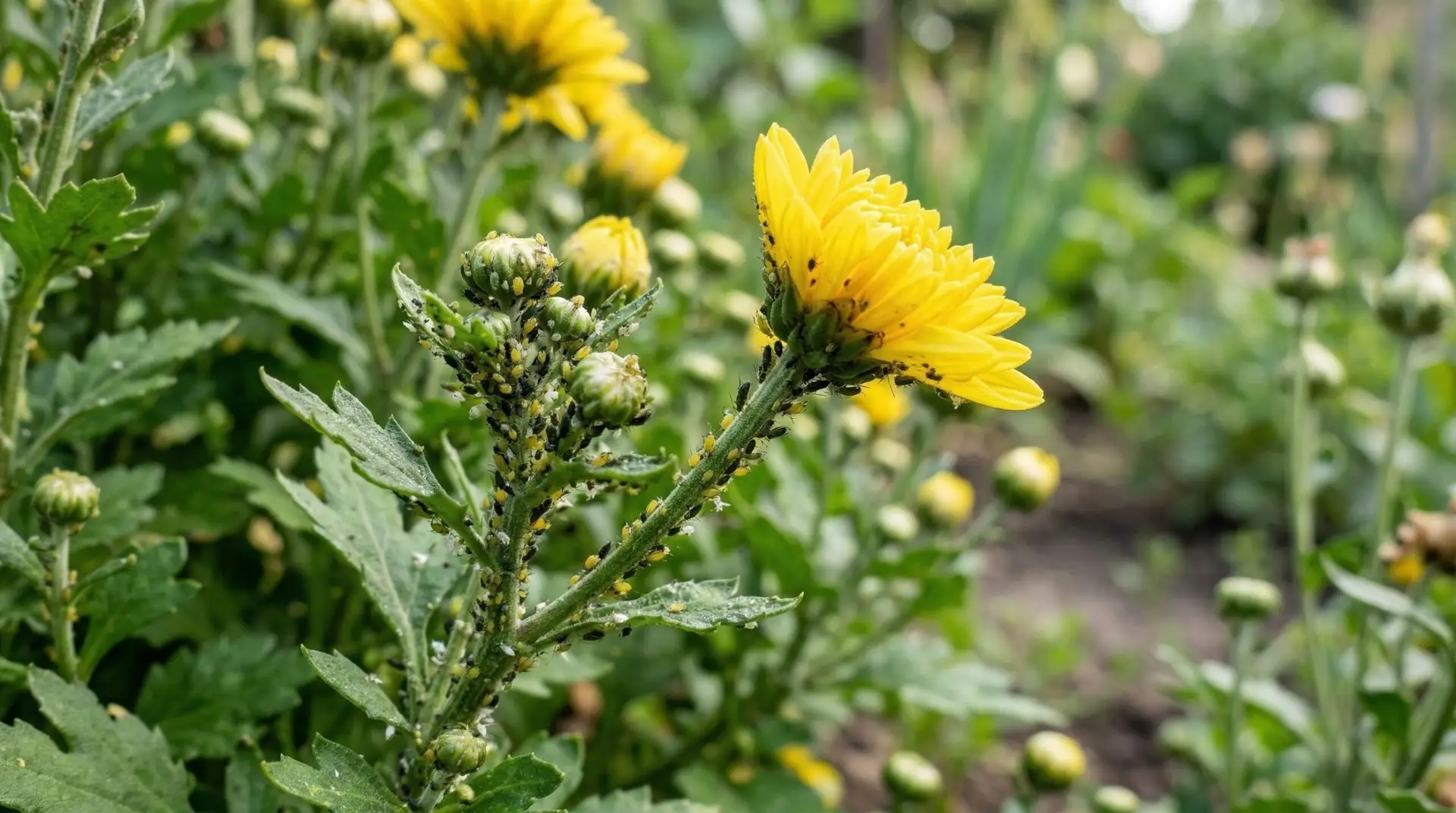
Chrysanthemum aphids gather in dense clusters on the tender new growth and just below the developing flower buds. These soft-bodied insects extract sap from the plant, causing the new leaves to curl, distort, and eventually turn yellow. They also excrete a sticky substance called honeydew that attracts ants and promotes the growth of unsightly black sooty mold on the foliage. You can control minor infestations by dislodging the insects with a strong spray of water from the hose early in the morning. For persistent populations, apply insecticidal soap or horticultural oil directly to the aphids, ensuring you coat the undersides of the leaves where they hide. You must reapply these organic treatments every five to seven days until the reproductive cycle breaks.
Two-spotted spider mites thrive in the hot, dry conditions that typically occur in late summer just before mums set their buds. You will rarely see the mites themselves without magnification, but their damage appears as fine, stippled yellow dots across the leaf surface, eventually progressing to delicate webbing between the stems. Regular overhead watering during extended dry spells disrupts their dry microclimate and naturally suppresses their population. Thrips present a different challenge by feeding directly inside the opening flower buds, causing the petals to emerge scarred, deformed, or discolored. You must apply spinosad-based organic sprays in the late evening to target thrips while protecting beneficial pollinating insects that visit during the day. Consistent monitoring of the developing buds allows you to catch thrips before the flowers open and the damage becomes permanent.
Leaf miners leave unmistakable winding, pale trails across the foliage as their larvae tunnel between the upper and lower leaf surfaces. Because the larvae feed inside the leaf tissue, topical contact insecticides cannot reach them. The most effective organic control is physical removal of the damaged leaves the moment you notice the characteristic squiggly lines. Adult leaf miner flies are drawn to yellow sticky traps, which you can place just above the plant canopy to monitor and reduce the breeding population. If you grow asters nearby, monitor them closely as well, since they share susceptibility to similar leaf-mining insects. Spraying neem oil early in the season can deter the adult flies from laying their eggs on the foliage in the first place.
Cultivar selection and garden integration
Selecting disease-resistant cultivars is the most reliable defense against perennial chrysanthemum struggles. Breeders have developed specific varieties that show strong natural resistance to white rust and powdery mildew. When purchasing new plants, inspect the undersides of the leaves and the stems carefully in the nursery to avoid bringing existing problems into your garden. If you regularly battle severe pest pressure late in the season, consider interplanting with entirely different families of late-blooming flowers. For example, incorporating dahlias into your autumn beds breaks up the monoculture and makes it harder for host-specific pests to spread rapidly from plant to plant. Diversity in the planting bed dilutes the concentration of chemical signals that attract specialized insects.
Winter survival often depends on how effectively you managed pests and diseases during the active growing season. Plants weakened by heavy aphid feeding or extensive foliar damage lack the stored energy reserves necessary to survive hard freezes. Do not cut the dead stems back in the fall, as the standing vegetation traps insulating snow and protects the crown from frost heaving. You should instead wait until new basal growth emerges in early spring to remove the old debris. Clean your pruners with rubbing alcohol between cuts to avoid transferring latent pathogens to the fresh spring growth. The health of next year’s crop is determined entirely by the sanitation practices you implement at the end of the current season.
More About Chrysanthemum
Mums care: why they turn brown and what to do next

Chrysanthemum tea and edible flowers from garden to cup and kitchen

Fall porch and front door displays using chrysanthemums pumpkins and autumn decor

How to pinch chrysanthemums for bushy plants loaded with fall flowers
Exhibition chrysanthemums and the art of growing show-stopping single blooms

Hardy garden chrysanthemum varieties that survive winter and come back stronger

Companion plants for mums: what to grow and what to avoid

Chrysanthemum meaning, and why it says joy in one country and death in the next

How to divide chrysanthemums in spring for healthier plants and more blooms
Growing garden mums as perennials instead of throwing them away every fall
Enjoying our flower guides? Add YourFlowersGuide as a preferred source on Google. It helps more readers find us.
Add to Preferred Sources