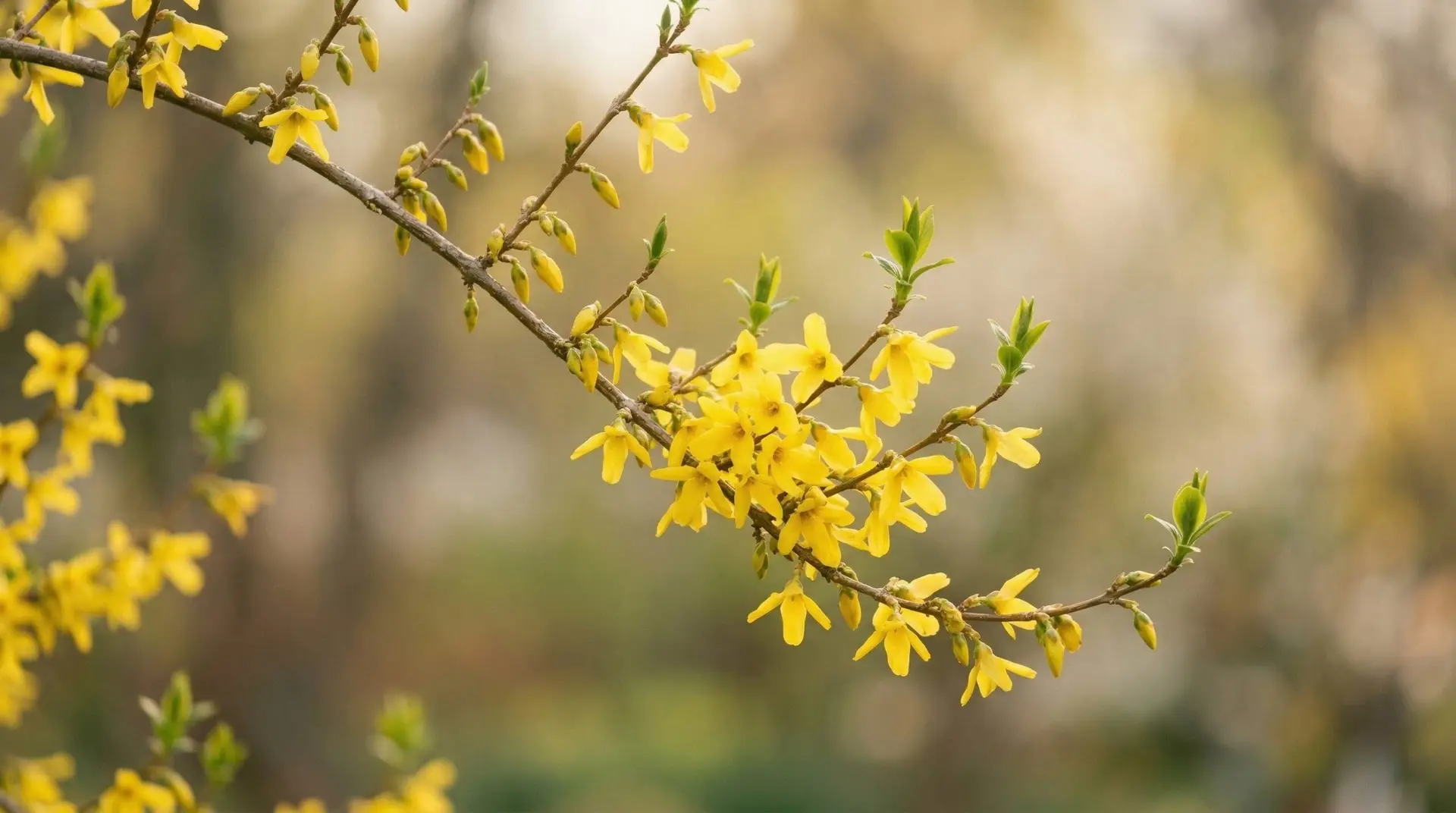
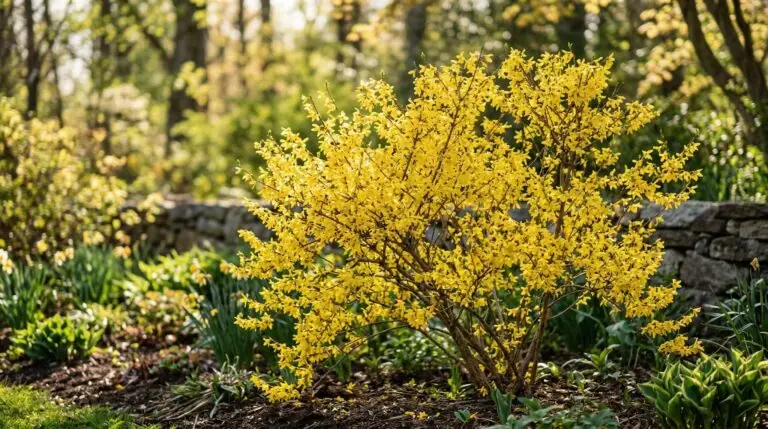
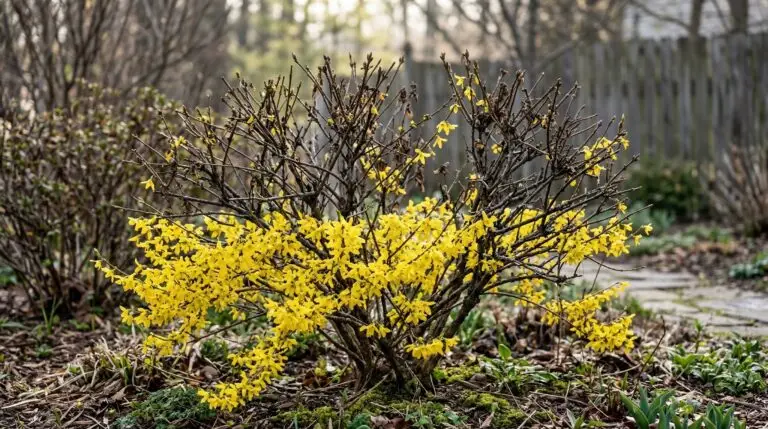
Late winter holds a specific kind of exhaustion. The ground remains hard, the sky stays a flat gray, and the trees are nothing but bare architecture against the horizon. Then, seemingly overnight, a wild explosion of bright yellow erupts along the edges of yards and country roads. Long, arching branches cover themselves entirely in golden, four-petaled bells before a single green leaf dares to unfurl. This sudden and unapologetic display is the definition of forsythia spring. The sight completely changes the mood of the winter garden, breaking the visual monotony of the cold months. For generations of gardeners, this early bloom has cemented the core forsythia meaning as a pure expression of anticipation and hope.
The story of this golden shrub begins far from the American suburbs where it now grows so easily. The plant originated in the mountains and valleys of East Asia, growing wild across China, Korea, and Japan. European plant hunters first noticed the brilliant yellow branches in Asian gardens and immediately recognized their value for a winter weary public. They collected cuttings and seeds, carefully packing them into wooden crates for the long ocean voyage back to Europe. The voyage required keeping the dormant wood alive through months of salt air and changing climates. When the plants finally bloomed in Western gardens, they caused an immediate sensation among horticulturists who had never seen such a vigorous, early flowering shrub.
Contents 3 sections
The royal gardener and a traveling shrub
The name we use today honors a man who never actually saw the plant growing in its native soil. William Forsyth was a Scottish botanist and a founding member of the Royal Horticultural Society in the late eighteenth century. He was the Chief Superintendent of the Royal Gardens at Kensington and St. James’s, spending his days managing extensive fruit orchards and ornamental borders. When another botanist officially classified the newly arrived Asian shrub, he named it after Forsyth to recognize his contributions to British horticulture. The plant quickly moved from royal estates into the gardens of everyday people, crossing the Atlantic to America in the mid nineteenth century. Farmers and city dwellers alike planted the tough, fast-growing bushes along property lines and foundations. The shrub demanded very little from the soil and rewarded even the most neglectful gardener with a massive display of color every single year.
The life cycle of the shrub tells a story of quiet preparation beneath the frozen earth. While the garden appears entirely dead in December and January, the plant is already holding tight, dormant buds along its woody stems. These buds wait patiently through ice storms and heavy snows, requiring a specific period of cold before they can open. As the days lengthen and the soil temperature creeps upward by just a few degrees, the buds swell and cast off their protective brown scales. The flowers emerge rapidly, opening wide to catch the weak late winter sunlight. The shrub does all of this work entirely on the energy it stored during the previous summer, pushing out blooms long before its roots can draw substantial new nutrients from the cold ground.
A living calendar in the garden
Long before modern meteorology, farmers and gardeners relied on the natural world to tell them when the seasons were actually changing. This practice of observing biological events in relation to weather is known as phenology, and the golden shrub is one of its most reliable markers. When the yellow bells open, the soil has finally reached a temperature that supports new growth. Gardeners watch for this exact moment to begin their spring chores, using the bloom as a starting gun for the growing season. The arrival of the flowers means it is time to prune the roses, cut back the ornamental grasses, and watch for the first daffodils to break the soil. It signals that the deepest freezes have passed, even if a late frost might still dust the open petals.
The timing of this display connects deeply with the emergence of other early bloomers pushing through the cold earth. You will often see the yellow branches arching over patches of white snowdrops that have braved the lingering frost. The shrub acts as an overstory of color while the smaller bulbs do their work close to the ground. This sequence of blooming creates a reliable rhythm in the garden, a progression of color that moves from white to yellow before the pastel pinks and purples of mid spring arrive. The deep forsythia symbolism of renewal is tied directly to this position at the very front of the seasonal parade. The plant takes the risk of blooming first, opening the door for the rest of the yard to wake up.
Yellow mountains and spring festivals
The visual impact of these early flowers is so powerful that entire communities gather to celebrate their arrival. In South Korea, the plant is native and grows abundantly across the rocky hillsides and urban parks of Seoul. Every year, Eungbongsan Mountain transforms into a solid mass of brilliant yellow, drawing thousands of visitors to the annual spring festival. People walk along winding paths cut directly through the dense, blooming shrubs, entirely surrounded by the bright color. The festival includes music, traditional food, and a collective sigh of relief that the long, bitter winter has finally ended. The mountain becomes a physical manifestation of forsythia meaning, offering a shared experience of joy and anticipation for the warmer days ahead.
The golden show, however, is intentionally brief. Just as the surrounding trees begin to show a haze of green at their branch tips, the yellow bells start to drop to the ground. Small, serrated green leaves push out from the same nodes where the flowers just bloomed, quickly covering the bare wood. Within a week or two, the plant completely changes its identity from a beacon of bright color to a quiet, green background shrub. It blends into the summer yard, providing dense cover for nesting birds and a solid green wall along the edge of the property. The plant spends the next six months quietly turning sunlight into the energy it will need to build the next generation of winter buds.
The true magic of the shrub lies in its fleeting nature and its perfect timing. We appreciate the yellow bells so deeply because they arrive exactly when we are most desperate for a sign of life. By the time the late daffodils fully open their trumpets and the tulips begin to show their colors, the golden branches have already faded into green. The shrub has done its job, breaking the winter silence and handing the season over to the rest of the garden. Walking past the leafy green bush in the heat of August, it is easy to forget the wild explosion of color it provided months earlier. Yet, deep inside the wood, the plant is already setting the tight, hidden buds that will carry the promise of next spring through the dark winter to come.
More About Forsythia
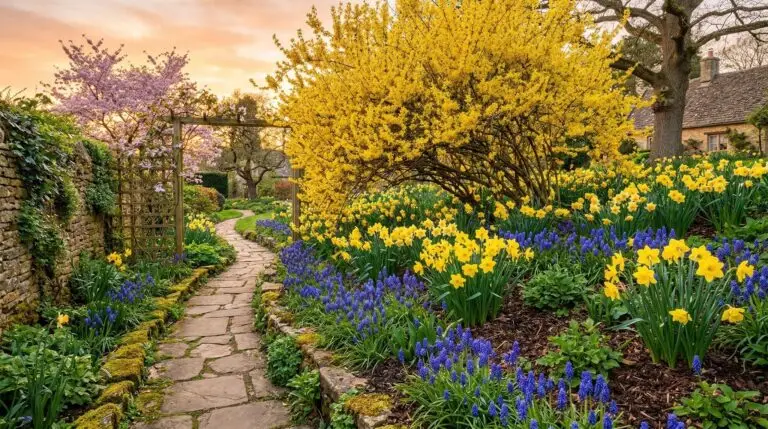
Companion plants for forsythia: what to grow, what to avoid
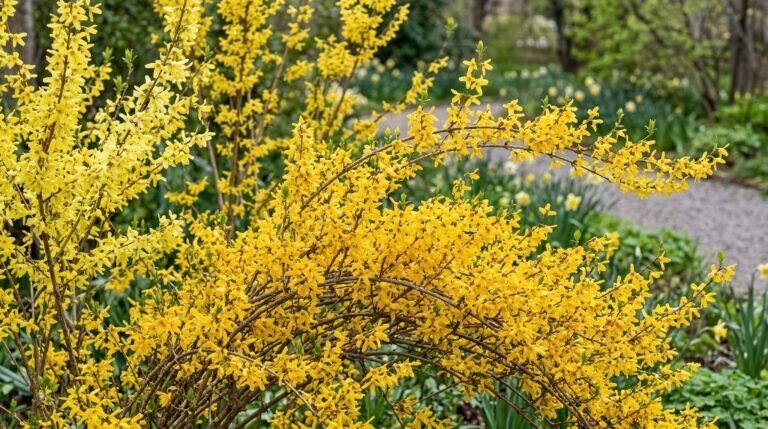
Dwarf forsythia varieties for small gardens that still deliver big spring color
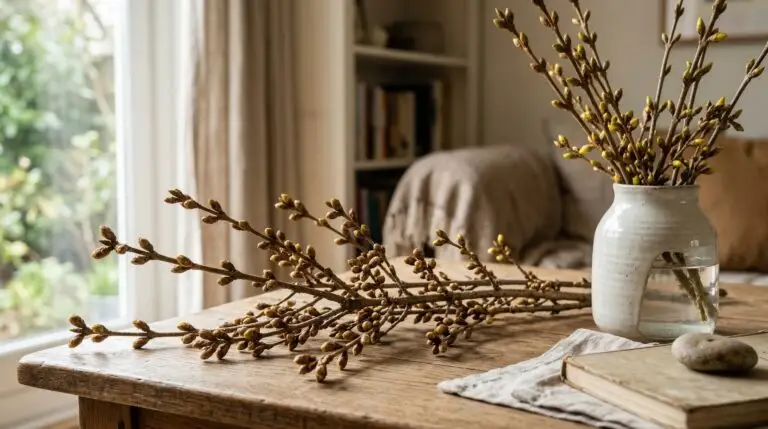
Forcing forsythia branches indoors for early spring sunshine on your kitchen table
How to grow forsythia for an explosion of golden yellow blooms in early spring
Best forsythia varieties from compact Show Off to weeping Arnold Dwarf
Using forsythia as a fast-growing privacy hedge that lights up spring
When and how to prune forsythia without accidentally cutting off next year’s flowers
Why your forsythia blooms only on the bottom and how to fix bare leggy branches
How to propagate forsythia from cuttings and tip layering for free new plants
Enjoying our flower guides? Add YourFlowersGuide as a preferred source on Google. It helps more readers find us.
Add to Preferred Sources