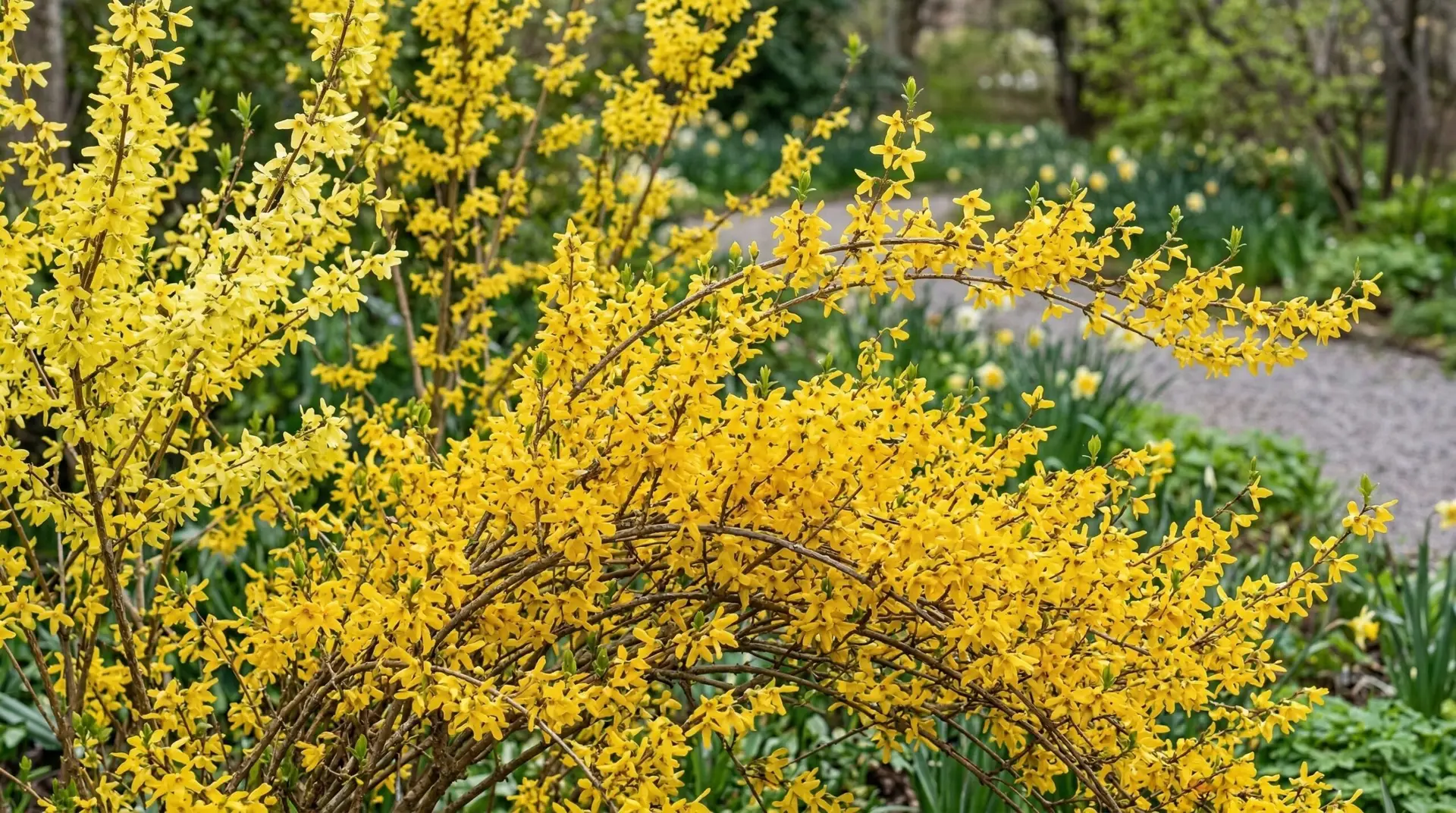
Spring fever makes people do foolish things at the garden center, like buying a tiny yellow twig in a black plastic pot and planting it right under the front window. Three years later, that innocent little shrub turns into an eight-foot monster that swallows the porch and demands a chainsaw every summer. Standard forsythia is practically indestructible and grows with a wild, sprawling energy that belongs out on a back property line, not crammed against residential siding. Digging out an overgrown root ball is backbreaking work that usually involves pickaxes and a lot of regret. The better approach for tight yards is choosing a dwarf forsythia right from the start. These compact versions deliver the exact same blast of early yellow color without requiring a weekend of heavy pruning just to see out the living room window.
The appeal of a small forsythia is that it actually behaves like a well-mannered guest in a mixed border. Instead of shooting ten-foot canes into the sky, these plants max out between one and three feet tall depending on the exact type. They fit neatly into the front of a garden bed near an early azalea and leave plenty of room for summer perennials to take over the show later in the season. A forsythia small garden setup relies on choosing the right specific plant rather than trying to force a large plant to stay small through constant shearing. Shearing standard types into tight green meatballs usually cuts off all the flower buds for the following year anyway. Letting a naturally small variety grow into its normal shape guarantees better flowers and saves countless hours of yard work.
Contents 3 sections
Finding the right small forsythia for foundation planting
When looking for a plant that will sit nicely under a low window, the variety called Show Off Sugar Baby is incredibly reliable. It tops out at around two and a half feet tall and stays quite dense all on its own. The branches grow upright and are absolutely packed with blooms from the base of the plant all the way to the tips. Many older dwarf types have a reputation for producing sparse, weak flowers, but this particular one puts on a heavy display. It is a very forgiving shrub that handles average garden soil and does not need expensive fertilizers to thrive. Just dig a hole, mix in a few shovels of basic homemade compost, and water it deeply during that first summer.
Spacing is still important even with a compact plant. Novice gardeners often push small shrubs right up against the concrete foundation, which blocks air circulation and creates a dry shadow where rain rarely reaches. Planting the root ball at least two feet away from the wall gives the roots room to establish and makes it easier to clean out dead leaves in the fall. This spacing also leaves room to layer other spring plants nearby. A dwarf forsythia planted slightly forward pairs beautifully with a later-blooming azalea to keep the color going for several weeks. The yellow flowers drop just as the next round of shrubs begins to wake up.
Using low growing varieties as spring ground cover
Not all dwarf forsythia varieties are meant to look like little upright bushes. Some are natural sprawlers that work perfectly as a tough ground cover on difficult slopes or banks. Arnold Dwarf is an older variety that is famous for its rugged nature and its ability to root wherever a branch touches bare soil. It is an excellent, cheap solution for holding dirt in place on a steep hill where running a lawnmower is dangerous. The honest trade-off with Arnold Dwarf is that the spring flower display is usually quite poor. It is grown almost entirely for its dense green foliage and its aggressive ability to choke out weeds on a rough patch of ground.
For gardeners who want both a low, spreading habit and a heavy bloom, Gold Tide is usually the better choice. Also sold under the name Courtasol, this variety grows only about two feet tall but easily spreads four or five feet wide. The branches arch gracefully outward and cover themselves in light yellow flowers before the leaves emerge. It looks completely natural cascading over a retaining wall or spilling out over the edge of a raised bed. Because it stays so low, it rarely needs structural pruning, though taking out a few of the oldest, thickest branches right at the base every few years keeps the new growth vigorous. A basic pair of bypass hand clippers is the only tool needed for this occasional maintenance.
Regional weather patterns play a big role in how well these early bloomers perform. Gardeners in the South sometimes struggle to get a good flower display because the plants need a certain number of winter chill hours to set their buds properly. If the winter is too mild, the shrub often pushes out green leaves with only a scattering of yellow. In northern zones, the chill hours are guaranteed, but a sudden late frost can freeze the flower buds right as they are trying to open. If the buds turn brown and crispy in March, the plant is not dead. It just lost its spring coat and will leaf out normally a few weeks later.
Growing dwarf shrubs in containers and tight spaces
Growing dwarf forsythia in pots is entirely possible and solves the problem of having no bare ground at all. The trick is avoiding cheap, lightweight plastic pots that will blow over in a strong spring wind once the shrub leafs out. A heavy terracotta or thick resin planter provides the necessary anchor and gives the roots some insulation. Standard potting soil works perfectly well, though mixing in a handful of slow-release granular fertilizer in early spring helps support the bloom. Potted shrubs dry out much faster than those in the ground, so checking the soil moisture with a bare finger every few days is mandatory during the heat of summer. If the leaves start to droop and lose their crisp green color, the plant needs a deep soak immediately.
Even in a container, a small forsythia will eventually get a little messy and require some attention. The rule for pruning remains the same regardless of where the shrub is planted, meaning you make the cuts immediately after the yellow flowers fade and drop off. Waiting until mid-summer or fall to trim means cutting off all the buds that are developing for the next spring. Keeping the container display interesting after the yellow fades requires a bit of planning. Setting the pot next to a container-grown viburnum or surrounded by summer annuals helps disguise the plain green leaves of the forsythia through July and August. The shrub becomes a quiet green backdrop until it drops its leaves in autumn.
The transition from a newly planted nursery shrub to an established garden performer takes a little patience. New plants often look a bit shocked and drop a few leaves for about two weeks after transplanting. They are not dying, they are just putting all their energy into growing roots instead of looking pretty above ground. Give them time, keep the soil damp but not muddy, and resist the urge to dump chemical fertilizers on them to force growth. A dwarf forsythia is a long-term investment that requires very little money or effort once it settles in. By the second spring, the root system will be solid, and the plant will deliver exactly the right amount of early color without threatening to take over the yard.
More About Forsythia
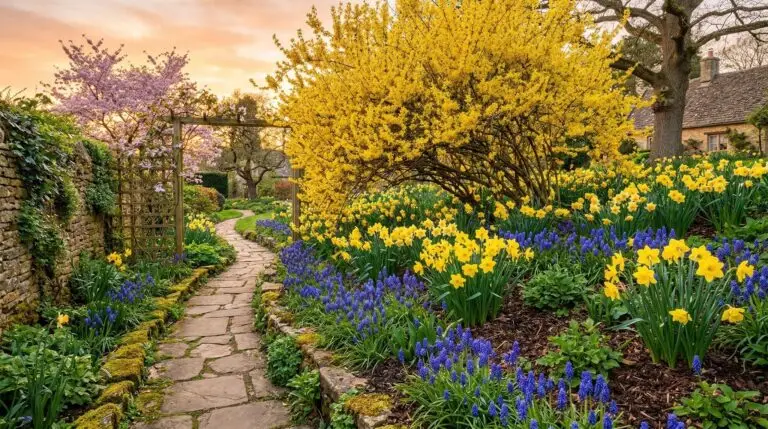
Companion plants for forsythia: what to grow, what to avoid
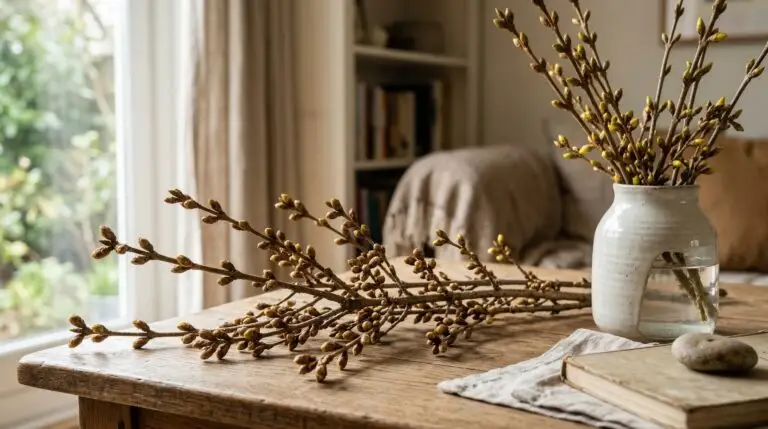
Forcing forsythia branches indoors for early spring sunshine on your kitchen table
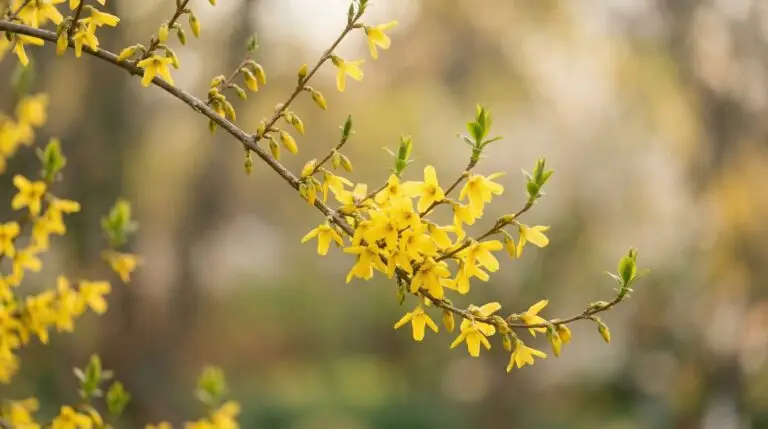
Forsythia flower meaning and why this golden shrub signals winter is finally over
How to grow forsythia for an explosion of golden yellow blooms in early spring
Best forsythia varieties from compact Show Off to weeping Arnold Dwarf
Using forsythia as a fast-growing privacy hedge that lights up spring
When and how to prune forsythia without accidentally cutting off next year’s flowers
Why your forsythia blooms only on the bottom and how to fix bare leggy branches
How to propagate forsythia from cuttings and tip layering for free new plants
Enjoying our flower guides? Add YourFlowersGuide as a preferred source on Google. It helps more readers find us.
Add to Preferred Sources