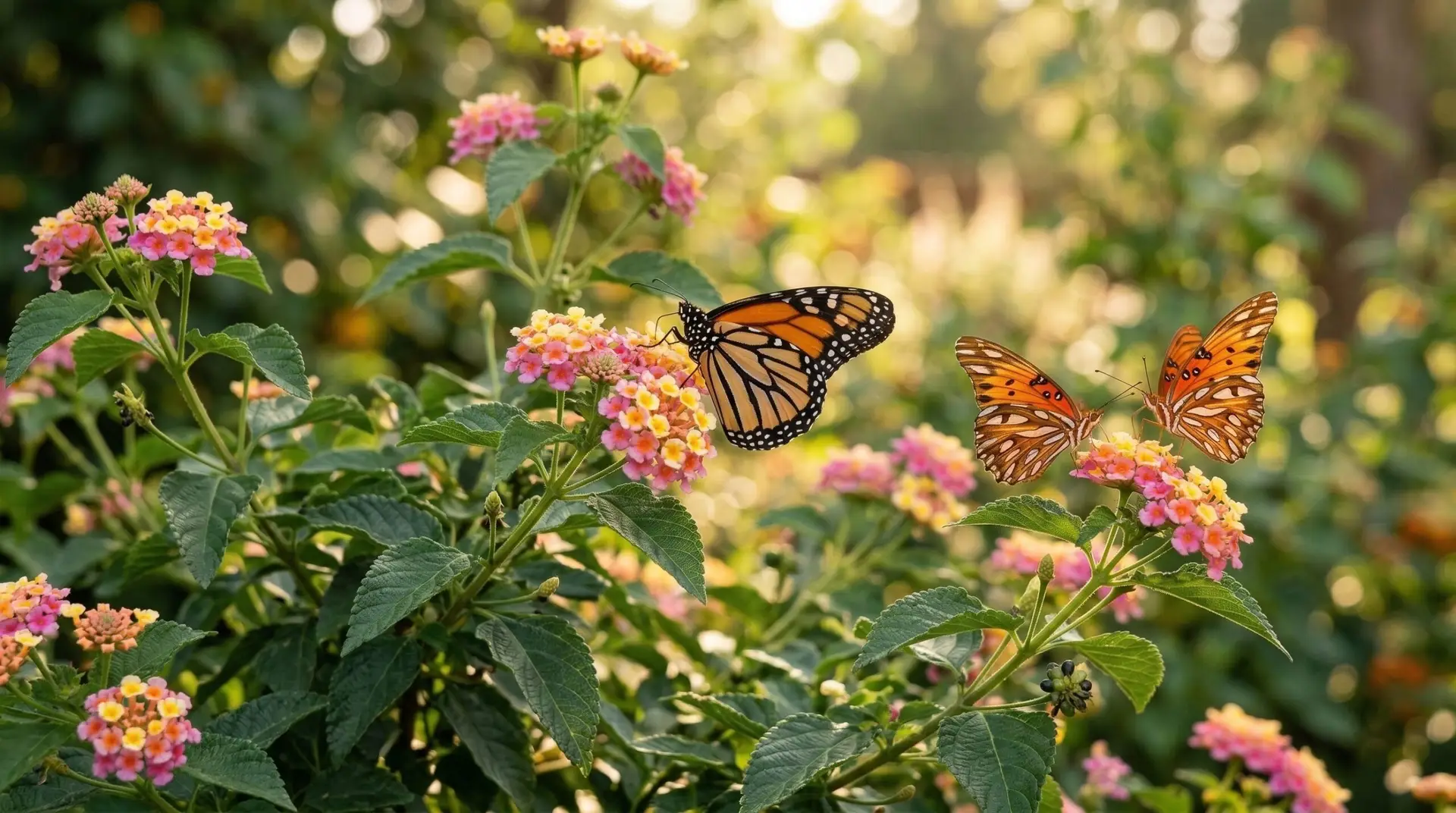
Late August afternoons in my garden carry a heavy, humid stillness that silences the songbirds and sends the neighborhood cats into the deep shade of the porch. The air itself seems to thicken, pressing down on the soil and wilting the broad leaves of the squash vines. In this sweltering quiet, motion belongs entirely to the insects. I stood by the south fence yesterday watching a tiger swallowtail navigate the shimmering heat waves above a sprawling patch of orange flowers. For anyone observing lantana butterflies, the attraction is clearly the steady supply of nectar when other plants have dried up. The butterfly circled twice before dropping its weight onto a flat cluster of red and yellow blossoms. The stiff stems held firm while the insect uncoiled its proboscis to probe the tiny tubular florets. Watching this exchange, I felt a sudden appreciation for the sheer endurance of this rough-leaved plant that offers a reliable drink to the living world.
Most plants retreat from the peak heat of summer by curling their leaves, dropping their blossoms, or simply pausing their growth until cooler nights return. Lantana takes a different approach to the brutal sun, responding to the rising temperatures by pushing out an endless succession of tight flower buds. The plant is a native of the hot, scrubby regions of the Americas, and it remembers its origins in every fibrous stem and sandpaper leaf. Water is carefully conserved within its tissues, allowing the roots to search deep into baking soil while the above-ground growth continues to produce rich nectar. I have found that watering lantana too frequently actually diminishes its flowering, because the plant needs a bit of stress to perform its best. The dry spells that turn the lawn brown only seem to encourage the lantana to bloom more profusely. This resilience makes it the quiet anchor of the midsummer yard, sustaining the local insect population through the harshest weeks of the year.
Contents 3 sections
The architecture of a landing pad
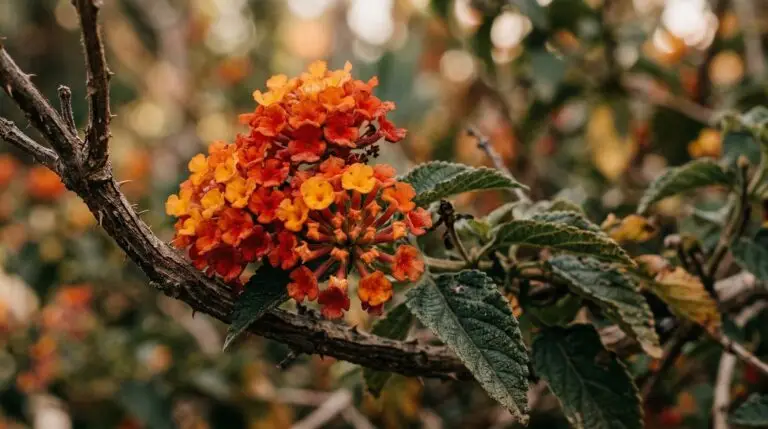
A close look at a single lantana flower head reveals a sophisticated mechanism designed entirely for the convenience of winged visitors. What appears from a distance to be a single bloom is actually a dense cluster of tiny, individual tubular flowers arranged in a flat dome. This structure provides a broad, stable platform for heavy insects like monarchs and swallowtails to rest their wings while they feed. The florets open in a ring from the outside edge toward the center, changing color as they age and are pollinated. A cluster might hold yellow blossoms in the center, surrounded by rings of orange, pink, or deep red. The changing colors act as visual signals to the steady stream of lantana pollinators, directing them toward the newer flowers and away from the older, depleted ones. The insects learn these color codes quickly, moving with efficient precision across the flat umbels.
While the broad landing pads are perfectly engineered for butterflies, they draw a much wider community of nectar seekers to the garden. Ruby-throated hummingbirds visit my yard just after dawn, hovering at the edges of the clusters to sip from the fresh morning blooms. Their rapid visits are followed by a quiet procession of skippers, fritillaries, and small native bees that work the flowers methodically through the heat of the day. The plant hums with a constant vibration of wings that becomes the background music of the late summer season. I often plant it alongside zinnias, which share a similar tolerance for intense heat and provide their own rigid landing platforms for visiting insects. Together, these sun-loving plants create a continuous corridor of food that keeps the insects actively working the soil rather than moving on to find better forage. The lantana becomes a bustling intersection in the local ecology.
Cultivating a butterfly sanctuary
Tending to lantana requires a certain willingness to engage with its rough edges. The leaves are covered in stiff hairs that can irritate bare skin, and they release a sharp, pungent odor when brushed or crushed. This scent is a natural defense mechanism that deters deer and rabbits from browsing the foliage, leaving the plant intact for the insects that depend on its flowers. I spend a few hours each week in late summer deadheading the spent blooms, snapping the brittle stems between my fingers to encourage another flush of growth. The task is repetitive but deeply grounding, tying my own physical labor to the ongoing life cycle of the yard. Sometimes I find praying mantises waiting motionless among the rough leaves, perfectly camouflaged and ready to ambush the smaller insects drawn to the nectar. Gardening for wildlife means accepting this predatory reality, understanding that a true butterfly garden lantana planting feeds spiders and mantises just as surely as it feeds the swallowtails.
Designing a space for pollinators requires thinking about layers, seasons, and the specific physical needs of different insects. I place lantana at the front of the sunniest borders, where its sprawling habit can soften the hard edges of walkways and retaining walls. Behind it, I let taller native plants establish a vertical backdrop that catches the late afternoon light. The sturdy, upright stalks of a coneflower patch provide an excellent contrast to the low, mounding shape of the lantana, while offering pollen to a different set of native bees. In the open spaces between these perennials, I scatter seeds for cosmos in the early spring, letting their feathery foliage weave through the heavier leaves of their neighbors. This intentional crowding forces the plants to compete for space, but it creates a dense, protective thicket where butterflies can shelter from sudden summer rainstorms or strong winds. The resulting tangle of stems and blooms grows into a small, self-sustaining meadow.
The shifting of the season
By the time September arrives, the quality of the light begins to change, taking on a golden slant that signals the closing of the year. The lantana continues to bloom with a quiet urgency, producing clusters of red and yellow even as the nights grow noticeably cooler. This late-season nectar is heavily utilized by migrating monarchs, who stop to refuel on their long flight south toward the mountain forests of Mexico. Watching a tattered monarch rest on a blossom in the fading autumn light is a reminder of the vast, invisible threads connecting a single suburban garden to a continental ecology. The plant will eventually succumb to the first hard frost, its rough leaves turning black and dropping to the soil to decompose. I will cut the brittle stems back to the ground, leaving the roots to sleep through the winter snows. Until that freezing morning comes, the lantana remains a steadfast host, offering a final, generous feast to the winged travelers passing through the yard.
More About Lantana
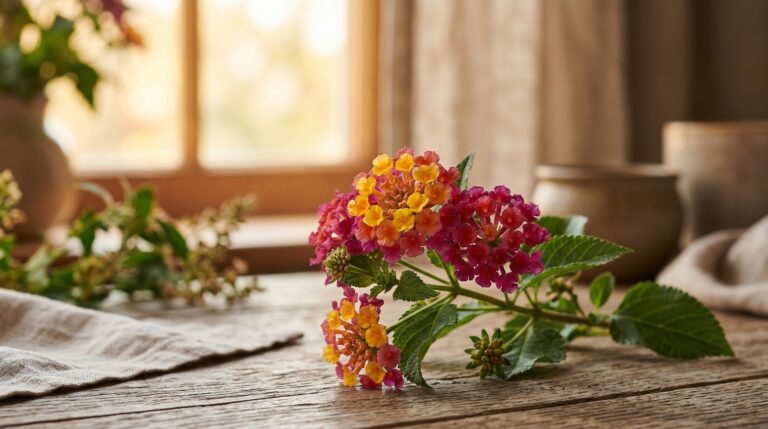
Why lantana flowers change color as they age and the science behind the show
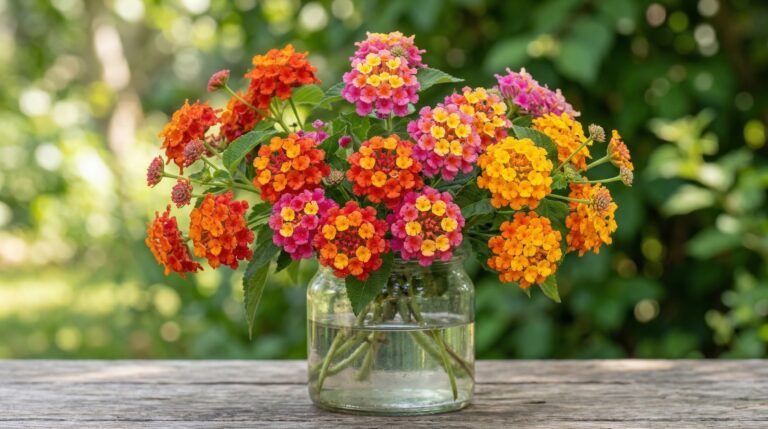
Best lantana varieties from multicolor Confetti to pure white Nivea
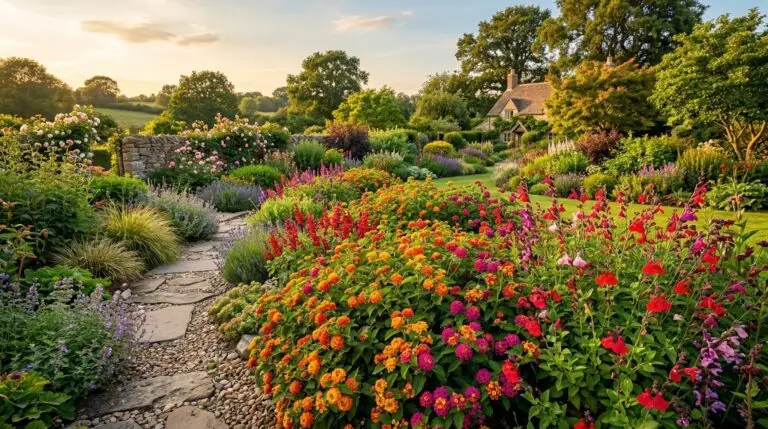
Companion plants for lantana that share its dry, sunny bed
Lantana flower meaning and the resilient beauty of this tough tropical bloomer
Lantana as a low-maintenance ground cover for slopes and hard-to-mow areas
Overwintering lantana plants indoors for saving your favorite varieties until spring
Is lantana invasive and how to grow it responsibly in warmer climates
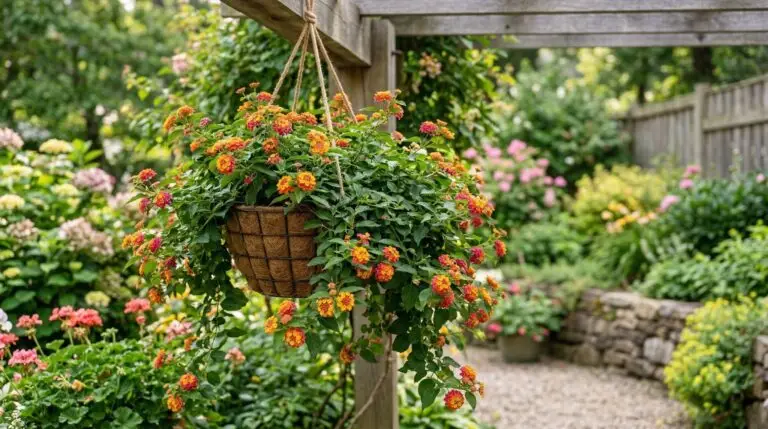
Growing lantana in containers and hanging baskets for summer patio color
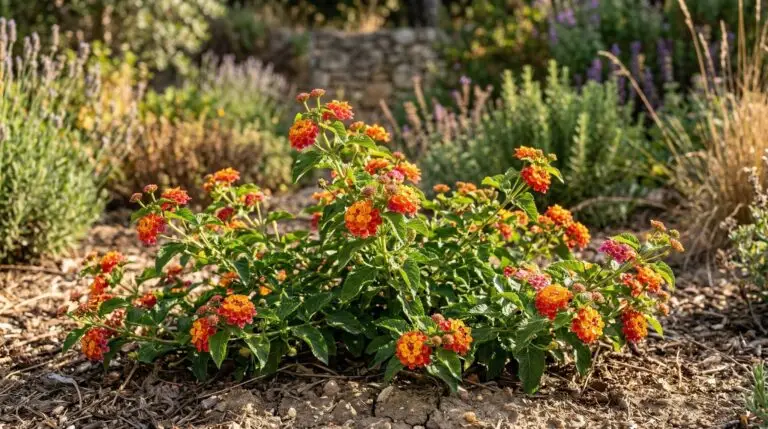
How to grow lantana for non-stop color in the hottest driest spots in your garden
Enjoying our flower guides? Add YourFlowersGuide as a preferred source on Google. It helps more readers find us.
Add to Preferred Sources