The pairing · pick a flower
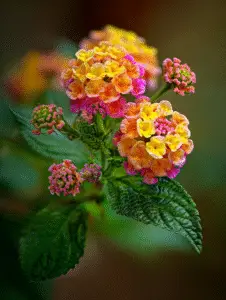 Lantana+
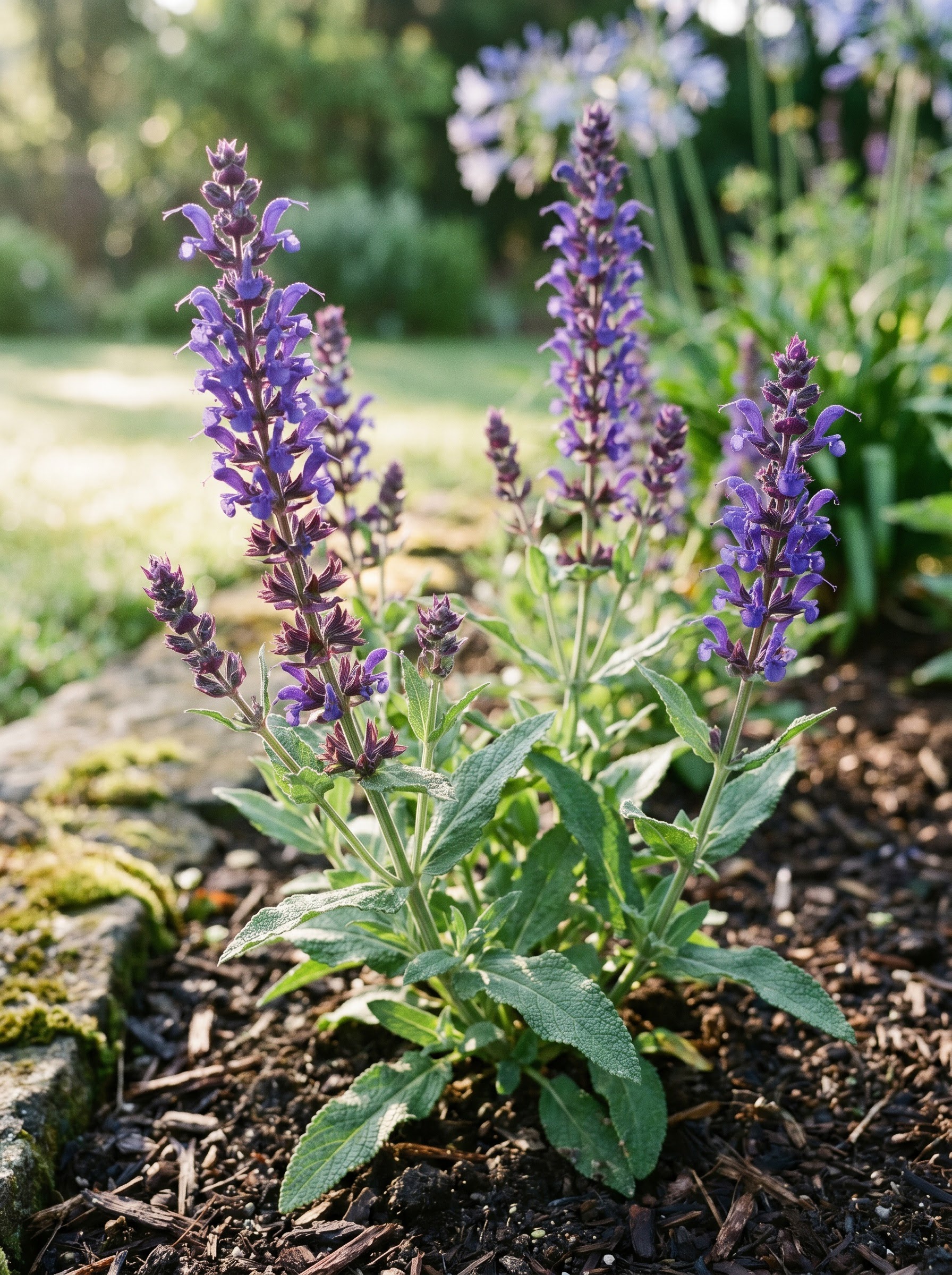 SalviaProven
Nearly identical needs, full sun, drought tolerance once rooted, and lean well-drained soil, plus upright spiky flowers that give lantana's low mounded clusters the vertical contrast they lack.
Lantana+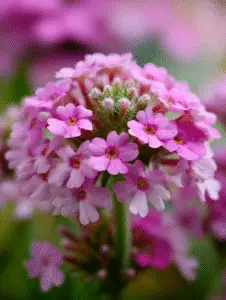 VerbenaProven
Full sun and well-drained soil are non-negotiable for both, and verbena's low trailing mats fill the ground at lantana's feet or spill over a container edge without competing for water.
Lantana+RosemaryProvenWants the same full sun, sharp drainage, and lean acid soil lantana tolerates, and its evergreen woody form gives a bed year-round structure once lantana dies back in cooler zones.
Lantana+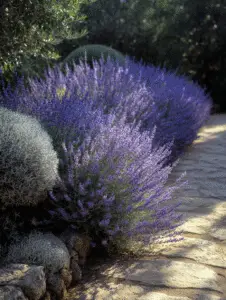 LavenderProven
Lavender's need for lean, dry, fast-draining soil is usually the plant other companion pages warn against pairing with a moisture-lover; next to lantana it is a genuine match, not a compromise.
Lantana+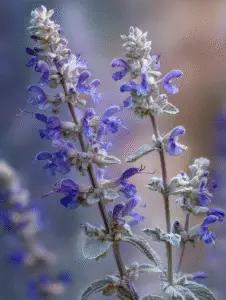 Russian sageProven
A woody-based perennial that wants the same full sun and lean, well-drained soil as lantana, with fine silver-blue foliage that reads as an airy scale contrast behind lantana's dense low clusters.
Lantana+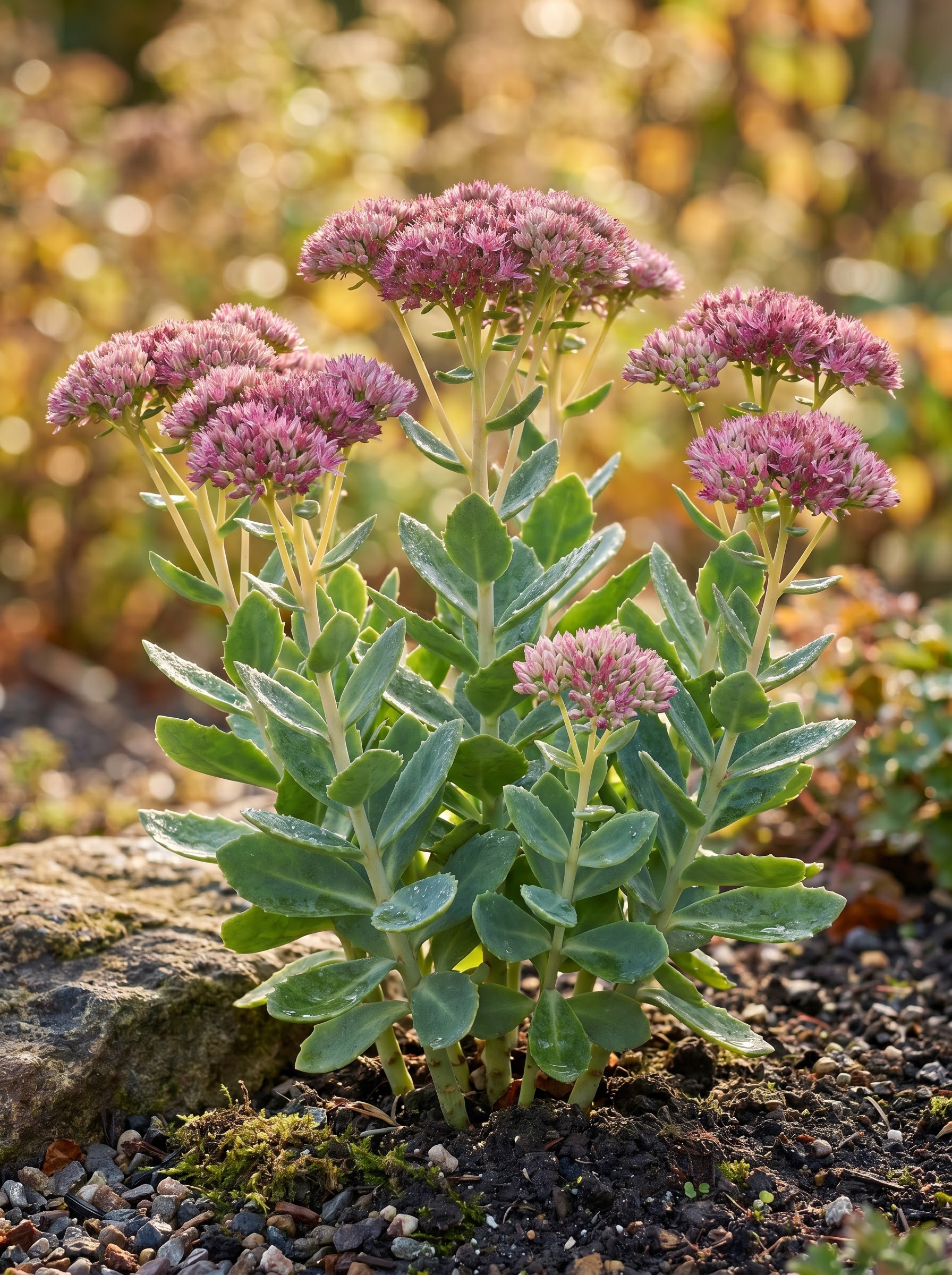 SedumProven
A succulent built for the exact lean, rocky, fast-draining conditions lantana wants, with a low mat-forming habit that works the front edge of the same xeriscape bed without any competition for water.
Lantana+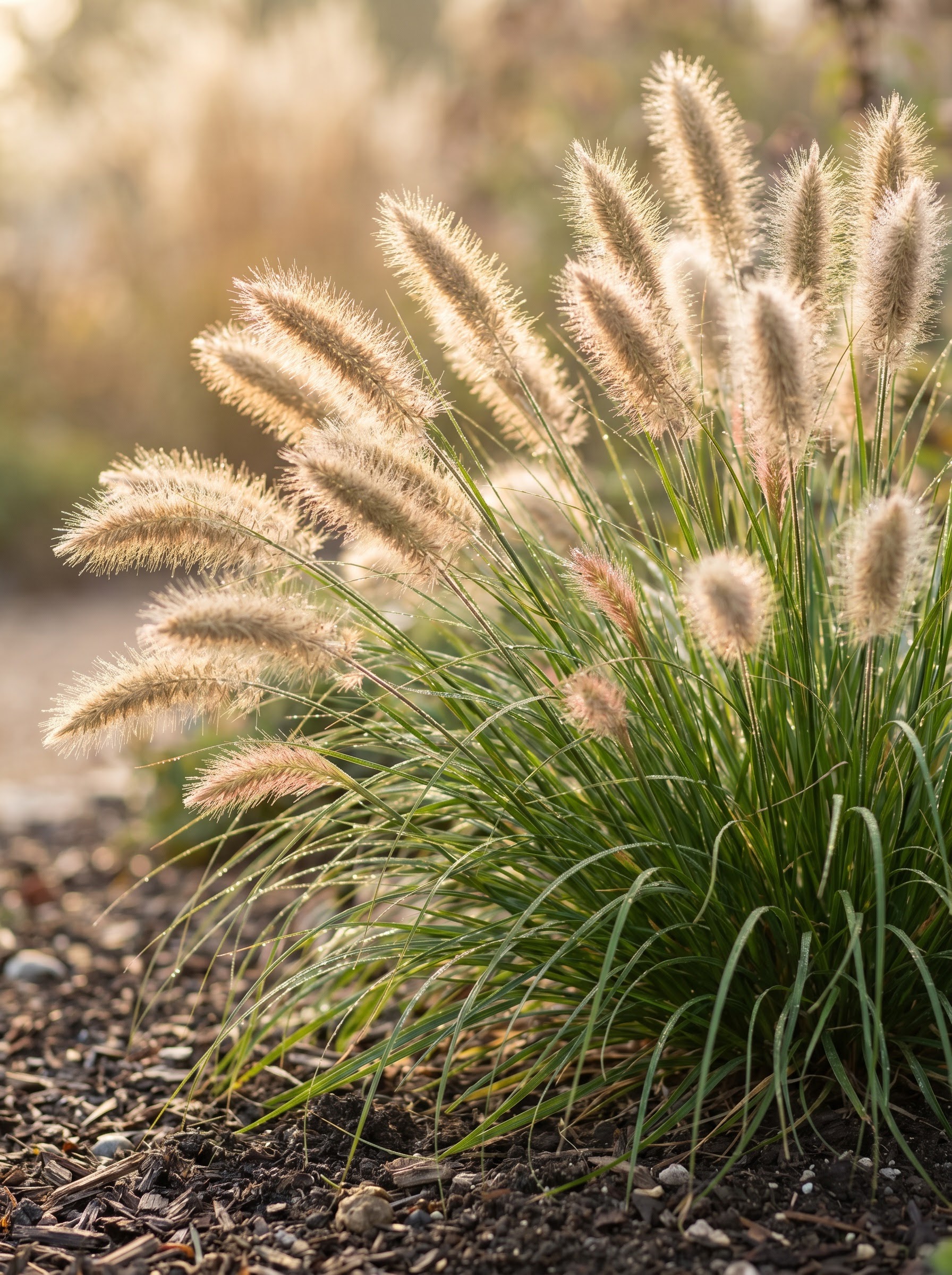 Ornamental grassesPartial
Fine-textured and genuinely drought-tolerant in the same lean soil, and the single strongest textural foil on this list: thread-fine blades against lantana's dense clustered florets.
Lantana+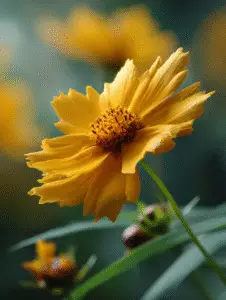 CoreopsisPartial
Genuinely drought-tolerant in full sun once established, and its small yellow-gold daisies amplify lantana's warm-toned cultivars specifically; the color echo does not carry over to pink or white lantana.
Lantana+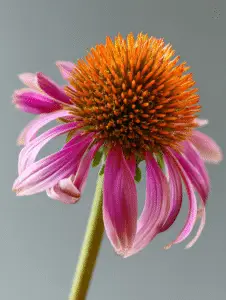 ConeflowerPartial
Drought-tolerant once established and a genuine pollinator magnet, but it takes more regular moisture than lantana would prefer, so give it the moister side of the bed rather than the driest corner.
All lantana companions
9 flower companions, best match first
What not to plant near lantana
Most bad neighbours are not evil, they just want the opposite light, water or root run. Here is what to keep away, and what to do instead.
Ferns, hostas, impatiens, astilbe, and other shade-and-moisture perennials
These need shade instead of the 6 or more hours of direct sun lantana wants, and steady moisture instead of the dry-between-waterings soil that keeps lantana's roots healthy; forced together, one of the two is always suffering.
Hydrangea and other consistently-moist-soil shrubs
Hydrangea wilts fast once its soil dries and wants steady moisture, the opposite of the lean, infrequently-watered ground lantana needs; watered on a hydrangea schedule, lantana risks root rot in soggy soil.
Sites with poor drainage or dense overhead shade
This is a siting problem more than a pairing problem: shaded, poorly-drained ground keeps lantana's roots wet and its foliage dim, and that combination is the single fastest way to lose the plant regardless of what grows beside it.
Aggressive spreaders (mint and similar runners)
Underground runners invade the lean, undisturbed soil lantana actually wants, competing for the same limited water rather than adding anything back.
The best companions for lantana, explained
Lantana sets one condition above all others: full sun, at least six hours of direct light, in soil that drains fast and is allowed to dry out between waterings. Every plant on this list earns its place by wanting the same thing, not by looking good in a catalog photo next to lantana’s small, multicolored umbels. Salvia is the clearest match, sharing lantana’s drought tolerance and lean-soil preference down to the letter, while adding the one thing lantana’s low mounded clusters can’t produce on their own: upright, spiky vertical form. Verbena does similar work at ground level, trailing or mat-forming varieties spreading over bare soil or a container’s edge without competing for the water lantana would rather not have. Both are already the most commonly named lantana partners for exactly this reason, and the match holds up against real extension guidance, not just repetition across garden blogs.
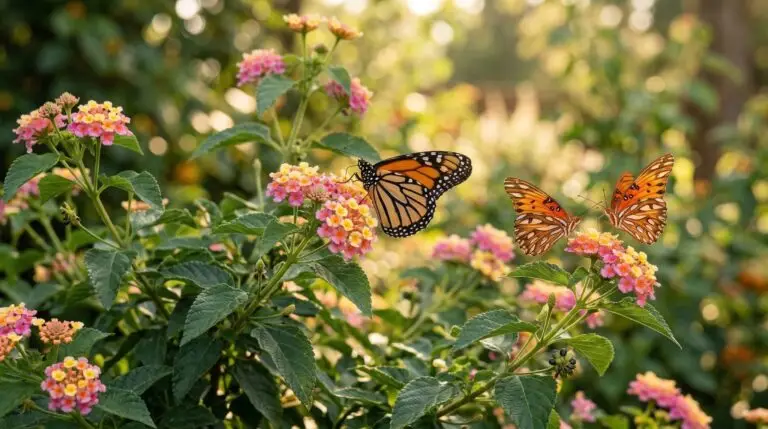
Rosemary, lavender, and russian sage round out the classic Mediterranean-bed trio, all woody-based, all genuinely drought tolerant once established, and all willing to sit in soil most flowering perennials would consider too lean. Lavender in particular is worth calling out by name: it is one of the most commonly mismatched plants in companion-planting content, paired constantly with moisture-loving shrubs it has no business sitting next to, so seeing it work as a real, sourced match here is the positive mirror image of that mistake. Sedum and ornamental grasses like purple fountain grass or Mexican feather grass do the same conditions-matching at a smaller, finer scale, sedum’s succulent rosettes tolerating rock-garden soil most plants would call inhospitable, the grasses supplying a thread-fine texture that sets off lantana’s dense clustered florets better than anything with broad leaves could. Coreopsis and coneflower extend the pollinator angle lantana is genuinely known for: lantana is a documented monarch and swallowtail nectar source, heavily used by migrating monarchs refueling on their way south, and stacking it with other full-sun nectar plants turns one bed into a real waystation rather than a single flowering shrub with visitors passing through.
What not to plant near lantana
The honest version of this section starts with the mirror image of everything above: shade-and-moisture perennials, ferns, hostas, impatiens, astilbe, want the opposite of what lantana wants on both axes at once. They need shade instead of direct sun, and they need soil that stays consistently damp instead of drying out between waterings, so forced into the same bed, one plant is always being kept wrong to suit the other. Either the shade-lover gets leggy and stops flowering trying to survive lantana’s sun, or lantana’s roots sit wet long enough to rot trying to keep the shade-lover’s soil damp. Hydrangea deserves its own line rather than folding into the generic moisture-lovers bucket, because it is named often enough in searches to be worth calling out specifically: hydrangea wilts fast once its soil dries and wants steady, even moisture, the precise opposite of lantana’s lean, infrequently-watered preference, and watering a shared bed to hydrangea’s schedule is a documented route to root rot in lantana.
Poor drainage and dense overhead shade belong on this list too, even though they describe a siting mistake more than a companion-pairing one. A foundation bed under eaves, or ground shaded by a tree canopy that also holds moisture, will struggle to keep lantana alive no matter what grows next to it, so the fix is choosing a different spot before choosing a different neighbor. Aggressive spreaders like mint round out the list for a more familiar reason: underground runners invade the lean, undisturbed soil lantana actually wants left alone, competing for the same limited water any drought-tolerant plant depends on. This one is closer to a general garden-bed caution than a lantana-specific finding, worth naming but not treated as gospel.
One more honesty note belongs here, separate from companion-pairing mechanics but load-bearing for this particular flower: lantana camara is toxic if eaten. NC State Extension and Cornell’s poisonous plants database both list unripe berries and foliage as toxic to dogs, cats, horses, cattle, sheep, and children, with symptoms ranging from vomiting and diarrhea to, in severe livestock cases, liver damage from the plant’s lantadene compounds. This is not a reason to avoid growing lantana, which remains one of the most widely planted, genuinely useful heat-and-drought garden flowers sold. It is a reason to site it away from play areas, pet-grazing spots, or pasture edges where berries within reach are actually a risk, the same precaution any gardener already takes with a handful of other common ornamentals.
Do they like the same conditions?
The rule that filters this whole list is simple and gets tested against every candidate above: full sun for at least six hours, and soil that is allowed to dry between waterings. Lantana tolerates poor soil, sand, clay, shallow rocky ground, better than almost anything else sold as a flowering bedding plant, which is exactly why rich, amended, frequently-watered beds work against it rather than for it. Clemson HGIC’s guidance is direct on this point: lantana grown in shade becomes susceptible to powdery mildew, and overwatering or poor drainage is a bigger risk to the plant than underwatering ever is. That single fact reorders how a lot of popular companion advice should be read. Anything promoted as a "moisture-loving contrast plant" for lantana, hydrangea, most ferns, most shade perennials, is working against the plant’s actual biology, not with it, no matter how the color or texture pairing photographs.
This is also where lantana’s regional honesty note belongs, since it changes what "good companion planting" even means depending on where the reader gardens. In Florida, Texas, and similar warm-winter states, Lantana camara and its close relative Lantana strigocamara are documented invasive species, capable of producing viable seed and naturalizing into wild areas; UF/IFAS lists it as one of the more troublesome landscape escapees in Florida specifically and now recommends sterile, non-seeding cultivars, sold under names like the Bloomify or Luscious Royale Red Zone series, for exactly this reason. A gardener in one of those states choosing companions should also be checking that the lantana itself is a sterile cultivar, not just picking pretty partners. A gardener growing lantana as a cold-killed annual, or overwintering it in a container the way most of the country does, faces essentially none of that naturalization risk, since a hard frost each year removes any chance of the plant setting seed outdoors. Both readers are gardening the same flower under genuinely different rules, and a page that only speaks to one of them is incomplete.
How to plant them together
Space every true companion 12 to 24 inches from lantana’s base, enough room that roots aren’t competing for the same small pocket of dry soil, less than that and even a drought-tolerant pairing starts to strain. Rosemary and russian sage need the wider end of that range, 18 to 30 inches, since both grow into substantial woody shrubs within a couple of seasons and will otherwise crowd out lower plants nearby. Salvia and verbena tolerate the tighter spacing, 10 to 18 inches, since neither develops an aggressive root system and both are commonly interplanted at exactly that density in real xeriscape beds. Layer by height and form rather than filling the bed with everything blooming at once: taller spikes like salvia, lavender, and russian sage behind or beside lantana for the vertical structure it can’t produce on its own, sedum and low grasses at the front edge where their fine texture reads clearly against lantana’s dense clustered blooms.
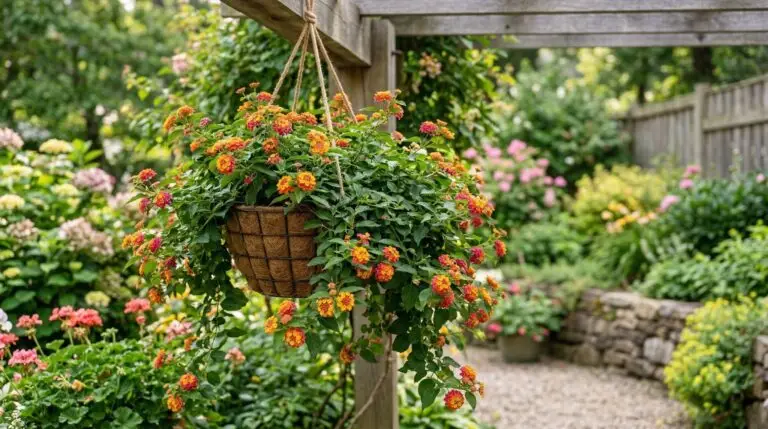
In containers, trailing lantana varieties are one of the most commonly sold thriller-or-filler anchor plants for exactly this reason, and the same full-sun, dry-between-waterings rule still governs what goes in the pot with it. Verbena works as the classic spiller, trailing over the rim without asking for more water than lantana already gets. A single upright salvia or a small rosemary works as height at the pot’s center if lantana itself is the spreading, low-mounding element rather than the anchor. Whatever the setting, resist the instinct to water more generously to accommodate a thirstier-looking companion; every plant on the true companion list here is drought tolerant once its roots are established, and overwatering the whole container risks the same root rot that threatens lantana planted in the ground.
Does companion planting actually work for lantana?
Some of it, genuinely, and some of it is closer to a design habit dressed up as horticultural advice, which is worth separating plainly. The shared-conditions matches are the strongest claim this page makes: salvia, verbena, rosemary, lavender, russian sage, and sedum all want the same full sun and lean, fast-draining soil lantana does, a real and verifiable overlap documented independently by Clemson HGIC, NC State Extension, and Utah State University Extension rather than a marketing line repeated across garden blogs. The pollinator argument is similarly real and specific to this flower: lantana is a documented nectar source for monarchs, swallowtails, and hummingbirds, named specifically in university butterfly-garden guidance from Texas A&M AgriLife, so stacking it with other full-sun nectar plants like coreopsis or coneflower is a genuine functional upgrade, not just more flowers for the sake of more flowers.
Where the evidence gets thinner is anywhere a companion is credited with actively protecting lantana or improving its bloom through some mechanism beyond simply not fighting it for light and water. There is no meaningful allelopathy case for lantana, no neighboring plant chemically repels its pests or boosts its flowering, so claims along those lines are folklore dressed as fact, listed here because people search for them, never treated as proven. The two facts that matter most for this specific flower, and that most companion-planting content skips entirely, are not about pairing mechanics at all: lantana is genuinely toxic if eaten, and Lantana camara is a documented invasive species in several warm-climate states. Neither fact is a reason to avoid growing it. Both are reasons to plant it with the same informed care any gardener already applies to a handful of other common, beloved, imperfect garden flowers, choosing a sterile cultivar where naturalization is a real regional risk, and siting it where pets and kids aren’t grazing on landscape berries.
Frequently asked questions
What is the best companion plant for lantana?
Salvia and verbena are the two most consistently matched partners, sharing lantana’s exact full-sun, drought-tolerant, well-drained-soil profile while adding vertical spikes or ground-level trailing habit that lantana’s low mounded clusters can’t provide on their own.
What should you not plant near lantana?
Shade-and-moisture perennials, ferns, hostas, impatiens, astilbe, and moisture-loving shrubs like hydrangea are the clearest mismatch, since both axes of their needs, light and water, run opposite to what keeps lantana healthy.
Is lantana toxic to dogs and cats?
Yes. NC State Extension and Cornell’s poisonous plants database both list unripe berries and foliage as toxic to dogs, cats, and other pets, typically causing vomiting and diarrhea in smaller animals; site the plant away from areas where pets graze on landscape berries rather than avoiding it altogether.
Is lantana invasive?
Lantana camara is a documented invasive species in Florida, Texas, and similar warm-winter states, where it can set viable seed and naturalize. Gardeners in those regions should look for sterile, non-seeding cultivars; gardeners growing it as a cold-killed annual or overwintered container plant face essentially no naturalization risk.
Can lantana grow in a container with other flowers?
Yes, trailing lantana is a common thriller-or-filler anchor for mixed containers. Pair it with verbena as a spiller and keep the whole pot on lantana’s dry-between-waterings schedule rather than watering to suit a thirstier-looking neighbor.
Does lantana attract pollinators?
It is a well-documented nectar source for monarchs, swallowtails, and hummingbirds, especially valuable late in the season when migrating monarchs use it to refuel; pairing it with other full-sun nectar plants like coreopsis or coneflower extends that support across more of the growing season.
Sources
- NC State Extension Gardener Plant Toolbox, Lantana camara
- Clemson Cooperative Extension (HGIC), Lantana
- UF/IFAS Gardening Solutions, Lantana
- UF/IFAS Extension Nassau County, Invasion of the Landscape Snatchers: Lantana
- Wisconsin Horticulture Extension, Lantana
- Clemson Cooperative Extension (HGIC), Verbena
- Clemson Cooperative Extension (HGIC), Salvia
- NC State Extension Gardener Plant Toolbox, Salvia rosmarinus (Rosemary)
- Utah State University Extension, How to Grow English Lavender in Your Garden
- Wisconsin Horticulture Extension, Russian sage
More About Lantana
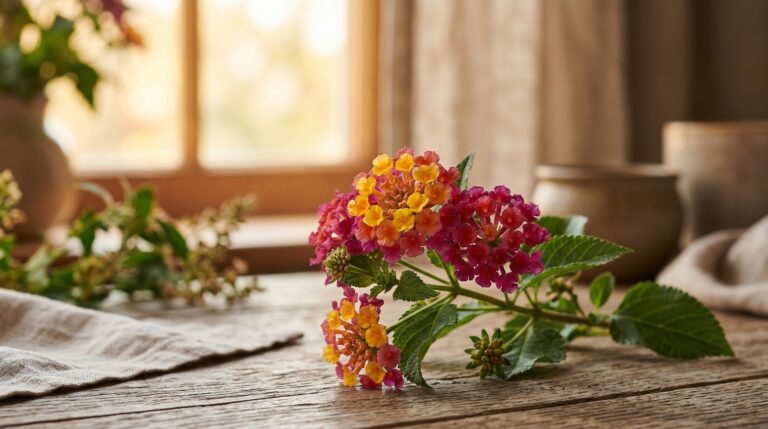
Why lantana flowers change color as they age and the science behind the show
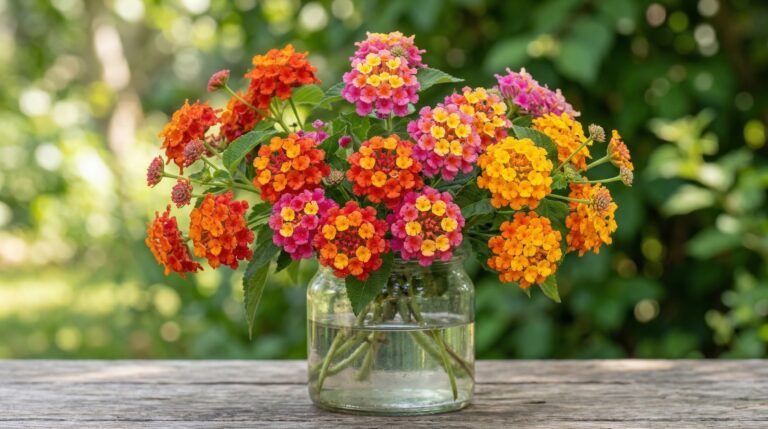
Best lantana varieties from multicolor Confetti to pure white Nivea
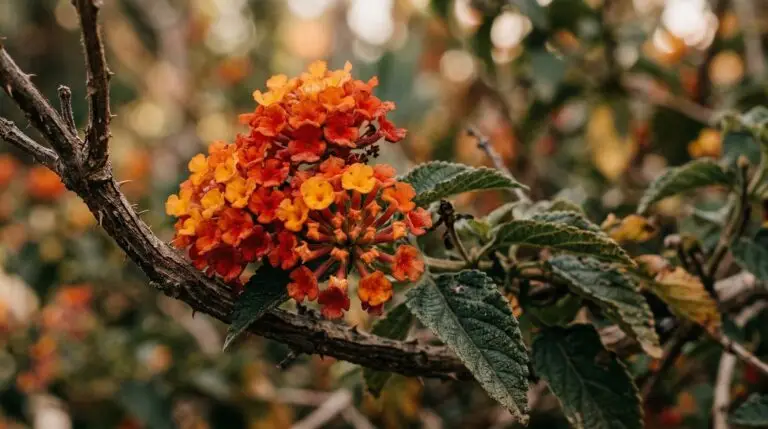
Lantana flower meaning and the resilient beauty of this tough tropical bloomer
Lantana as a low-maintenance ground cover for slopes and hard-to-mow areas
Overwintering lantana plants indoors for saving your favorite varieties until spring
Is lantana invasive and how to grow it responsibly in warmer climates
Growing lantana in containers and hanging baskets for summer patio color
How to grow lantana for non-stop color in the hottest driest spots in your garden
Lantana as a butterfly magnet and the pollinator garden star of summer heat