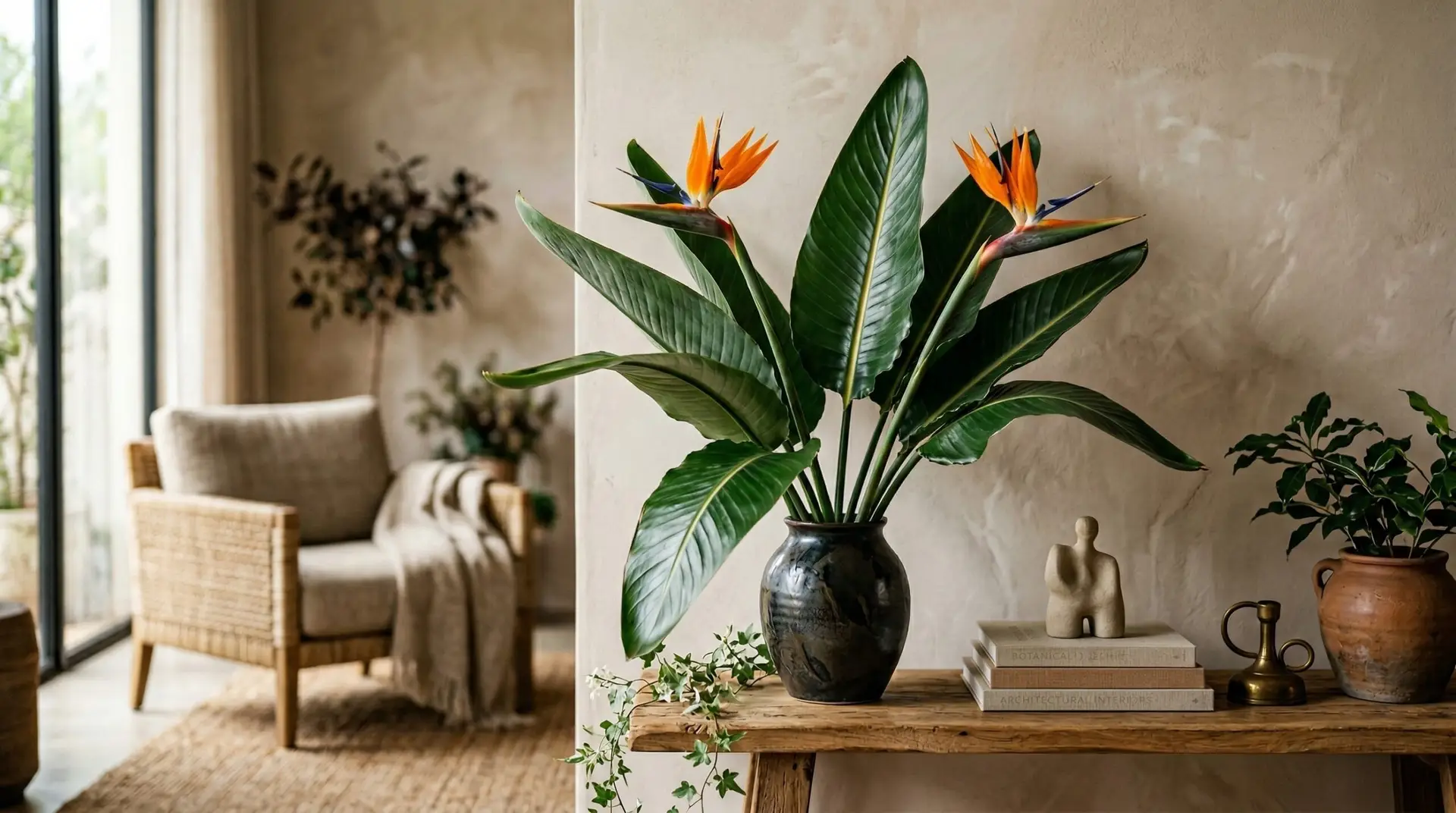
I wish you could see the way the early morning light moves across the corner of this room, catching the massive, paddle-shaped leaves of the bird of paradise. The foliage is a deep, dusty blue-green, covered in a faint natural wax that feels smooth and cool under your fingertips. As the sun rises higher, the light filters through the sheer curtains and illuminates the thick, fibrous veins running down the center of each leaf. The plant stands nearly seven feet tall, its thick stalks emerging from the soil like a cluster of green bamboo before arching outward in a slow, deliberate canopy. You can hear a faint rustle when the air conditioning kicks on, the heavy leaves brushing against each other with a sound like thick paper. This is not a delicate plant that requires peering closely to appreciate. It commands the space entirely, anchoring the room with a weight and scale that transforms a simple white corner into a living greenhouse.
The living architecture of giant foliage
When you bring a bird of paradise into a modern interior, you are bringing in a piece of living sculpture. The stems rise with a rigid, architectural posture, holding those massive leaves aloft like green sails catching an invisible wind. Older leaves naturally split along their lateral veins as they age, creating feathered, irregular edges that add a rough, organic texture to the otherwise smooth silhouette. This tearing is completely natural, a response to wind in their native environment, and indoors it prevents the plant from looking like a piece of molded plastic. While you might use the glossy, heart-shaped foliage of an Anthurium for a compact splash of color on a side table, the bird of paradise requires the floor, demanding vertical space to stretch its long neck. The leaves fan out in an alternating pattern, creating a flat plane of foliage that looks different from every angle in the room. Walking past it feels like passing a small tree, its canopy casting a wide, cooling shadow over the floorboards.
The way this plant interacts with light changes the entire mood of a room throughout the day. In the bright, direct sun of midday, the newest leaves appear almost translucent, glowing with a bright, acidic lime green that contrasts sharply with the leathery, dark emerald of the mature foliage. The smooth, cylindrical stems catch the light on their curves, highlighting the subtle vertical ridges that run from the soil line to the base of the leaf. As the afternoon wanes, the real transformation happens against the blank canvas of a pale wall. The setting sun projects the sharp, oversized silhouette of the bird of paradise across the plaster, creating a moving shadow play that stretches and warps as the light fades. Dusting these broad leaves with a damp cloth every few weeks becomes a sensory ritual, revealing the true depth of their color while allowing them to photosynthesize efficiently. You can smell the faint, green scent of crushed plant matter when you wipe away the gray film of household dust, restoring the leaf surface to its natural, muted sheen.
Grounding the plant in modern spaces
The bold, clean lines of a bird of paradise make it a natural companion for mid-century modern furniture and minimalist design. Picture the warm, honeyed tones of a teak credenza or the worn, buttery surface of a caramel leather chair placed just beneath the arching green canopy. The plant softens the hard geometric edges of modern architecture without introducing the visual clutter of a bushy, trailing vine. To maintain this clean aesthetic, the choice of the vessel is just as critical as the placement of the plant. A heavy, matte white ceramic cylinder or a rough, porous concrete basin provides the visual weight needed to balance the towering foliage above. You want a pot that feels grounded and permanent, something with a texture you can run your palm over, feeling the grit of the stone or the chalky finish of unglazed clay. Unlike the soft, moisture-loving stems of a Calla Lily that look best in smooth, glazed porcelain, the thick, woody base of the bird of paradise demands a container with a raw, earthy presence.
Caring for such a massive piece of living decor requires tuning into the physical cues the plant gives you. You will know the soil is ready for water when you press your fingers an inch below the surface and feel only dry, loose dirt that falls away from your skin without leaving a smudge. When you finally pour water from a heavy metal can, listen for the deep, hollow sound of moisture seeping through the dry potting mix, followed by the rich, earthy scent of wet soil that rises into the room. The roots of a bird of paradise are thick and fleshy, storing water efficiently, which means they prefer a thorough soaking followed by a long, dry resting period. If the edges of those giant leaves begin to crisp and turn a brittle, papery brown, the air in the room is too dry, begging for a fine misting of water in the early mornings. Overwatering reveals itself in a soft, yellowing fade that creeps up from the base of the stem, a sign that the roots are suffocating in wet earth. Learning this rhythm of wet and dry, of heavy pots and light pots, connects you physically to the life cycle happening in the corner of your living room.
A quiet presence in the evening hours
As evening falls and the artificial lights of the house click on, the bird of paradise takes on a different kind of character. The deep green leaves recede into the shadows, becoming dark, sculptural shapes that frame the windows and doorways. The sheer size of the plant makes it feel like a quiet companion in the room, a living presence that breathes and grows alongside you. While you might place a delicate Moth Orchid under a bright reading lamp to admire its pale blooms, the bird of paradise is content to stand in the dim periphery, its massive leaves absorbing the ambient light. The smooth stems cool down as the night air settles, feeling almost like cold marble if you brush against them in the dark. The faint smell of damp earth lingers near the floor, a subtle reminder of the garden brought indoors. When you finally turn off the last lamp, the towering silhouette remains visible against the faint blue glow of the nighttime window, a perfect, still portrait of nature resting in the quiet house.
More About Bird of Paradise
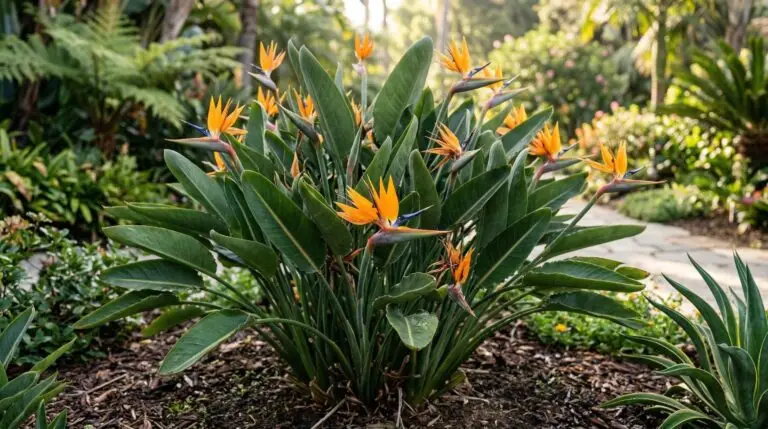
Growing bird of paradise outdoors in zones 9 through 11 for year-round tropical color
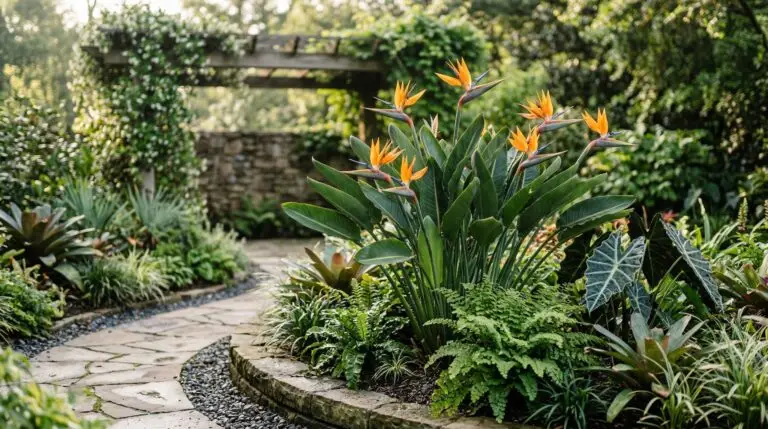
Using bird of paradise flowers in dramatic tropical floral arrangements
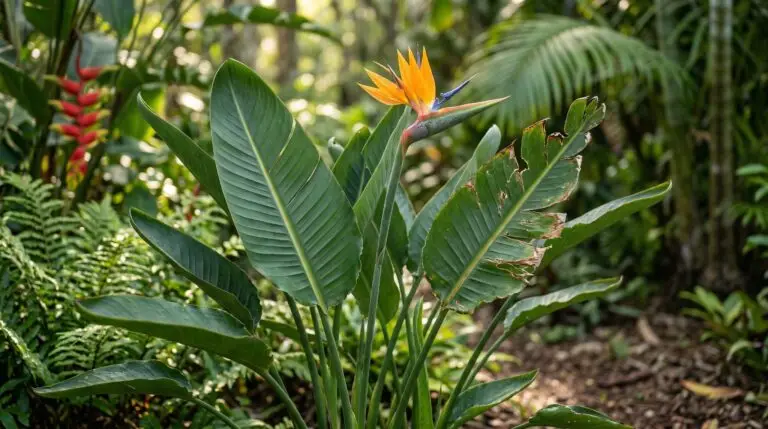
Bird of paradise leaf splitting and curling and what your plant is trying to tell you
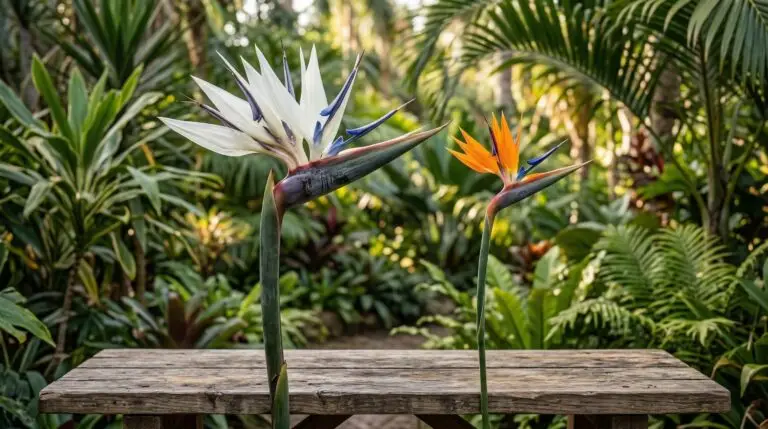
Giant white bird of paradise versus orange bird of paradise and which to choose
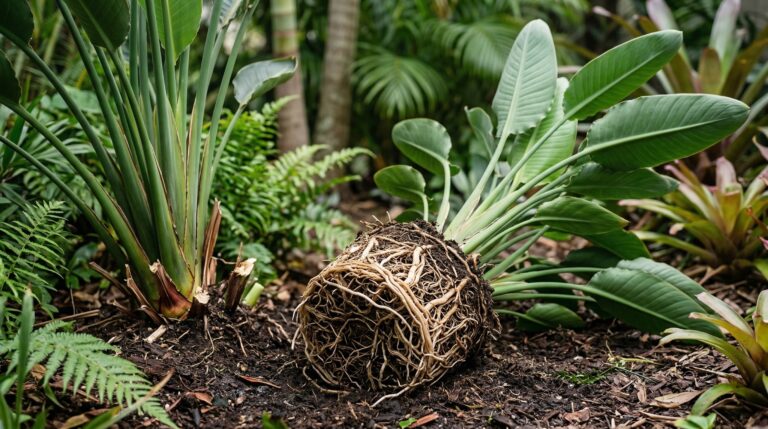
How to divide bird of paradise to share with friends or fill your garden
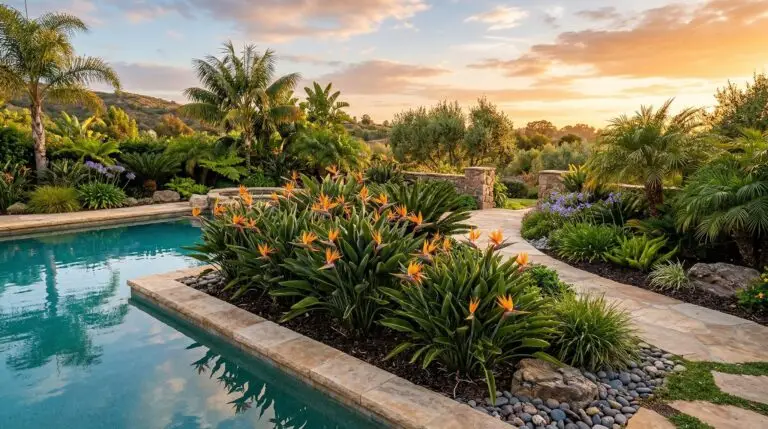
Bird of paradise in tropical landscape design for a resort-style backyard
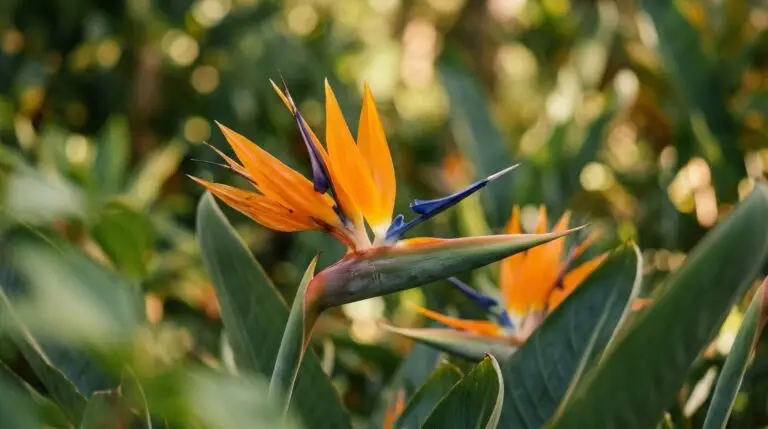
Bird of paradise flower meaning and its connection to freedom and paradise
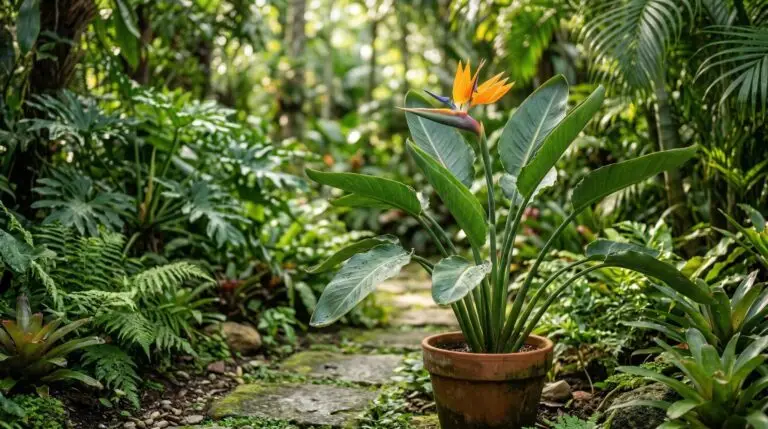
How to grow bird of paradise indoors and get it to bloom in your living room