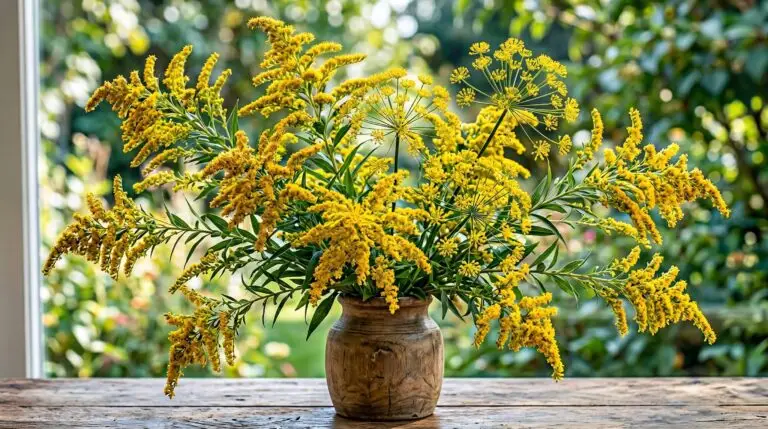
What to plant with goldenrod
The pairing · pick a flower
All goldenrod companions
What not to plant near goldenrod
The best companions for goldenrod, explained
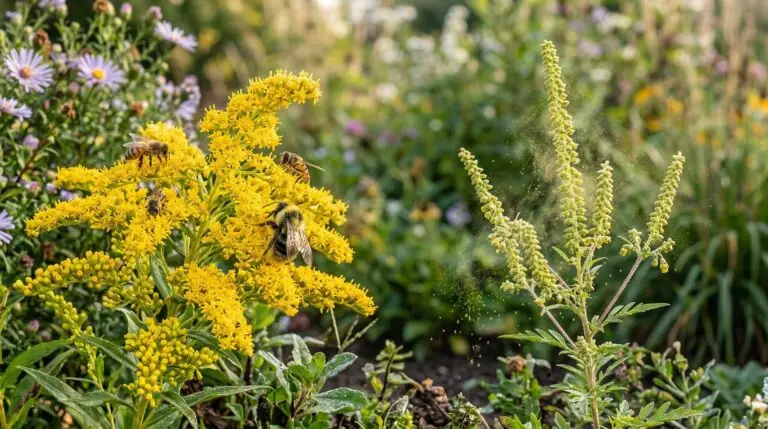
Before any companion question, goldenrod deserves two honest answers. It will not give you allergies: it is insect-pollinated, and its pollen grains are too large and sticky to become airborne, unlike wind-pollinated ragweed, which blooms at the same time and produces the actual allergen most people mistakenly blame on goldenrod’s showy yellow spikes. And it will spread. Canada goldenrod grows by both rhizome and seed, forms wide colonies over a few seasons, and university plant profiles describe it plainly as weedy and typically not suited to a tidy mixed border without some management. Neither fact should scare you off planting it. Native goldenrod is one of the best fall nectar plants an American garden can offer, feeding monarch butterflies fueling up for migration and bumblebee queens storing energy for winter at a point in the season when almost nothing else is still blooming, and the companions below are chosen partly for how well they share that job with it.
Because goldenrod is the rare host plant that can crowd out its neighbors rather than the other way around, the strongest partners here share two traits: the same full sun and forgiving soil goldenrod already tolerates, and enough of their own root vigor or clumping habit to hold ground next to it instead of losing the argument. New England aster is the standout pairing for exactly that reason, its purple against goldenrod’s gold being the fall combination every source reaches for first, and the color trick works because both are genuinely documented late-season nectar sources sharing one bloom window, not just a photogenic accident. Little bluestem and switchgrass do the structural work color alone can’t: fine, upright native grasses in the same lean, sunny conditions, with switchgrass explicitly noted in university guidance as a companion to prairie perennials generally and little bluestem specifically named alongside goldenrod itself. Purple coneflower and black-eyed Susan round out the front-to-mid layer, both tough, self-sufficient natives that share goldenrod’s tolerance for average soil and extend the bloom calendar on either side of its peak.
Joe Pye weed and ironweed bring the height goldenrod’s own habit doesn’t supply, tall native perennials blooming on the same late-summer clock in magenta and dusty mauve, best sited where the bed holds a touch more moisture than goldenrod strictly needs. Butterfly milkweed closes the pollinator story from the other direction: it blooms earlier in summer, well ahead of goldenrod’s fall show, and pairing the monarch’s only larval host plant with one of its best fall nectar sources builds a genuine season-long argument for a wildlife garden, not just a design flourish. Blazing star’s spiky purple form and feather reed grass’s strict vertical clump, both worth trying too among purple flowers, are common nursery combination advice rather than extension-documented pairings, but honest, useful options at the good tier.
What not to plant near goldenrod
Flip the usual companion-page question here. Most flowers need protecting from an aggressive neighbor; goldenrod is the aggressive neighbor, and the real avoid list is about protecting other plants from it, not the reverse. Small, slow-establishing, or shallow-rooted perennials planted right at goldenrod’s base, dwarf sedums, low groundcovers, a first-year division of anything delicate, are the genuine casualties. Give them real distance, at least 24 inches, or a buried root barrier between the two, because two or three seasons of unchecked rhizome spread and self-seeding is enough for goldenrod to win the space outright. There is no meaningful chemical warfare case here the way there is for black walnut against sensitive species elsewhere; this is straightforward physical competition for root room and light, not allelopathy.
Full shade near large shrubs or trees is worth naming even though it isn’t a plant-to-plant pairing, because it’s exactly the placement an anxious gardener might reach for to try to contain goldenrod’s spread, and it backfires. Goldenrod tolerates light shade but not full shade, so tucking it into a dark corner just produces a weak, floppy plant that keeps creeping anyway, only with less to show for it. The one genuine disease caution worth carrying is powdery mildew, rust, and leaf spot, all confirmed on goldenrod itself by university plant profiles, which makes crowding it tightly against other mildew-prone late-summer perennials, garden phlox being the classic offender in this exact plant community, a real if compounding risk rather than a myth. That specific goldenrod-and-phlox pairing claim isn’t directly sourced anywhere; it’s inferred from each plant’s individually documented susceptibility, so treat it as a caution to give any mildew-prone neighbor airflow, not a hard rule against phlox by name. If your soil runs lean, dry, or poor, that isn’t an avoid at all: goldenrod handles it fine, and a drier site is genuinely one of the few honest tools for slowing its spread, so there’s no real soil compromise to negotiate here.
Do they like the same conditions?
Full sun and tolerant soil are the two filters every companion on this page has to clear, and goldenrod makes that an easier bar than most hosts do. Light is the one non-negotiable: full sun for the best bloom and a sturdy upright habit, light shade tolerated with some drop in vigor, full shade simply not workable. Soil pH is close to a non-issue, since goldenrod adapts across acid, neutral, and alkaline ground, and soil texture is nearly as forgiving, tolerating clay, loam, and sandy conditions rather than demanding one ideal mix. Water is where goldenrod’s flexibility becomes genuinely unusual among companion-page hosts: medium moisture is the stated preference, but the plant does fine in dry soil, and that dryness is not just tolerated, it’s a legitimate way to keep the plant’s spread somewhat in check, which flips the usual moisture-matching logic most companion pages run on.
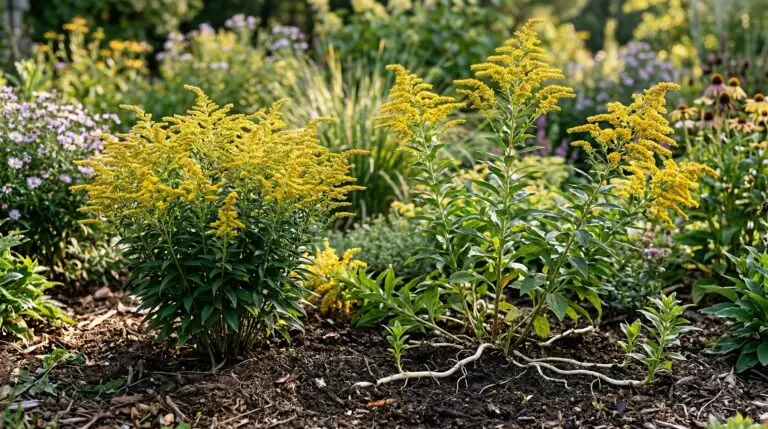
What actually governs which companions belong here isn’t the conditions ruler at all, it’s the root system underneath it. Goldenrod spreads by shallow, actively creeping rhizomes as well as by seed, and university plant profiles describe it as weedy and better suited to a naturalized meadow setting than a tightly managed mixed border without some intervention. That’s the fact this page is built around: spacing and containment matter more here than soil chemistry does for almost any other flower in this system. It’s also worth being precise about which goldenrod you mean, since the species behind this page, Canada goldenrod (Solidago canadensis), spreads noticeably more than several popular ornamental-bred cultivars. ‘Fireworks’ and similar Solidago rugosa selections are described directly by university extension sources as clumping, non-aggressive, and well-behaved in a garden bed, spreading slowly enough that a small border genuinely doesn’t need the same spacing discipline the wild species does. If your bed is small and tidy rather than a naturalized meadow corner, a clumping cultivar solves the spread question before it starts, and every companion pick on this page still applies to it.
How to plant them together
Site goldenrod first, since its placement decides everyone else’s. Full sun, and enough open ground around it to either let the rhizomes run into a genuinely naturalized area or to plant a root barrier 10 to 12 inches deep if it’s going into a mixed border, since that’s roughly the depth its shallow spreading roots actually occupy. Layer taller companions, Joe Pye weed and ironweed at 5 to 8 feet, behind goldenrod’s own 2 to 6 foot spread, with New England aster and little bluestem at a similar mid-height alongside it rather than in front, where the color and texture pairing reads clearly without either plant shading the other out. Purple coneflower, black-eyed Susan, and butterfly milkweed suit the front-to-mid layer, all sharing goldenrod’s tolerance for lean soil and needing no special amending to sit near it.
Space with goldenrod’s spread habit as the deciding factor, not just aesthetics. Keep small or slow-establishing perennials at least 24 inches from any goldenrod clump, and divide a mature planting every two to three years if you want to keep the wild species contained rather than let it colonize the bed on its own schedule; a clumping cultivar like ‘Fireworks’ needs this far less often. Give any mildew-prone neighbor, garden phlox especially, 18 to 24 inches of open air on top of that spacing, since goldenrod itself can develop powdery mildew and crowding compounds the risk for both plants. In containers, choose a clumping cultivar over the wild species by default, since a pot has no room to negotiate a running rhizome, and pair it with an equally sun-loving, drought-tolerant companion like butterfly milkweed rather than anything that wants steady moisture.
Does companion planting actually work for goldenrod?
Some of what gets repeated about goldenrod is solid, university-documented fact, and some is closer to nursery habit worth naming honestly rather than dressing up as settled science. The strongest claims on this page are the shared-conditions matches, full sun and tolerant soil confirmed for goldenrod, aster, coneflower, black-eyed Susan, milkweed, Joe Pye weed, and ironweed alike by university extension sources, and the pollinator argument, which is specific and real rather than a generic "good for bees" gesture. Multiple university and conservation sources independently name goldenrod among the most important fall nectar plants for monarch migration and for native bees storing up reserves before winter, which is a genuinely different and stronger claim than most companion-page pollinator language.
Where the evidence thins is in naming one specific ornamental grass or one specific pairing as the definitive goldenrod companion. Little bluestem earns a direct citation for that; blazing star and feather reed grass are common, plausible, widely sold combinations without a university source naming the pairing outright, and they’re labeled accordingly rather than inflated to match the stronger picks. The goldenrod-and-phlox mildew caution is real mechanism, inferred pairing, worth a spacing precaution rather than a hard rule. And the two fears that keep people from planting goldenrod at all deserve the clearest verdict of anything on this page: the allergy blame is a documented myth, not a matter of degree, and the spread concern is real but manageable, either by choosing a clumping cultivar for a small bed or by giving the wild species room, a barrier, and a few minutes of division every couple of years for a naturalized corner.
Frequently asked questions
Does goldenrod cause allergies?
No. Goldenrod is pollinated by insects, and its pollen grains are heavy and sticky, not built to travel on wind the way an allergen needs to. Ragweed, which blooms at the same time and has inconspicuous flowers most people never notice, is the actual wind-pollinated culprit behind fall hay fever.
Will goldenrod take over my garden?
The wild species, Canada goldenrod, spreads by rhizome and self-seeding and is genuinely described by university sources as weedy and better suited to a naturalized meadow than a tidy border without management. A clumping ornamental cultivar like ‘Fireworks’ avoids the problem almost entirely, since it spreads slowly and stays in a controlled mound.
What can I plant in front of goldenrod?
Purple coneflower, black-eyed Susan, and butterfly milkweed all suit the front-to-mid layer, sharing goldenrod’s tolerance for lean, well-drained soil and needing no special amending to sit close to it.
What should you not plant near goldenrod?
Small, slow-establishing, or shallow-rooted perennials directly at its base are the real risk, since goldenrod’s spread can crowd them out within a couple of seasons. Full shade is also worth avoiding as a containment shortcut, since it weakens the plant without actually stopping the spread.
Is goldenrod good for pollinators?
Yes, unusually so. It’s repeatedly named among the most important fall nectar sources for migrating monarch butterflies and for native bees building up reserves before winter, at a point in the season when few other garden flowers are still blooming.
Sources
NC State Extension Gardener Plant Toolbox, Solidago canadensis · Missouri Botanical Garden Plant Finder, Solidago canadensis · Illinois Extension, Autumn allergies: don’t blame goldenrod · Illinois Extension, Goldenrods and asters are the stars of fall · Wisconsin Horticulture (UW-Madison Extension), Little Bluestem · Wisconsin Horticulture (UW-Madison Extension), Butterfly Weed · NC State Extension Gardener Plant Toolbox, Solidago rugosa ‘Fireworks’ · University of Vermont Extension, Phlox and Powdery Mildew Management
More About Goldenrod
Goldenrod does not cause allergies and why ragweed is the real culprit
How to grow goldenrod for brilliant golden plumes that light up the fall garden
How to keep goldenrod from spreading aggressively in cultivated garden beds
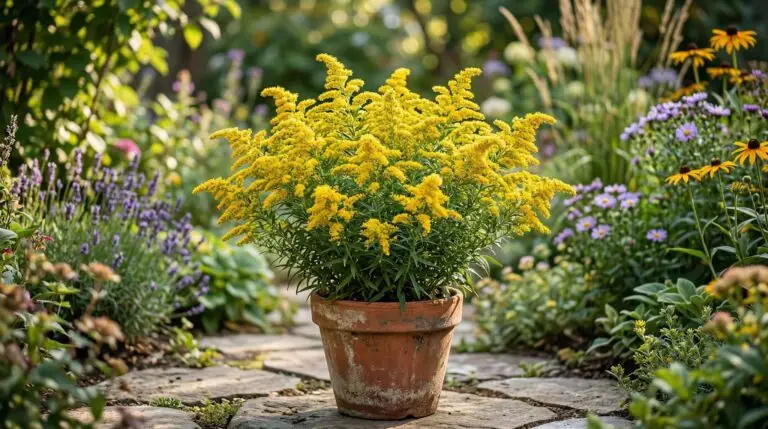
Growing goldenrod in containers for fall patio color when everything else is fading
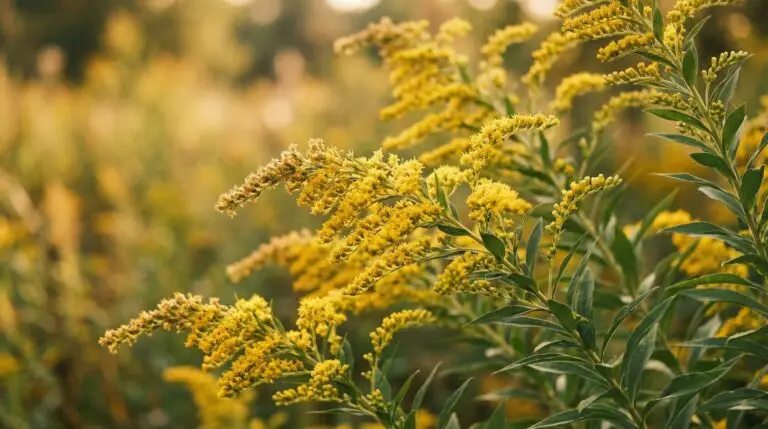
Goldenrod flower meaning and the American wildflower that nearly became the national flower
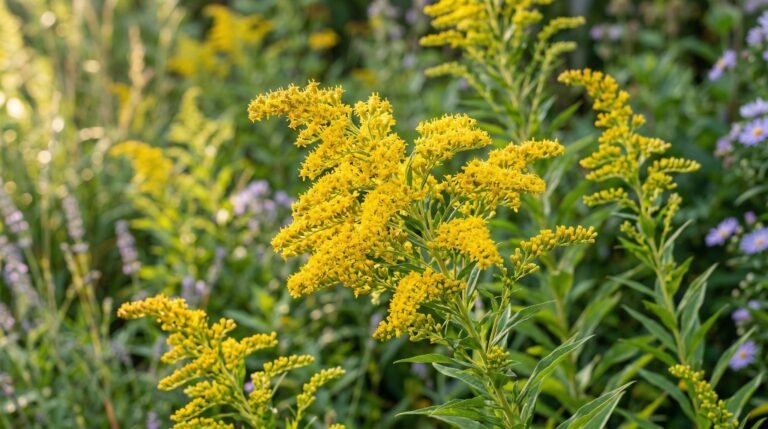
Goldenrod in dried flower arrangements for warm autumn bouquets that last all winter
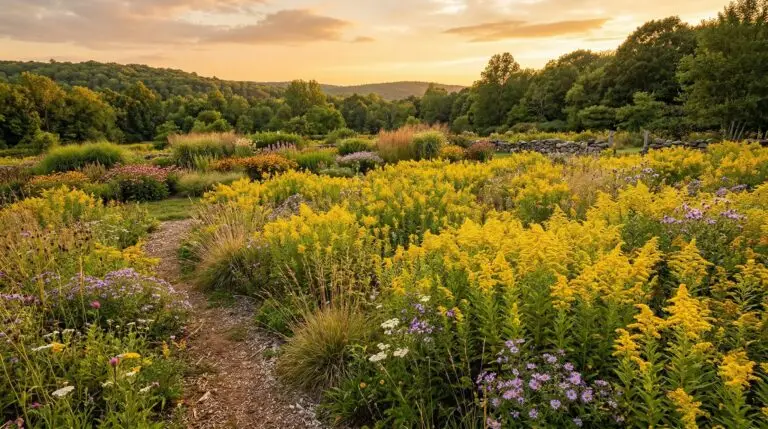
Goldenrod for naturalizing in meadows and the wildflower garden it was born for