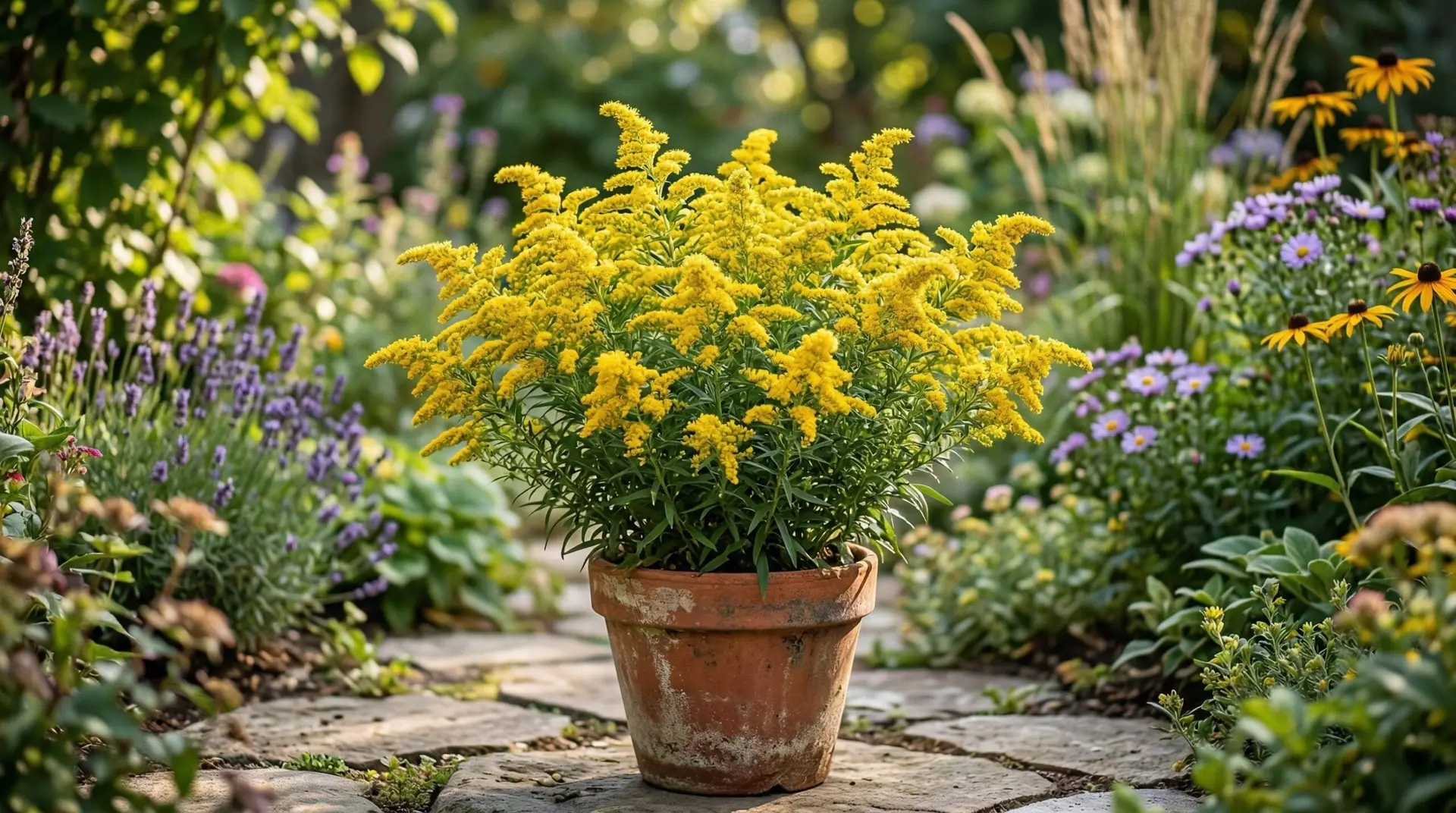
Late August arrives and the patio pots that looked so fresh in May usually start looking tired, leggy, and thoroughly exhausted by the heat. The petunias are getting stringy, the geraniums have slowed down, and the whole space begs for a transition into autumn. This is the exact moment when bringing goldenrod to the patio makes all the difference for late season color. After trying dozens of different fall flowers over the years, growing goldenrod in pots is the one approach that consistently wakes up a fading garden. It brings a dense, electric yellow that stands up to the cooling temperatures and keeps the pollinators visiting right up until the first hard frost. The trick is treating it like a proper container plant rather than just digging up a giant weed from the roadside and expecting it to behave in a ten inch plastic pot.
Contents 4 sections
Choosing the right goldenrod for patio pots
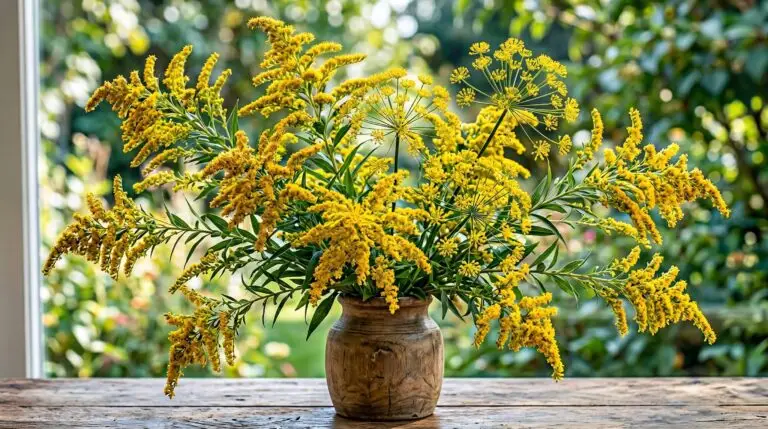
Wild goldenrod gets massive, often pushing five or six feet tall, and putting something that large into a standard container usually ends with the pot blowing over in the first strong autumn breeze. For container goldenrod, selecting compact varieties is the only way to keep the plant upright and looking intentional on a porch or balcony. Varieties like Little Lemon and Golden Baby stay under two feet tall and form neat, bushy mounds that fit perfectly into standard decorative planters. These shorter types still produce the exact same dense flower spikes as their wild cousins, but their root systems are much happier confined to a limited space. Finding these compact types sometimes requires a trip to a local nursery rather than a big box store, but they are relatively cheap and well worth the extra effort, especially since their foliage tends to stay greener and cleaner through the late summer humidity. When shopping, look for plants that are just starting to form green buds rather than ones in full bloom. Buying plants in the budding stage ensures they will establish better in their new pots and give a much longer display of color on the patio.
Soil and water needs for container goldenrod
Goldenrod is practically indestructible out in the yard, but any plant trapped in a pot relies entirely on the gardener for its survival. A basic, inexpensive potting soil mixed with a few handfuls of perlite or coarse sand provides the fast drainage these plants need to thrive. They absolutely hate sitting in wet, soggy soil, which will rot their roots long before the winter cold gets a chance to damage them. Using unglazed terra cotta pots also helps pull excess moisture away from the roots, though heavy duty plastic containers work just fine if they have plenty of holes drilled in the bottom. Watering is a delicate balance, especially early in the fall when the afternoon sun still carries some serious heat, so the top inch of the soil should feel completely dry to the touch before reaching for the watering can. The water must run freely out of the drainage holes at the bottom every single time you water. Gardeners in the South may find themselves watering these pots every other day during September, while those in northern zones might stretch that to once a week as the days shorten and cool down. Goldenrod requires very little fertilizer, so skipping the expensive liquid feeds and just letting the fresh potting soil do the work is the best approach.
Fall container combinations that work
A pot filled entirely with yellow goldenrod is perfectly fine, but mixing it with other late season bloomers creates a much richer display for the front porch. The bright yellow spikes pair beautifully with the deep purples and blues of a classic aster, creating a complementary color scheme that defines the autumn season. When building these mixed pots, put the goldenrod in the center or toward the back, because it will usually grow slightly taller and more upright than its companions. Tucking a rust colored or dark red chrysanthemum around the edges of the same pot anchors the arrangement with solid mounds of color. Do not worry about crowding the plants too much for these late season displays, because they are not going to grow much larger before winter sets in. Pack the root balls snugly together to get an instantly full look, but remember to check the moisture levels daily since all those roots will drink up water quickly. Adding a cheap trailing plant like English ivy over the rim of the pot softens the whole arrangement and hides the plastic edges.
Keeping potted goldenrod alive through winter
Many people toss their fall patio plants into the compost pile after the first freeze, but goldenrod is a tough perennial that can easily survive the winter with a little basic care. The biggest danger to perennials in containers is the freeze and thaw cycle, where the soil repeatedly expands and contracts, tearing the roots apart. In colder northern zones, leaving the pots completely exposed on a concrete patio will almost certainly kill the roots, no matter how hardy the plant is in the ground. Moving the containers into an unheated garage or sliding them up against the foundation of the house provides just enough shelter to keep the temperature relatively stable. The plant will die back completely to the soil line, looking entirely dead for months, but the roots are just sleeping beneath the surface. Give the pots a light splash of water perhaps once a month during the winter just to keep the soil from turning to dry dust, and consider adding a thick layer of shredded leaves on top of the soil for extra insulation. When the spring ground warms up, those seemingly dead roots will send up fresh green shoots, ready to be divided or repotted for another year of growth.
More About Goldenrod
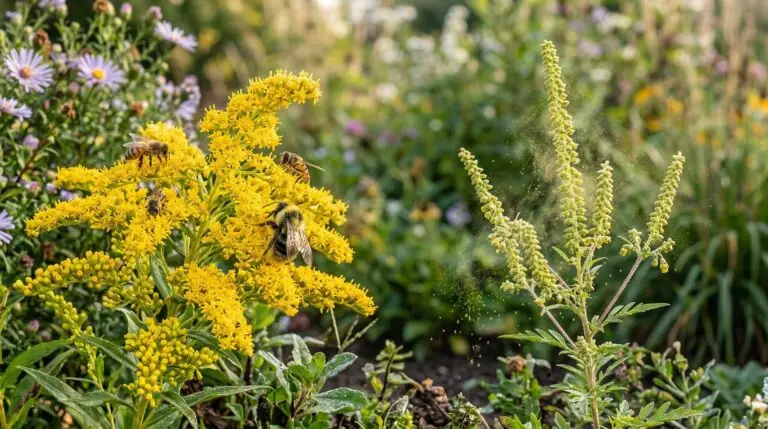
Goldenrod does not cause allergies and why ragweed is the real culprit
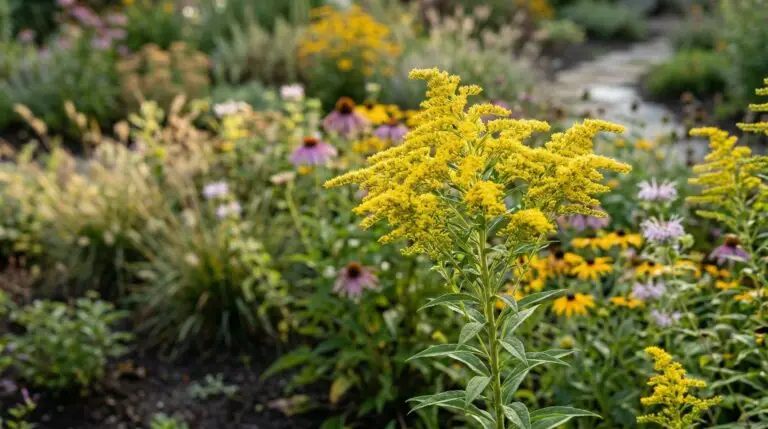
How to grow goldenrod for brilliant golden plumes that light up the fall garden
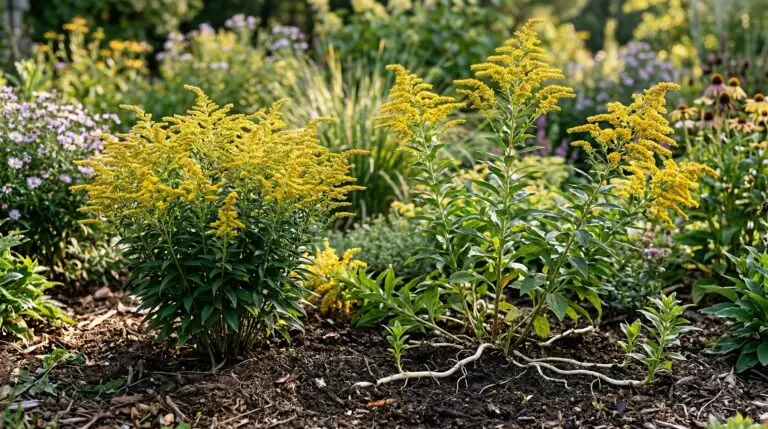
How to keep goldenrod from spreading aggressively in cultivated garden beds
Goldenrod flower meaning and the American wildflower that nearly became the national flower
Goldenrod in dried flower arrangements for warm autumn bouquets that last all winter
Companion plants for goldenrod: what to grow, what to avoid
Goldenrod for naturalizing in meadows and the wildflower garden it was born for
Best goldenrod varieties for gardens from compact Little Lemon to elegant Fireworks
Enjoying our flower guides? Add YourFlowersGuide as a preferred source on Google. It helps more readers find us.
Add to Preferred Sources