Many gardeners eventually find themselves staring at a tall orange flower and wondering exactly what they are looking at. The confusion between tiger lilies and the common orange daylily is widespread, especially since both plants frequently appear in older gardens, along country roads, and in passed-down plant divisions. When you look at these two plants from a distance, they share a strong resemblance through their tall stature and bright orange coloring that peaks in midsummer. Understanding the tiger lily vs daylily distinction goes far beyond simple curiosity about plant names. Your choice between the two affects how the plant will behave in your garden over the years, how much space it will eventually conquer, and whether it poses a severe threat to pets roaming your yard.
To make matters more complicated, people often use the common names interchangeably, referring to the aggressive orange ditch lily as a tiger lily. This regional naming habit causes significant trouble when gardeners try to purchase new plants or research care instructions. A true tiger lily belongs to the Lilium genus, while the common daylily belongs to the Hemerocallis genus. They are entirely different plants with different root structures, growth habits, and lifespans for individual blooms. Learning the orange lily difference requires looking closely at the roots, the stems, and the specific patterns painted across the petals.
Examining the roots and growth habits
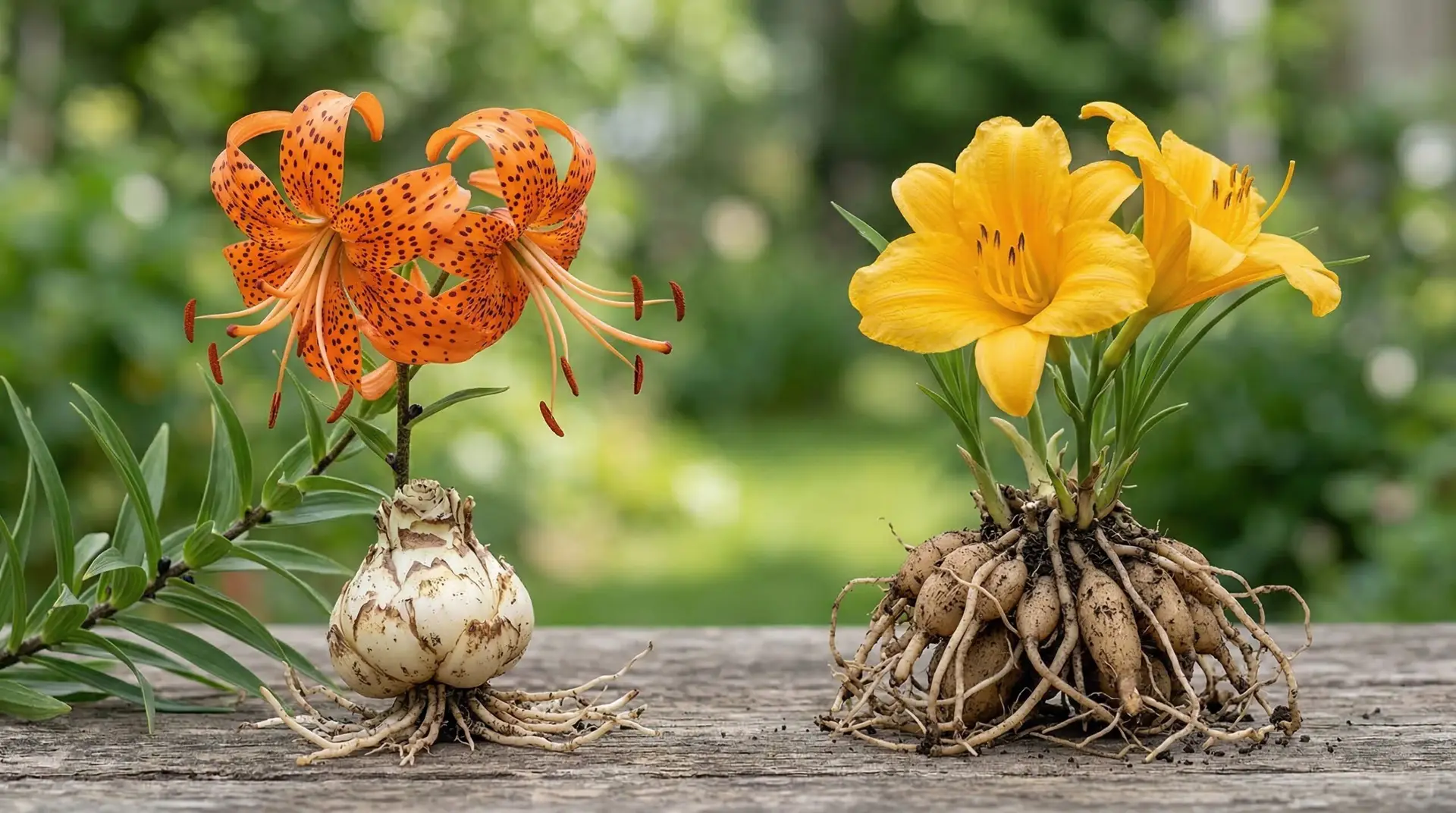
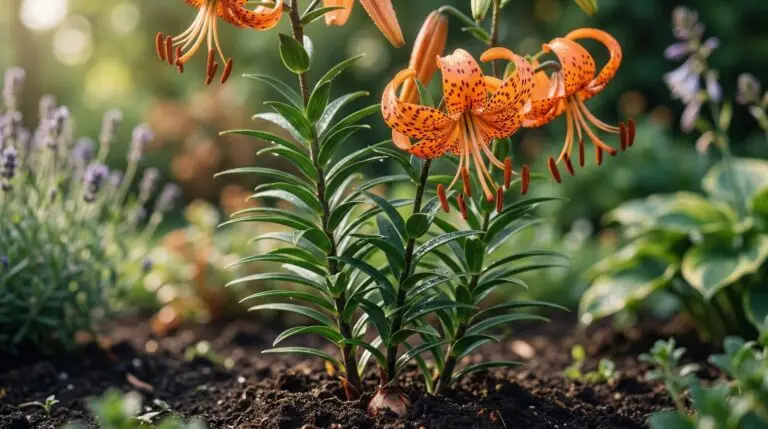
The most fundamental difference between these two plants lies hidden underground. A true lily, such as the tiger lily, grows from a distinct, scaly bulb that looks somewhat like a small, pale artichoke. You plant this bulb relatively deep in the soil, and it sends up a single, sturdy stalk each spring. Tiger lilies multiply slowly over time by forming smaller offset bulbs underground or by dropping seeds, meaning they tend to stay exactly where you plant them for many years. This contained growth habit makes the tiger lily a polite neighbor in a mixed perennial border, as it rarely crowds out other plants or attempts to take over the entire garden bed.
In sharp contrast, a daylily relies on a thick, tuberous root system that resembles a cluster of fleshy fingers. These roots grow near the soil surface and spread aggressively outward, creating dense mats that can choke out less vigorous plants. The common orange daylily is particularly famous for its ability to colonize large areas, which is why you often see it covering steep banks or filling roadside ditches. If you need to control erosion on a difficult slope, this spreading habit is highly beneficial. If you want a well-behaved plant for a small, carefully planned garden space, the daylily tuber system will likely cause frustration as it quickly outgrows its designated boundaries.
Spotting the differences in foliage and stems
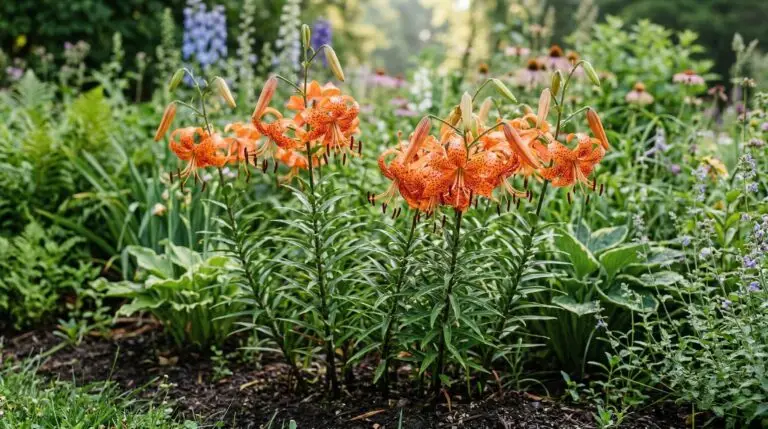
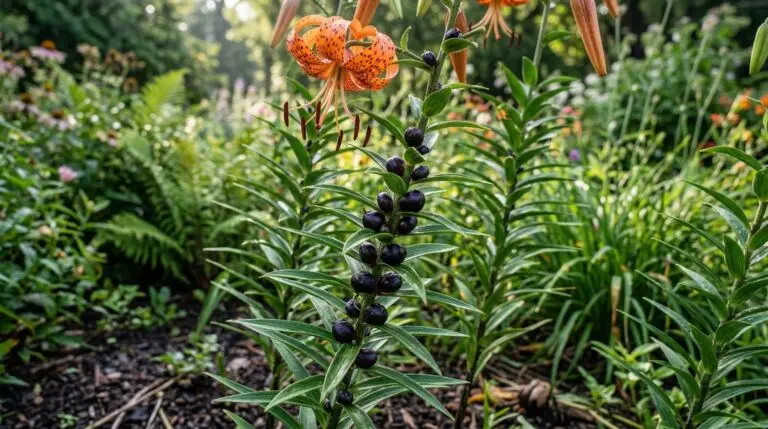
Proper tiger lily identification becomes quite simple once you examine how the plant holds its leaves. A tiger lily produces one thick, rigid stem that grows straight up from the bulb, reaching heights of three to five feet. The leaves are short, lance-shaped, and grow directly out of this main stem in an alternating pattern all the way up to the flowers. In the late summer, you will notice small, round, black objects forming in the leaf axils where the leaves meet the stem. These black objects are called bulbils, and they are tiny aerial bulbs that will eventually drop to the ground and grow into completely new tiger lily plants.
The daylily takes an entirely different approach to its foliage and stems. All the leaves of a daylily emerge directly from the ground, forming a dense, fountain-like clump of long, arching, grass-like foliage. When the plant is ready to bloom, it sends up smooth, completely bare stems called scapes from the center of this leafy clump. You will never find leaves growing along a daylily stem, and you will certainly never find black bulbils attached to the plant. This clean separation between the grassy basal foliage and the bare flowering stems provides an immediate visual clue when you are trying to determine which plant you have.
Comparing the orange lily difference in blooms
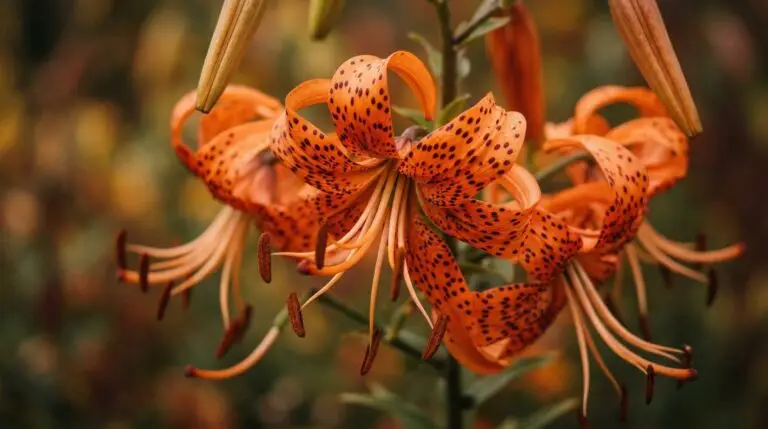
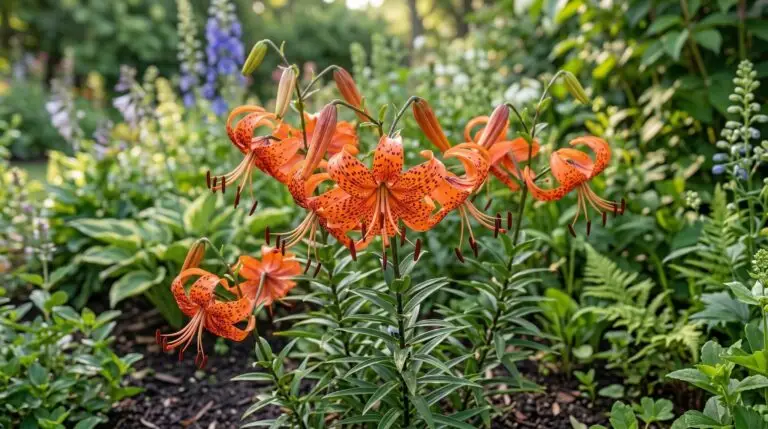
The flowers themselves offer another clear point of comparison for the observant gardener. Tiger lily blooms are heavily speckled with dark, prominent spots across their orange petals, which is exactly how the plant earned its feline common name. The petals curve strongly backward, a shape botanists call reflexed, leaving the long stamens thrusting forward and pointing toward the ground. Each individual flower on a tiger lily lasts for several days before fading, and the entire stalk can put on a display for a few weeks as the buds open in sequence. The downward-facing posture and the distinct black spots are absolute requirements for identifying a true tiger lily.
Daylily flowers lack these dramatic spots and hold their heads in a completely different manner. The petals of a common orange daylily form a classic trumpet shape that faces outward or slightly upward toward the sun. While the center of the daylily might have a slightly darker orange or reddish eye zone, the petals are generally smooth and unspotted. The most defining characteristic of the daylily is its bloom duration, as each individual flower opens in the morning and wilts by sunset on the exact same day. The plant compensates for this incredibly short bloom time by producing dozens of buds on a single scape, ensuring a continuous display of color that lasts for several weeks despite the daily turnover of flowers.
Toxicity to cats and garden maintenance
The difference in toxicity to pets is perhaps the most critical factor for many homeowners deciding between these plants. True lilies, including the tiger lily, are exceptionally dangerous to cats and can cause acute kidney failure. Every single part of the tiger lily is toxic to felines, from the bulb and the stem to the petals and the water in a vase. Even a small amount of tiger lily pollen brushing onto a cat’s fur and later being ingested during grooming is enough to cause a fatal reaction. If you have outdoor cats or if neighborhood cats frequently visit your garden, planting true tiger lilies poses a severe and unnecessary risk.
The daylily offers a much safer alternative for gardens frequented by feline visitors. While daylilies can cause mild stomach upset if a cat eats a large amount of the foliage, they do not trigger the catastrophic kidney failure associated with true lilies. Beyond the toxicity issue, the maintenance needs of the two plants also differ significantly. Daylilies benefit from regular deadheading to remove the mushy, spent blooms, and they require dividing every few years when the clump becomes too congested to flower well. Tiger lilies require very little maintenance once established, needing only the removal of the dead stalk in late autumn and preferring to be left undisturbed in the soil for years.
Making the right choice for your garden space
Choosing between these two orange summer bloomers ultimately comes down to your specific garden conditions and your personal priorities. If you are trying to fill a large, difficult area with poor soil, the daylily is the clear winner. Its aggressive root system will establish quickly, choke out weeds, and provide a massive sweep of color with very little effort on your part. The daylily is also the only responsible choice if you live with cats, providing that classic bright orange summer look without introducing a deadly hazard to your property. Gardeners who want a tough, reliable plant that can survive neglect usually find the daylily meets their needs perfectly.
If you have a small garden space or a carefully curated perennial border, the tiger lily is the better option. Its vertical growth habit provides height and structure without taking up valuable ground space or threatening to swallow neighboring plants. The heavily spotted, downward-facing blooms offer a level of complex detail that the simple daylily trumpet cannot match. Gardeners who enjoy studying the intricacies of their plants often prefer the tiger lily for its unique bulbils and its elegant, reflexed petals. By matching the growth habits and characteristics of these plants to your specific situation, you can easily choose the right orange flower for your yard.
More About Tiger Lilies
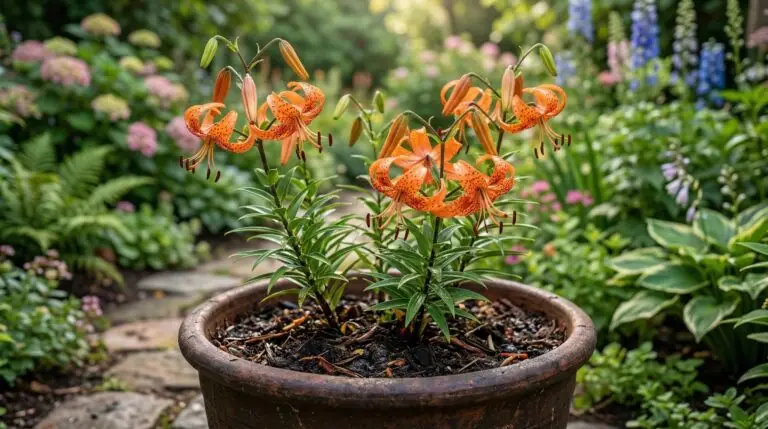
Growing tiger lilies in containers for bold orange summer drama on patios
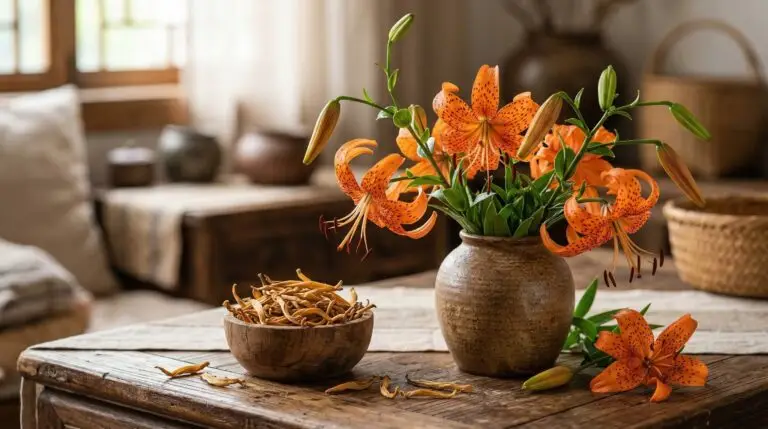
Edible tiger lily buds in Asian cuisine and the centuries-old tradition of cooking with lilies
How to grow tiger lilies for dramatic orange spotted flowers that multiply on their own

Tiger lilies in cottage and farmhouse gardens and why old gardens always have them
Tiger lilies that are toxic to cats and the urgent warning every cat owner needs to know
Propagating tiger lilies from the tiny black bulbils that form along the stem
Warning about tiger lilies near other lilies and the virus they can silently carry

Tiger lily companion plants: what to grow, what to avoid