The pairing · pick a flower
 Tiger lily+
 Black-eyed SusanPartial
Its dark central cone echoes the tiger lily's own black spotting, and its clumping habit is dense enough to compete with wandering bulbils instead of losing ground to them.
Tiger lily+ DaylilyPartial
Arching strap foliage hides the tiger lily's bare lower stem, and daylily's own dense fibrous clump is tough enough to hold its ground against bulbils rather than get engulfed by them.
Tiger lily+ ConeflowerPartial
A flat, sturdy daisy that shares the tiger lily's full-sun, tolerant-soil profile and grounds the border visually beneath the taller, top-heavy lily blooms.
Tiger lily+ Russian sagePartial
A cool violet-blue haze that calms the tiger lily's hot orange and black, in the same full sun, though it wants leaner, drier soil than the lily's consistently moist preference.
Tiger lily+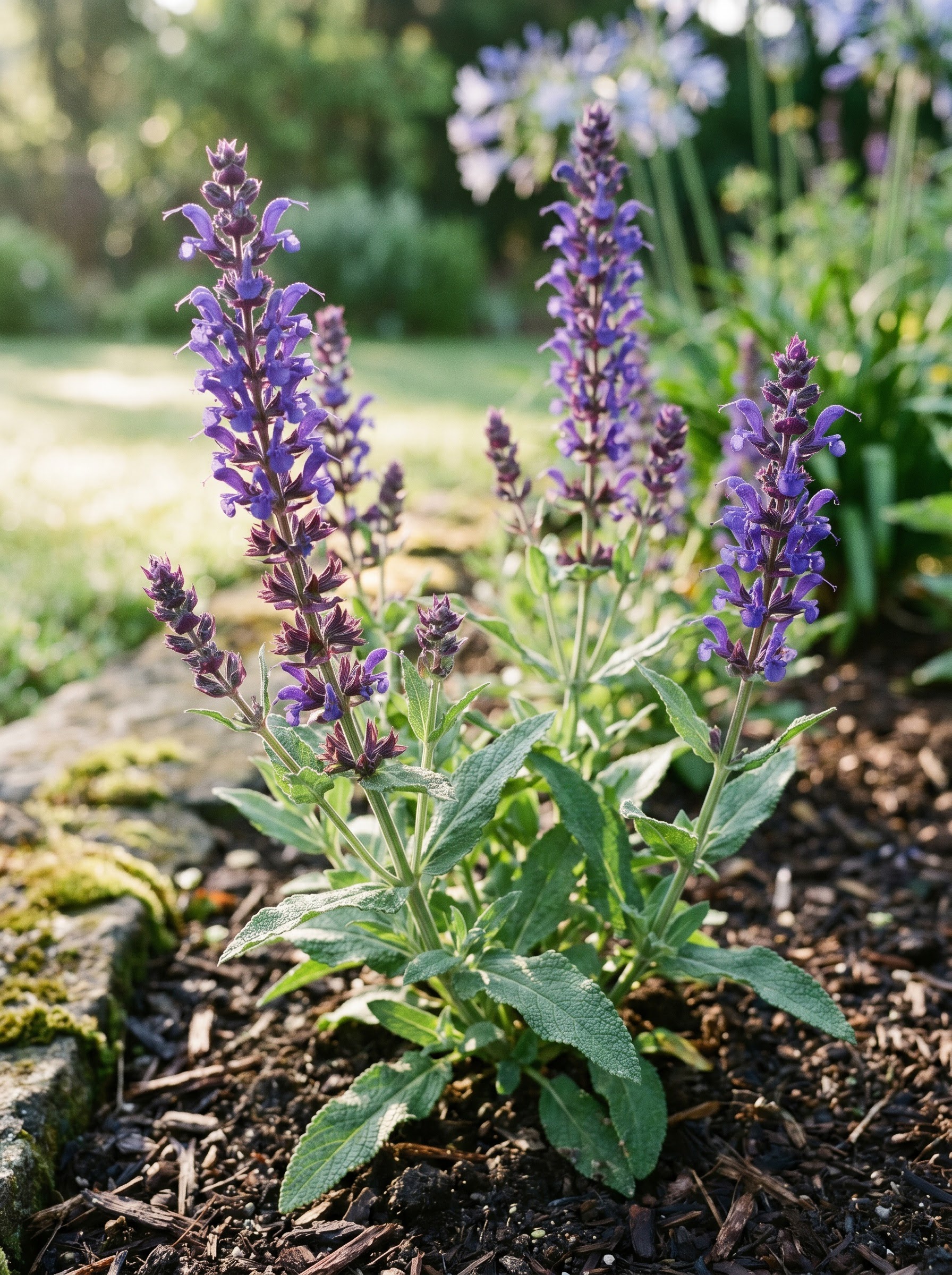 SalviaPartial
Deep violet spikes give the same cool-color relief as Russian sage, in a smaller, more clump-forming package that fits closer to the lily without the drier-soil tension.
Tiger lily+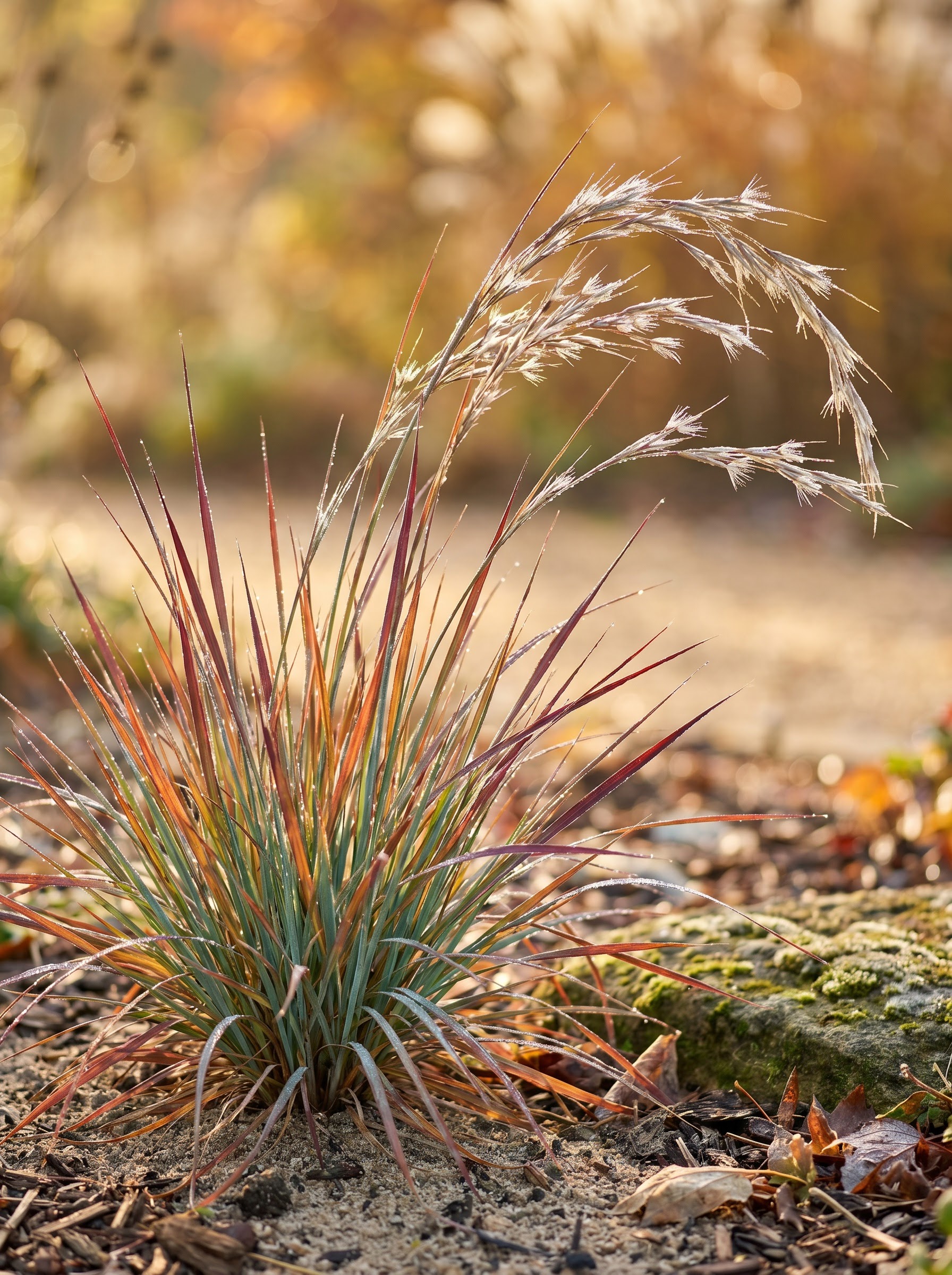 Ornamental grassesProven
Fine, upright blades contrast the lily's broad strap foliage and carry the border into fall once the lily's stalk is cut back; little bluestem wants dry-to-medium soil while switchgrass tolerates wet-to-dry, so both flank comfortably around the lily's consistently moist bed rather than sharing its exact damp zone.
All Tiger lily companions
6 flower companions, best match first
What not to plant near Tiger lily
Most bad neighbours are not evil, they just want the opposite light, water or root run. Here is what to keep away, and what to do instead.
Other lilies (Asiatic, Oriental, and any other Lilium type)
Tiger lily often carries lily mosaic virus without showing symptoms itself, and aphids and other sap-feeding insects carry the virus from it to nearby lilies, which then bloom fewer, deformed flowers with streaked or mottled foliage and have no cure.
Tulips
Tulip breaking virus is a close relative of lily mosaic virus, both aphid-vectored potyviruses documented in the botanical literature as crossing between Lilium and Tulipa, so tulips planted close to a symptomless tiger lily carry a plausible risk of streaked, broken color and reduced vigor, though this exact cross-genus pairing is not confirmed on a currently live university extension page.
Tall, shade-casting shrubs and trees
Tiger lily needs 6 or more hours of direct sun for strong bloom, and anything tall enough to shade the bed for part of the day cuts flowering, per NC State Extension's own listing of its light requirement.
Dense, moisture-trapping groundcovers over the bulb
Fusarium oxysporum f. sp. lilii, the fungus behind lily basal rot, is confirmed by Penn State Extension as the cause of the most serious bulb disease in greenhouse lilies, and poorly drained, overwatered soil is documented more broadly as a driver of Fusarium infection; a thick damp mat sitting right over the bulb keeps that zone wetter than the good drainage the lily actually needs. This is the shared-genus lily rot mechanism, not tiger-lily-specific research.
Delicate, slow-establishing, or shallow-rooted small plants tucked close
Tiger lily is the aggressor here, not the victim: NC State Extension tags it both weedy and aggressive because its stem bulbils root readily in the surrounding soil and can crowd out a weak neighbor within a couple of seasons.
The best companions for tiger lilies, explained
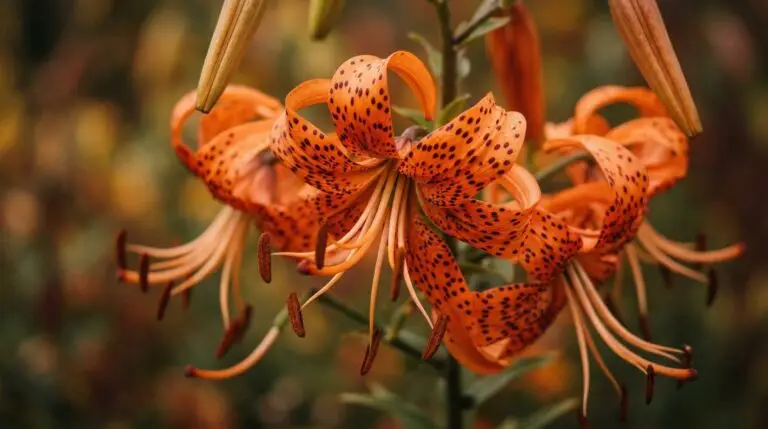
A tiger lily’s single naked stem carries its recurved, black-spotted blooms on bare lower legs, so the strongest companions do two jobs at once: they hide that stalk, and they hold their own ground against a plant that spreads harder than almost anything else in the summer border. Black-eyed Susan is the standout pairing for a reason that goes beyond shared full sun and tolerant soil. Its dark brown-black cone echoes the same spotting pattern that marks the tiger lily’s own orange petals, a genuine color echo rather than an arbitrary pairing, and its dense clumping crown does not get pushed around by the lily’s wandering bulbils. Daylily earns the same top tier for a more mechanical reason: its arching, strap-like foliage masks the bare lower stem completely, its fibrous root clump is tough enough to compete for space rather than lose it, and its rebloom habit solves the succession problem a single-flush lily creates on its own.
Below that top pair, coneflower brings a flat, sturdy daisy form that grounds the composition visually beneath the taller, top-heavy lily blooms, while Russian sage and clump-forming salvia do the color work the lily cannot do for itself. Both are cool violet-blue against the tiger lily’s hot orange and black, a contrast that makes both colors read more intensely rather than fighting each other. Russian sage carries one real caveat worth respecting: it wants leaner, drier soil than the lily’s consistently moist preference, so it belongs slightly toward the bed’s drier edge rather than crowded against the crown. Ornamental grasses close out the season once the lily’s short bloom window ends, their fine upright blades a genuine textural foil to the lily’s broad strap leaves. Little bluestem prefers dry-to-medium, well-drained soil and switchgrass tolerates anything from occasional flooding to dry spells, so either species flanks the lily’s consistently moist bed comfortably rather than crowding into its exact damp zone.
What not to plant near tiger lilies
This is the part most companion-planting advice for tiger lily skips entirely, and it is also the sharpest, most citable avoid claim in the whole conversation about this flower. Tiger lily is a documented likely-symptomless carrier of lily mosaic virus. Iowa State University Extension states it plainly: the virus causes little harm to tiger lilies themselves, and often you cannot tell they are infected at all, but aphids and other sap-feeding insects carry the virus from the tiger lily to other lily types nearby, where it does real damage: fewer flowers, deformed blooms, and foliage that is streaked or mottled, with no cure once a plant is infected. That flips the usual companion-planting fear on its head. Most avoid-lists exist to protect the host flower from something dangerous nearby. Here, the tiger lily itself is the dangerous one, quietly spreading a virus to every other lily planted within reach of the same aphids, and quite possibly to tulips too.
Tulip breaking virus, a close relative of lily mosaic virus, is documented in the botanical literature as another aphid-vectored potyvirus capable of crossing between Lilium and Tulipa, so a bed that mixes tiger lilies with tulips carries a plausible added risk of streaked, broken color and reduced vigor in the tulips, even though this exact cross-genus pairing is not confirmed on a currently live university extension page. The honest, practical fix is not a precise measured distance (no university extension source found in this research commits to a specific footage figure, despite that number circulating on garden blogs), but simple separation as a low-cost precaution: keep tiger lilies in their own section of the garden, away from other Lilium and Tulipa plantings, and use clean tools between them. Beyond the virus, tiger lily’s own aggressive bulbil spread creates a second, gentler avoid: NC State Extension tags the species both weedy and aggressive, because it drops a small bulbil in every leaf axil that roots readily on contact. Delicate, slow-establishing, or shallow-rooted small plants placed too close risk being crowded out within a couple of seasons, not because the tiger lily is toxic to them, but because it simply out-competes them for space. The last real avoid is ordinary and less dramatic: tall shrubs or trees that shade the bed cut into the 6-plus hours of direct sun the lily needs for strong bloom, and dense, moisture-trapping groundcovers packed right over the bulb keep that zone wetter than the good drainage the plant actually wants. Penn State Extension confirms Fusarium oxysporum f. sp. lilii as the fungus behind the most serious lily bulb disease in cultivation, and poorly drained, overwatered soil is documented more broadly as a driver of Fusarium infection, the same basal-rot risk that affects lilies generally.
Do they like the same conditions?
Tiger lily wants full sun, 6 or more hours of direct light, consistently moist but genuinely well-drained soil, and acid conditions below pH 6.0, per NC State Extension’s own listing for Lilium lancifolium. Every top-tier companion on this page shares that profile closely. Black-eyed Susan, coneflower, and daylily all match the sun and drainage needs directly, and none of them demands a soil chemistry the tiger lily cannot also tolerate. The one honest tension worth naming is Russian sage and, to a lesser degree, clump-forming salvia: both want a leaner, drier soil once established than the tiger lily’s "consistently moist" preference, the same kind of narrow needle other true lilies walk. That does not disqualify the pairing. It just means Russian sage belongs slightly apart, on the drier margin of the bed, rather than sharing the exact same damp pocket of soil as the bulb.
Standing water is the one condition that actually threatens the plant outright. NC State Extension lists good drainage as a requirement alongside moisture, and Penn State Extension’s basal-rot research (the same Fusarium mechanism documented across the lily genus, not tiger-lily-specific) confirms poorly drained, overwatered soil is what lets the fungus destroy a bulb from the base up. That is the real reason to be careful with dense groundcovers or a low spot in the bed, not a myth about tiger lilies being fussy. Treat the shared-conditions ruler as sun plus drainage plus acid-to-neutral pH, and nearly every companion on this page passes cleanly.
How to plant them together
Give the tiger lily’s own footprint room first: it reaches 2 to 6 feet, typically 3 to 4 feet, and its top-heavy, recurved blooms benefit from a living skirt of shorter neighbors rather than open ground at the base. Plant black-eyed Susan or daylily 12 to 24 inches out to hide the bare lower stem without competing directly for the bulb’s root zone, and treat that inner ring as the "workhorse" layer that also needs to be tough enough to hold ground against emerging bulbils. Coneflower and the cool-color salvias sit a little further out, 18 to 24 inches, where they read as a mid-height layer that grounds the composition and carries bloom past the lily’s own midsummer finish. Russian sage goes furthest out or slightly uphill from the bulb, on the driest available spot in the bed, so its root zone never sits in the same consistently damp soil the lily prefers.
Because tiger lily spreads through bulbils dropping from every leaf axil, containment is a real planting-time decision, not an afterthought. If you want the naturalized, spreading look this species is known for along old foundations and cottage borders, plant it with companions dense enough to compete on their own terms and let the bulbils fall where they will. If you want a controlled bed, collect and remove bulbils before they root each season, and give small or slow-establishing companions at least 18 to 24 inches of their own space rather than tucking them tight against the stem. Tiger lily is not well suited to a container shared with other true lilies for the same virus-carrier reason it should stay separated in the ground; if grown in a pot, keep it as a solo planting or pair it only with non-Lilium companions.
Does companion planting actually work for tiger lilies?
Some of it, honestly documented, and some of it is closer to popular design advice than horticultural science. The genuinely proven layer is straightforward: full-sun, well-drained, tolerant-soil companions share conditions with the tiger lily because NC State Extension confirms those exact requirements for the species, and the virus-carrier avoid claim against other lilies is backed directly by Iowa State University Extension’s own FAQ addressing this precise question. Ornamental grasses extending the border’s season past the lily’s short bloom window is likewise a documented extension finding for little bluestem and switchgrass specifically, not a garden myth. What is less certain is the specific, named pairing logic. Sources agree Rudbeckia and Echinacea share the lily’s growing conditions and bloom timing, but no extension research ties the specific "black-eyed Susan echoes the spotting pattern" design claim to a controlled study; it is a real, visually accurate observation, not a peer-reviewed finding, and this page tiers it Partial rather than Proven for that reason. The hardy geranium pairing carried in this dataset is weaker still: it is a reasonable extrapolation from how cranesbill behaves with true lilies generally, not a confirmation specific to Lilium lancifolium, and it is labeled Folklore honestly rather than dressed up as settled fact. The tulip avoid claim sits in the same honest category: tulip breaking virus and lily mosaic virus are documented as closely related aphid-vectored viruses in the botanical literature, but that specific cross-genus mechanism could not be pinned to a currently live university extension page during this research, so it is tiered Folklore here even though the underlying biology is credible.
The one claim worth being skeptical of if you see it elsewhere is a precise isolation distance, commonly repeated online as 100 feet between tiger lilies and other lilies. That figure circulates widely on gardening blogs, but no university extension source in this research commits to that specific number; Iowa State’s own answer to "should tiger lilies be kept away from Asiatic lilies" confirms the mechanism and the risk without naming a distance. Treat separation as the safe, sensible practice it clearly is, not a number you need to measure with a tape.
Color is where the design case is strongest and easiest to trust on sight: tiger lily’s hot orange-and-black coloring plays two honest ways, echoed by black-eyed Susan’s matching dark cone or cooled by the violet-blue of Russian sage and salvia, a contrast that makes both colors look more saturated rather than competing for attention. Readers shopping by color rather than by flower name can find more options in this same warm register at the orange flowers hub, useful alongside the pairings above for a full wedding or garden palette. One separate note worth a plain mention: tiger lily is highly toxic to cats specifically, capable of causing kidney failure, while it is not toxic to dogs or horses. That toxicity does not affect which plants grow well next to it in the ground, since it has no bearing on neighboring plants, but if a cat has garden access, keep it in mind apart from anything on this companion list.
FAQ
What can I plant in front of tiger lilies to hide the bare stems?
Daylily and black-eyed Susan both work well: daylily’s arching foliage covers the lower stem most completely, and black-eyed Susan adds a color echo with its dark cone against the lily’s own black spotting. Both are dense enough to hold their ground against the tiger lily’s spreading bulbils.
What should you not plant near tiger lilies?
Keep other lilies, of any type, separated from tiger lilies. Tiger lily is a likely-symptomless carrier of lily mosaic virus, which aphids spread to nearby lilies, causing deformed blooms and streaked foliage with no cure. Tulips carry the same risk on credible but less firmly documented grounds, since the related tulip breaking virus is aphid-vectored too, so separating them as a low-cost precaution is still worth doing.
Can tiger lilies infect other lilies with a virus?
Yes. Iowa State University Extension confirms tiger lily often carries lily mosaic virus without showing symptoms itself, while aphids and other sap-feeding insects carry that virus to Asiatic and other hybrid lilies planted nearby, where it causes real, visible damage.
Will tiger lilies take over my garden?
They spread readily. Tiger lily produces a small bulbil in every leaf axil that drops and roots on contact, and NC State Extension tags the species both weedy and aggressive as a result. Dense, clump-forming companions hold their ground better than delicate or slow-establishing plants, and removing bulbils before they root keeps the spread in check if containment matters to you.
Do tiger lilies need the same soil as other lilies?
Close to it, but slightly more acid-leaning. NC State Extension lists tiger lily’s preferred soil pH as acid, below 6.0, with consistently moist, well-drained conditions, the same "moist but drained" needle other true lilies walk, just with a firmer acid preference.
Sources
- Lilium lancifolium (Tiger Lily) – NC State Extension Gardener Plant Toolbox
- I’ve been told that tiger lilies should not be planted near Asiatic lilies. Is this true? – Iowa State University Extension
- Rudbeckia hirta – NC State Extension Gardener Plant Toolbox
- Hemerocallis – NC State Extension Gardener Plant Toolbox
- Echinacea purpurea – NC State Extension Gardener Plant Toolbox
- Perovskia atriplicifolia (Russian sage) – NC State Extension Gardener Plant Toolbox
- Salvia nemorosa – NC State Extension Gardener Plant Toolbox
- Schizachyrium scoparium (Little Bluestem) – NC State Extension Gardener Plant Toolbox
- Greenhouse IPM: Lily Basal Rot and Bulb Mites in Easter Lilies – Penn State Extension
More About Tiger Lilies
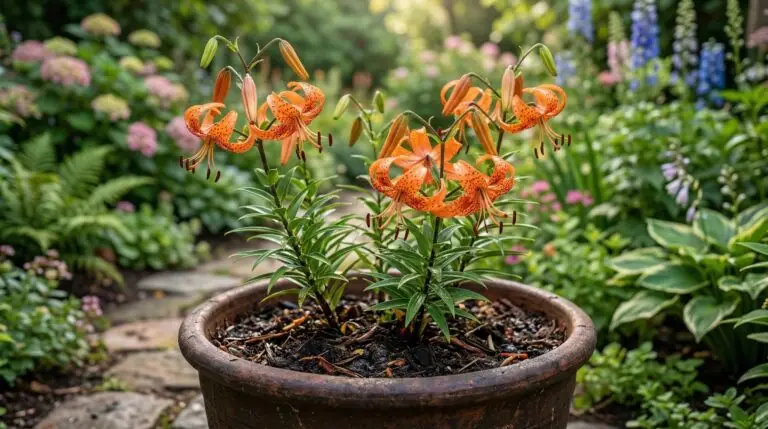
Growing tiger lilies in containers for bold orange summer drama on patios

Edible tiger lily buds in Asian cuisine and the centuries-old tradition of cooking with lilies
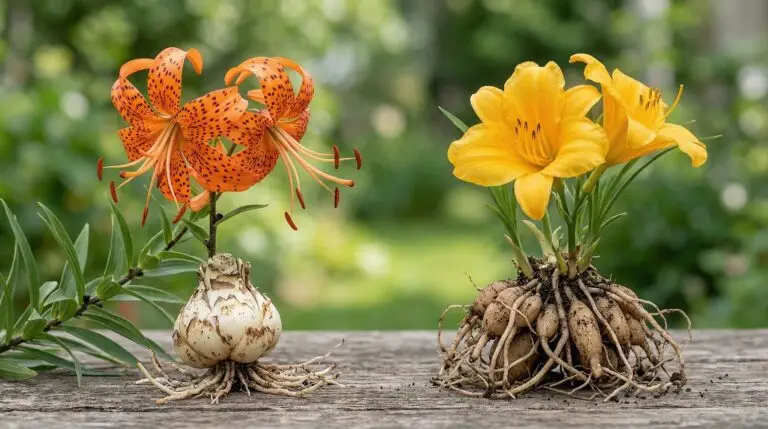
Tiger lilies versus daylilies and the common confusion between these two orange flowers
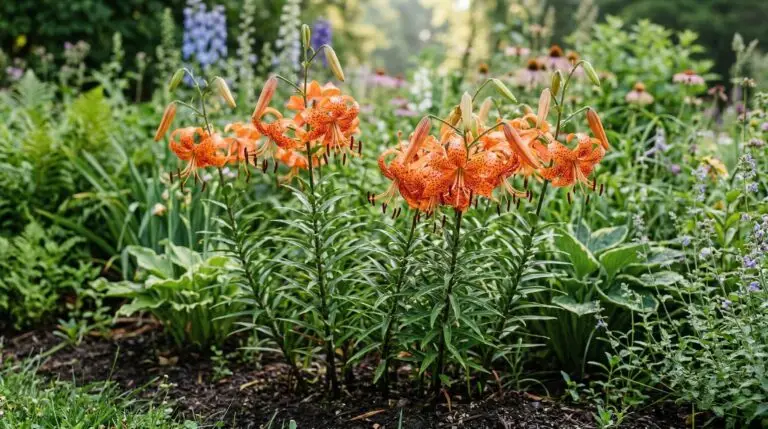
How to grow tiger lilies for dramatic orange spotted flowers that multiply on their own

Tiger lilies in cottage and farmhouse gardens and why old gardens always have them
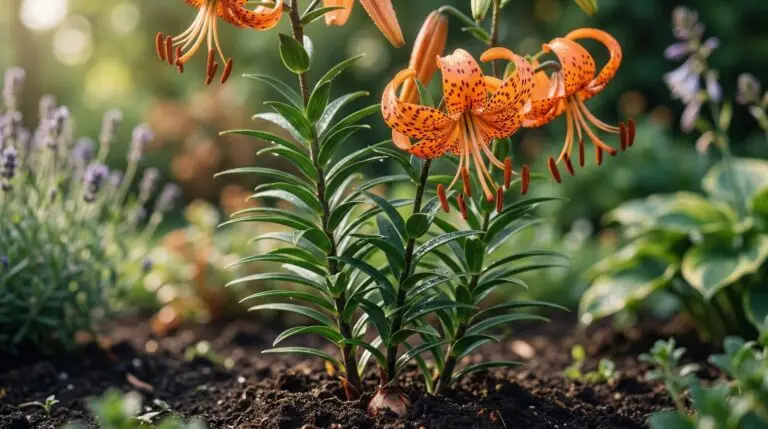
Tiger lilies that are toxic to cats and the urgent warning every cat owner needs to know
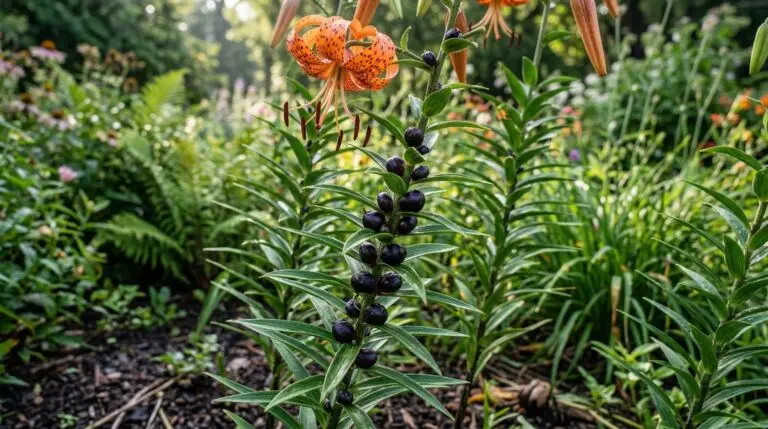
Propagating tiger lilies from the tiny black bulbils that form along the stem
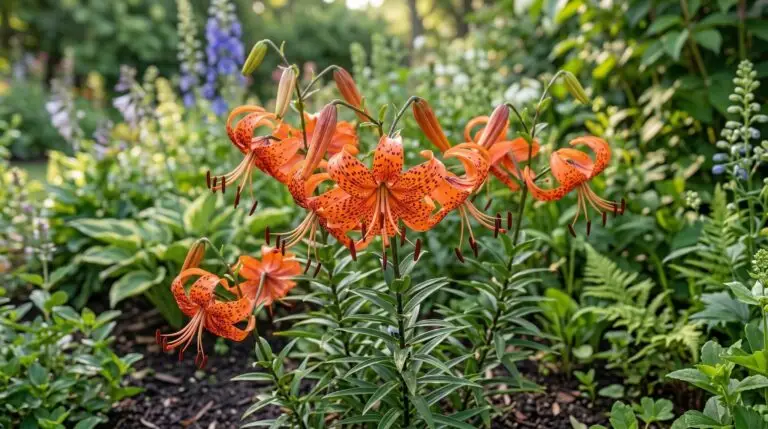
Warning about tiger lilies near other lilies and the virus they can silently carry
Tiger lily flower meaning and the bold confidence this spotted bloom represents