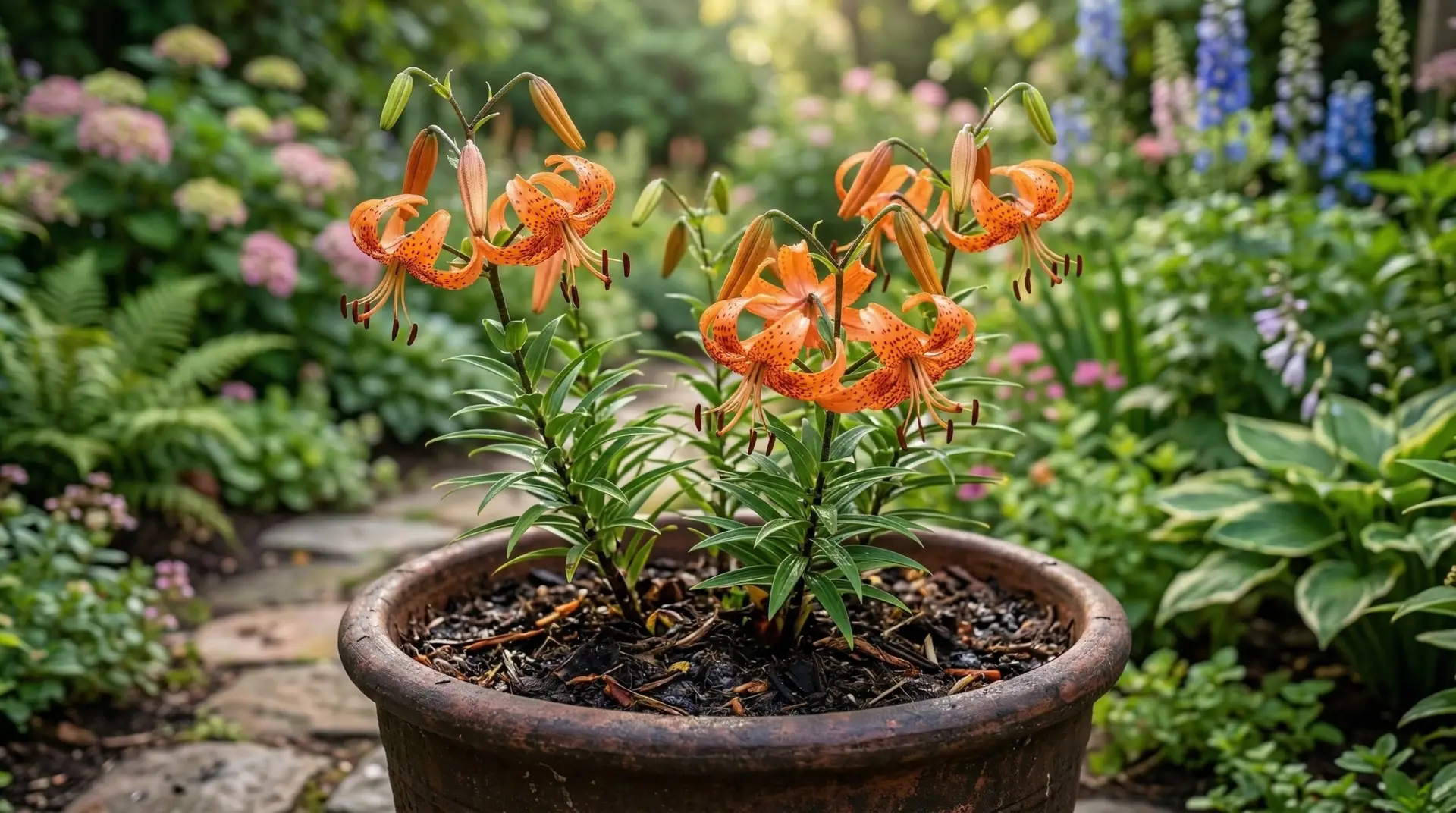
There comes a moment every spring when the garden beds are entirely full, but the local nursery has a bin of plump, healthy bulbs that are impossible to leave behind. That is usually how a lily collection begins to migrate onto the pavement. Putting a tiger lily in pots might seem counterintuitive since these plants easily reach four or five feet tall and look top-heavy even in the ground. However, they actually thrive in confined spaces if the setup is correct. Tiger lilies are known for their downward-facing, bright orange blooms covered in dark speckles. Growing them in pots allows you to position these bold flowers right next to a favorite patio chair. A container tiger lily brings that summer color right up to the seating area where you can actually see the details on the recurved petals. The trick is treating the pot like a permanent home rather than a temporary display, which means getting the soil depth and drainage right from the very beginning.
Contents 4 sections
Choosing the right deep container for heavy bulbs
The single biggest mistake made with patio lilies is choosing a shallow decorative bowl instead of a deep, functional pot. Tiger lilies grow stem roots, meaning they send out roots from the stem just above the bulb as well as from the bottom of the bulb itself. Because of this, the bulb needs to sit at least six to eight inches below the soil surface, leaving plenty of room underneath for the main root system to stretch out. A container that holds at least five gallons of soil is a good starting point for a small cluster of bulbs. Heavy pots also provide a sturdy base that prevents the tall plants from tipping over in a stiff wind. A standard half-barrel planter or a tall resin pot works perfectly for this job. You do not need expensive ceramic urns, especially since cheap plastic nursery pots can be slipped inside decorative woven baskets to save money. Just drill extra drainage holes in whatever container you use because lily bulbs sitting in wet, stagnant soil will turn to mush before they ever sprout.
Planting multiple bulbs for a dense patio display
A single tall stem poking out of a large pot looks lonely and awkward on a patio. To create a proper tiger lily patio display, plant three to five bulbs in the same container. Space them about four inches apart from each other, buried in a good quality, standard potting mix heavily amended with perlite or coarse sand to keep the water moving through. A slow-release granular fertilizer mixed into the soil at planting time provides plenty of nutrients for the entire season. The new shoots will look like thick, scaly asparagus spears when they finally break the surface, and they often sit there doing practically nothing for two straight weeks. They are not dead or stunted, they are simply building their underground root system before pushing upward. Once they start gaining height, they grow incredibly fast and will quickly fill out the container with their whorled green leaves. You can supplement with a weak liquid fertilizer when the flower buds begin to form at the top of the stalks to encourage larger blooms.
Staking tall stems and summer watering chores
Growing plants this tall in a pot means dealing with wind, and a stiff summer breeze will snap a blooming lily stalk right at the soil line if it is not supported. Do not wait until the buds form to add stakes, because plunging a stick into the pot late in the season will likely spear the bulb. Push thin bamboo stakes deep into the soil right when planting the bulbs, placing one stake near each bulb so you can gently tie the stems as they grow. Watering a container tiger lily is a daily chore during July and August, as the potting soil dries out much faster than garden dirt. Give the pot a thorough soaking until water runs out the bottom, then let the top two inches of soil dry out completely before watering again. If the lower leaves start turning yellow and dropping off, the soil is staying too wet and the drainage holes might be clogged. Keep an eye out for red lily beetles, which love to hide on the undersides of the leaves and can strip a plant bare in a matter of days. Picking them off by hand and dropping them into soapy water is the most effective control method for a few potted plants.
Beyond watering and pest control, tiger lilies have a unique habit of growing tiny black bulbils along the stem where the leaves attach. These look like little black berries, but they are actually miniature clones of the parent bulb. When growing a tiger lily in pots, these bulbils will eventually fall off and land on the soil surface. If left alone, they will root right there in the container and create a messy tangle of grassy foliage the following spring. It takes several years for a bulbil to grow large enough to produce a flower, and they often crowd out the main bulbs in a confined pot. Pluck these black bulbils off the stems in late summer before they drop. You can throw them into an empty spot in the garden beds where they have room to mature, or simply toss them in the compost bin to keep your patio pots looking neat.
Handling winter dormancy in pots
When the flowers finally drop and the stalks turn brown in early autumn, the messy work of winterizing begins. Unlike a canna lily that must be dug up and stored bare-root in cold climates, tiger lilies actually need a period of winter chill to bloom the following year. Gardeners in the South can often leave their pots right on the patio year-round, perhaps moving them under an eave to prevent winter rains from rotting the dormant bulbs. In northern zones where the potting soil freezes solid, the pots need to be moved into an unheated garage or shed. The goal is to keep the bulbs cold but protect them from the repeated freeze-and-thaw cycles that turn container soil to ice. Check the pots once a month and give them a tiny splash of water if the soil is completely bone dry, just enough to keep the bulbs from shriveling.
Potted bulbs cannot stay in the same container forever, even with proper winter care. After three or four years of growing in the same confined space, the bulbs will multiply and the pot will become severely crowded. You will know it is time to divide them when the spring stems emerge thinner than usual and the summer flower count drops significantly. If the plants are still vigorous, simply drag the pots back out into the full sun when the spring weather warms up. Top the old soil off with an inch of fresh compost to replenish the nutrients lost during the previous growing season. The hardest part of the entire process is simply having the patience to wait for those thick green spears to push through the cold soil all over again.
More About Tiger Lilies
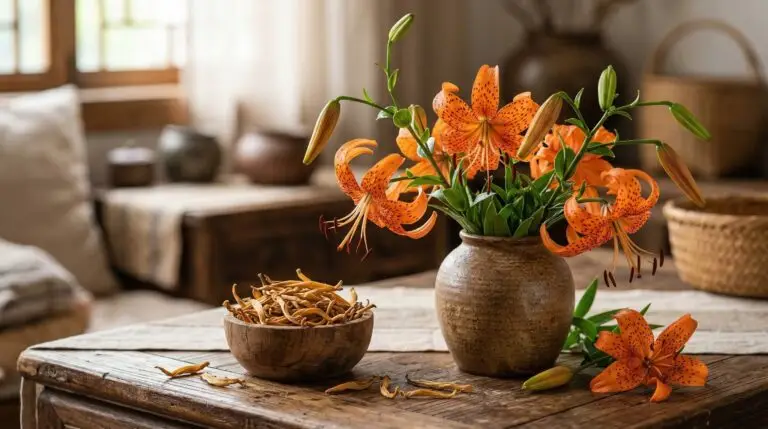
Edible tiger lily buds in Asian cuisine and the centuries-old tradition of cooking with lilies
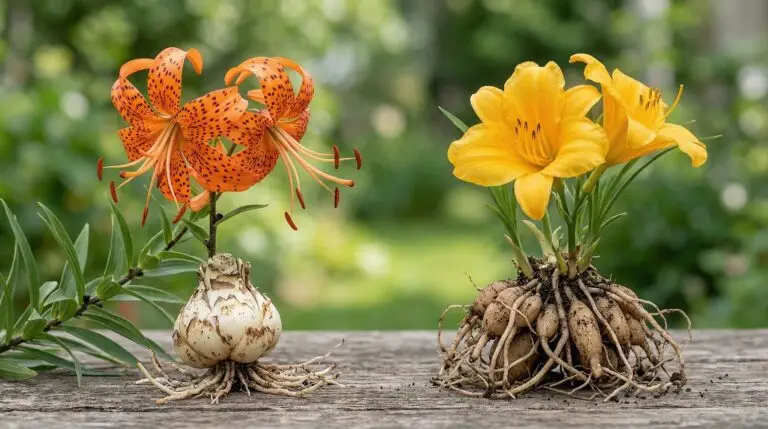
Tiger lilies versus daylilies and the common confusion between these two orange flowers
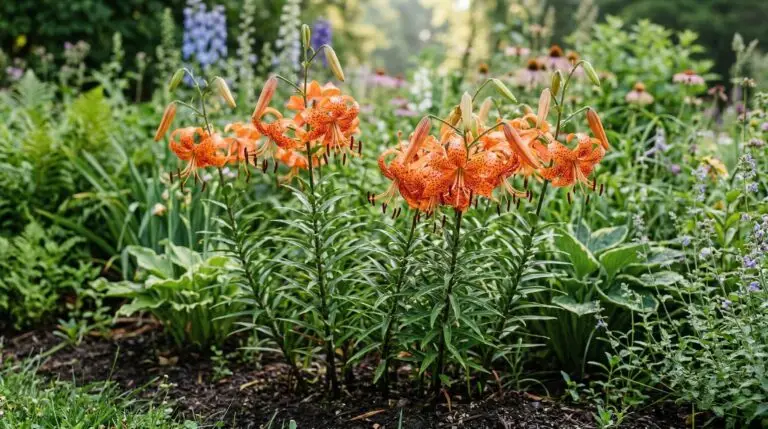
How to grow tiger lilies for dramatic orange spotted flowers that multiply on their own

Tiger lilies in cottage and farmhouse gardens and why old gardens always have them
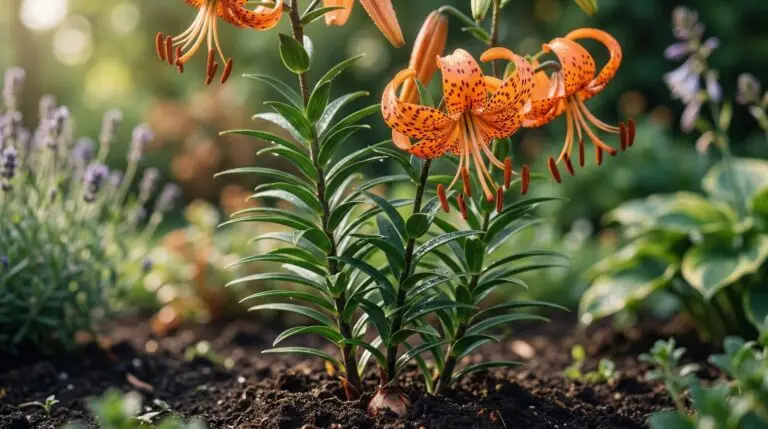
Tiger lilies that are toxic to cats and the urgent warning every cat owner needs to know
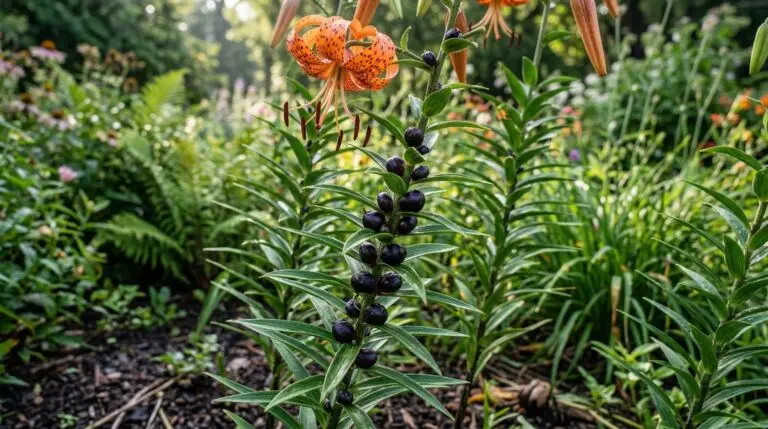
Propagating tiger lilies from the tiny black bulbils that form along the stem
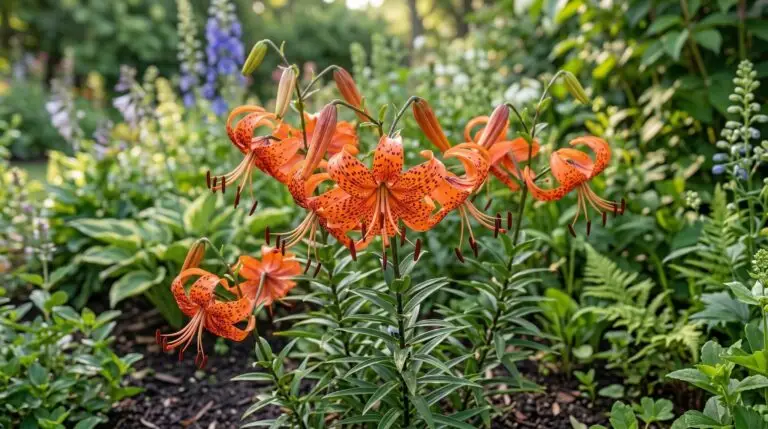
Warning about tiger lilies near other lilies and the virus they can silently carry

Tiger lily companion plants: what to grow, what to avoid
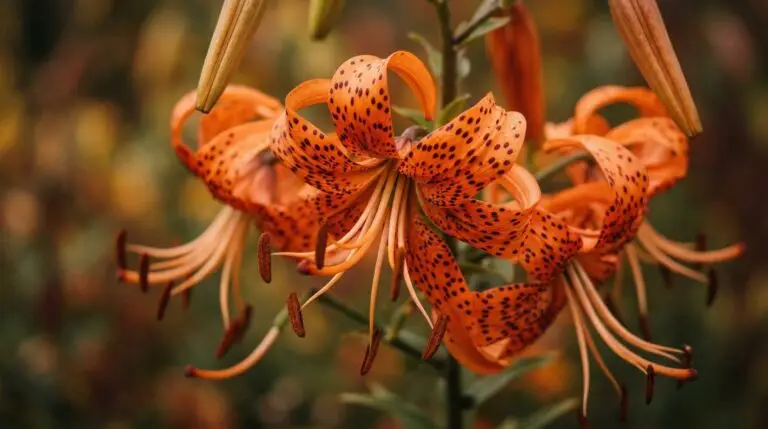
Tiger lily flower meaning and the bold confidence this spotted bloom represents
Enjoying our flower guides? Add YourFlowersGuide as a preferred source on Google. It helps more readers find us.
Add to Preferred Sources