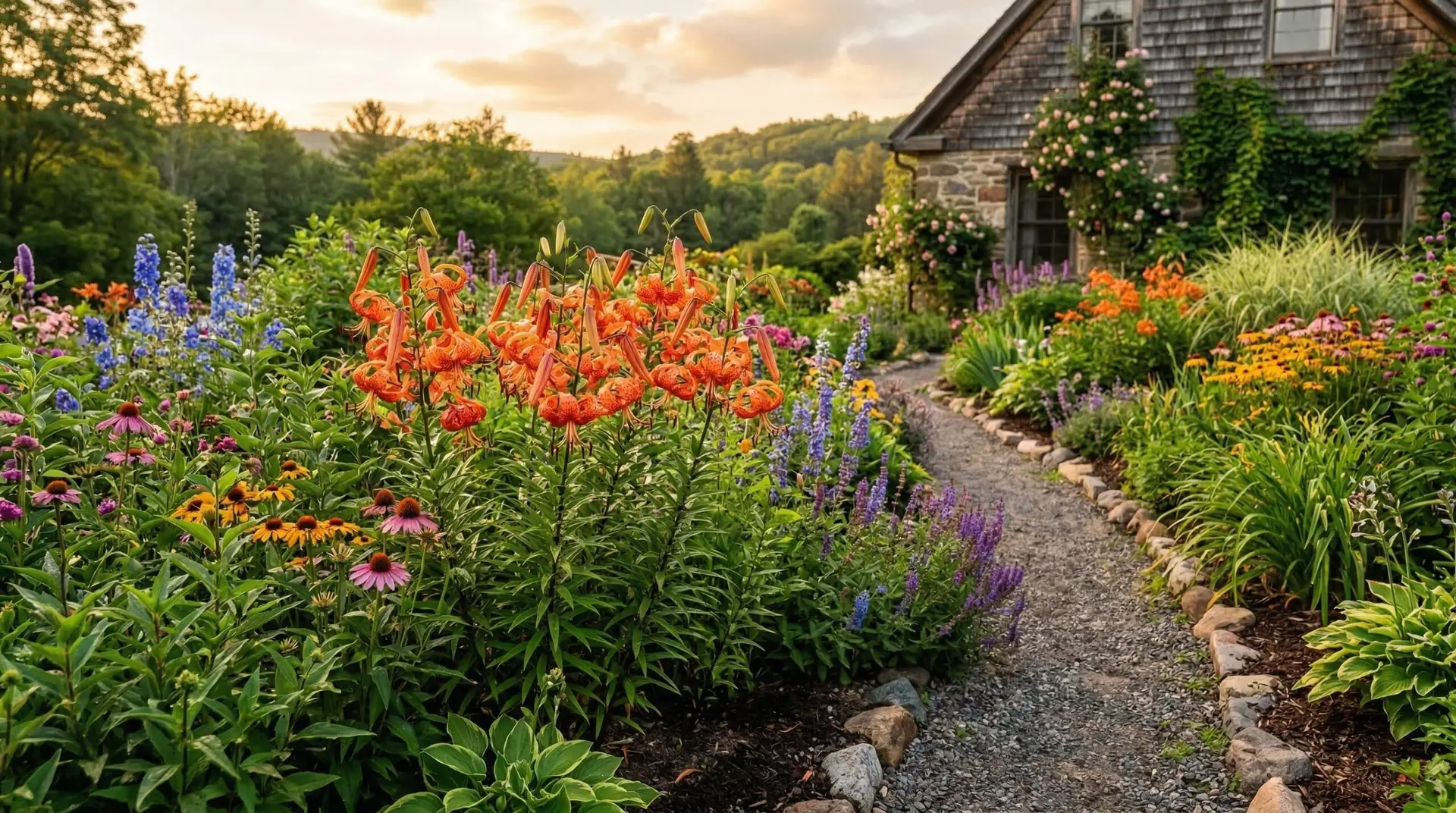
When the ground finally yields its frozen grip in late winter, the true nature of a tiger lily old garden reveals itself. Before the soil is warm enough to work, you can walk the muddy perimeters of old foundations and find the resting places of plants that have survived for decades. The air smells of wet earth and decaying leaves, a sharp scent that promises renewal. This is the time when you remember the pass-along plants, the ones traded over fences and carried in damp newspaper across state lines. The tiger lily heritage is built on these early spring discoveries, as the scaly bulbs wait patiently just beneath the surface. Generations of gardeners have trusted these bulbs to wake up without coaxing or coddling. They are the quiet survivors of abandoned homesteads and the reliable anchors of a grandmother’s garden. Even as the late winter winds howl, the energy stored in those fleshy underground scales is preparing for a spectacular return.
As the days lengthen and the red-winged blackbirds return to the marshes, the soil warms enough to trigger the first real growth. You will notice tight purple-green nubs pushing through the softening earth, often right through the lingering snow crust. These early shoots are sturdy and thick, quite unlike the delicate emergence of other spring perennials. The cycle of the tiger lily cottage garden has officially begun again, driven by a biological clock that ignores late frosts and unpredictable spring rains.
Contents 3 sections
The upward push of spring
By the time the spring peepers start their nightly chorus in the damp hollows, the stalks are rising with astonishing speed. They grow straight and rigid, covered in fine white hairs that catch the morning dew. The leaves unfold in neat whorls along the stalk, creating a ladder of deep green foliage that climbs steadily toward the sun. This is the season of anticipation in the garden, where the architecture of the summer display takes shape. You might see the broad, crinkled foliage of daylilies forming dense clumps nearby, keeping the soil cool around the tall lily stalks. The air is mild, and the earth is damp and crumbly, offering perfect conditions for the roots to pull up water and nutrients. As weeks pass, the stems thicken to the diameter of a walking stick, engineered to hold immense weight without snapping in the wind. The plant asks for nothing during this period, thriving on the natural rainfall and the rich, settled soil of an established bed.
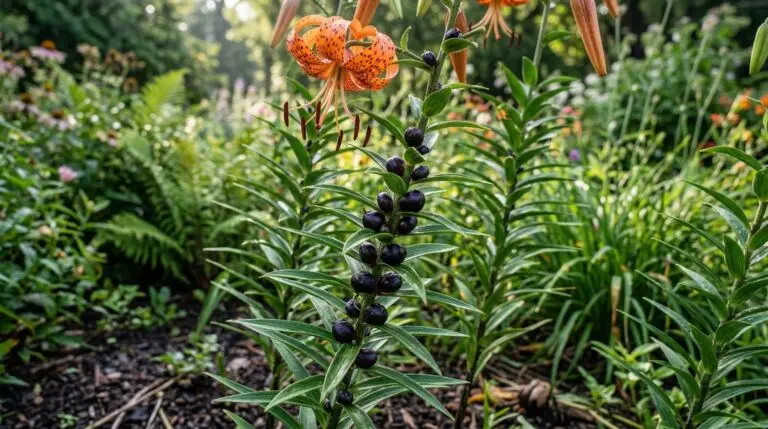
When the early summer heat settles in and the soil begins to dry, the growth shifts from height to reproduction. The top of the stalk develops a cluster of tight green buds, pointing downward like heavy teardrops. At the same time, tiny black bulbils begin to form in the axils where the leaves meet the stem. These little dark beads are the secret to the plant’s immortality, a unique trait that ensures the patch will spread and naturalize for decades.
The midsummer fire
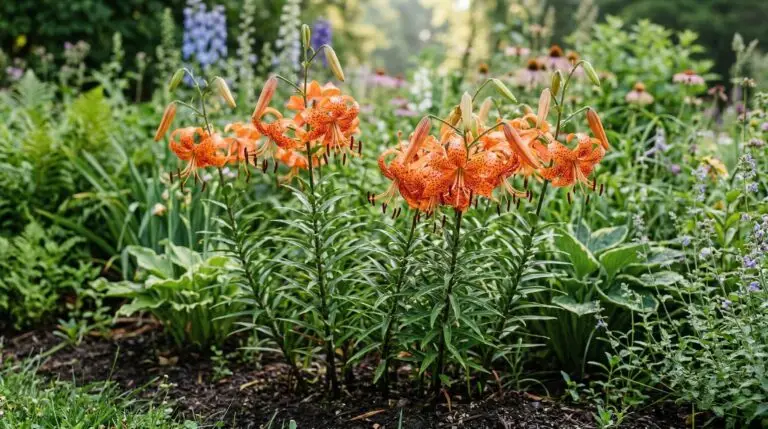
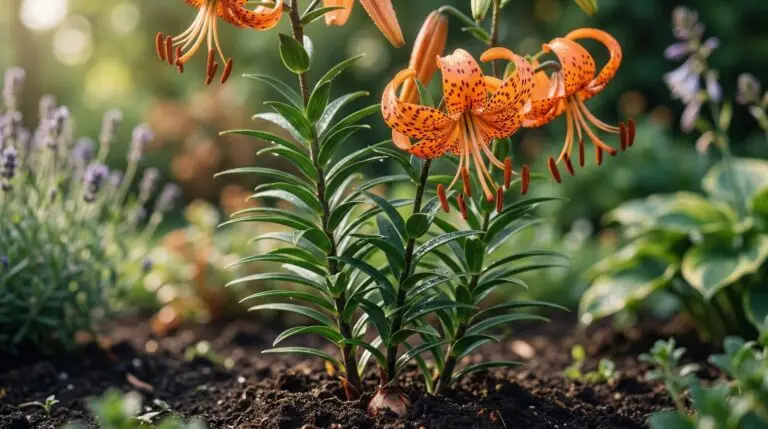
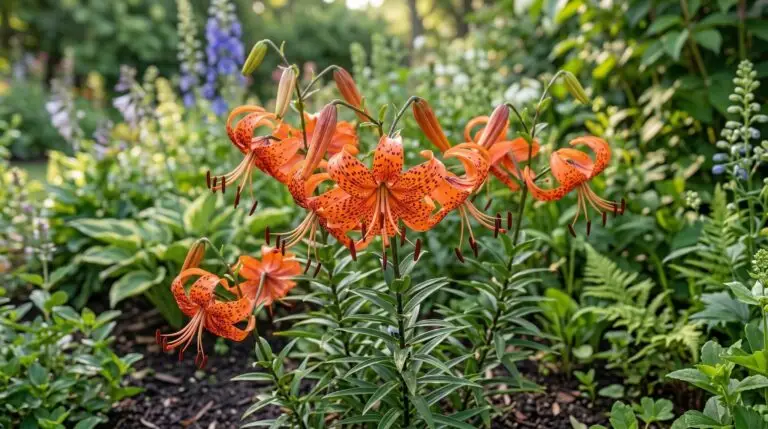
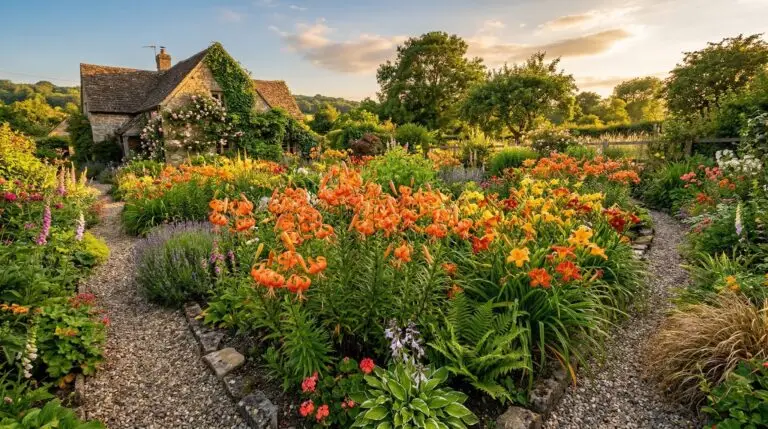
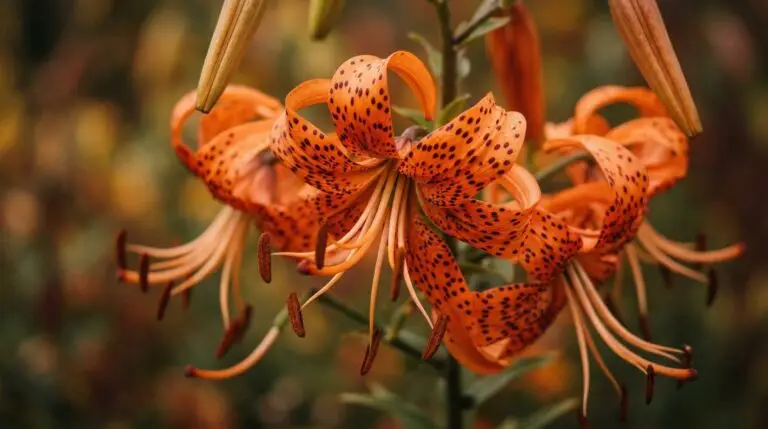
High summer arrives with heavy, humid air and the drone of cicadas in the afternoon heat. This is when the tight green buds finally split open, rolling their petals backward to reveal a brilliant, spotted orange face. A mature stem might hold a dozen or more flowers, blooming in succession from the bottom of the cluster to the top. The color is unapologetically loud, a fiery orange that anchors the wild growth of a true cottage garden. Butterflies and hummingbirds are drawn to the prominent stamens, which are heavy with rust-colored pollen that stains anything it touches. The heavy heads nod in the warm breeze, standing tall above the fading blooms of peonies that dominated the earlier weeks. The visual impact explains exactly why these flowers were planted near porch steps and along split-rail fences by early settlers. They provide a massive return on a tiny initial investment, requiring no deadheading or staking to maintain their upright posture through the worst summer thunderstorms.
As August bleeds into September, the orange petals drop one by one, leaving behind bare green stalks. The black bulbils that formed along the stem loosen their grip and fall to the earth below. Each one of these dark pearls is a tiny clone of the parent plant, ready to pull itself into the soil and begin the cycle anew. This effortless self-propagation is how a single gifted bulb becomes a massive drift over a human lifetime.
Sinking back into the earth
The autumn air turns crisp, bringing the smell of woodsmoke and the frantic activity of squirrels preparing for the freeze. The tall stalks of the lilies turn yellow and then a papery brown, their work for the year completely finished. You can snap the brittle stems off at the base, clearing the way for the late-season display of phlox and asters. Below the cooling surface of the soil, the original bulbs are pulling nutrients down from the dying foliage, plumping up their scales for winter. The newly fallen bulbils are already sending out microscopic roots, anchoring themselves before the ground freezes solid. This quiet multiplication is the hallmark of the pioneer garden, where plants had to earn their keep by surviving harsh winters and periods of neglect. When you look at a dormant patch of these lilies, you are looking at a living timeline of garden history. And then, just as the first hard frost blackens the last leaves, the roots below are already storing energy for the next spring.
More About Tiger Lilies
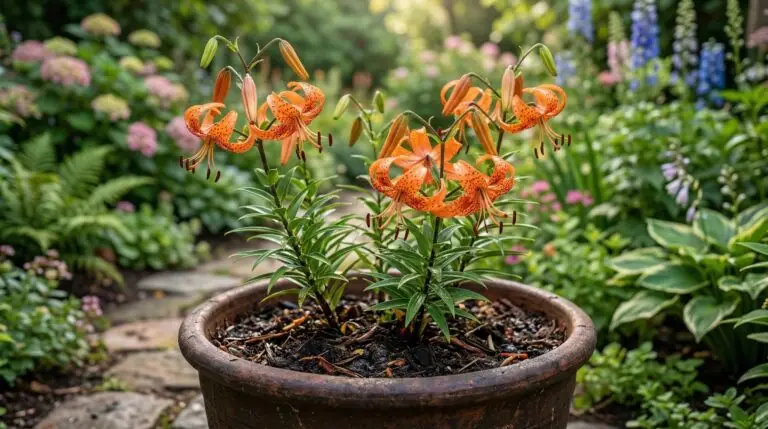
Growing tiger lilies in containers for bold orange summer drama on patios
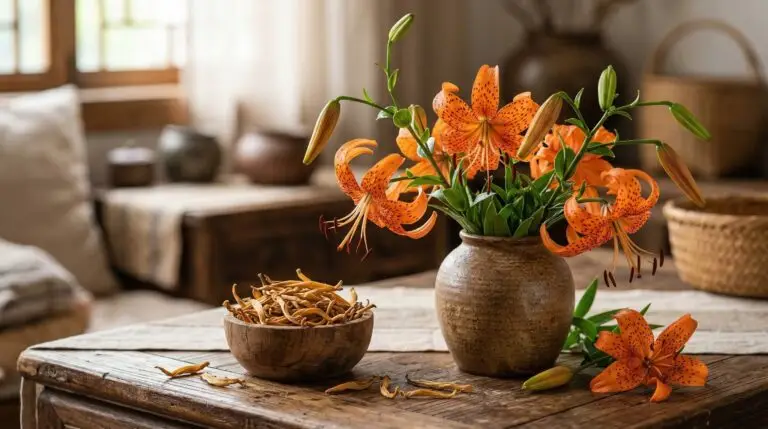
Edible tiger lily buds in Asian cuisine and the centuries-old tradition of cooking with lilies
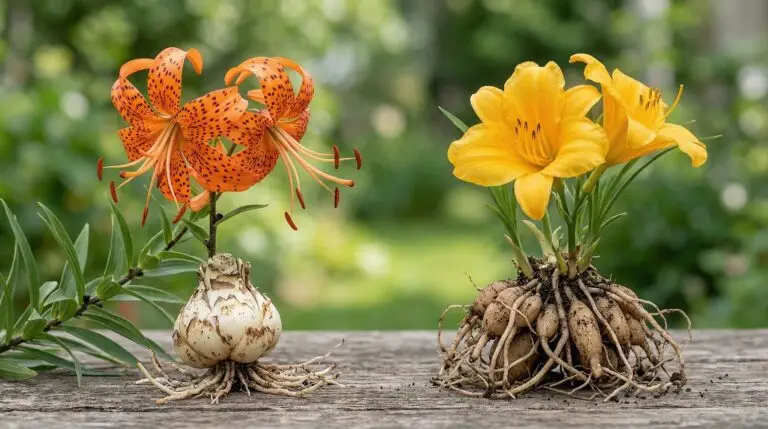
Tiger lilies versus daylilies and the common confusion between these two orange flowers
How to grow tiger lilies for dramatic orange spotted flowers that multiply on their own
Tiger lilies that are toxic to cats and the urgent warning every cat owner needs to know
Propagating tiger lilies from the tiny black bulbils that form along the stem
Warning about tiger lilies near other lilies and the virus they can silently carry
Tiger lily companion plants: what to grow, what to avoid
Tiger lily flower meaning and the bold confidence this spotted bloom represents
Enjoying our flower guides? Add YourFlowersGuide as a preferred source on Google. It helps more readers find us.
Add to Preferred Sources