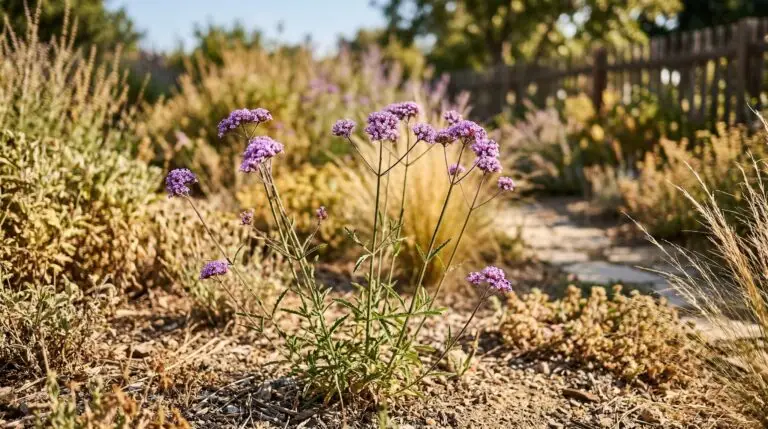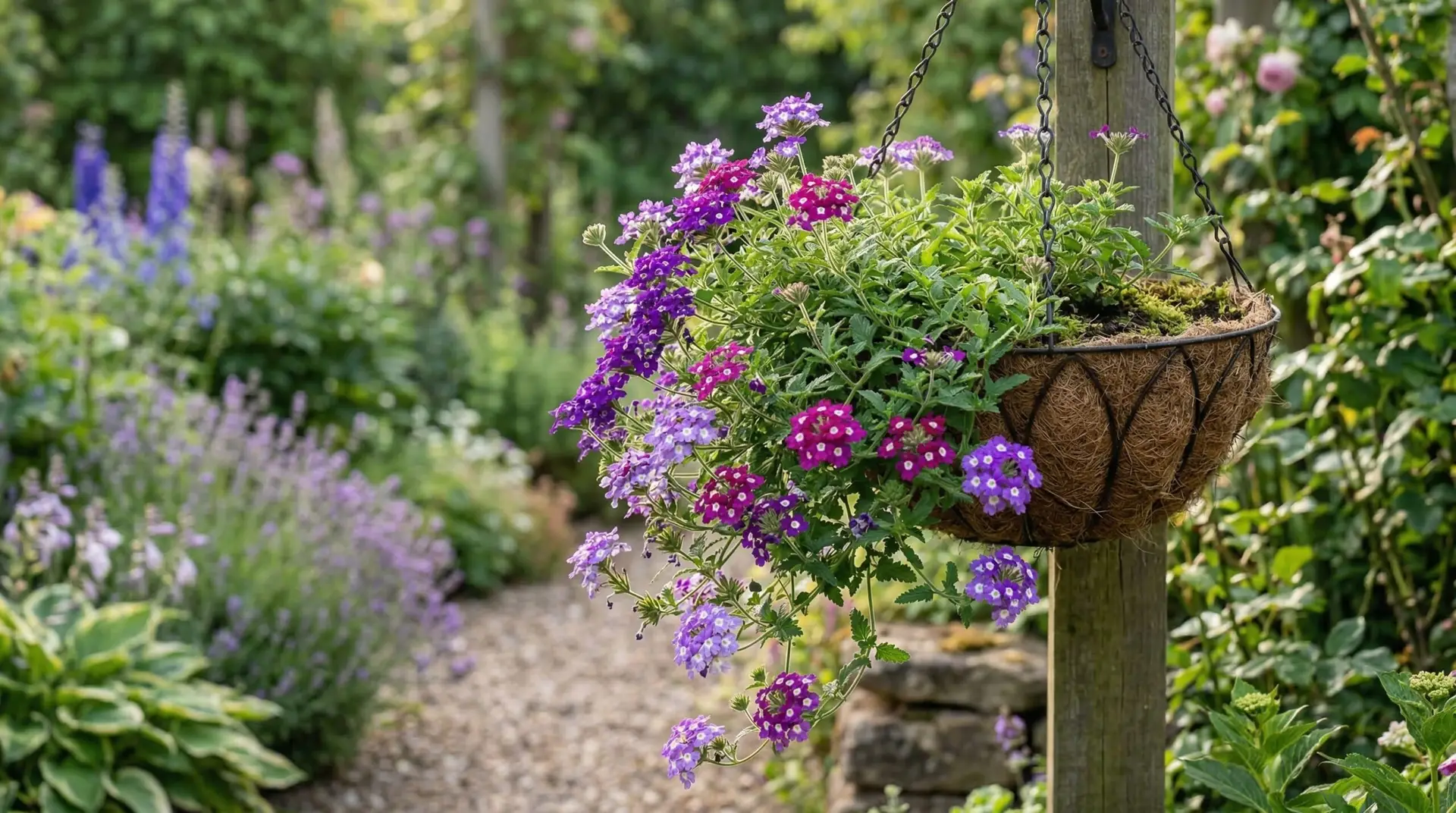
We all know the feeling of walking into a garden center in early May and grabbing the biggest, most overstuffed hanging basket in sight. By the second week of July, that same basket usually looks like a crispy brown mess hanging sadly next to the front door. After trying dozens of different plants to beat the midsummer heat, the one that consistently works for a trailing summer cascade is verbena. A verbena hanging basket thrives on neglect and actually prefers the blistering afternoon sun that fries more delicate flowers. The secret to getting that professional, spilling-over-the-edges look at home is planting density. Stuffing four to five small starter plants into a standard twelve-inch wire basket might feel like crowding, but it forces the stems to cascade downward right away.
When those small plugs first go into the soil, they often throw a bit of a tantrum. The seedlings look dead for about two weeks after transplanting, dropping a few leaves and refusing to grow. They are not dead, and the worst thing to do is drown them with extra water trying to wake them up. Give them time to push their roots into the fresh soil, and keep the watering can away until the pot feels light. Once they settle in, a trailing verbena will grow aggressively, sending out long stems covered in clusters of tiny, star-shaped flowers. They will completely hide the rim of a cheap plastic pot by mid-June.
Picking the right plants for the job
The garden center benches are usually packed with verbena, but grabbing the wrong type will leave a basket looking awkward and stiff. Upright varieties are meant for the front of a flower bed and will simply grow straight up in a pot, exposing the bare soil underneath. Always check the plant tag for the words trailing verbena or spreading verbena before bringing them home. Varieties bred specifically for trailing will naturally arch over the sides of a container without any pinning or training required. Gardeners in the South may find that the dark purple and red varieties fade slightly under the intense August sun, making white or light pink better choices for those regions. In northern zones, the darker colors hold their pigment perfectly from spring all the way to the first frost.
Creating a successful verbena container starts with the dirt, and this is not a place where expensive specialty soils matter. A standard, affordable bag of moisture-control potting mix from the hardware store works perfectly well. The absolute requirement is drainage, because verbena roots will rot quickly if they sit in wet mud. If using a decorative plastic or resin pot, flip it over and drill at least four extra holes in the bottom before adding any soil. A layer of cheap coffee filters placed over those holes keeps the dirt from washing out onto the patio while still letting the excess water drain away instantly. Fill the pot loosely, tuck the plants in, and press the soil down firmly around the root balls to remove large air pockets.
Watering rules and summer survival
Watering a hanging basket is usually a daily chore, but verbena changes the rules entirely. These plants have a natural defense against drought, and their leaves will develop a slight gray cast when they are thirsty. Wait for that visual cue before dragging the hose over, rather than sticking to a rigid daily schedule. Overwatering causes the stems to stretch out and become leggy, leaving large gaps between the flower clusters. When it is time to water, soak the soil completely until water runs out the bottom, and then ignore the plant again for several days. Even during a brutal heatwave, a mature verbena hanging basket rarely needs water more than every other day.
Feeding these heavy bloomers is the second half of the summer survival equation. A slow-release granular fertilizer mixed into the soil at planting time provides a good baseline, but it washes out of a hanging basket after about six weeks. Pick up a basic, inexpensive water-soluble bloom booster and mix it at half strength. Pouring this weak fertilizer mixture over the soil every two weeks keeps the foliage green and forces the plant to push out new buds. If the leaves start turning pale yellow while the veins stay dark green, the plant is hungry and needs a dose of liquid food immediately. Skip the expensive organic emulsions for these pots, as standard synthetic fertilizers deliver the nutrients much faster to hungry container plants.
Mixing partners for a full basket
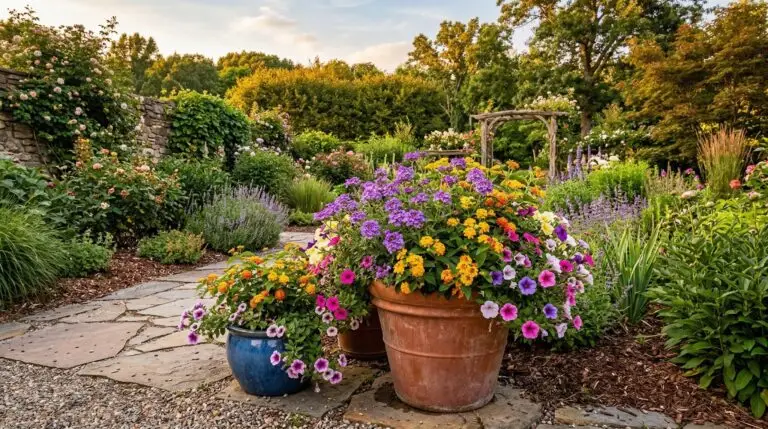
A solid bowl of one color is fine, but mixing different plants together creates a much more interesting display on a front porch. Trailing verbena plays incredibly well with other sun-loving survivors that share the same low-water requirements. Tucking a few petunias into the center of the basket provides large, trumpet-shaped blooms that contrast nicely with the tiny verbena clusters. For the edges, adding some sweet alyssum will create a frothy, white spill that smells like honey in the evening air. The alyssum will sometimes take a break from blooming during the absolute hottest weeks of July, but the verbena will easily cover the gap until the weather cools down.
Another excellent companion for a hot patio is lantana, which handles neglect just as well as verbena does. When combining these aggressive growers in a single pot, give each root ball about three inches of breathing room. They will compete for space, which is exactly what you want, as the competition forces the stems to weave together and spill outward. Do not be afraid to use a pair of cheap scissors to snip back any single plant that starts to bully its neighbors. A quick haircut on a dominant stem allows the slower growers to catch up and keeps the whole arrangement looking balanced.
Dealing with the late summer slump
Even the toughest plants eventually show signs of exhaustion after blooming non-stop for three solid months. Sometime around late August, the stems on a trailing verbena will likely get woody near the soil line, and the flowers will only appear at the very tips. This is completely normal and happens in almost every home garden, regardless of how well the plant was treated. Grab a sharp pair of bypass pruners and cut the entire plant back by exactly half its length. It feels incredibly harsh to chop off the remaining flowers, but this hard prune is the only way to force new growth from the center of the pot.
After the haircut, give the basket a heavy dose of liquid fertilizer and put it back in the full sun. Within about ten days, fresh green shoots will emerge from those woody stems, and a new flush of buds will follow shortly after. This second wind will carry the basket straight through September and well into the chilly nights of October. Many older gardening books insist that verbena requires constant deadheading, but pinching off hundreds of tiny faded blooms is a waste of time. Most modern varieties available at local nurseries are self-cleaning, meaning the old flowers dry up and blow away on their own. Focus your energy on proper watering and that one late-summer haircut, and let the plants do the heavy lifting.
More About Verbena
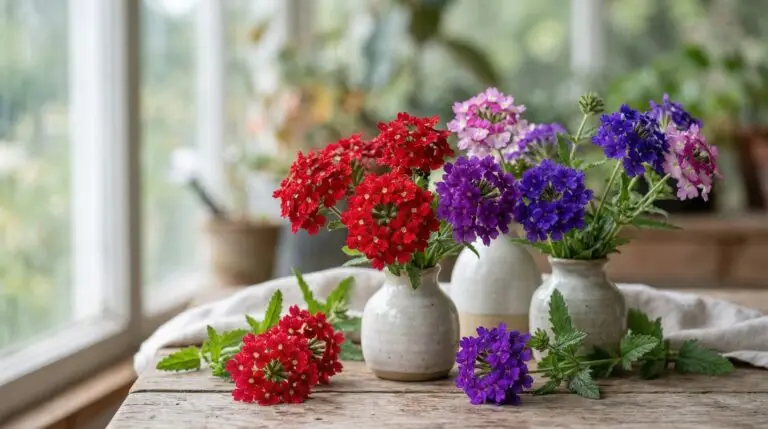
Best verbena varieties from trailing Superbena to tall bonariensis purple towers
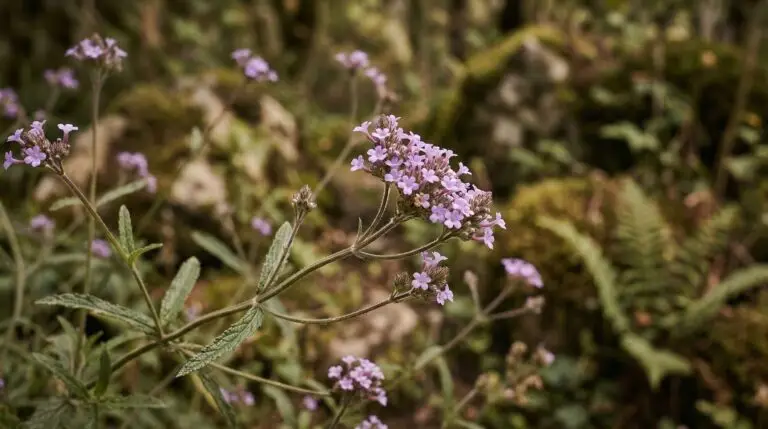
Verbena flower meaning and the sacred herb that ancient Romans used for altars and oaths
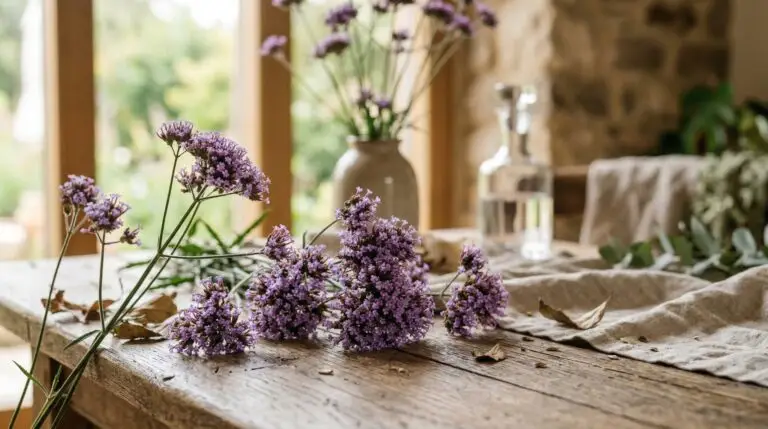
Verbena as a butterfly garden essential that attracts dozens of species all summer
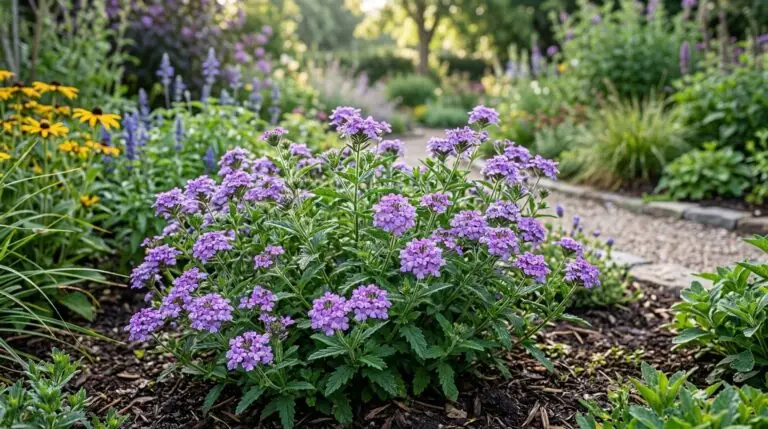
Why verbena gets powdery mildew and how to prevent the white coating on leaves
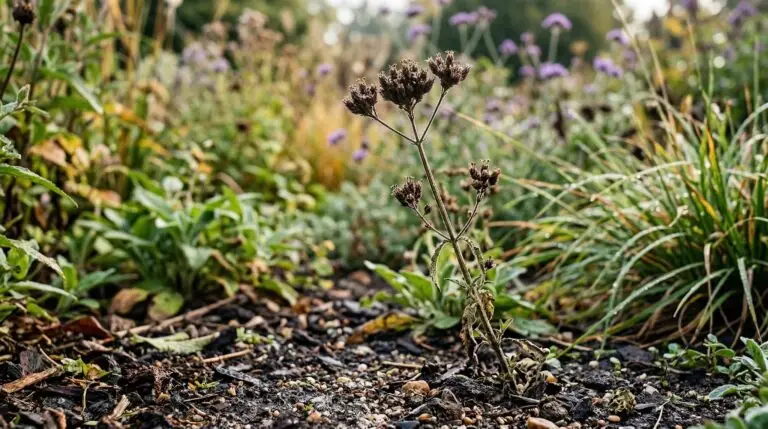
Growing verbena from seed and cuttings for more plants from your favorites
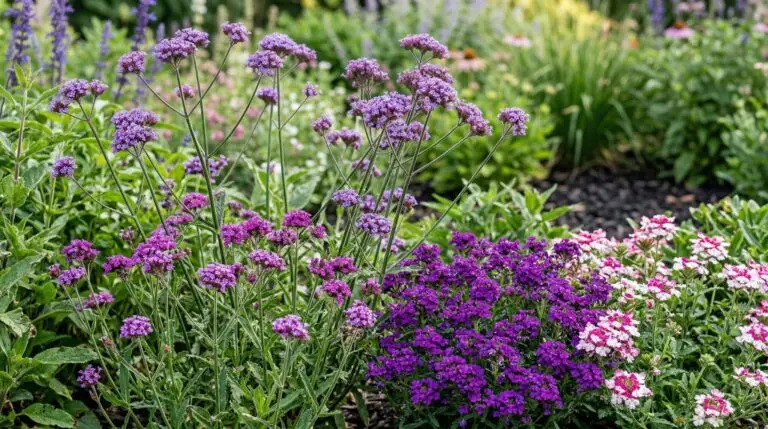
Homestead Purple verbena the tough perennial ground cover that blooms for months
Companion plants for verbena: what to grow and what to avoid