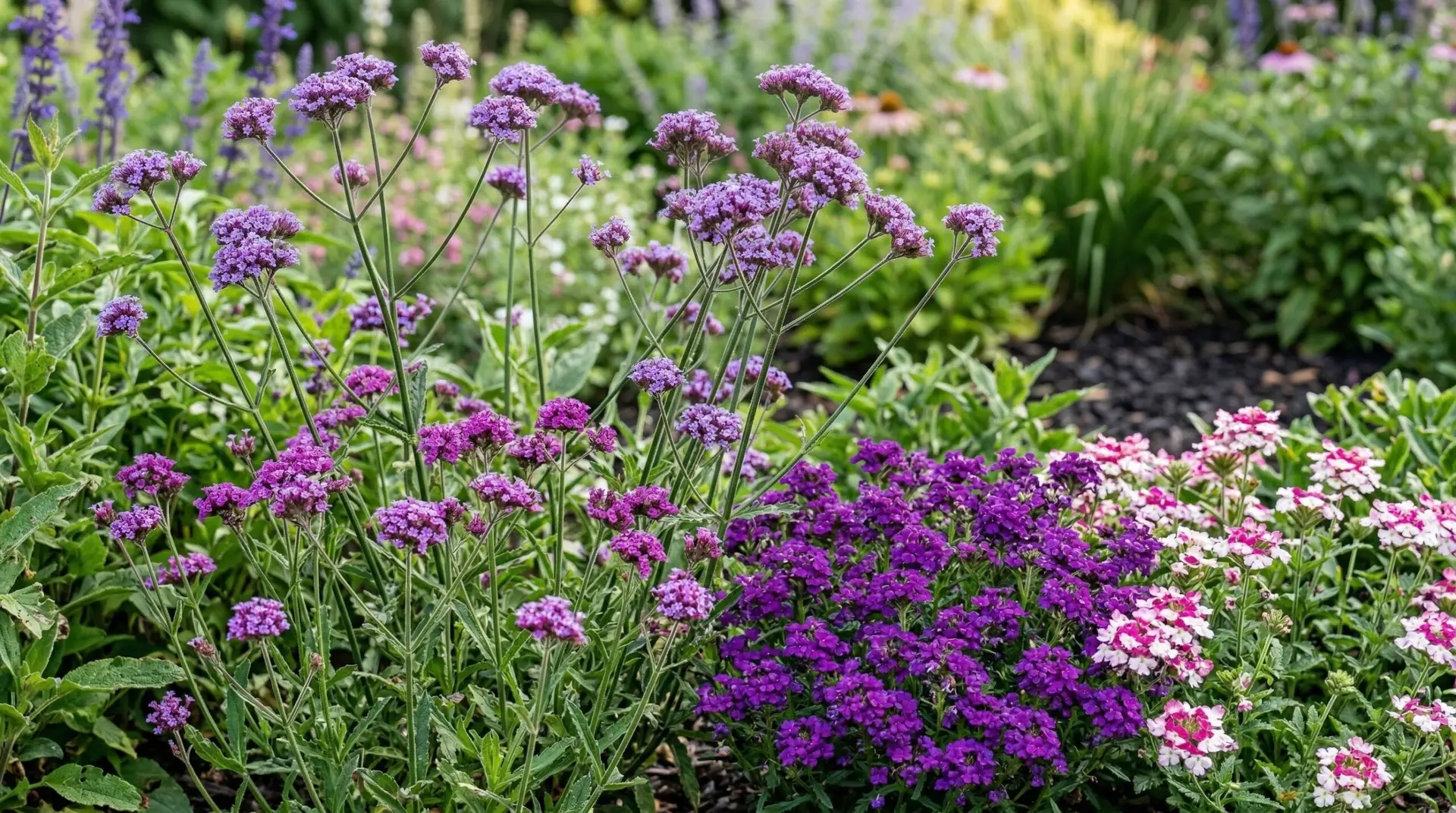
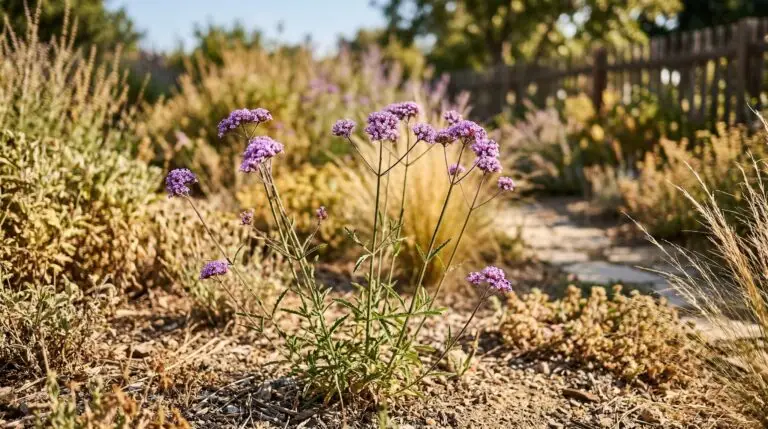
Botanists Allan Armitage and Michael Dirr were driving down a rural Georgia road in the early 1990s when they noticed a dense patch of purple flowers thriving at an abandoned farm. The plant was surviving entirely on its own, enduring the brutal summer heat and baked clay without any human intervention. This chance encounter brought Homestead Purple verbena into the horticultural world. When you examine this plant closely in the garden, you will notice its stems are distinctly square. This anatomical feature often makes people mistake it for a member of the mint family, but it actually belongs to the Verbenaceae family. The tough, sprawling nature of this specific plant quickly earned it a reputation as a survivor among horticulturists.
Contents 4 sections
The botanical origins of a garden survivor
The botanical classification of this plant often confuses even experienced growers, as it sits right on the taxonomic line between Verbena and Glandularia. Most botanists now classify the native parent species as Glandularia canadensis, though the nursery trade universally sells it as perennial verbena. The wild ancestors of this plant evolved in the open prairies and rocky glades of North America, where they had to adapt to intense sunlight and periodic drought. These harsh native environments forced the species to develop deep, aggressive root systems to access water far below the soil surface. You can see similar survival strategies in other prairie natives like Coreopsis, which also thrive in impoverished soils. Understanding this evolutionary history explains exactly why Homestead Purple verbena performs so well in modern gardens that mimic these tough prairie conditions.
How adventitious roots create a living mulch
The true secret to the success of a verbena ground cover lies in its cellular ability to generate adventitious roots. As the square stems creep horizontally across the soil surface, the plant produces specific hormones at every leaf node that touches the earth. These hormones trigger the epidermal cells to differentiate and grow into fresh roots that anchor the stem directly into the ground. This biological mechanism allows a single plant to spread up to three feet wide in one growing season. Instead of relying on one central taproot to sustain a massive canopy of foliage, the plant creates a decentralized network of hundreds of smaller root systems. This continuous rooting process essentially creates a living mulch that cools the soil and suppresses weed seeds from germinating.
Knowing how these nodes root along the ground changes how you should approach planting and maintaining this species. Because it relies on soil contact to spread, Homestead Purple verbena makes an ideal candidate for a driveway edge planting where it can creep over hot concrete. The radiant heat from the pavement would bake the roots of more delicate species, but this plant uses the warm surface to accelerate its stem growth. You do need to provide excellent drainage, as those shallow adventitious roots will rot quickly in compacted clay that holds standing water. When you plant it in loose, well-draining soil, it easily proves itself to be the toughest garden verbena available today. If a section of the plant is damaged by foot traffic or extreme weather, the decentralized root system simply pushes new growth from the surviving nodes.
Surviving heat and drought through leaf anatomy
A close look at the foliage reveals exactly how this plant manages water during the hottest months of the year. The leaves of perennial verbena are deeply lobed, which reduces the total surface area exposed to the baking sun. If you rub a leaf between your fingers, you will feel a rough, sandpaper-like texture created by thousands of microscopic hairs called trichomes. These tiny hairs perform a specific biological function by trapping a microscopic layer of humid air right against the leaf surface. This boundary layer slows down the rate of transpiration, keeping the plant hydrated even when the surrounding air is dry and hot. You will find similar trichome adaptations on Lantana, a closely related genus in the same botanical family that shares this extreme heat tolerance.
The metabolic rhythm of this plant allows it to survive as a reliable perennial in zones 6 through 10. When soil temperatures drop in late autumn, the plant pulls its carbohydrates out of the trailing stems and stores them securely in the crown and root system. In the colder end of its hardiness range, the above-ground foliage will die back completely after a hard freeze. The extensive root network remains insulated beneath the soil, waiting for the increasing day length and warming soils of spring to trigger new growth. In warmer southern zones, the plant often retains its leaves through the winter and continues slow metabolic activity. This wide temperature tolerance is rare for a plant that produces such a heavy volume of flowers during the summer months.
The reproductive biology behind continuous blooms
The flowering structure of this verbena is an example of evolutionary engineering designed specifically for long-tongued pollinators. Each flower head is an umbel composed of dozens of individual, tubular florets that open in a sequential pattern. The nectar is stored at the very bottom of these long tubes, making it inaccessible to short-tongued bees and flies. Butterflies and certain moths possess the exact anatomical equipment needed to reach this high-energy food source. As the insect probes for nectar, it inevitably brushes against the reproductive organs located near the opening of the tube, transferring pollen from plant to plant. The rich purple pigment of the petals acts as a highly visible target for these pollinators flying rapidly over open ground.
The reason Homestead Purple verbena blooms for months without stopping comes down to a genetic quirk that interrupts normal plant reproduction. In wild populations, a plant will stop producing new flowers once it has successfully been pollinated and begins setting seed. This specific cultivar is largely sterile, meaning it rarely produces viable seeds even after successful pollination occurs. Because the biological goal of setting seed is never fulfilled, the plant continuously channels its metabolic energy into generating more buds. The plant remains locked in a perpetual state of attempted reproduction from spring until the first hard frost. This frustrating biological loop for the plant results in the endless display of purple flowers that gardeners value so highly.
More About Verbena
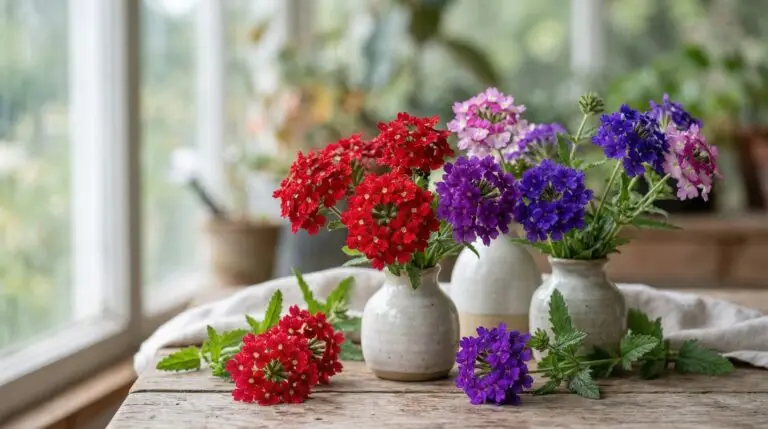
Best verbena varieties from trailing Superbena to tall bonariensis purple towers
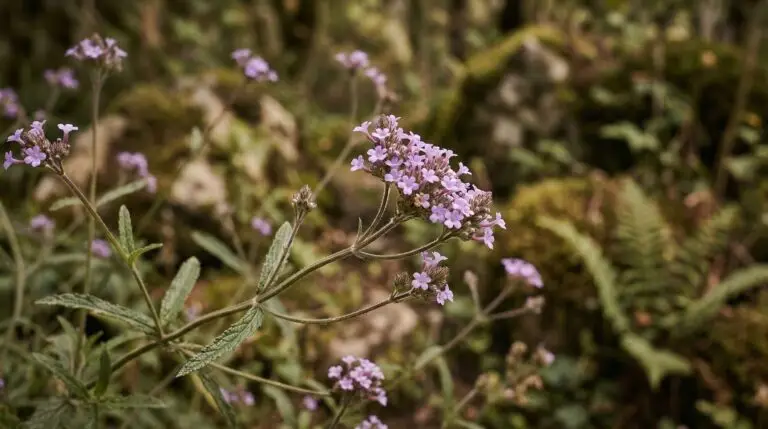
Verbena flower meaning and the sacred herb that ancient Romans used for altars and oaths
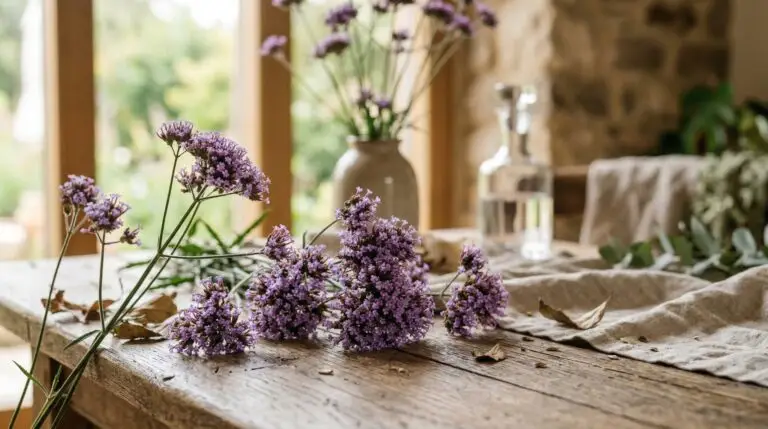
Verbena as a butterfly garden essential that attracts dozens of species all summer
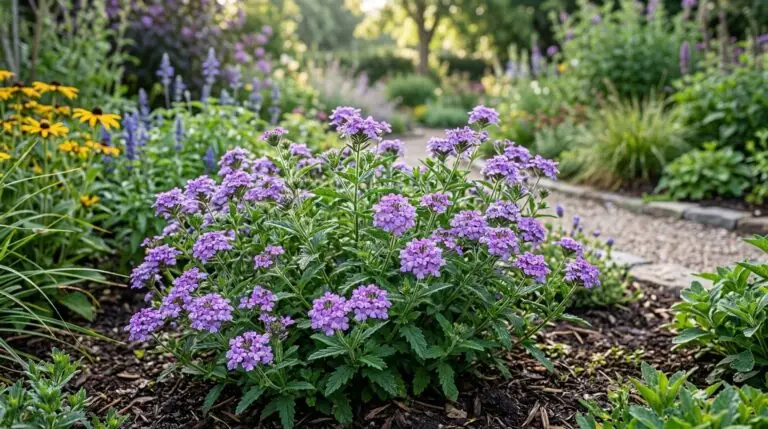
Why verbena gets powdery mildew and how to prevent the white coating on leaves
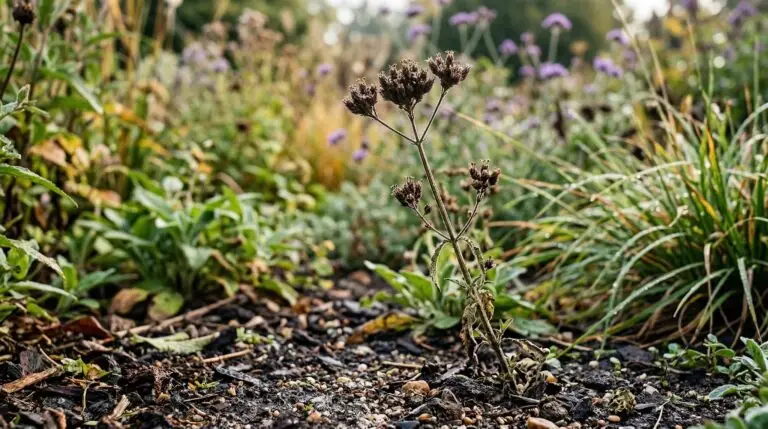
Growing verbena from seed and cuttings for more plants from your favorites
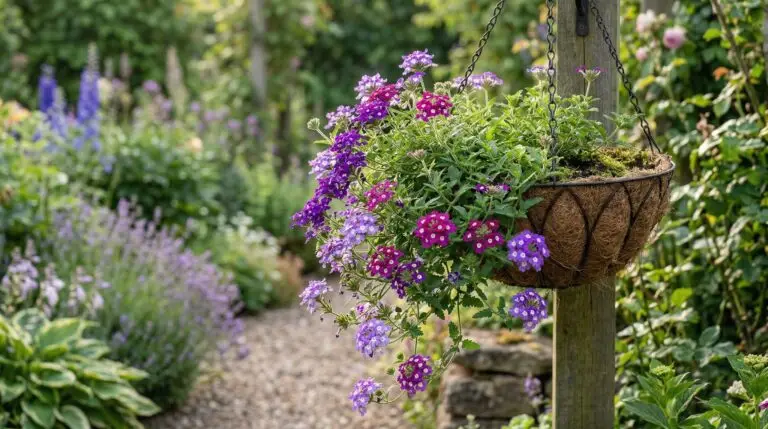
Growing verbena in hanging baskets and containers for trailing summer cascades
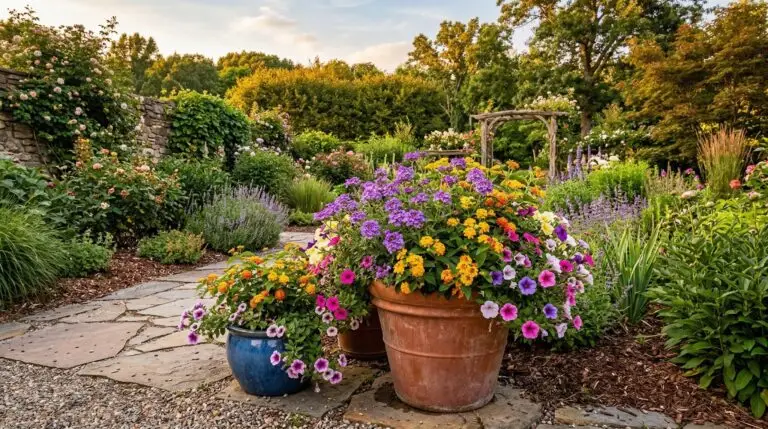
Companion plants for verbena: what to grow and what to avoid
How to grow verbena for non-stop clusters of color that bloom through heat and drought
Enjoying our flower guides? Add YourFlowersGuide as a preferred source on Google. It helps more readers find us.
Add to Preferred Sources