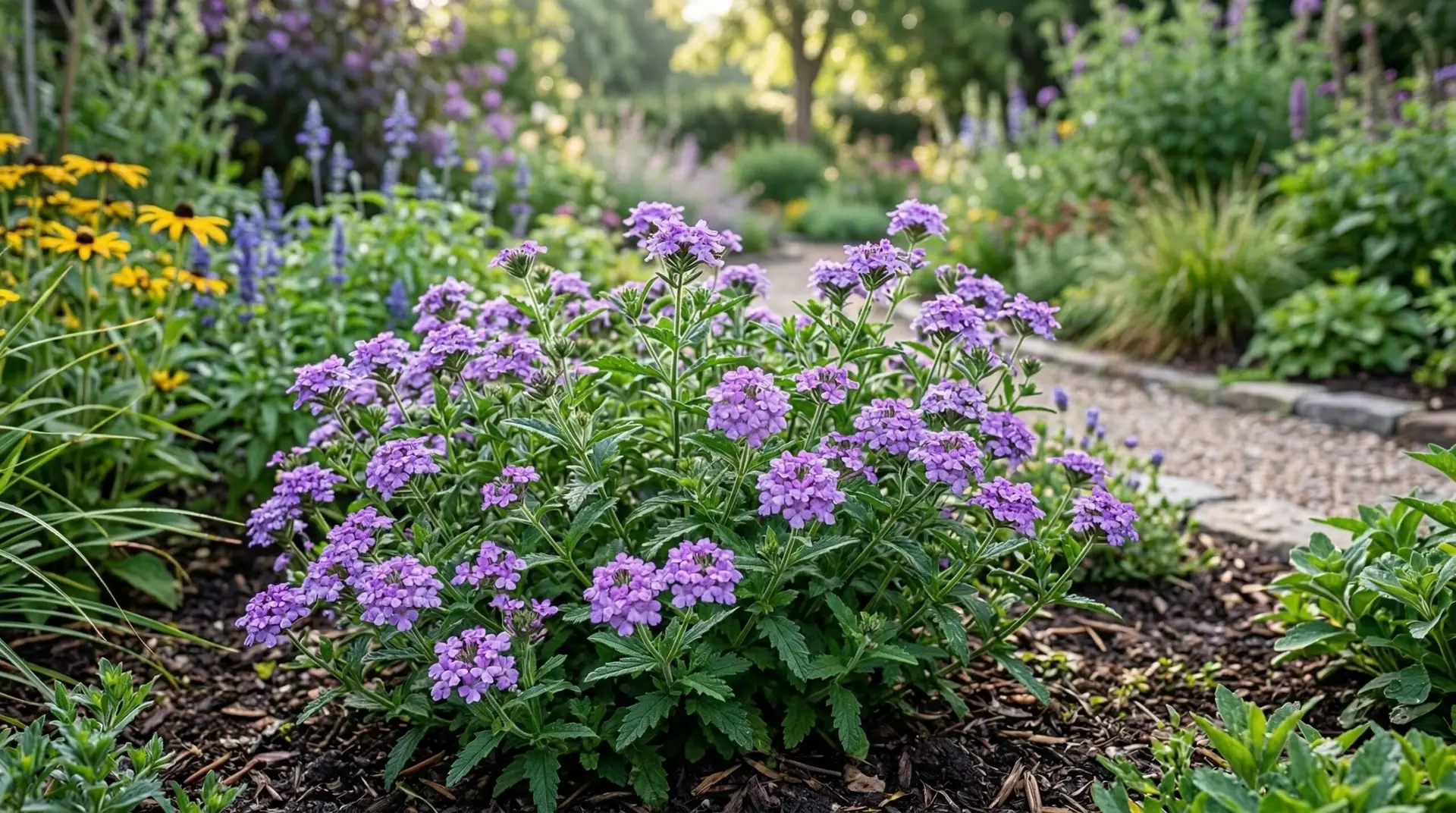
You buy verbena at the garden center because you want tough, sun-loving plants that bloom constantly through the heat of summer. For the first few weeks, everything goes perfectly, and the plants spread into a thick mat of bright flowers. Then, seemingly overnight, you notice a dusty white coating spreading across the leaves, making the plant look like it was sprinkled with powdered sugar. The leaves begin to curl, the blooms stop forming, and the entire plant starts looking exhausted and sickly. You are dealing with powdery mildew, which is the single most common frustration gardeners face when growing this plant. People often assume they did something wrong with their fertilizer, but this is a fungal disease that exploits specific environmental conditions. Once you understand what triggers this fungus, you can change your habits to stop it from ruining your garden beds and containers.
Contents 5 sections
Understanding why powdery mildew targets verbena
Powdery mildew is a fungal infection caused by spores that are almost constantly present in the air around your garden. Unlike many other fungal diseases that need soaking wet leaves to spread, this particular fungus thrives in a very specific combination of high ambient humidity and dry soil. When verbena experiences drought stress at the root level, its natural defenses drop, making the leaves highly vulnerable to the spores landing on them. The white powder you see is actually the body of the fungus growing across the leaf surface and sending tiny root-like structures into the plant tissue to suck out nutrients. As the fungus feeds, the plant loses its ability to photosynthesize effectively, leading to yellowing leaves, stunted growth, and a complete halt in flower production. Warm days followed by cool, humid nights create the absolute perfect breeding ground for this disease. If you live in an area with high summer humidity, your verbena is already at a disadvantage, meaning you have to be extra careful about how you manage the growing environment.
Watering habits that cause and cure the problem
The way you water your garden is often the deciding factor in whether your plants succumb to fungal diseases or stay healthy. Many gardeners make the mistake of standing over their flower beds with a hose nozzle and spraying everything from above. When you water verbena with an overhead sprinkler or a hose wand, you wet the foliage and create a dense, humid microclimate right at the surface of the leaves. This localized humidity is exactly what the powdery mildew spores need to wake up and start growing. The fix is simple and requires you to change your watering technique to deliver moisture directly to the soil at the base of the plant. Using drip irrigation, a soaker hose, or simply aiming your watering can under the leaves keeps the foliage dry while giving the roots the deep drink they need. You will find this same base-watering strategy is essential for keeping other popular bedding plants like Petunia looking their best throughout the long summer months. Consistent soil moisture prevents the drought stress that weakens the plant, while dry leaves deny the fungus the environment it needs to establish a foothold.
The role of air circulation and spacing
Gardeners are understandably impatient and often plant their flowers very close together to achieve an instantly full, lush look in their beds and containers. When verbena plants are crowded tightly against each other or smothered by neighboring plants, air cannot move freely through the stems and leaves. This lack of airflow traps stagnant, humid air inside the plant canopy, practically guaranteeing a powdery mildew outbreak. You can prevent this by following the spacing recommendations on the plant tag, giving each verbena enough room to spread without weaving into a dense, impenetrable mat. If your plants have already grown together into a thick tangle, you should take a pair of sharp bypass pruners and thin out some of the inner stems. Removing about a quarter of the dense growth opens up the center of the plant, allowing the wind to blow through and dry out the morning dew quickly. Good air circulation is a mechanical defense against disease, sweeping away humid air and making the environment hostile to fungal spores.
Choosing resistant varieties to stop the cycle
If you have repeatedly struggled with the white coating on your plants despite changing your watering habits, the problem is likely the genetics of the plant itself. Older varieties of verbena are notorious mildew magnets, and trying to keep them clean in a humid climate is a frustrating, uphill battle. Plant breeders recognized this major flaw and spent years developing new series of verbena that naturally resist the fungus. When you shop for plants in the spring, you should specifically look for series bred for high disease resistance, as these will save you an enormous amount of time and effort. Spending a few extra dollars on a premium, disease-resistant plant is always a better investment than buying cheap, susceptible varieties that will require constant spraying. This shift toward better genetics mirrors the transformation seen with Phlox, where older types were routinely destroyed by mildew until resistant cultivars finally offered a reliable solution. Starting with a plant that naturally fights off the disease is the most effective way to guarantee a garden full of healthy, continuous blooms.
Knowing when to treat and when to pull the plant
Even with good habits, you might still see a few spots of white powder on your leaves during a particularly humid stretch of weather. If you catch the infection very early, you can treat the plant with a horticultural oil or a basic baking soda spray. These alkaline treatments work by altering the pH of the leaf surface, creating a harsh environment where the fungus cannot survive or spread. You must apply these sprays thoroughly to coat both the tops and bottoms of the leaves, and you will need to reapply them after every rainstorm. However, you need to be realistic about the condition of your plants and recognize when a rescue mission is no longer worth the effort. If the verbena is completely covered in white powder and the stems are turning brown, no amount of spray will bring it back to its former glory. The most useful piece of advice for dealing with severe powdery mildew is to simply pull the infected plant, throw it in the trash, and replace it with a resistant variety. Accepting defeat on a sick plant allows you to focus your energy on growing healthy flowers rather than running a hospital ward in your backyard.
More About Verbena
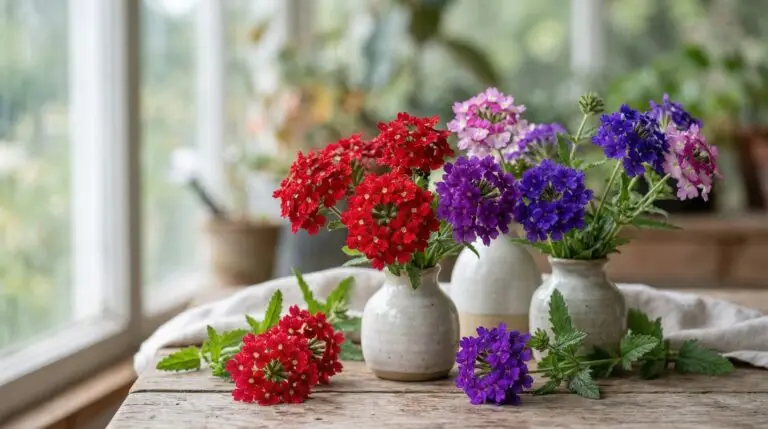
Best verbena varieties from trailing Superbena to tall bonariensis purple towers
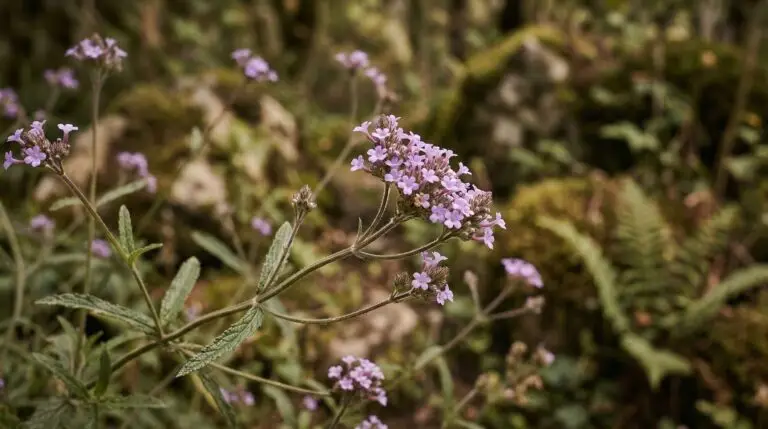
Verbena flower meaning and the sacred herb that ancient Romans used for altars and oaths
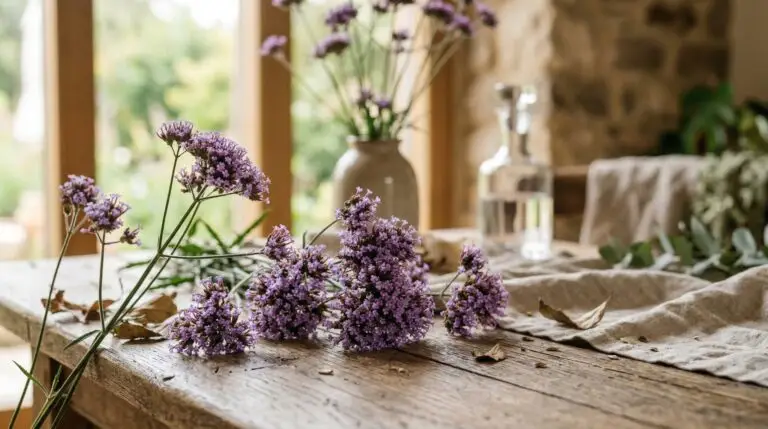
Verbena as a butterfly garden essential that attracts dozens of species all summer
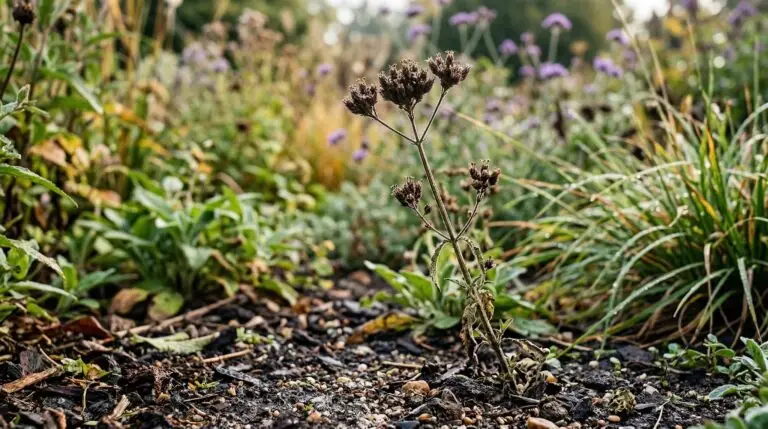
Growing verbena from seed and cuttings for more plants from your favorites
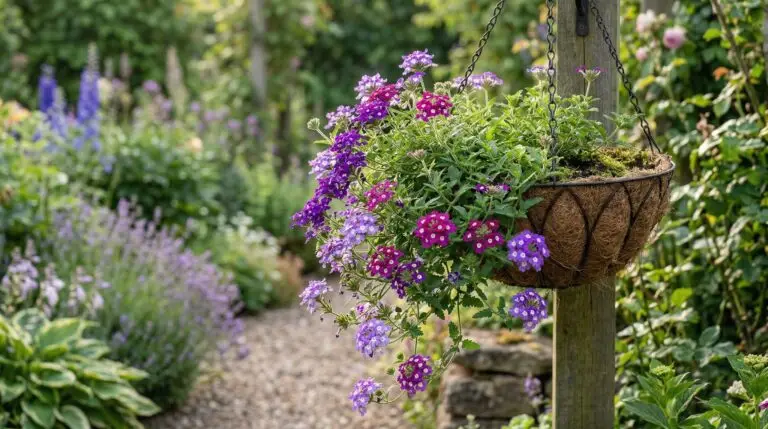
Growing verbena in hanging baskets and containers for trailing summer cascades
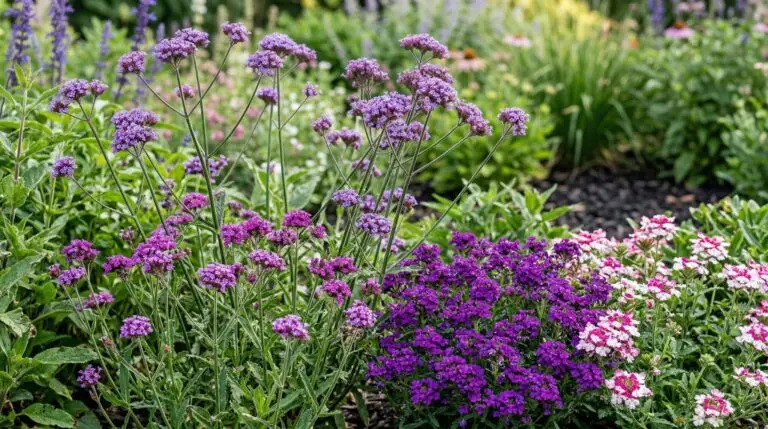
Homestead Purple verbena the tough perennial ground cover that blooms for months
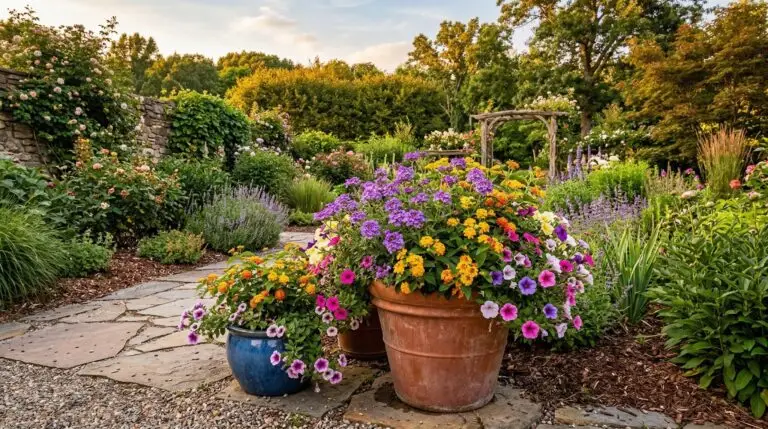
Companion plants for verbena: what to grow and what to avoid
How to grow verbena for non-stop clusters of color that bloom through heat and drought
Enjoying our flower guides? Add YourFlowersGuide as a preferred source on Google. It helps more readers find us.
Add to Preferred Sources