What to plant with Delphinium
The pairing · pick a flower
All Delphinium companions
What not to plant near Delphinium
The best companions for candle larkspur, explained
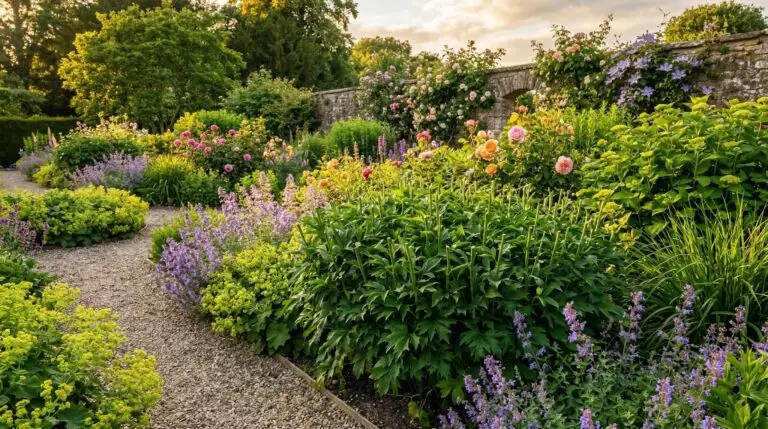
Delphinium elatum is the plant every English cottage border is built around, a spire of blue or purple that reads as an exclamation point above everything else in the bed, and the companions worth choosing all serve that one fact. The most repeated pairing across every source is the shrub rose: roses share delphinium’s appetite for full sun and rich soil closely enough that neither plant is compromised, and a mounded rose at three to five feet gives the spikes both a color foil and a windbreak at a lower, sturdier height. Herbaceous peonies do something more practical. Delphinium famously drops its lower leaves and looks bare and leggy below the bloom spike by midsummer, especially after the first flush gets cut back for a second round, and a peony’s broad mounded foliage sits directly in front of that gap without asking for different conditions. The two bloom close enough in sequence, peony first or alongside, delphinium’s spikes rising through and past it, that the border reads as continuous rather than staggered.
Lower down the height scale, catmint and Salvia nemorosa both do useful, different jobs. Catmint spreads into a soft, long-blooming mound that tolerates the same full-sun, well-drained range delphinium wants, low and airy enough to skirt the base without smothering the crown, and it keeps flowering through most of the season rather than finishing in one flush. Salvia’s shorter violet-blue spikes are a genuine textural echo rather than a competing feature: the same spire form at a fraction of the height reads as a stepping stone leading the eye up to delphinium’s full six feet, and the two share sun and drainage needs closely enough to plant with confidence. Foxglove earns its reputation as the classic second vertical for the same reason lupine does, opening its spotted bells just ahead of delphinium’s peak and stretching the spike season on both ends, though it is itself toxic and self-seeds aggressively enough that it will show up where you did not plant it. Oriental poppy and Shasta daisy round out the front and mid border, the poppy’s papery blooms opening earlier in the same sun and drainage, the daisy’s clean white flowers giving the eye a resting point against so much blue and purple, and garden phlox picks the border back up in mid to late summer once the delphinium spikes have faded and been cut down.
What not to plant near candle larkspur
The real danger to delphinium is not another plant attacking it, it is another plant fighting it for the two things it cannot compromise on: full sun and sharp drainage. Its documented failure mode, named directly by university extension sources, is crown rot from soil that stays wet or from planting the crown too deep, so anything that demands constantly saturated ground, true bog and streamside perennials, marsh marigold, cattails, sets up a direct conflict where keeping one plant happy stresses or kills the other. The same logic rules out tall shade-casters planted on delphinium’s sunny side. It needs six or more hours of direct light to bloom well, and a plant like Joe Pye weed, which can reach six feet and wants consistently moist to wet soil, competes for that light and compounds the drainage problem at the same time, a double conflict rather than a single one. Aggressive spreading herbs, mint above all, round out the honest avoid list for a more generic reason: running mints spread by rhizomes several feet a year and will crowd the root zone of a comparatively slow, refined perennial, though this is a caution that applies to almost any refined border plant next to mint, not something specific to delphinium.
Several claims worth naming and rejecting circulate on consumer garden sites. Some list peony, ornamental grasses, and even sunflower as delphinium avoids, but that does not hold up: the RHS itself recommends grouping tall delphinium among other large plants, ornamental grasses specifically, precisely because they buffer wind without stealing sun, and peony is one of the most established, repeatedly named delphinium companions rather than a threat to it. No delphinium-specific evidence for sunflower competition turned up in the sourcing for this page, which makes that particular avoid look like copied listicle content rather than horticulture. Hollyhock gets flagged on some sites for sharing rust and powdery mildew with delphinium, and while both plants are genuinely susceptible to powdery mildew, extension sources are clear that different fungal pathogens cause it in each species, not one shared disease jumping between them, so treat that specific claim skeptically rather than as a reason to keep the two apart.
Do they like the same conditions?
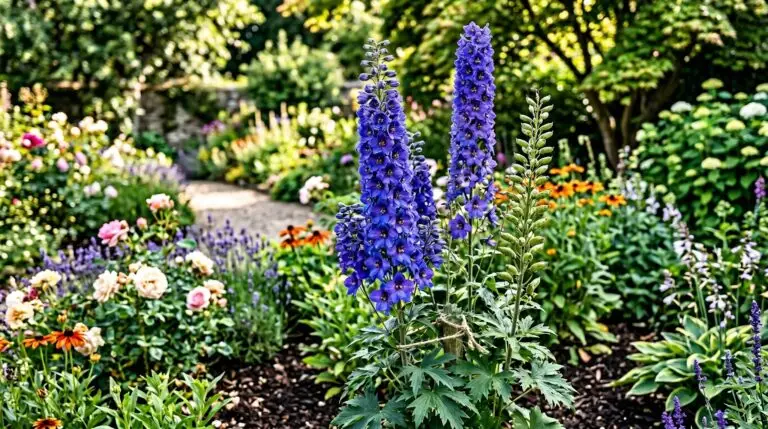
Delphinium’s growing profile is narrower than it looks from the outside, and it is worth stating plainly because it is what makes every pairing above honest rather than decorative. It wants full sun, six or more hours of direct light, with afternoon shade protection recommended only in hot southern zones where the plant already struggles with heat and humidity. It wants soil that stays consistently moist through the growing season without ever sitting wet, a genuinely narrow target that rules out both drought specialists and anything that wants constantly damp feet. It tolerates alkaline soil up to roughly pH 8.0, which is a wider pH range than many perennials manage, but it is also a documented heavy feeder that needs fertilizing in early spring and again later in the season, with stunted growth and yellow foliage as the visible sign it needs more. Its hardiness runs roughly USDA zones 3 through 7, and the real limiter is not winter cold but summer heat and humidity, which is why it performs poorly and often lives only two to three years as a short-lived perennial south of that range.
That heavy-feeder, moist-but-sharply-drained combination is where the honest caveats live. Lavender is repeated everywhere as a delphinium companion for its silvery texture and matching blue-purple tone, and the pairing does work at the design level, but lavender actually wants lean, dry, low-fertility soil, close to the opposite of delphinium’s rich, moist, heavily fed profile. The two can share a bed, but only if lavender sits on the leaner, drier edge rather than root to root with delphinium’s feeding zone, a looser conditions match than the marketing copy for this pairing usually admits. Catmint carries a smaller version of the same caveat: it tolerates delphinium’s richer soil well enough to plant close, but it is naturally more drought-tolerant and would be just as happy, if not happier, a little leaner and drier. None of this makes either plant a bad choice near delphinium. It only means the shared-conditions match is real for some companions and more approximate for others, and knowing which is which is the difference between a pairing that lasts and one that quietly fails within a season.
How to plant them together
Delphinium’s own culture drives almost every spacing decision here. Because it is a heavy feeder competing for the same fertile ground, give true companions room, roughly 18 to 24 inches from the crown for most perennials and up to 30 inches for larger, more permanent plantings like peony and shrub rose, so root competition stays low and the delphinium’s feeding does not have to be shared at close range. That same spacing does double duty protecting airflow: delphinium is prone to powdery mildew, and a crowded center traps the humidity that disease needs, so the goal is always a companion planted close enough to read as one composition but far enough to leave the crown open to moving air. Layer by height and bloom timing rather than by color alone. Taller, sturdier plants like shrub roses or ornamental grasses belong at a similar height slightly ahead of or beside delphinium, where they block wind without shading it; low skirting plants like catmint and peony belong directly in front, where their foliage will still be doing its job in August after delphinium has dropped its lower leaves; and later bloomers like garden phlox belong nearby but not crowding, ready to pick up color once the spikes are cut back.
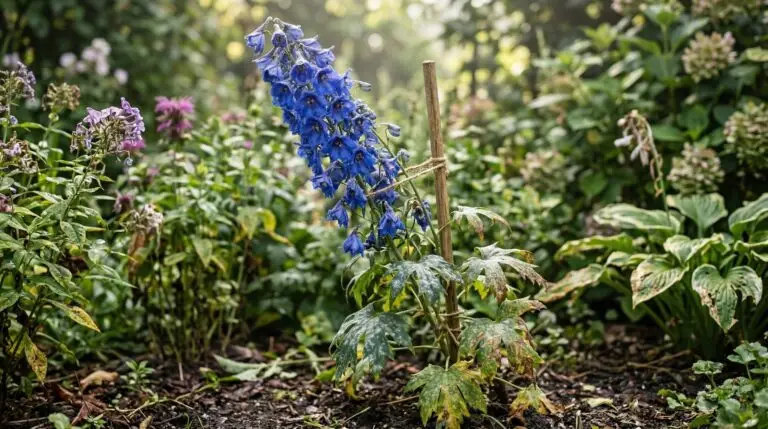
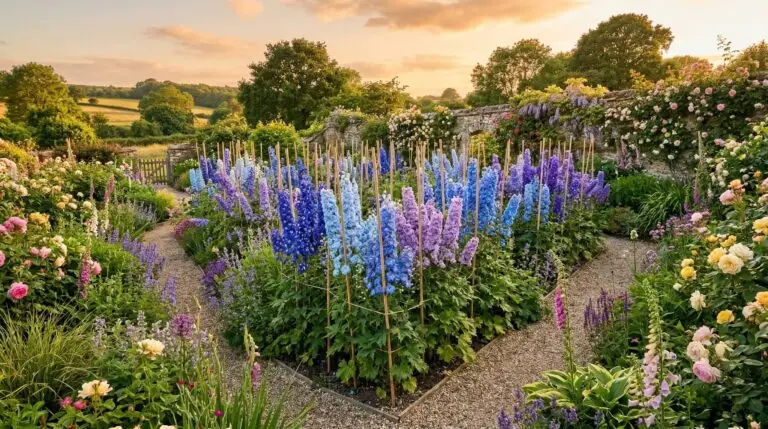
Staking deserves its own mention because it changes how you plant around delphinium more than most perennials. Its hollow, brittle stems and heavy flower spike snap easily in wind and rain, and extension sources are consistent that staking, or siting the plant against a fence or amid other large plants for shelter, is not optional for the taller elatum hybrids. That means leaving working room behind or beside the plant for a stake, cage, or twiggy support inserted early in the season, before the stems reach knee height, rather than filling every inch of space with companions and discovering later there is nowhere to put a support. Delphinium is a poor candidate for a container on its own for the same reason: it wants deep, fertile, well-drained soil and a stable base for staking that most pots cannot provide, so if you are growing it in a large mixed container, pair it only with equally full-sun, well-drained companions and expect to add support early.
Does companion planting actually work for candle larkspur?
Some of what gets called delphinium companion planting is genuinely proven, some is a real but more modest benefit than advertised, and some is widely repeated with no delphinium-specific study behind it at all, and being honest about which is which is more useful than pretending every pairing carries equal weight. The crown-rot risk from poor drainage and the light competition from shade-casters are both directly documented by university extension sources, which makes the core avoid logic, keep delphinium out of wet ground and out of another plant’s shadow, as close to proven as garden advice gets. Shrub rose as a design and windbreak pairing sits just below that: the RHS itself recommends grouping tall delphinium among other large plants for shelter, and rose’s full-sun, rich-soil profile is independently confirmed against the same guide, so the shared-conditions match rests on real sourcing even though the benefit is design and practical coverage rather than a measurable horticultural effect. Peony as a bare-legs solution sits lower again: it is one of the most repeated pairings in garden writing, and each plant’s own growing profile checks out separately, full sun, rich well-drained soil, similar bloom timing, but no university source was found that documents the pairing itself, so treat it as sound garden logic rather than a settled fact. Lavender and catmint sit at a similar level, popular and visually convincing pairings where the actual soil-moisture needs diverge more than most garden writing admits, which does not disqualify them but does mean giving them room rather than crowding them close.
What does not hold up is the cluster of claims naming peony, ornamental grasses, and sunflower as things to avoid near delphinium. Those contradict better sources directly, RHS recommends grouping delphinium with large plants including grasses for shelter, and peony is one of its best-documented companions, which makes that particular avoid list look manufactured rather than researched. The one real, separate fact worth keeping straight from all of this is delphinium’s toxicity: every part of the plant is poisonous if eaten, a genuine concern for pets, children, and, on a much larger scale, livestock grazing wild larkspur on western rangeland, extensively studied by USDA researchers for exactly that reason. That toxicity has nothing to do with which plants delphinium tolerates beside it in a border. Conflating the two, as some casual garden writing does, is the kind of shortcut this page is built to avoid.
Frequently asked questions
What can I plant in front of delphinium to hide the bare stems?
Peony and catmint are the two most reliable choices. Peony’s broad mounded foliage sits at exactly the right height to cover the lower stems delphinium drops by midsummer, and catmint spreads into a lower, airier mound that does the same job with a longer bloom window.
What should you not plant near delphinium?
Avoid true bog and streamside plants that need constantly wet soil, since delphinium’s crown rots in standing moisture, and keep tall, shade-casting or wet-soil plants like Joe Pye weed off its sunny side. Aggressive spreaders like mint are worth keeping at a distance too, though that caution applies broadly and is not specific to delphinium.
Is delphinium actually poisonous to plant near other flowers?
No. Delphinium’s toxicity is an ingestion risk to people, pets, and grazing livestock, not a chemical effect on neighboring plants. There is no evidence it harms other plants growing beside it; the two facts are unrelated even though they get mixed up in casual garden writing.
Can delphinium and roses grow together?
Yes, and it is the single most repeated pairing in delphinium companion planting. Both want full sun and rich, well-drained soil, and a rose’s mounded height gives the taller delphinium spikes a windbreak and a lower-growing color foil.
What blooms after delphinium’s flowers fade?
Garden phlox is the classic answer, picking up color in mid to late summer once the first delphinium flush has been cut back. Cutting delphinium’s spent stalks promptly can also coax a lighter second bloom later in the season, extending its own display rather than relying solely on a successor.
Sources
RHS: How to grow perennial delphiniums · North Carolina Extension Gardener Plant Toolbox: Delphinium elatum · North Carolina Extension Gardener Plant Toolbox: Delphinium (genus) · Iowa State University Extension: Growing Delphiniums · North Carolina Extension Gardener Plant Toolbox: Salvia nemorosa · North Carolina Extension Gardener Plant Toolbox: Nepeta x faassenii · North Carolina Extension Gardener Plant Toolbox: Digitalis purpurea · North Carolina Extension Gardener Plant Toolbox: Leucanthemum x superbum · North Carolina Extension Gardener Plant Toolbox: Phlox paniculata · PlantTalk Colorado (Colorado State University Extension): Oriental Poppy
More About Delphinium elatum
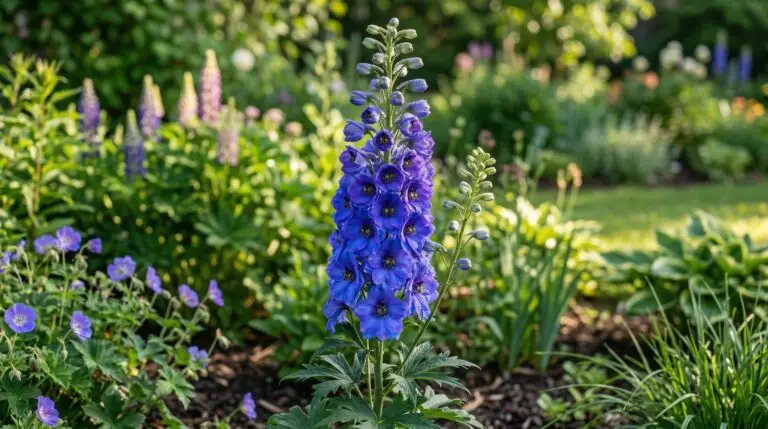
Delphiniums as show-stopping cut flowers for dramatic tall arrangements
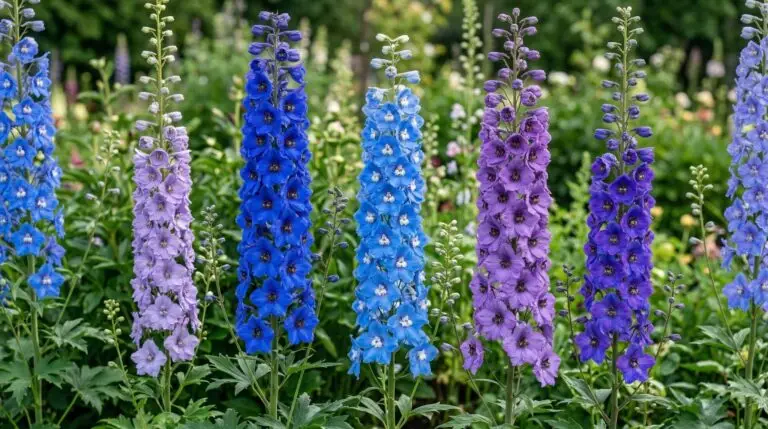
Best delphinium varieties from towering Pacific Giants to compact Magic Fountains
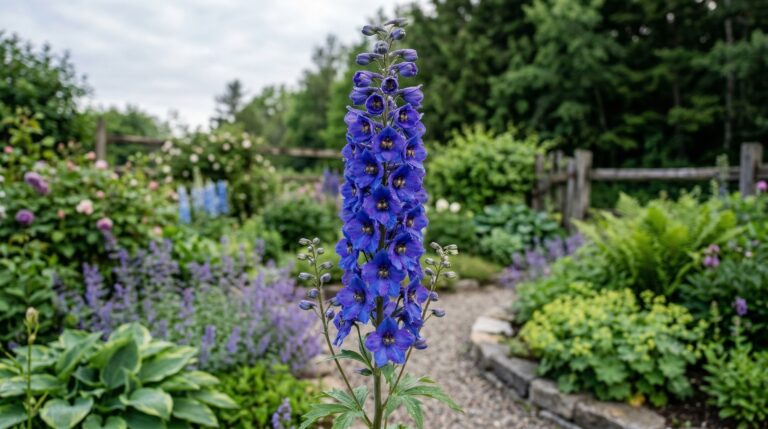
How to grow tall delphinium spires that tower above the garden like living architecture
Staking delphiniums properly so tall flower spikes survive wind and rain storms
Growing delphiniums from seed and the patience required for first-year blooms
How to get delphiniums to rebloom by cutting back spent flower spikes
Why delphiniums are short-lived perennials and how to keep them coming back
Delphinium flower meaning and the symbolism of true blue in the garden