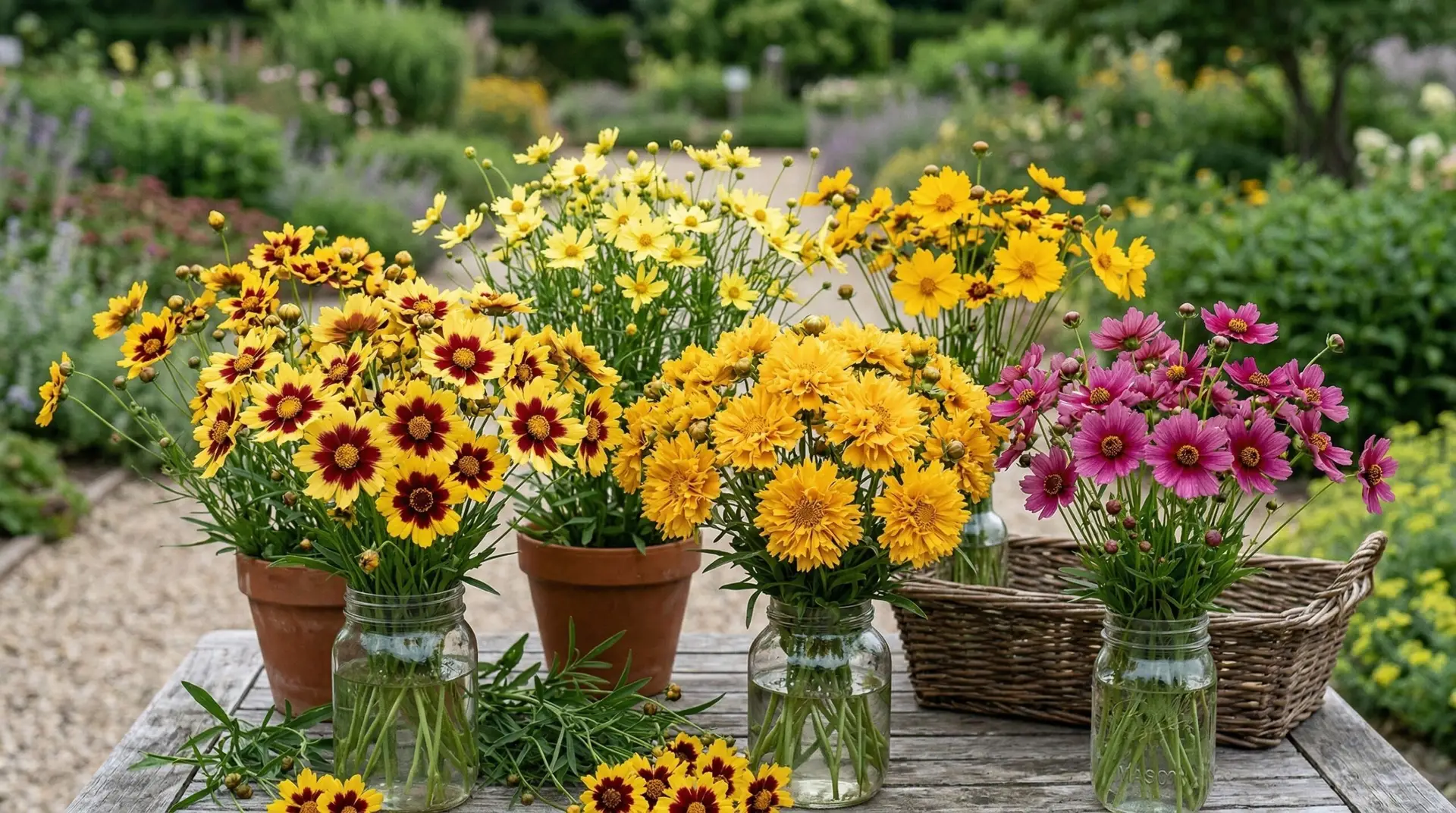
I still remember the first time I saw coreopsis moonbeam planted in a massive, sweeping drift. Before that moment, my experience with tickseed was entirely limited to the aggressive, fiery golden-yellow varieties that dominated roadside plantings and commercial spaces. Those older types were certainly cheerful, but they demanded attention and often clashed with the softer colors I preferred in my own garden. Then came this revelation of a plant, offering a completely different experience with its pale, buttery yellow blossoms that seemed to hover like tiny stars. It completely changed how I thought about the genus and opened my eyes to the subtle power of thread leaf coreopsis. The sheer volume of flowers it produced without ever looking loud or garish felt like a minor miracle to a gardener used to compromising between bloom count and color harmony.
The appeal of this specific variety goes far beyond a pretty face, rooting itself in a combination of extreme resilience and delicate aesthetics. You get the rugged, drought-tolerant nature of a native prairie plant wrapped in a package that looks fragile enough to belong in a formal English border. The foliage itself is a major draw, composed of incredibly fine, needle-like leaves that create a soft haze of green long before the first bud even opens. I find myself brushing my hands over the airy mounds every time I walk past, enjoying the springy resistance of the stems. When you finally get a mature clump established, it is almost like a living cloud that softens the hard edges of rocks, pathways, and stiffer neighboring plants. It bridges the gap between wild nature and cultivated garden space with effortless grace.
Contents 4 sections
The quiet revolution of a pale yellow flower
The gardening world collectively recognized the brilliance of coreopsis verticillata moonbeam when it was named the 1992 Perennial Plant of the Year. That award is usually reserved for plants that solve problems, and the problem this plant solved was the harshness of midsummer garden palettes. Pale yellow is an incredibly useful color in garden design because it is a bridge between warm and cool tones, cooling down hot reds and oranges while warming up blues and purples. I love planting it alongside the deep violet spikes of catmint, where the two plants weave their stems together in a perfectly balanced color pairing. The soft yellow blooms never fight for dominance, allowing you to create complex planting schemes where every participant gets a moment to shine. It is a team player in the truest sense of the word.
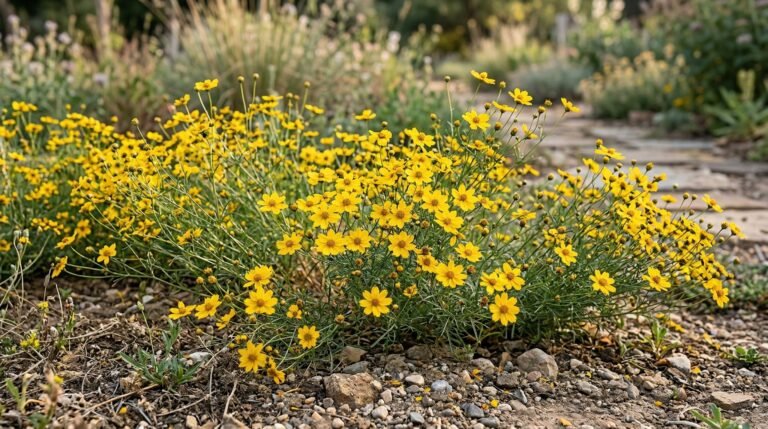
Watching the blooms open in early summer brings a specific kind of satisfaction that I look forward to every year. The flowers are small, usually no more than an inch or two across, but they are produced in such staggering numbers that the entire plant seems to glow. This glowing effect is especially pronounced in the early evening, a time when darker flowers recede into the shadows and the pale yellow petals catch the last light of the day. You will often find me sitting near my coreopsis moonbeam patches at dusk, just watching the moths and late-foraging bees work the blossoms. The sheer duration of the bloom period is another reason I keep planting it, as it reliably pushes out new flowers from June all the way into September if given a light shearing mid-season. Even without deadheading, it manages to look remarkably tidy as the old petals simply drop away.
Texture that transforms the garden bed
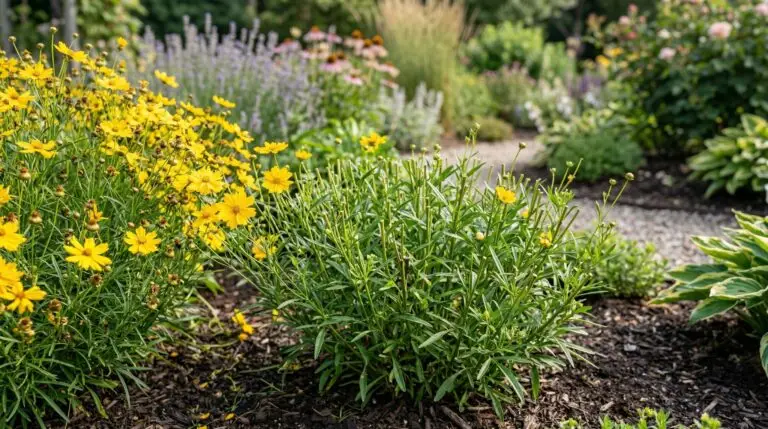
While the flowers get most of the credit, the thread-leaf foliage is what truly elevates this plant from a good perennial to an essential one. Most garden plants have relatively broad, flat leaves that can create a visually heavy, stagnant look if you group too many of them together. The finely cut, almost ferny foliage of thread leaf coreopsis breaks up all that visual weight and injects a sense of movement into the bed. Even on a perfectly still day, the airy structure looks dynamic, and the slightest breeze sets the whole mound swaying gently. This textural contrast makes it the perfect companion for stiff, upright plants or those with large, coarse leaves that need a soft skirt to hide their bare lower stems. It masks the awkward legs of coneflowers and sedums beautifully.
I rely heavily on this fine texture to solve awkward transitions in my planting beds. If two aggressive colors or bold shapes are clashing, dropping a coreopsis moonbeam between them instantly diffuses the tension. The wiry stems are surprisingly strong, allowing the plant to push its way up through neighboring foliage without smothering the plants around it. It looks entirely natural spilling over a stone retaining wall or softening the harsh lines of a concrete walkway. You can easily pair it with the silver foliage of lavender to create a drought-tolerant, sun-loving combination that thrives on neglect while looking incredibly intentional. The contrast between the silver leaves and the bright green thread-leaf foliage is just as rewarding as the eventual flowers.
Growing quirks and honest disappointments
My enthusiasm for this plant does not blind me to its occasional frustrations, and anyone growing it should be prepared for a few specific quirks. The most common panic among new growers happens in early spring, when the garden is waking up and the coreopsis patch remains completely bare. Coreopsis verticillata moonbeam is notoriously late to emerge, often sleeping weeks longer than the rest of the perennials, leading many gardeners to accidentally dig it up assuming it died over the winter. I have learned to mark the crowns with small stakes in the autumn so I remember to leave that empty dirt alone until late May. Once the soil warms up sufficiently, the little green shoots finally appear and grow with astonishing speed to make up for lost time. You just have to trust that the plant knows exactly what it is doing.
Another reality of growing this variety is that it simply will not tolerate rich, heavily amended soil or excessive moisture. If you plant it in a lush, highly fertilized bed, the stems will grow weak, leggy, and eventually splay open from the center, leaving a bald spot in the middle of the clump. It actively prefers lean, sandy, or rocky soils where it has to work a bit harder, which keeps the growth tight and the stems upright. You also have to accept that it is not a plant you can put in the ground and ignore for a decade. After three or four years, the center of the crown often dies out, requiring you to dig up the clump in early spring, discard the woody middle, and replant the vigorous outer sections to keep the patch healthy. It is a small chore, but a necessary one to maintain the vigor of your plants.
Why this perennial remains a permanent fixture
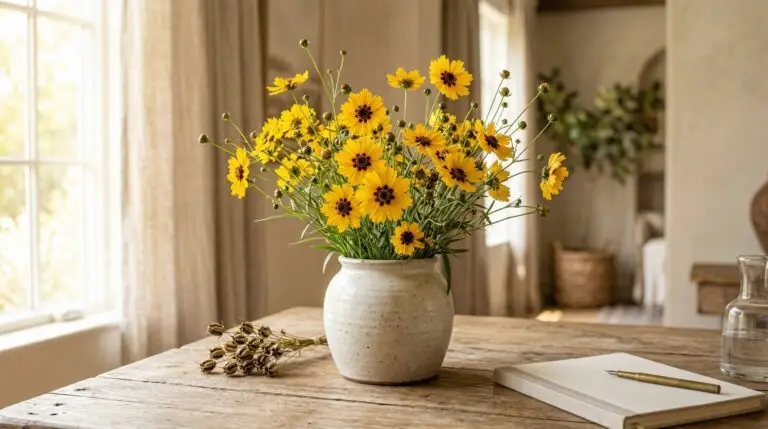
Despite the need for occasional division and the agonizing wait for it to wake up in the spring, the rewards of growing coreopsis moonbeam far outweigh the maintenance. There is a deep, quiet joy in walking out to the garden on a hot July morning and seeing those hundreds of pale yellow stars hovering over their wiry green stems. It is a plant that asks for very little in the way of water or fertilizer, yet it gives back months of continuous color and life. I frequently snip small handfuls of the blooming stems to bring indoors, sometimes pairing them with a few late sprigs of catmint for a simple, soft-toned bouquet. The airy structure of the cut stems makes even a simple, thrown-together arrangement look wild and natural. I love how a single stem can fill out a small vase with its sprawling laterals.
The true measure of a plant is whether you would replace it if you lost it, and I can say with absolute certainty that my garden will never be without this specific variety. I have tried many of the newer coreopsis introductions that promise bigger flowers or different colors, but I always find myself returning to the classic pale yellow of moonbeam. It possesses a subtle charm that the louder, more modern hybrids completely miss. The way it weaves through its neighbors, softens the harsh summer sun, and feeds the local pollinators makes it an anchor in my planting schemes. It is a humble, hardworking perennial that quietly steals the show year after year, proving that sometimes the softest voices in the garden are the ones you want to listen to the most. Every season it returns, I am reminded exactly why I fell in love with it in the first place.
More About Coreopsis
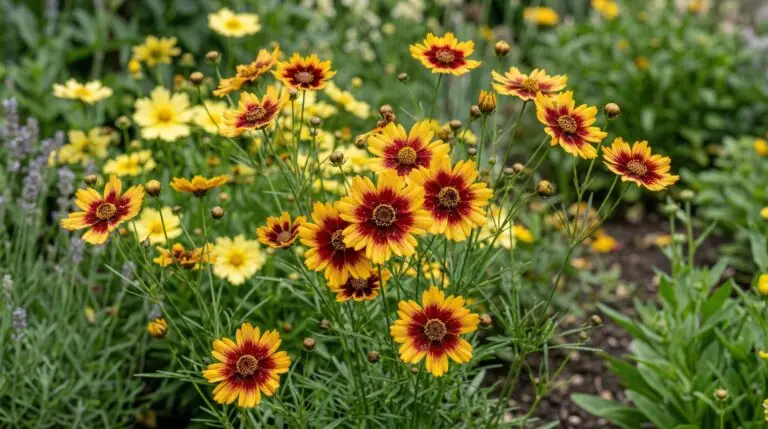
Red and bicolor coreopsis varieties that go beyond the usual yellow
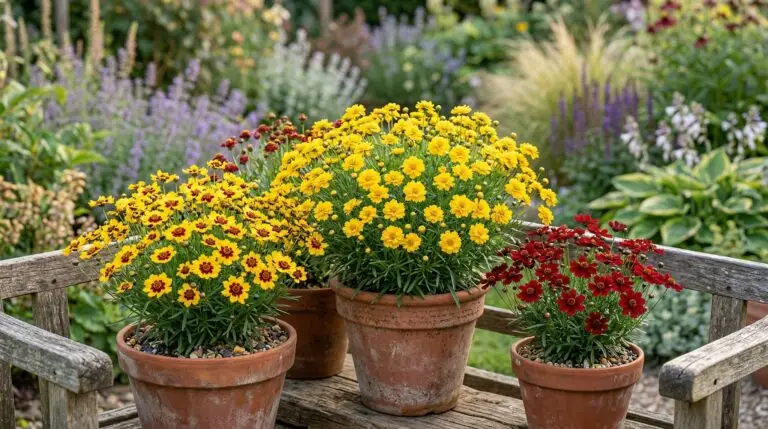
Coreopsis in containers and window boxes for sunny spots that need easy color
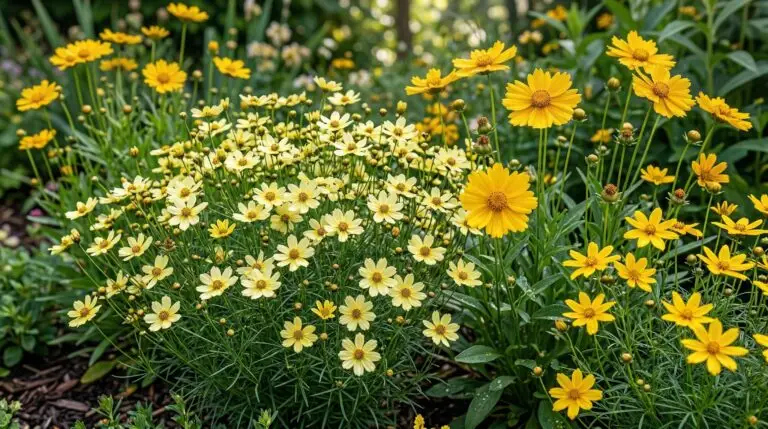
Best coreopsis varieties for non-stop golden blooms from early summer to frost
How to grow coreopsis as a carefree perennial that thrives on neglect
Why coreopsis stops blooming in midsummer and how to keep flowers coming

Coreopsis for xeriscaping and dry garden conditions where other flowers struggle
Growing coreopsis from seed for masses of budget-friendly garden color
Native coreopsis species and their role in restoring American wildflower meadows

Coreopsis companion plants: what to grow, what to avoid
Enjoying our flower guides? Add YourFlowersGuide as a preferred source on Google. It helps more readers find us.
Add to Preferred Sources