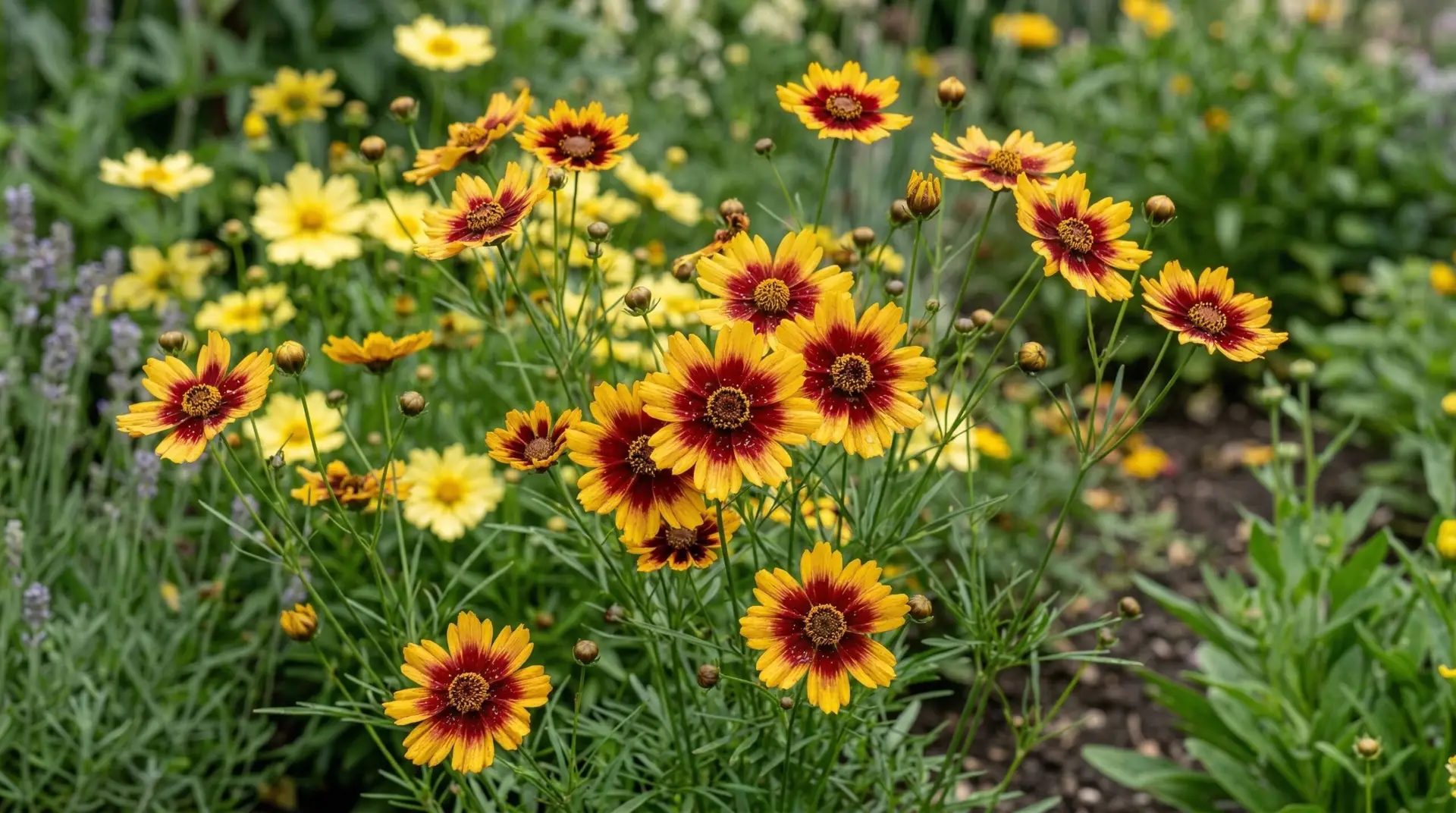
I am writing to you from the edge of the south border, where the morning dew is still clinging to the fine, thread-like foliage of the summer perennials. When you think of coreopsis, your mind likely summons the familiar, cheerful yellow blooms that line highway medians and fill hot August fields. I want to show you something entirely different today, a quiet revolution of color that has transformed this corner of the garden into a study of deep reds and painted bicolors. The light is just beginning to clear the oak trees, striking a patch of petals that look less like wildflowers and more like spilled velvet. These new red coreopsis and bicolor coreopsis varieties pull the eye away from everything else, demanding attention with shades of crushed berry and burnt orange. If you could press your fingers against these blooms, you would feel a papery thinness that somehow holds an immense depth of pigment.
Contents 4 sections
The deep crimson of Limerock Ruby and Ruby Frost
By noon, the garden bakes under a high sun, and the familiar scent of warm earth and dry pine needles rises from the mulch. This is when Limerock Ruby truly comes into its own, holding its face up to the harsh light without fading or curling. The petals on this variety are a saturated magenta that photographs almost purple, but in person, they resemble the dark flesh of a ripe plum. The stems are wiry and rough under bare hands, swaying slightly whenever a heavy bumblebee lands on the golden button center. Just a few steps away, Ruby Frost offers a dramatic variation on this dark theme. Its deep burgundy petals look as though they have been dipped in heavy cream, leaving a stark, frosty white edge that catches the ambient light. When the coastal fog rolls in during our late afternoons, those white margins seem to float above the dark foliage, creating an illusion of hundreds of tiny stars suspended in the mist.
The shifting patterns of Route 66 and Uptick Red and Gold
As we walk further down the stone path, the color palette shifts into something unpredictable and wild. Here, the Route 66 variety spills over the edging stones, presenting a different face on every single bloom. The base color is a clear, lemon yellow, but a deep burgundy bleeds outward from the center, feathering into the yellow like watercolor paint dropped onto wet paper. Some flowers are almost entirely red, while others show just a faint ring of rust around the eye, changing their dominant coreopsis colors as the temperature fluctuates through the season. Beside them sits Uptick Red and Gold, a much more compact plant that produces massive, heavy blossoms. The blooms are so large and structured that they remind me of a coneflower in their sturdy architecture, though their petals remain smooth and relatively flat. The rich brick-red centers transition sharply into thick golden tips, giving the entire cluster of flowers a warm, glowing quality as the afternoon light begins to slant through the trees.
The wild charm of coreopsis tinctoria
We turn the corner toward the back fence, where the soil is leaner and the watering hose rarely reaches. This dry, dusty patch is the perfect home for coreopsis tinctoria, the annual cousin to our perennial border plants. The seeds of this plant look like tiny, curved splinters of dark wood, smooth and light in the palm of your hand. When you sow them in the spring, you will know the soil is right when it feels like a wrung-out sponge, holding just enough moisture to wake the dormant seeds before drying out again. By midsummer, the plants shoot up into a tangled mass of wiry stems that smell faintly of black pepper and dry grass when brushed against. The blossoms are smaller here, but they appear in overwhelming numbers, covering the plants in shades of deep mahogany and bright mustard. The dark red centers often overtake the yellow completely, leaving only a tiny rim of gold that flickers in the wind like a dying ember.
Caring for painted daisies through the changing seasons
Keeping these rich colors blooming deep into the autumn requires a tactile relationship with the plants. Once a week, I walk through this section of the garden snapping off the spent flower heads. The stems break with a satisfying, crisp pop between the thumb and forefinger, leaving behind a sticky, resinous sap that smells faintly of citrus. Removing the heavy, fading blooms encourages the plant to push out fresh buds, extending the display of red coreopsis long past the first cool nights of September. While they appreciate a deep drink of water during extended dry spells, their roots demand loose, gritty earth that drains quickly after a summer thunderstorm. If the soil stays too heavy and wet, the crowns will turn to a soft, black mush beneath the green foliage. When placed in the right spot, their bold, flat faces make a wonderful companion to the thick, velvety petals of a gerbera daisy, creating a striking contrast of textures in the cutting garden.
I wish you could be here right now as the sun finally dips below the horizon, pulling the last warmth from the day. The yellow flowers in the garden seem to glow for a few minutes longer, but the dark red and bicolor coreopsis varieties begin to recede into the shadows. Their deep burgundy and crimson petals absorb the twilight, turning into black silhouettes against the pale gray of the gravel path. The night air brings out a subtle, earthy fragrance from the foliage, a scent of dust and green life settling down for the evening. The garden is quiet, save for the rustle of the dry seed heads moving in the evening breeze, waiting for tomorrow’s sun to light their painted petals once again.
More About Coreopsis
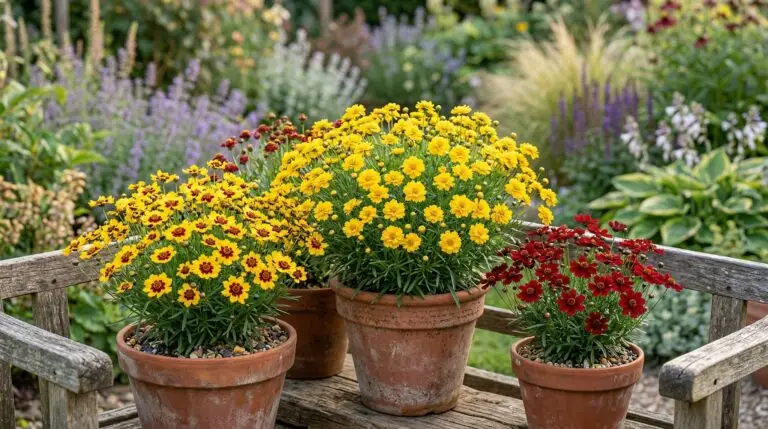
Coreopsis in containers and window boxes for sunny spots that need easy color
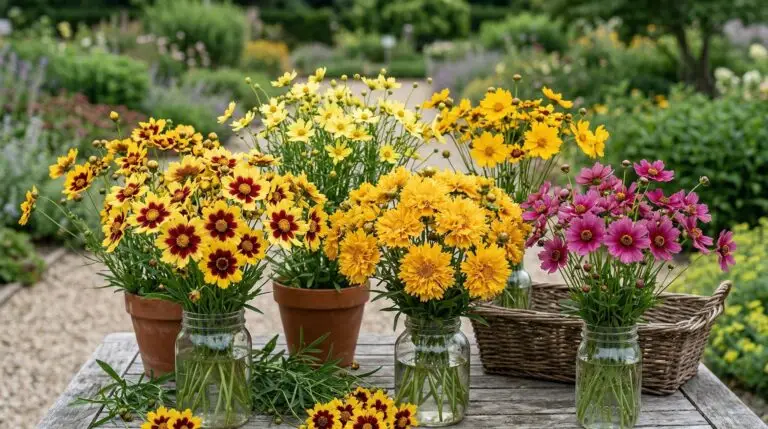
Thread-leaf coreopsis Moonbeam and why it is one of the finest perennials ever bred
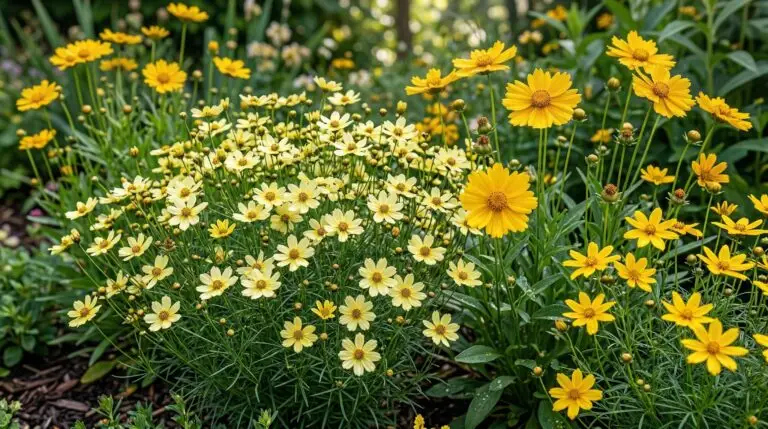
Best coreopsis varieties for non-stop golden blooms from early summer to frost
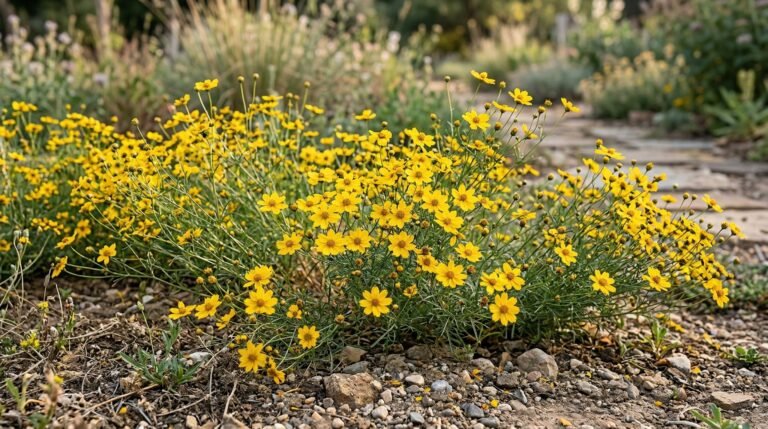
How to grow coreopsis as a carefree perennial that thrives on neglect
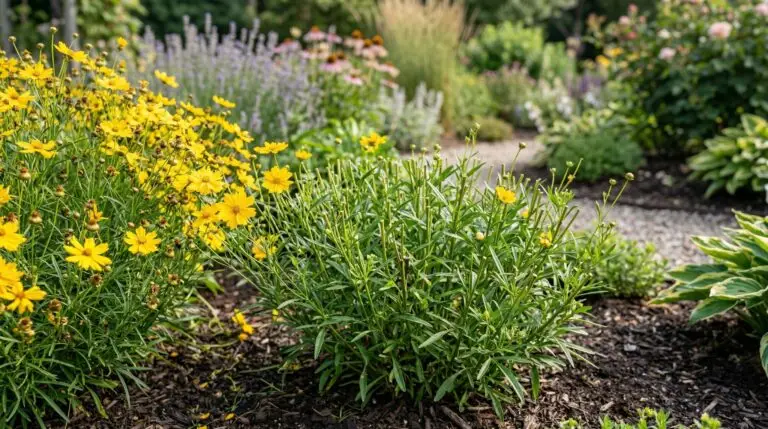
Why coreopsis stops blooming in midsummer and how to keep flowers coming
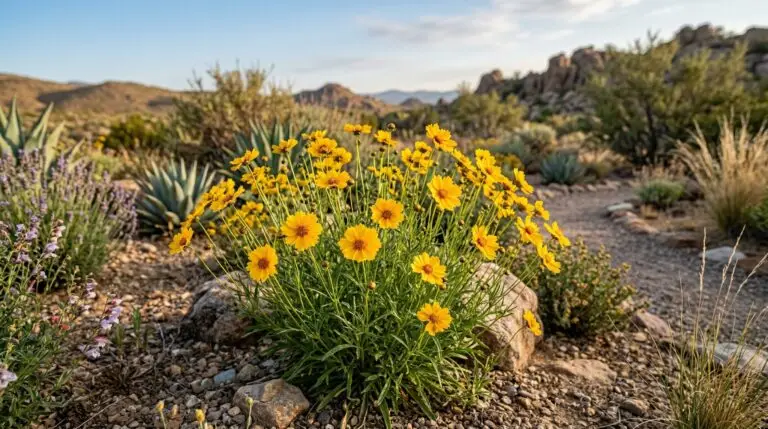
Coreopsis for xeriscaping and dry garden conditions where other flowers struggle
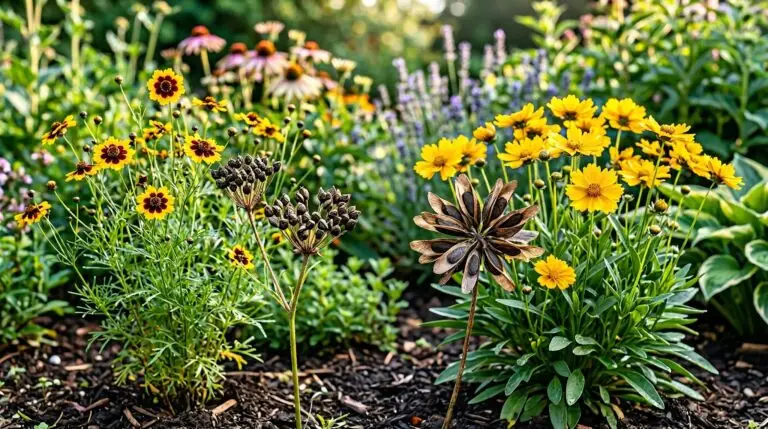
Growing coreopsis from seed for masses of budget-friendly garden color
Native coreopsis species and their role in restoring American wildflower meadows
Coreopsis companion plants: what to grow, what to avoid
Enjoying our flower guides? Add YourFlowersGuide as a preferred source on Google. It helps more readers find us.
Add to Preferred Sources