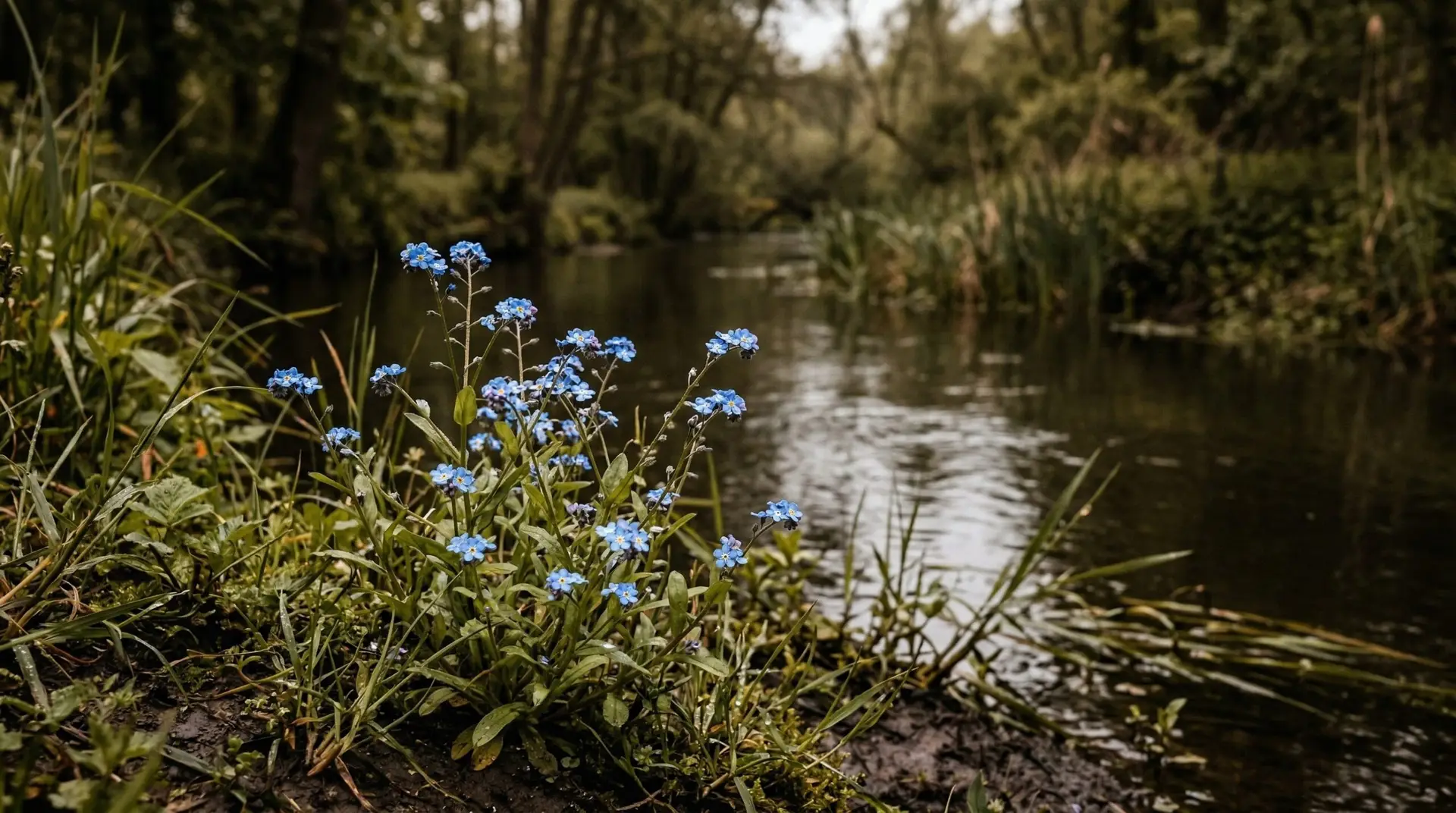
The story begins on the banks of the Danube River in medieval Europe. A knight and his lover walk along the rushing water, enjoying the warmth of a spring afternoon. The knight wears his heavy armor, a symbol of his station and duty, while the young woman points to a cluster of small blue flowers growing dangerously close to the river’s edge. He wades into the current to gather the blossoms for her, but the weight of his metal plates drags him down into the deep water. As the river pulls him under, he throws the bouquet onto the bank and calls out his final words. He shouts for her to forget him not, sealing the fate and the name of the tiny blue plant forever. This forget-me-not legend shaped the cultural identity of the flower for centuries to come.
The true story of the plant is less tragic but equally focused on endurance and survival. The scientific name, Myosotis, translates from Greek as mouse’s ear, a practical description of the short, softly hairy leaves that emerge from the soil. Long before the plant held the weight of human romance, it simply lived near water, thriving in the damp earth of European woodlands and stream banks. The myosotis meaning grew from this habit of returning reliably year after year in the exact same spots. The seeds drop into the wet mud in late summer, wait through the freezing winter, and sprout as soon as the ground thaws. By the time the spring rains arrive, the plant has already formed a dense mat of green foliage ready to support hundreds of tiny blue blooms.
Contents 4 sections
Crossing oceans and settling in new gardens
English colonists packed the seeds into their trunks alongside tools and Bibles when they sailed for North America. They wanted familiar sights in their new dooryard gardens, and these small blue flowers offered a reliable comfort in an unfamiliar place. The seeds proved highly adaptable, escaping the neat beds of early settlements and naturalizing along the creeks and forest edges of the eastern seaboard. Over generations, the plant integrated itself into the local ecology, blooming quietly under the shade of native trees. The forget-me-not meaning shifted slightly in this new context, representing a tie to the homes and families left behind across the Atlantic. Every spring, when the blue petals opened with their bright yellow centers, the settlers had a living reminder of their personal histories.
The plant moves through the seasons with a quiet, determined rhythm. In the early days of March, the green shoots push through the remaining snow and decaying autumn leaves. The stems grow taller as the days lengthen, uncoiling like a fern frond to reveal tight clusters of buds. By May, the flowers open fully, creating a low mist of blue that hovers just above the soil line. They do not demand attention with large, heavy blooms or overpowering scents. Instead, they wait for the gardener to kneel down and look closely at the five perfectly formed petals and the star-shaped center. This subtle presence makes the forget-me-not symbolism so effective, as true remembrance requires quiet attention rather than loud display.
The Victorian language of hidden messages
During the nineteenth century, gardeners and florists developed a complex system of communicating through plants. People exchanged small bouquets to express feelings that strict social rules prevented them from saying aloud. While a suitor might send a red rose to declare passionate love, the forget-me-not carried a different kind of promise. It represented a steadfast, enduring devotion that would survive distance and time. Young women pressed the blue flowers into their diaries and Bibles, preserving the color long after the petals dried into brittle paper. The plant often appeared in small, handheld bouquets alongside the violet, another flower that signaled loyalty and modesty. Together, these small blooms conveyed a private understanding between two people that required no words.
The Victorian fascination with the flower extended beyond fresh bouquets into everyday objects. Jewelers carved the five-petaled shape into turquoise and set it into gold lockets that held locks of hair. Stationers painted the blue clusters onto calling cards and the borders of romantic letters. The flower became a visual shorthand for fidelity, appearing on teacups, embroidered handkerchiefs, and mourning jewelry. People understood that giving this flower meant asking someone to hold their memory close, whether they were traveling for a season or parting forever. This practice cemented the plant’s reputation as the ultimate symbol of remembrance in Western culture.
Taking root in the northern wilderness
The history of the flower took a surprising turn in the early twentieth century when it became tied to the rugged terrain of the far north. Settlers and prospectors arriving in the Alaska territory found a native species of the plant growing wild across the mountains and tundra. The Alpine forget-me-not thrives in rocky, inhospitable soil where few other plants can survive the extreme cold and wind. It blooms brightly during the brief, intense northern summer, covering the harsh ground with patches of vivid blue. Decades before statehood, the territorial legislature adopted the flower as its official emblem. The lawmakers saw the plant as a reflection of the people who lived there, hardy, resilient, and capable of finding beauty in difficult conditions.
This northern variety behaves differently than its woodland cousins, adapting its growth to match the environment. It stays incredibly close to the ground, forming tight cushions of hairy leaves that trap heat from the sun and protect the roots from freezing winds. The flowers emerge almost directly from this protective mat, opening their petals to the long hours of summer daylight. When the first snows return in early September, the plant is already prepared for the deep freeze, holding its seeds securely until the following June. The ability to endure months of darkness and ice adds another layer to the flower’s meaning. It shows that memory and love can survive even the longest, coldest winters of our lives.
Bearing witness to memory and loss
In recent decades, the flower has taken on a heavier, more communal role in how we talk about illness and grief. Organizations dedicated to Alzheimer’s disease and dementia care adopted the blue blossom as their primary symbol of awareness. The connection is direct and powerful, using the name of the plant to advocate for people whose own memories are slipping away. Families plant the seeds in memory gardens to honor parents and grandparents who lost their battle with cognitive decline. The small flowers serve as a physical promise that the person will remain in the minds of their loved ones, even when their own mind fails. It is a heavy burden for such a delicate plant to carry, but the reliable return of the blooms each spring offers a measure of comfort to those who grieve.
The flower also plays a part in broader days of national and international remembrance. People wear enamel pins shaped like the blue blossoms to honor fallen soldiers, particularly in places like Newfoundland where the plant is tied to World War I memorials. Much like the white lily is used to mark the solemnity of Easter and funerals, the forget-me-not marks the quiet spaces of personal and public mourning. It asks us to pause and acknowledge the people who shaped our histories before they departed. The act of planting the seeds becomes an act of keeping those histories alive. The roots hold the soil, and the flowers hold the stories of those we refuse to leave behind in the past.
A garden is ultimately a collection of memories planted in the dirt. When you sow a patch of these tiny blue flowers in a damp, shaded corner of your yard, you are participating in a tradition that stretches back to medieval riverbanks and early American settlements. The seeds will drop, the winter will come, and the green shoots will faithfully return when the soil warms. You might find them spreading under a tree or pushing up between the stones of a pathway, arriving exactly when the spring garden needs a touch of blue. You do not need a tragic legend or a secret Victorian code to appreciate their presence. You only need to walk out in the cool morning air, look down at the bright yellow centers, and remember the hands that taught you how to plant them.
More About Forget-me-nots
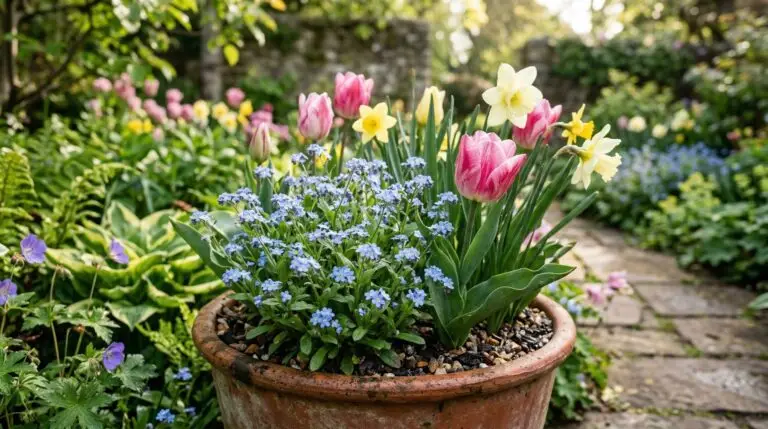
Forget-me-nots in containers and window boxes for spring cottage charm
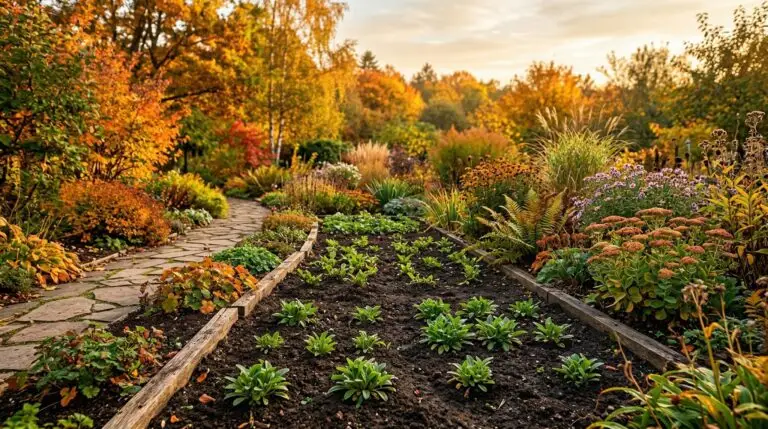
Growing forget-me-nots from seed and the simple trick of fall sowing for spring flowers
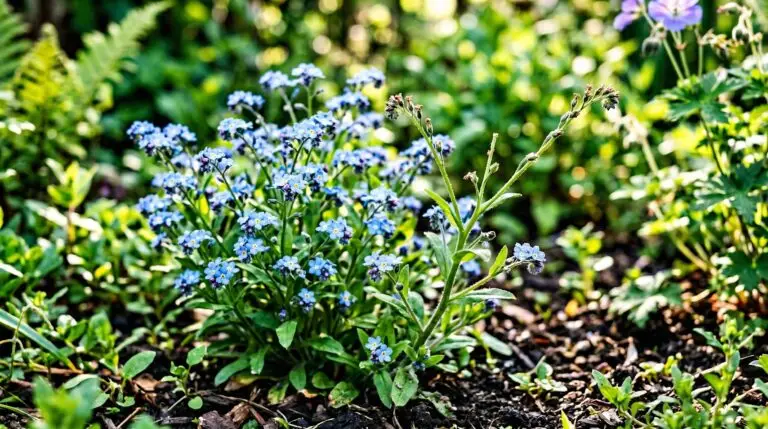
How to control forget-me-nots when self-sowing becomes too enthusiastic
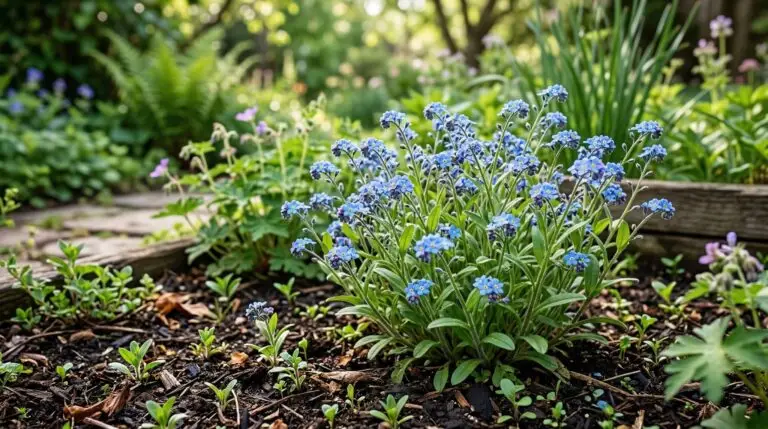
How to grow forget-me-nots for clouds of tiny blue flowers in spring gardens
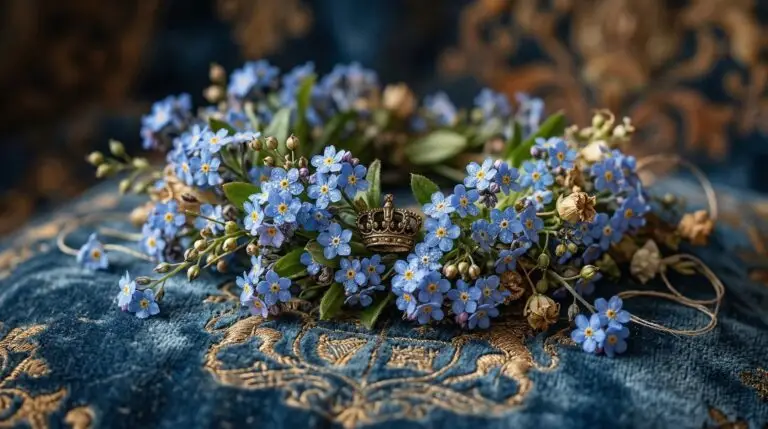
Forget-me-nots in literature and art and their enduring place in cultural memory
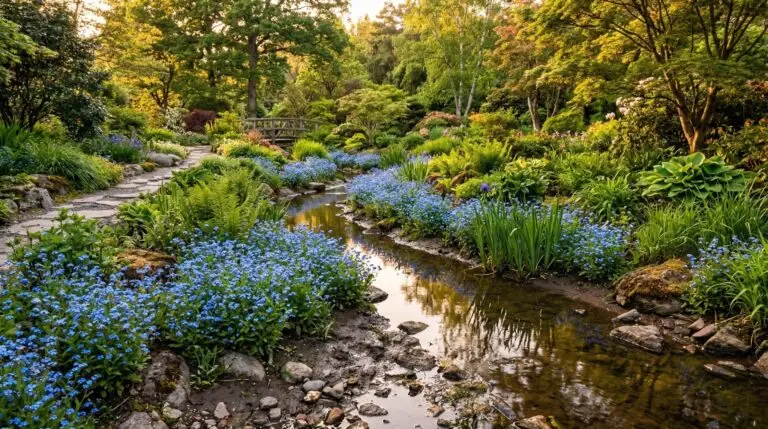
Water forget-me-nots for pond edges and stream banks that stay wet
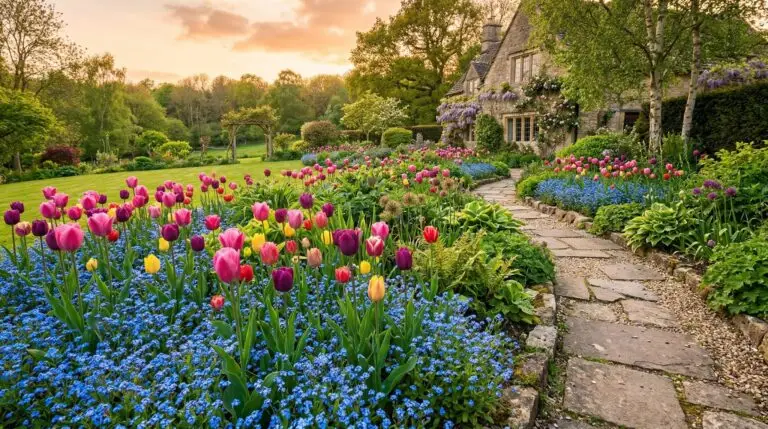
Forget-me-nots as ground cover under spring bulbs for a layered woodland look
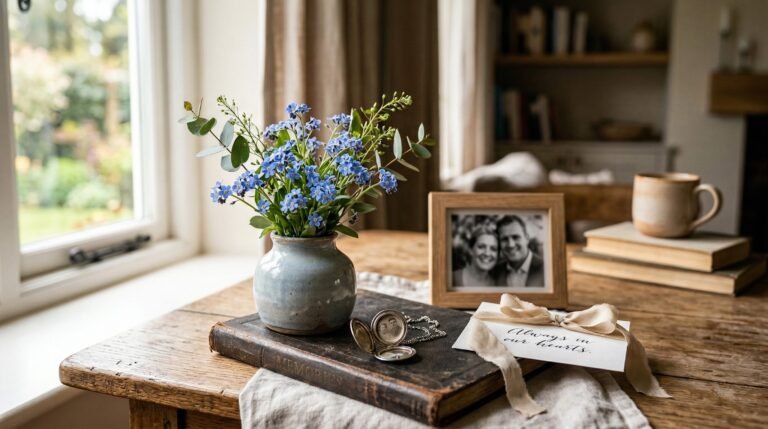
Forget-me-nots for wedding flowers and the sentimental meaning for bridal bouquets
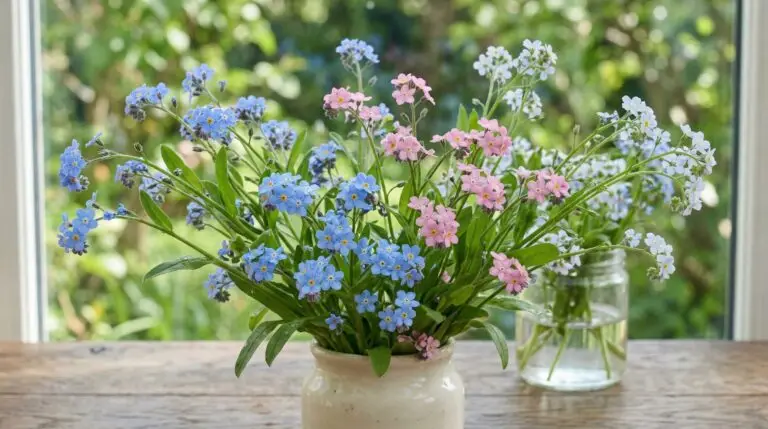
Best forget-me-not varieties from classic blue Myosotis to pink and white forms
Enjoying our flower guides? Add YourFlowersGuide as a preferred source on Google. It helps more readers find us.
Add to Preferred Sources